iScooter iX7 Pro
iScooter iX8

iScooter iX7 Pro iScooter iX8

Overview

Choosing between the iScooter iX7 Pro and the iScooter iX8 is no simple task. Both scooters arrive with foldable frames, pneumatic tires, front and rear lighting, and a solid IPX4 weather-resistance rating, making them credible contenders in the high-performance electric scooter segment. Yet beneath these shared traits lie notable differences in motor setup, wheel size, suspension, and battery technology that could make one a far better match for your riding style than the other.

Common Features

  • Both scooters have a dedicated smartphone app.
  • Both scooters use pneumatic tires.
  • Neither scooter has a seat.
  • Both scooters can be folded.
  • Neither scooter is designed for kids.
  • Both scooters have front lights.
  • Both scooters have rear lights.
  • Both scooters carry an IPX4 ingress protection rating.
  • Both scooters support a maximum climbing angle of 25°.
  • Both scooters have a rear brake.
  • Both scooters have a front brake.
  • Both scooters support a maximum weight capacity of 150 kg.
  • Both scooters require 10 hours to fully charge.
  • Both scooters have a battery level indicator.
  • Neither scooter has a removable battery.

Main Differences

  • Weight is 30 g on iScooter iX7 Pro and 24900 g on iScooter iX8.
  • Suspension is present on iScooter iX7 Pro but not available on iScooter iX8.
  • Wheel diameter is 10″ on iScooter iX7 Pro and 12″ on iScooter iX8.
  • Height is 1170 mm on iScooter iX7 Pro and 1270 mm on iScooter iX8.
  • Width is 1143 mm on iScooter iX7 Pro and 1240 mm on iScooter iX8.
  • Motor power is 2000W on iScooter iX7 Pro and 2400W on iScooter iX8.
  • Top speed is 61 km/h on iScooter iX7 Pro and 60 km/h on iScooter iX8.
  • Dual motors are present on iScooter iX7 Pro but not available on iScooter iX8.
  • Battery capacity is 17500 mAh on iScooter iX7 Pro and 20000 mAh on iScooter iX8.
  • Maximum range per charge is 80 km on iScooter iX7 Pro and 70 km on iScooter iX8.
  • Regenerative braking is present on iScooter iX8 but not available on iScooter iX7 Pro.
  • Battery size is 840 Wh on iScooter iX7 Pro and 960 Wh on iScooter iX8.
Specs Comparison
iScooter iX7 Pro

iScooter iX7 Pro

iScooter iX8

iScooter iX8

Design:
weight 30 g 24900 g
has suspension
Has a dedicated smartphone app
has pneumatic tires
wheel diameter 10" 12"
has a seat
can be folded
is designed for kids
height 1170 mm 1270 mm
width 1143 mm 1240 mm
has front light(s)
has rear light(s)
Ingress Protection (IP) rating IPX4 IPX4
release date May 2025 January 2025

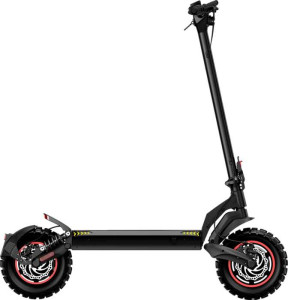
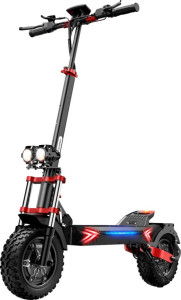
The most significant structural difference between the iScooter iX7 Pro and the iX8 lies in two areas: suspension and wheel size. The iX7 Pro is equipped with suspension, while the iX8 has none. In practice, this means the iX7 Pro is better equipped to absorb road vibrations and small bumps, which translates to a more comfortable ride on uneven surfaces. The iX8, lacking suspension, relies entirely on its 12″ pneumatic tires for shock absorption — and those larger wheels do help, since a bigger air-filled tire inherently provides a smoother roll over minor imperfections compared to the iX7 Pro′s 10″ wheels. These two design choices partially offset each other, but riders on rough urban terrain will likely still feel the difference.

In terms of form factor, the iX8 is noticeably larger, standing 1270 mm tall and 1240 mm wide versus the iX7 Pro′s 1170 mm × 1143 mm. The added size comes with the territory of the larger wheels but may affect storage convenience and maneuverability in tight spaces. Both scooters are foldable, which mitigates some of the size concern for transit and storage. Shared design features — including front and rear lights, IPX4 water resistance, and a dedicated smartphone app — mean neither product has an edge on safety visibility or connectivity.

Overall, the iX7 Pro holds a design edge for ride comfort thanks to its dedicated suspension system, which is a meaningful differentiator in real-world urban use. The iX8′s larger wheels are a partial compensator but do not fully replicate the role of suspension. Riders who prioritize a smoother, more forgiving ride should lean toward the iX7 Pro; those who prefer a larger-wheeled platform and can tolerate a firmer ride may find the iX8′s footprint acceptable.

Performance:
motor power 2000W 2400W
top speed 61 km/h 60 km/h
has dual motors
climbing angle 25° 25°
has a rear brake
has a front brake
maximum weight capacity 150kg 150kg

At first glance, the iX8′s 2400W motor appears to outgun the iX7 Pro′s 2000W dual-motor setup, but the architecture difference matters more than the raw wattage gap. The iX7 Pro splits its power across two motors — one per wheel — which delivers torque to both axles simultaneously. This dramatically improves traction, especially on wet surfaces or loose terrain, and makes for more balanced acceleration. The iX8, despite its higher single-motor output, channels all drive force through one wheel, which can limit grip under hard acceleration. In real-world riding, the iX7 Pro′s dual-motor layout is generally the more capable configuration for demanding conditions.

Despite this architectural divide, the two scooters arrive at nearly identical top speeds — 61 km/h for the iX7 Pro versus 60 km/h for the iX8 — a difference so marginal it is irrelevant in practice. Climbing capability is also identical at 25°, and both share a 150 kg maximum payload and a full dual-brake system. These parity points confirm that on flat, clean pavement, everyday performance will feel very similar between the two.

For performance, the iX7 Pro holds the edge due to its dual-motor drivetrain. Higher peak wattage on a single motor does not compensate for the traction, stability, and redundancy advantages that come with power distributed across both wheels. Riders who push their scooter in varied or challenging conditions will find the iX7 Pro′s configuration meaningfully superior, while casual flat-road commuters may not notice a practical difference.
Battery:
battery power 17500 mAh 20000 mAh
charge time 10 hours 10 hours
maximum distance per charge 80 km 70 km
has a battery level indicator
Has regenerative braking
has a removable battery
battery size 840 Wh 960 Wh

A notable paradox emerges when comparing these two batteries: the iX8 carries a larger pack — 960 Wh and 20000 mAh versus the iX7 Pro′s 840 Wh and 17500 mAh — yet delivers a shorter claimed range of 70 km compared to the iX7 Pro′s 80 km. This means the iX7 Pro extracts more distance per unit of stored energy, making it the more range-efficient scooter according to the provided figures. For commuters where per-charge distance is the primary concern, that 10 km gap is meaningful and favors the iX7 Pro.

Where the iX8 attempts to claw back ground is through regenerative braking, a feature absent on the iX7 Pro. Regenerative braking recovers kinetic energy during deceleration and feeds it back into the battery, which can meaningfully extend effective range in stop-and-go urban environments with frequent braking. Whether this feature closes the 10 km gap in practice depends heavily on riding conditions, but it does give the iX8 an advantage on city routes with traffic lights and intersections. Both scooters share a 10-hour charge time and neither offers a removable battery, so overnight charging is the only option for both.

On balance, the iX7 Pro holds the battery edge based strictly on rated range — the figure most riders rely on. The iX8′s larger raw capacity and regenerative braking are genuine assets, but they do not overcome the headline range deficit as specified. Riders who primarily cruise longer distances on open roads will prefer the iX7 Pro, while those navigating dense urban stop-and-go traffic may find the iX8′s regenerative system partially compensates in real use.

Comparison Summary & Verdict

After reviewing every specification, these two scooters serve distinctly different rider profiles. The iScooter iX7 Pro stands out for commuters and thrill-seekers who value a dual-motor configuration, built-in suspension for a smoother ride, and an impressive 80 km range per charge — the longest of the two. Conversely, the iScooter iX8 appeals to riders who prefer larger 12-inch wheels for added stability, a higher 960 Wh battery capacity, and the efficiency benefit of regenerative braking. Neither scooter is a clear-cut winner; the iX7 Pro rewards those who prioritize range and ride comfort, while the iX8 is the stronger pick for riders focused on raw motor power and energy recovery.

iScooter iX7 Pro
Buy iScooter iX7 Pro if...

Buy the iScooter iX7 Pro if you want dual motors, built-in suspension for a more comfortable ride, and the longest possible range at 80 km per charge.

iScooter iX8
Buy iScooter iX8 if...

Buy the iScooter iX8 if you prefer larger 12-inch wheels for greater stability, a bigger 960 Wh battery, and the added efficiency of regenerative braking.