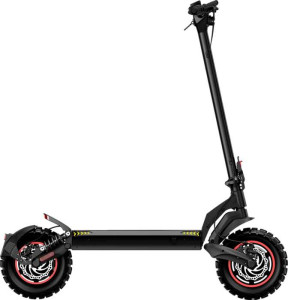
iScooter iX7 Pro
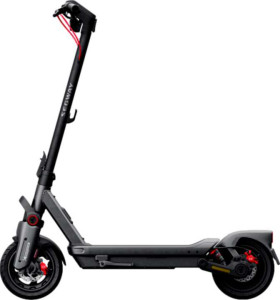
Ninebot by Segway eKickScooter Max G3

iScooter iX7 Pro Ninebot by Segway eKickScooter Max G3

Overview

Welcome to our in-depth specification comparison between the iScooter iX7 Pro and the Ninebot by Segway eKickScooter Max G3. Both scooters share a solid foundation — folding design, pneumatic tires, suspension, and an 80 km range — yet they diverge sharply when it comes to speed, battery capacity, and charging time. Whether you prioritize raw performance or everyday practicality, this comparison will help you identify which scooter truly fits your riding needs.

Common Features

  • Both scooters feature suspension for a smoother ride.
  • Both scooters have a dedicated smartphone app.
  • Both scooters are equipped with pneumatic tires.
  • Neither scooter has a seat.
  • Both scooters can be folded for easier transport.
  • Neither scooter is designed for kids.
  • Both scooters have front light(s).
  • Both scooters have rear light(s).
  • Both scooters are powered by a 2000W motor.
  • Both scooters have a rear brake.
  • Both scooters have a front brake.
  • Both scooters support a maximum weight capacity of 150 kg.
  • Both scooters offer a maximum distance of 80 km per charge.
  • Both scooters have a battery level indicator.
  • Neither scooter has a removable battery.

Main Differences

  • Weight is 30 g on iScooter iX7 Pro and 24600 g on Ninebot by Segway eKickScooter Max G3.
  • Wheel diameter is 10″ on iScooter iX7 Pro and 11″ on Ninebot by Segway eKickScooter Max G3.
  • Height is 1170 mm on iScooter iX7 Pro and 1299 mm on Ninebot by Segway eKickScooter Max G3.
  • Width is 1143 mm on iScooter iX7 Pro and 1218 mm on Ninebot by Segway eKickScooter Max G3.
  • The Ingress Protection rating is IPX4 on iScooter iX7 Pro and IPX6 on Ninebot by Segway eKickScooter Max G3.
  • Top speed is 61 km/h on iScooter iX7 Pro and 45 km/h on Ninebot by Segway eKickScooter Max G3.
  • Dual motors are present on iScooter iX7 Pro but not available on Ninebot by Segway eKickScooter Max G3.
  • Climbing angle is 25° on iScooter iX7 Pro and 30° on Ninebot by Segway eKickScooter Max G3.
  • Charge time is 10 hours on iScooter iX7 Pro and 3.5 hours on Ninebot by Segway eKickScooter Max G3.
  • Regenerative braking is present on Ninebot by Segway eKickScooter Max G3 but not available on iScooter iX7 Pro.
  • Battery size is 840 Wh on iScooter iX7 Pro and 597 Wh on Ninebot by Segway eKickScooter Max G3.
Specs Comparison
iScooter iX7 Pro

iScooter iX7 Pro

Ninebot by Segway eKickScooter Max G3

Ninebot by Segway eKickScooter Max G3

Design:
weight 30 g 24600 g
has suspension
Has a dedicated smartphone app
has pneumatic tires
wheel diameter 10" 11"
has a seat
can be folded
is designed for kids
height 1170 mm 1299 mm
width 1143 mm 1218 mm
has front light(s)
has rear light(s)
Ingress Protection (IP) rating IPX4 IPX6
release date May 2025 January 2025

Both the iScooter iX7 Pro and the Segway eKickScooter Max G3 share a strong foundation of rider-friendly design features: both fold for portability, ride on pneumatic tires, include front and rear lighting, offer suspension, and connect to a dedicated smartphone app. These shared traits put them on equal footing for everyday commuting comfort and convenience.

Where the two diverge meaningfully is in physical size and weather resistance. The Max G3 is notably larger, standing 1299 mm tall and 1218 mm wide versus the iX7 Pro's 1170 mm height and 1143 mm width, which suggests it is built for a broader range of rider heights and may feel more stable at speed. Its 11″ wheels also edge out the iX7 Pro's 10″ wheels — larger wheels generally roll over road imperfections more smoothly and maintain momentum more efficiently. On weather protection, the gap is significant: the Max G3 carries an IPX6 rating, meaning it can withstand powerful water jets, while the iX7 Pro's IPX4 rating only guards against splashing from any direction. For riders who commute in rain or wet conditions, this is a practical real-world advantage.

Overall, the Segway Max G3 has a clear design edge in this group: its larger wheel diameter, bigger frame, and superior IPX6 weather resistance make it the more capable and weather-resilient option. The iX7 Pro's more compact dimensions may appeal to riders prioritizing a smaller footprint, but it concedes ground on both wheel size and water protection.
Performance:
motor power 2000W 2000W
top speed 61 km/h 45 km/h
has dual motors
climbing angle 25° 30°
has a rear brake
has a front brake
maximum weight capacity 150kg 150kg

At first glance, both scooters appear evenly matched on paper — identical 2000W motor power, the same 150 kg weight capacity, and dual front-and-rear braking. But how that power is delivered tells a very different story. The iX7 Pro achieves this output through dual motors, splitting the load across two drivetrains, while the Max G3 channels all 2000W through a single motor. Dual-motor configurations typically deliver more responsive acceleration and better traction on slippery or uneven surfaces, since each wheel drives independently.

The most striking divergence is in top speed versus climbing ability. The iX7 Pro reaches 61 km/h — a significant 16 km/h faster than the Max G3's 45 km/h ceiling — making it the clear choice for riders who prioritize outright velocity. The Max G3, however, counters with a steeper 30° climbing angle compared to the iX7 Pro's 25°, meaning it handles inclines more confidently. This is likely a byproduct of torque tuning: the Max G3's single motor appears optimized for sustained hill-climbing grunt rather than peak speed.

The performance edge here depends entirely on use case. The iX7 Pro has the advantage for speed-focused, flatter commutes, while the Max G3 is better suited for hilly terrain. Riders who encounter significant elevation changes regularly will appreciate the Max G3's superior climb rating, but for open-road performance, the iX7 Pro's dual-motor setup and higher top speed give it the upper hand.

Battery:
charge time 10 hours 3.5 hours
maximum distance per charge 80 km 80 km
has a battery level indicator
Has regenerative braking
has a removable battery
battery size 840 Wh 597 Wh

The most counterintuitive finding in this group is that both scooters deliver an identical 80 km maximum range, yet the iX7 Pro does so with an 840 Wh battery while the Max G3 manages the same distance on just 597 Wh. A 40% larger battery pack producing no additional range is a notable efficiency gap — and the Max G3's regenerative braking system is a key part of the explanation. By recovering kinetic energy during deceleration and feeding it back into the battery, regenerative braking meaningfully extends usable range, particularly in stop-and-go urban riding where braking is frequent.

Where the gap becomes most practically painful is charging time. The iX7 Pro requires a full 10 hours to recharge — essentially an overnight commitment — while the Max G3 tops up in just 3.5 hours, nearly three times faster. For a daily commuter who occasionally needs a mid-day top-up or forgets to plug in the night before, this difference is significant. Neither scooter offers a removable battery, so in-place charging is the only option for both.

The Max G3 holds a clear battery advantage in this category. Matching the iX7 Pro's range while using a smaller pack and charging nearly three times faster makes it the more practical and efficient choice for everyday use. The iX7 Pro's larger battery ultimately compensates for lower efficiency rather than delivering superior endurance.

Comparison Summary & Verdict

After reviewing all the specifications, both scooters serve distinct rider profiles. The iScooter iX7 Pro stands out with its impressive 61 km/h top speed and a large 840 Wh battery, making it the stronger choice for riders who demand high performance and extended range without compromise. However, its 10-hour charge time is a notable drawback for daily commuters. On the other hand, the Ninebot by Segway eKickScooter Max G3 offers a more practical commuter experience thanks to its rapid 3.5-hour charge time, superior IPX6 water resistance, steeper 30° climbing angle, and energy-saving regenerative braking. Riders who value reliability, quicker turnaround, and a polished daily-use experience will feel right at home on the Segway.

iScooter iX7 Pro
Buy iScooter iX7 Pro if...

Buy the iScooter iX7 Pro if you want the highest possible top speed and the largest battery capacity for maximum range, and you can tolerate a longer charging time between rides.

Ninebot by Segway eKickScooter Max G3
Buy Ninebot by Segway eKickScooter Max G3 if...

Buy the Ninebot by Segway eKickScooter Max G3 if you need a practical daily commuter scooter with a much faster charge time, better water resistance, regenerative braking, and stronger hill-climbing capability.