iScooter iX8
Ninebot by Segway KickScooter F3 Pro

iScooter iX8 Ninebot by Segway KickScooter F3 Pro

Overview

Welcome to our in-depth specification comparison between the iScooter iX8 and the Ninebot by Segway KickScooter F3 Pro. Both scooters share a foldable design, pneumatic tires, and an impressive 70 km range per charge, but they take very different approaches when it comes to raw performance, battery capacity, and overall build. Read on to discover how these two electric scooters stack up across every key specification.

Common Features

  • Both scooters have a dedicated smartphone app.
  • Both scooters are equipped with pneumatic tires.
  • Neither scooter has a seat.
  • Both scooters can be folded.
  • Neither scooter is designed for kids.
  • Both scooters have front light(s).
  • Both scooters have rear light(s).
  • Neither scooter has dual motors.
  • Both scooters have a rear brake.
  • Both scooters have a front brake.
  • Both scooters offer a maximum distance of 70 km per charge.
  • Both scooters have a battery level indicator.
  • Both scooters feature regenerative braking.
  • Neither scooter has a removable battery.

Main Differences

  • Weight is 24900 g on iScooter iX8 and 19300 g on Ninebot by Segway KickScooter F3 Pro.
  • Suspension is not available on iScooter iX8 but is present on Ninebot by Segway KickScooter F3 Pro.
  • Wheel diameter is 12″ on iScooter iX8 and 10″ on Ninebot by Segway KickScooter F3 Pro.
  • Height is 1270 mm on iScooter iX8 and 1262 mm on Ninebot by Segway KickScooter F3 Pro.
  • Width is 1240 mm on iScooter iX8 and 1152 mm on Ninebot by Segway KickScooter F3 Pro.
  • Ingress Protection rating is IPX4 on iScooter iX8 and IPX6 on Ninebot by Segway KickScooter F3 Pro.
  • Motor power is 2400W on iScooter iX8 and 1200W on Ninebot by Segway KickScooter F3 Pro.
  • Top speed is 60 km/h on iScooter iX8 and 25 km/h on Ninebot by Segway KickScooter F3 Pro.
  • Climbing angle is 25° on iScooter iX8 and 24° on Ninebot by Segway KickScooter F3 Pro.
  • Maximum weight capacity is 150 kg on iScooter iX8 and 120 kg on Ninebot by Segway KickScooter F3 Pro.
  • Charge time is 10 hours on iScooter iX8 and 8 hours on Ninebot by Segway KickScooter F3 Pro.
  • Battery size is 960 Wh on iScooter iX8 and 477 Wh on Ninebot by Segway KickScooter F3 Pro.
Specs Comparison
iScooter iX8

iScooter iX8

Ninebot by Segway KickScooter F3 Pro

Ninebot by Segway KickScooter F3 Pro

Design:
weight 24900 g 19300 g
has suspension
Has a dedicated smartphone app
has pneumatic tires
wheel diameter 12" 10"
has a seat
can be folded
is designed for kids
height 1270 mm 1262 mm
width 1240 mm 1152 mm
has front light(s)
has rear light(s)
Ingress Protection (IP) rating IPX4 IPX6
release date January 2025 January 2025

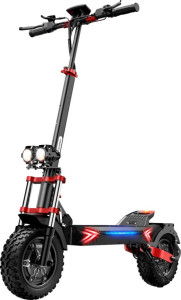
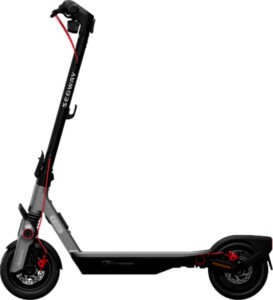
The most consequential physical difference between these two scooters is weight. The iScooter iX8 tips the scales at 24,900 g, while the Ninebot F3 Pro comes in at a notably lighter 19,300 g — a gap of roughly 5.6 kg. Both scooters fold, but folding only helps when you can comfortably carry the result: lugging an iX8 up stairs or onto public transit will feel considerably more demanding than doing the same with the F3 Pro.

Ride quality is another area where the two diverge sharply. The F3 Pro includes suspension, while the iX8 has none. The iX8 partially compensates with larger 12-inch pneumatic tires (vs. the F3 Pro's 10-inch), which do absorb some road vibration on their own — but air-filled tires alone are no substitute for a dedicated suspension system on rough or uneven surfaces. The F3 Pro also carries a superior IPX6 water-resistance rating against the iX8's IPX4, meaning the F3 Pro can tolerate directed water jets, not just light splashes — a meaningful real-world advantage for riders who commute in wet conditions.

Both scooters share a solid baseline: foldable form factor, pneumatic tires, front and rear lighting, and a companion smartphone app. However, when the differentiators are weighed together — suspension, significantly lower weight, and a stronger IP rating — the Ninebot F3 Pro holds a clear design advantage for most riders. The iX8's larger wheel diameter is a genuine but narrow offset, primarily benefiting those riding over larger obstacles or very rough terrain.

Performance:
motor power 2400W 1200W
top speed 60 km/h 25 km/h
has dual motors
climbing angle 25° 24°
has a rear brake
has a front brake
maximum weight capacity 150kg 120kg

The performance gap between these two scooters is striking. The iScooter iX8 packs a 2,400W motor and reaches a top speed of 60 km/h — double the motor output and more than twice the top speed of the Ninebot F3 Pro, which runs a 1,200W motor capped at 25 km/h. That 25 km/h ceiling on the F3 Pro is not accidental: it aligns precisely with the legal speed limit for electric scooters in many European and Asian jurisdictions, suggesting it is deliberately tuned for road-legal, urban commuting. The iX8, by contrast, is positioned squarely in high-performance territory — though riders should be aware that 60 km/h far exceeds what is legally permitted on public roads in most regions.

Where the two scooters are surprisingly close is hill-climbing: the iX8 manages 25° and the F3 Pro 24°, a difference so marginal it is effectively a tie in practice. Both also share a dual-brake setup — front and rear — which is the right configuration for safe deceleration at any speed. That said, adequate braking at 25 km/h is a very different engineering challenge than at 60 km/h, so the iX8's higher velocity demands considerably more attention to braking distance in real-world use.

On payload, the iX8 supports up to 150 kg versus the F3 Pro's 120 kg, giving it a meaningful edge for heavier riders. Overall, the performance winner depends entirely on the use case: the iScooter iX8 dominates on raw power, speed, and weight capacity, but the F3 Pro is the more pragmatic choice for riders who prioritize legal compliance and city commuting over outright performance.
Battery:
charge time 10 hours 8 hours
maximum distance per charge 70 km 70 km
has a battery level indicator
Has regenerative braking
has a removable battery
battery size 960 Wh 477 Wh

At first glance, the battery comparison looks like a straightforward win for the iScooter iX8 — it carries a 960 Wh pack, nearly double the 477 Wh of the Ninebot F3 Pro. Yet both scooters claim an identical maximum range of 70 km per charge. That raises an important insight: the iX8 requires roughly twice the stored energy to travel the same distance, which is a direct consequence of its far more powerful motor and higher operating speeds consuming energy at a much greater rate. The F3 Pro, tuned for efficient urban commuting, effectively does more with less.

Charge time reinforces this dynamic. Despite its much smaller battery, the F3 Pro charges in 8 hours, while the iX8 demands 10 hours — meaning the iX8 not only stores more energy but takes longer to replenish it. For riders who charge overnight, the difference is largely academic, but anyone working with limited charging windows will find the F3 Pro more convenient. Both scooters share regenerative braking and a battery level indicator, which are useful quality-of-life features at this tier, and neither offers a removable battery — so on-the-go swapping is off the table for both.

On paper, the iX8's larger pack sounds impressive, but the matched range figures suggest its capacity advantage is consumed by its own performance demands rather than translating into extra distance. For pure range efficiency, the F3 Pro has a clear edge; for riders who need the iX8's power output and can accept the longer charge cycle, the larger battery is simply the cost of entry — not a bonus.

Comparison Summary & Verdict

After examining every specification, it is clear that these two scooters target quite different riders. The iScooter iX8 is the powerhouse of the pair, boasting a 2400W motor, a blistering top speed of 60 km/h, a massive 960 Wh battery, and a higher 150 kg weight capacity, making it the obvious choice for riders who demand maximum performance and range endurance. The Ninebot by Segway KickScooter F3 Pro, on the other hand, wins on practicality and refinement: it is significantly lighter at 19300 g, features built-in suspension, charges faster in just 8 hours, and carries a superior IPX6 water resistance rating, making it better suited for daily urban commuters who value comfort and portability over outright power.

iScooter iX8
Buy iScooter iX8 if...

Buy the iScooter iX8 if you need maximum motor power, a much higher top speed, and a larger battery capacity for demanding rides or heavier riders.

Ninebot by Segway KickScooter F3 Pro
Buy Ninebot by Segway KickScooter F3 Pro if...

Buy the Ninebot by Segway KickScooter F3 Pro if you prioritize a lighter build, built-in suspension for a smoother ride, faster charging, and superior water resistance for daily urban commuting.