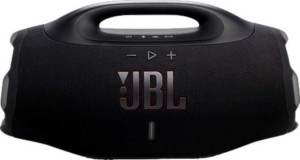
JBL Boombox 4
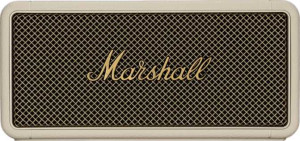
Marshall Middleton II

JBL Boombox 4 Marshall Middleton II

Common Features

  • Control panel is placed on the device on both products.
  • Both products are waterproof.
  • A travel bag is not included with either product.
  • Neither product has a touch screen.
  • Neither product has RGB lighting.
  • Neither product is a neckband speaker.
  • Neither product has a remote control.
  • Both products have stereo speakers.
  • Both products have a highest frequency of 20000 Hz.
  • Both products have a passive radiator.
  • Neither product has magnetic shielding.
  • Both products have a battery level indicator.
  • Both products have a rechargeable battery.
  • Neither product has a removable battery.
  • Neither product supports wireless charging.
  • Both products can be used wirelessly.
  • Both products support a remote smartphone.
  • Neither product has fast pairing.
  • Neither product has voice commands.
  • Neither product has a radio.
  • Both products have voice prompts.
  • Both products have a sleep timer.
  • Neither product supports pairing for stereo sound.

Main Differences

  • Ingress Protection (IP) rating is IP68 on JBL Boombox 4 and IP67 on Marshall Middleton II.
  • Volume is 28343.922024 cm³ on JBL Boombox 4 and 2479.4 cm³ on Marshall Middleton II.
  • JBL Boombox 4 has a detachable cable while Marshall Middleton II does not.
  • Weight is 5890 g on JBL Boombox 4 and 1800 g on Marshall Middleton II.
  • Height is 262.9 mm on JBL Boombox 4 and 110 mm on Marshall Middleton II.
  • Width is 506.4 mm on JBL Boombox 4 and 230 mm on Marshall Middleton II.
  • Thickness is 212.9 mm on JBL Boombox 4 and 98 mm on Marshall Middleton II.
  • JBL Boombox 4 has a subwoofer while Marshall Middleton II does not.
  • Lowest frequency is 37 Hz on JBL Boombox 4 and 45 Hz on Marshall Middleton II.
  • Audio output power is 4 x 200W on JBL Boombox 4 and 4 x 80W on Marshall Middleton II.
  • Number of microphones is 0 on JBL Boombox 4 and 1 on Marshall Middleton II.
  • Battery life is 34 hours on JBL Boombox 4 and 30 hours on Marshall Middleton II.
  • Charge time is 2 hours on JBL Boombox 4 and 3 hours on Marshall Middleton II.
  • Bluetooth version is 5.4 on JBL Boombox 4 and 5.3 on Marshall Middleton II.
  • AAC support is not available on JBL Boombox 4 but is available on Marshall Middleton II.
  • Auracast support is available on JBL Boombox 4 but not available on Marshall Middleton II.
  • Maximum Bluetooth range is 10 m on JBL Boombox 4 and 60 m on Marshall Middleton II.
Specs Comparison
JBL Boombox 4

JBL Boombox 4

Marshall Middleton II

Marshall Middleton II

Design:
Ingress Protection (IP) rating IP68 IP67
volume 28343.922024 cm³ 2479.4 cm³
control panel placed on a device
water resistance Waterproof Waterproof
travel bag is included
has a touch screen
has RGB lighting
has a detachable cable
is a neckband speaker
has a remote control
weight 5890 g 1800 g
height 262.9 mm 110 mm
width 506.4 mm 230 mm
thickness 212.9 mm 98 mm

The JBL Boombox 4 and Marshall Middleton II both offer waterproof designs, but they differ in some key areas. The Boombox 4 has an IP68 rating, making it slightly more water-resistant than the Middleton II, which carries an IP67 rating. This means the Boombox 4 can withstand being submerged in deeper water for longer periods. In terms of size, the Boombox 4 is significantly larger, with a volume of 28,343.92 cm³, compared to the Middleton II's much smaller 2,479.4 cm³. This makes the Boombox 4 a bulkier speaker overall.

Regarding portability, the Boombox 4 weighs 5,890 g, making it much heavier than the Middleton II, which weighs just 1,800 g. The Boombox 4 is also taller, wider, and thicker—standing at 262.9 mm high, 506.4 mm wide, and 212.9 mm thick, compared to the Middleton II's 110 mm height, 230 mm width, and 98 mm thickness. This size difference might make the Middleton II more suited for easy transport.

Both speakers have a control panel placed on the device, and neither comes with a travel bag. Neither speaker includes a touchscreen, RGB lighting, or remote control. Additionally, the Boombox 4 features a detachable cable, while the Middleton II does not offer this feature.

Sound quality:
has stereo speakers
has a subwoofer
highest frequency 20000 Hz 20000 Hz
lowest frequency 37 Hz 45 Hz
audio output power 4 x 200W 4 x 80W
Has a passive radiator
number of microphones 0 1
has a magnetic shielding

Both the JBL Boombox 4 and Marshall Middleton II feature stereo speakers, but there are notable differences in their audio capabilities. The Boombox 4 is equipped with a subwoofer, whereas the Middleton II does not have one. In terms of frequency range, the Boombox 4 can reach as high as 20,000 Hz and as low as 37 Hz, giving it a wider low-end frequency compared to the Middleton II, which has a lowest frequency of 45 Hz.

The Boombox 4 also has more powerful audio output, delivering 4 x 200W, compared to the Middleton II’s 4 x 80W. Both products feature a passive radiator to enhance sound performance, and neither has magnetic shielding. Additionally, the Boombox 4 has no microphones, while the Middleton II is equipped with one microphone.

Overall, the Boombox 4 offers a broader frequency range and more powerful audio output, as well as a subwoofer, which may provide deeper bass. The Middleton II, on the other hand, includes a microphone, which the Boombox 4 lacks.

Power:
Battery life 34 hours 30 hours
charge time 2 hours 3 hours
has a battery level indicator
has a rechargeable battery
has a removable battery
has wireless charging

The JBL Boombox 4 and Marshall Middleton II both offer impressive battery features, but there are some differences between them. The Boombox 4 provides a longer battery life, lasting 34 hours compared to the Middleton II's 30 hours. In terms of charging time, the Boombox 4 charges faster, taking 2 hours, while the Middleton II requires 3 hours for a full charge.

Both speakers include a battery level indicator, a rechargeable battery, and lack removable batteries or wireless charging capabilities. These features are identical between the two models.

While both products are similar in many respects, the Boombox 4 has the edge in terms of battery life and charge time, offering a bit more playtime and faster recharging.

Connectivity:
Bluetooth version 5.4 5.3
supports Bluetooth pairing using NFC
has a socket for a 3.5 mm audio jack
has an AUX input
has aptX Lossless
has LDAC
has aptX Adaptive
has aptX HD
has aptX
has aptX Low Latency
has AAC
has AirPlay
has Chromecast built-in
has Auracast
has Bluetooth LE Audio
maximum Bluetooth range 10 m 60 m
supports Wi-Fi
USB ports 1 1
Has USB Type-C
has a 3.5mm male connector
has an external memory slot
is DLNA-certified
supports Ethernet
has a microphone input

The JBL Boombox 4 and Marshall Middleton II have several similarities and differences in their connectivity options. Both speakers use USB Type-C for charging and have one USB port, but the Boombox 4 supports Bluetooth version 5.4, while the Middleton II uses Bluetooth 5.3. The Boombox 4 also supports Auracast, a feature not found in the Middleton II, which does not have this capability.

In terms of Bluetooth range, the Boombox 4 has a maximum range of 10 meters, whereas the Middleton II offers a much longer range of 60 meters. Neither speaker supports Wi-Fi or Ethernet, and both lack features like NFC Bluetooth pairing, a 3.5 mm audio jack, AUX input, aptX technologies, LDAC, AAC (for the Boombox 4), AirPlay, Chromecast built-in, or DLNA certification.

While both products offer solid connectivity with a USB port and Type-C charging, the Middleton II stands out with its longer Bluetooth range. However, the Boombox 4 supports Auracast, which the Middleton II does not.

Features:
release date July 2025 July 2025
Can be used wirelessly
supports a remote smartphone
has fast pairing
has voice commands
Has a radio
Has voice prompts
has a sleep timer

The JBL Boombox 4 and Marshall Middleton II share several similar features, including the ability to be used wirelessly, support for remote smartphone control, voice prompts, and the inclusion of a sleep timer. Both speakers also lack fast pairing, voice commands, and a built-in radio.

While both speakers have the same set of features in this group, they do not differ in any of the provided specifications. The functionality regarding wireless use, smartphone control, voice prompts, and sleep timer is identical between the two models.

Overall, the features offered by both the Boombox 4 and Middleton II are aligned, with no significant differences in this category.

Miscellaneous:
supports pairing for stereo sound

Both the JBL Boombox 4 and Marshall Middleton II do not support pairing for stereo sound. This feature is absent in both models, meaning neither can be used to create a stereo setup by pairing two speakers together for enhanced audio output.

In this particular category, the two products are identical in functionality, with no differences in the pairing capabilities for stereo sound.

Overall, neither speaker offers the ability to pair for stereo sound, making them similar in this respect.

Comparison Summary

This is a specification comparison between JBL Boombox 4 and Marshall Middleton II. Both products feature a control panel on the device, are waterproof, have stereo speakers, a passive radiator, and support wireless use with a remote smartphone, voice prompts, and a sleep timer. Key differences include size and weight, with JBL Boombox 4 measuring 262.9 mm in height, 506.4 mm in width, and weighing 5890 g, compared to Marshall Middleton II at 110 mm, 230 mm, and 1800 g. JBL Boombox 4 includes a detachable cable and a subwoofer while Marshall Middleton II does not. Audio output is 4 x 200W on JBL Boombox 4 and 4 x 80W on Marshall Middleton II. Battery life differs slightly, with 34 hours for JBL Boombox 4 and 30 hours for Marshall Middleton II, and charge times are 2 hours versus 3 hours. Connectivity variations include Bluetooth version 5.4 with Auracast on JBL Boombox 4 and version 5.3 with AAC support on Marshall Middleton II, and maximum Bluetooth range of 10 m versus 60 m.