JBL Charge 6
JBL Flip 7

JBL Charge 6 JBL Flip 7

Overview

Welcome to our in-depth specification comparison between the JBL Charge 6 and the JBL Flip 7 — two popular Bluetooth speakers from JBL that share the same IP68 waterproof rating and Bluetooth 5.4, yet take notably different approaches to size, battery life, and output power. Whether you prioritize portability or extended listening sessions, understanding where these two models diverge is key to making the right choice for your lifestyle.

Common Features

  • Both products have an IP68 ingress protection rating.
  • Both products feature 2 drivers.
  • Both products have a control panel placed on the device.
  • Both products are waterproof.
  • Neither product includes a travel bag.
  • Neither product has a touch screen.
  • Neither product has RGB lighting.
  • Both products have a detachable cable.
  • Both products reach a highest frequency of 20000 Hz.
  • Both products include a passive radiator.
  • Neither product has a noise-canceling microphone.
  • Both products have a sound pressure level of 80 dB/mW.
  • Both products have a battery level indicator.
  • Both products have a rechargeable battery.
  • Neither product has a removable battery.
  • Neither product supports wireless charging.
  • Both products use Bluetooth version 5.4.
  • Neither product supports Bluetooth pairing using NFC.
  • Neither product has a socket for a 3.5 mm audio jack or AUX input.
  • Neither product supports aptX Lossless, LDAC, aptX Adaptive, or aptX HD.
  • Both products can be used wirelessly.
  • Both products support remote smartphone control.
  • Neither product supports fast pairing.
  • Neither product has voice commands.
  • Neither product has a radio.
  • Both products have voice prompts.
  • Neither product has a mute function.
  • Both products have a sleep timer.
  • Both products support pairing for stereo sound.

Main Differences

  • Volume is 2118.4592 cm³ on JBL Charge 6 and 906.888125 cm³ on JBL Flip 7.
  • Neodymium magnet is present on JBL Charge 6 but not available on JBL Flip 7.
  • Weight is 960 g on JBL Charge 6 and 560 g on JBL Flip 7.
  • Waterproof depth rating is 1 m on JBL Charge 6 and 1.5 m on JBL Flip 7.
  • Height is 98.5 mm on JBL Charge 6 and 182.5 mm on JBL Flip 7.
  • Width is 228.8 mm on JBL Charge 6 and 71.5 mm on JBL Flip 7.
  • Thickness is 94 mm on JBL Charge 6 and 69.5 mm on JBL Flip 7.
  • Lowest frequency is 56 Hz on JBL Charge 6 and 60 Hz on JBL Flip 7.
  • Audio output power is 2 x 22.5W on JBL Charge 6 and 2 x 17.5W on JBL Flip 7.
  • Battery power is 4722 mAh on JBL Charge 6 and 4800 mAh on JBL Flip 7.
  • Battery life is 28 hours on JBL Charge 6 and 16 hours on JBL Flip 7.
  • Charge time is 3 hours on JBL Charge 6 and 2.5 hours on JBL Flip 7.
  • Power bank functionality is available on JBL Charge 6 but not available on JBL Flip 7.
Specs Comparison
JBL Charge 6

JBL Charge 6

JBL Flip 7

JBL Flip 7

Design:
Ingress Protection (IP) rating IP68 IP68
volume 2118.4592 cm³ 906.888125 cm³
drivers count 2 2
has a neodymium magnet
control panel placed on a device
water resistance Waterproof Waterproof
travel bag is included
has a touch screen
has RGB lighting
has a detachable cable
is a neckband speaker
has a remote control
weight 960 g 560 g
waterproof depth rating 1 m 1.5 m
height 98.5 mm 182.5 mm
width 228.8 mm 71.5 mm
thickness 94 mm 69.5 mm

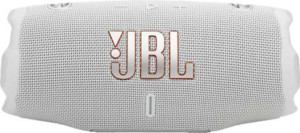
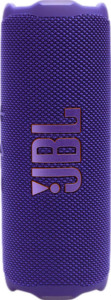
The most immediate design difference between these two JBL speakers is their form factor and portability profile. The Charge 6 is a substantially larger and heavier unit at 960 g and a volume of roughly 2118 cm³, built in a wide, horizontal orientation (228.8 × 98.5 × 94 mm). The Flip 7, by contrast, weighs only 560 g and occupies about 907 cm³ in a slim, vertical cylinder (182.5 × 71.5 × 69.5 mm). In practice, the Flip 7 is far easier to slip into a backpack or carry one-handed, while the Charge 6 is better suited to a fixed listening spot like a table or poolside setup where you are not moving it constantly.

Both speakers share an IP68 waterproof rating, but they differ in certified depth: the Flip 7 is rated to 1.5 m underwater versus the Charge 6's 1 m. This gives the Flip 7 a modest but real edge for accidental submersion scenarios, such as dropping it in a pool or kayaking. On driver technology, the Charge 6 uses neodymium magnets while the Flip 7 does not — neodymium drivers are typically more efficient and can deliver stronger magnetic force relative to their size, which is a hardware advantage for the Charge 6. Both units share identical secondary design traits: a physical control panel on the device, a detachable cable, and no touch screen, RGB lighting, or remote control.

Overall, the design group has no single clear winner — the right choice depends entirely on priorities. The Flip 7 has the edge in portability and submersion depth, making it the better travel and outdoor companion. The Charge 6 counters with neodymium driver hardware and a larger physical presence suited to stationary use. Users who value packability and ruggedness should lean toward the Flip 7; those setting up a dedicated listening spot will find the Charge 6's build more appropriate.
Sound quality:
highest frequency 20000 Hz 20000 Hz
lowest frequency 56 Hz 60 Hz
audio output power 2 x 22.5W 2 x 17.5W
Has a passive radiator
has a noise-canceling microphone
sound pressure level 80 dB/mW 80 dB/mW

The most meaningful differentiator in this group is raw output power. The Charge 6 delivers 2 × 22.5W versus the Flip 7's 2 × 17.5W — a combined difference of 10W that translates to noticeably greater headroom at high volumes. In practical terms, this makes the Charge 6 better suited to filling larger outdoor spaces or competing with ambient noise like wind and crowds, where the Flip 7 may begin to compress or lose dynamic clarity at its ceiling.

On frequency response, both speakers reach the same 20,000 Hz high-frequency ceiling, but the Charge 6 extends slightly deeper into the bass at 56 Hz compared to the Flip 7's 60 Hz. Those 4 Hz on paper are a modest but real advantage — the Charge 6 can reproduce slightly more sub-bass content before roll-off begins, which contributes to a fuller, warmer low end. Both units use a passive radiator to reinforce bass from their enclosures, a design choice that helps each punch above its physical size. Sensitivity is identical at 80 dB/mW, meaning neither speaker is inherently more efficient at converting power into perceived loudness.

The Charge 6 holds a clear edge in this group. Its higher wattage and marginally lower bass extension make it the stronger performer for demanding listening environments. The Flip 7 is no slouch acoustically, but given the identical sensitivity and shared passive radiator design, the power and frequency advantages consistently favor the Charge 6 when sound output quality is the deciding factor.

Power:
battery power 4722 mAh 4800 mAh
Battery life 28 hours 16 hours
charge time 3 hours 2.5 hours
has a battery level indicator
has a rechargeable battery
has a removable battery
has wireless charging

Battery capacity tells only part of the power story here. Both speakers carry nearly identical cells — 4722 mAh in the Charge 6 versus 4800 mAh in the Flip 7 — yet their rated runtimes diverge dramatically: 28 hours for the Charge 6 against just 16 hours for the Flip 7. The implication is that the Flip 7 drives its amplifier harder relative to its battery, burning through a comparable cell in far less time. For weekend trips or situations where charging access is limited, that 12-hour gap is substantial and practically meaningful.

Charging speed slightly favors the Flip 7, which refills in 2.5 hours compared to the Charge 6's 3 hours. That half-hour difference is minor in isolation, but combined with the Flip 7's shorter runtime, it matters more — users will simply be plugging it in more often. Both speakers share the same quality-of-life features: a battery level indicator, a non-removable rechargeable cell, and no wireless charging support.

The Charge 6 wins this group decisively on the metric that matters most to most users: endurance. Squeezing 28 hours from a battery nearly identical in size to the Flip 7's is a meaningful engineering efficiency advantage, and it makes the Charge 6 the stronger choice for anyone prioritizing long untethered listening sessions.

Connectivity:
Bluetooth version 5.4 5.4
supports Bluetooth pairing using NFC
has a socket for a 3.5 mm audio jack
has an AUX input
has aptX Lossless
has LDAC
has aptX Adaptive
has aptX HD
has aptX
has aptX Low Latency
has AAC
has AirPlay
has Chromecast built-in
has Auracast
has Bluetooth LE Audio
maximum Bluetooth range 10 m 10 m
supports Wi-Fi
USB ports 1 1
Has USB Type-C
has a 3.5mm male connector
has an external memory slot
is DLNA-certified
supports Ethernet
has a microphone input

Connectivity is the one group in this comparison where the two speakers are in complete lockstep. Both run Bluetooth 5.4 — the current leading standard — which brings improved connection stability, lower power consumption during transmission, and better handling of congested wireless environments compared to older iterations. Both cap out at a 10 m Bluetooth range, which is typical for portable speakers in this class and sufficient for most indoor and personal outdoor use.

A notable shared feature is Auracast support, a Bluetooth broadcast technology that allows one device to stream audio to multiple receivers simultaneously without traditional pairing. This is still an emerging capability in the consumer space, but it opens the door to shared listening scenarios — syncing with other Auracast-enabled speakers or devices in public or group settings. Neither speaker supports higher-fidelity codecs like LDAC or aptX, nor do they offer Wi-Fi, AirPlay, or Chromecast, keeping the feature set focused and straightforward. Both include a single USB-C port, primarily for charging, and drop the 3.5mm audio jack entirely.

This group is a complete tie. Every connectivity specification is identical across the Charge 6 and Flip 7, from Bluetooth version and range to codec support and port configuration. Connectivity should not factor into a purchase decision between these two models.

Features:
release date March 2025 March 2025
Can be used wirelessly
supports a remote smartphone
has fast pairing
has voice commands
Has a radio
Has voice prompts
has a mute function
works as a power bank
has a sleep timer

Across most of the features in this group, the two speakers are evenly matched. Both support wireless use, smartphone remote control, voice prompts, and a sleep timer — a solid shared baseline that covers the practical needs of most users. Neither offers fast pairing, voice commands, or a mute function, so there are no hidden gaps to watch for on either side.

The single differentiating feature here is significant: the Charge 6 can function as a power bank, allowing it to charge other devices directly from its battery. Given its large 4722 mAh cell and long runtime, this is a genuinely useful capability in the field — it means the Charge 6 can top up a smartphone during a camping trip or outdoor event without requiring a separate power source. The Flip 7 offers no such functionality, which is a tangible omission for users who pack light and rely on one device to serve multiple roles.

The Charge 6 takes a clear edge in this group purely on the strength of its power bank capability. Everything else is identical, but the ability to act as an emergency charger adds a layer of utility that the Flip 7 simply cannot match.

Miscellaneous:
supports pairing for stereo sound

This group contains a single shared specification: both the Charge 6 and Flip 7 support stereo pairing, meaning two units of the same model can be linked together to create a dedicated left and right channel configuration. For listeners who already own — or plan to own — two of the same speaker, this unlocks a noticeably wider soundstage compared to a single unit playing in mono, which is a meaningful upgrade for music listening in a room or outdoor space.

Since both speakers offer this capability equally, this group is a complete tie and provides no basis for choosing one over the other. The decision remains with the other specification groups covered in this comparison.

Comparison Summary & Verdict

After examining every specification, it is clear that these two JBL speakers serve distinct audiences. The JBL Charge 6 stands out with its significantly longer 28-hour battery life, higher audio output power of 2 x 22.5W, deeper bass response starting at 56 Hz, and the added convenience of functioning as a power bank — making it the stronger companion for extended outdoor use or travel. The JBL Flip 7, on the other hand, wins on portability, being considerably lighter at 560 g and more compact, while also offering a slightly deeper waterproof rating of 1.5 m and a faster 2.5-hour charge time. Both share stereo pairing, voice prompts, and a sleep timer, so the core feature set is well matched. Choose the Charge 6 if endurance and power matter most; choose the Flip 7 if you value a slim, lightweight form factor you can take anywhere.

JBL Charge 6
Buy JBL Charge 6 if...

Buy the JBL Charge 6 if you need a high-endurance speaker with up to 28 hours of playtime, stronger audio output, and the ability to charge your other devices on the go.

JBL Flip 7
Buy JBL Flip 7 if...

Buy the JBL Flip 7 if you want a lighter, more compact speaker that is easier to carry daily and offers a slightly deeper waterproof rating with a faster charge time.