JBL Charge 6
JBL Partybox Encore 2

JBL Charge 6 JBL Partybox Encore 2

Overview

Welcome to this in-depth specification comparison between the JBL Charge 6 and the JBL Partybox Encore 2. These two JBL speakers serve notably different audiences, and exploring their contrasts reveals a fascinating range of design priorities. From portability and water resistance to battery endurance and connectivity options, each product makes deliberate trade-offs worth examining closely before making a purchasing decision.

Common Features

  • Both products have a control panel placed on the device.
  • Neither product includes a travel bag.
  • Neither product has a touch screen.
  • Neither product has RGB lighting.
  • Both products have a detachable cable.
  • Neither product is a neckband speaker.
  • Neither product has a remote control.
  • Both products share the same highest frequency of 20000 Hz.
  • Both products have a battery capacity of 4722 mAh.
  • Both products have a battery level indicator.
  • Both products have a rechargeable battery.
  • Neither product has a removable battery.
  • Neither product supports wireless charging.
  • Both products use Bluetooth version 5.4.
  • Neither product supports Bluetooth pairing using NFC.
  • Neither product has a 3.5 mm audio jack socket.
  • Neither product supports aptX Lossless, LDAC, aptX Adaptive, aptX HD, or aptX.
  • Both products can be used wirelessly.
  • Both products support remote smartphone control.
  • Neither product has fast pairing.
  • Neither product supports voice commands.
  • Neither product has a radio.
  • Both products have voice prompts.
  • Neither product has a mute function.
  • Both products have a sleep timer.
  • Both products support pairing for stereo sound.

Main Differences

  • Ingress Protection rating is IP68 on JBL Charge 6 and IPX4 on JBL Partybox Encore 2.
  • Volume is 2118.4592 cm³ on JBL Charge 6 and 28452.0501 cm³ on JBL Partybox Encore 2.
  • A neodymium magnet is present on JBL Charge 6 but not available on JBL Partybox Encore 2.
  • Water resistance is waterproof on JBL Charge 6 and sweat resistant on JBL Partybox Encore 2.
  • Weight is 960 g on JBL Charge 6 and 6400 g on JBL Partybox Encore 2.
  • Height is 98.5 mm on JBL Charge 6 and 338.6 mm on JBL Partybox Encore 2.
  • Width is 228.8 mm on JBL Charge 6 and 319.5 mm on JBL Partybox Encore 2.
  • Thickness is 94 mm on JBL Charge 6 and 263 mm on JBL Partybox Encore 2.
  • Lowest frequency is 56 Hz on JBL Charge 6 and 40 Hz on JBL Partybox Encore 2.
  • A passive radiator is present on JBL Charge 6 but not available on JBL Partybox Encore 2.
  • Battery life is 28 hours on JBL Charge 6 and 15 hours on JBL Partybox Encore 2.
  • Charge time is 3 hours on JBL Charge 6 and 3.5 hours on JBL Partybox Encore 2.
  • AUX input is available on JBL Partybox Encore 2 but not present on JBL Charge 6.
  • Maximum Bluetooth range is 10 m on JBL Charge 6 and 30 m on JBL Partybox Encore 2.
  • A microphone input is available on JBL Partybox Encore 2 but not present on JBL Charge 6.
  • Power bank functionality is available on JBL Charge 6 but not present on JBL Partybox Encore 2.
Specs Comparison
JBL Charge 6

JBL Charge 6

JBL Partybox Encore 2

JBL Partybox Encore 2

Design:
Ingress Protection (IP) rating IP68 IPX4
volume 2118.4592 cm³ 28452.0501 cm³
has a neodymium magnet
control panel placed on a device
water resistance Waterproof Sweat resistant
travel bag is included
has a touch screen
has RGB lighting
has a detachable cable
is a neckband speaker
has a remote control
weight 960 g 6400 g
height 98.5 mm 338.6 mm
width 228.8 mm 319.5 mm
thickness 94 mm 263 mm

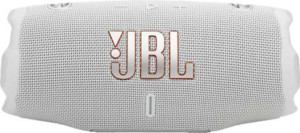
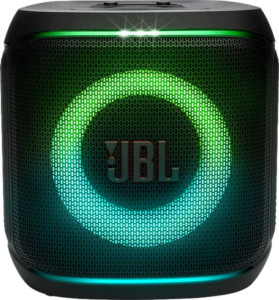
The most defining design difference between these two speakers is sheer scale. The JBL Charge 6 is a compact, portable cylinder weighing just 960 g with a volume of roughly 2,118 cm³, while the Partybox Encore 2 is a full-sized party speaker tipping the scales at 6,400 g with a volume over 28,452 cm³ — more than 13 times larger. In practical terms, the Charge 6 fits in a bag or backpack and can be carried with one hand, whereas the Encore 2 is a two-handed, floor-standing unit designed to stay in one place or be transported by its handle.

Water resistance is another critical divergence. The Charge 6 carries an IP68 rating, meaning it is fully submersible and genuinely waterproof — safe at the pool, beach, or in the rain without hesitation. The Encore 2 is rated only IPX4, which means it can handle light splashes and sweat but should never be exposed to rain or water immersion. This makes the Encore 2 a predominantly indoor or covered-outdoor device from a durability standpoint. Additionally, the Charge 6 includes a neodymium magnet, which contributes to a more efficient, lightweight driver construction — the Encore 2 does not share this trait.

On shared design traits, both speakers feature an on-device control panel and a detachable cable, and neither includes a touch screen, RGB lighting, or a remote control — keeping interfaces straightforward. Overall, the Charge 6 holds a clear design edge for portability and ruggedness, while the Encore 2 is purpose-built as a stationary, high-output party speaker where size is a feature, not a drawback.
Sound quality:
highest frequency 20000 Hz 20000 Hz
lowest frequency 56 Hz 40 Hz
Has a passive radiator

Both speakers share an identical upper frequency ceiling of 20,000 Hz, covering the full range of human hearing on the high end. The meaningful separation comes at the low end: the Partybox Encore 2 reaches down to 40 Hz, while the Charge 6 bottoms out at 56 Hz. That 16 Hz difference may look small numerically, but in practice it places the Encore 2 deeper into sub-bass territory — capturing the low rumble of kick drums, bass synths, and cinematic content that the Charge 6 simply cannot reproduce at the same depth.

Interestingly, the Charge 6 compensates for its physical size limitations with a passive radiator — a tuned, unpowered membrane that enhances low-frequency output without requiring a larger enclosure. It is a well-established engineering trick to squeeze more bass out of compact speakers. The Encore 2, being a much larger cabinet, does not need this workaround; its physical volume does the heavy lifting naturally, allowing drivers to move more air and produce deeper bass organically.

For sound quality in this category, the Partybox Encore 2 holds a clear edge on raw frequency reach. However, the Charge 6 deserves credit for achieving competitive low-end performance for its size, thanks to its passive radiator design. If bass extension and room-filling sound are the priority, the Encore 2 wins outright; if you want the most acoustically capable speaker relative to its footprint, the Charge 6 punches well above its weight.

Power:
battery power 4722 mAh 4722 mAh
Battery life 28 hours 15 hours
charge time 3 hours 3.5 hours
has a battery level indicator
has a rechargeable battery
has a removable battery
has wireless charging

Perhaps the most surprising finding in this category is that both speakers share an identical 4,722 mAh battery capacity — remarkable given the Partybox Encore 2 is over six times heavier and dramatically larger. That shared capacity tells only part of the story, though. The Charge 6 stretches that same battery to 28 hours of playback, while the Partybox Encore 2 manages just 15 hours. The Encore 2's larger, more power-hungry drivers and amplification circuitry consume energy at nearly twice the rate, which is the expected trade-off for higher output volume in a party-class speaker.

In real-world terms, 28 hours means the Charge 6 can comfortably cover multiple days of moderate use before needing a charge — ideal for camping trips or travel where outlets are scarce. The Encore 2's 15 hours is still respectable for a speaker of its class, covering a full evening event with room to spare, but its use case is inherently more tied to locations where recharging is accessible. Charge times are nearly identical at 3 hours versus 3.5 hours, a negligible difference in practice.

The Charge 6 holds a clear edge in this category. Delivering nearly double the battery life from the same capacity is a meaningful engineering achievement, and for users who prioritize untethered, on-the-go use, that endurance advantage is a significant real-world benefit.

Connectivity:
Bluetooth version 5.4 5.4
supports Bluetooth pairing using NFC
has a socket for a 3.5 mm audio jack
has an AUX input
has aptX Lossless
has LDAC
has aptX Adaptive
has aptX HD
has aptX
has aptX Low Latency
has AAC
has AirPlay
has Chromecast built-in
has Auracast
has Bluetooth LE Audio
maximum Bluetooth range 10 m 30 m
supports Wi-Fi
USB ports 1 1
Has USB Type-C
has a 3.5mm male connector
has an external memory slot
is DLNA-certified
supports Ethernet
has a microphone input

At the foundation, both speakers are evenly matched on core wireless technology: identical Bluetooth 5.4 and shared support for Auracast, the broadcast audio standard that allows one source to stream to multiple listeners simultaneously. Both also include a USB Type-C port, and neither supports Wi-Fi, NFC pairing, or any high-resolution Bluetooth codec such as aptX or LDAC. For the majority of streaming use cases, the two are functionally equivalent out of the box.

The divergence comes in range and physical inputs. The Partybox Encore 2 offers a 30 m Bluetooth range versus just 10 m on the Charge 6 — a threefold difference that matters considerably in larger spaces like backyards, halls, or open venues where the source device may not be nearby. Beyond that, the Encore 2 adds an AUX input and a microphone input, neither of which the Charge 6 provides. The AUX input enables wired connections from DJ mixers, instruments, or older devices, while the mic input opens the door to live vocal use — features that are squarely aligned with the Encore 2's party-speaker identity.

For connectivity, the Partybox Encore 2 has a clear advantage. Its extended Bluetooth range, wired audio input, and microphone support give it substantially more versatility in real-world event scenarios. The Charge 6 covers the essentials cleanly, but its connectivity set is deliberately streamlined for simple, personal wireless listening rather than multi-source or live-performance setups.

Features:
release date March 2025 February 2025
Can be used wirelessly
supports a remote smartphone
has fast pairing
has voice commands
Has a radio
Has voice prompts
has a mute function
works as a power bank
has a sleep timer

Across most feature categories, these two speakers are remarkably well-matched. Both support wireless use and smartphone remote control, include voice prompts for status feedback, and offer a sleep timer — a useful convenience for winding down music automatically. Neither supports fast pairing, voice commands, or a mute function, keeping the feature set lean and focused on core playback functionality.

The single differentiator in this group is the Charge 6's ability to function as a power bank, charging external devices via its USB-C port. The Partybox Encore 2 does not offer this. For a portable speaker used on outdoor trips or away from power outlets, this is a genuinely practical bonus — it means the Charge 6 can serve as an emergency top-up for a smartphone when needed, adding a layer of utility that goes beyond audio.

Given how closely aligned these two products are across this spec group, the Charge 6 edges ahead solely on the strength of its power bank capability. It is a small but meaningful real-world advantage, and one that fits naturally with the portable, on-the-go lifestyle the Charge 6 is designed for.

Miscellaneous:
supports pairing for stereo sound

This category contains a single shared specification: both the JBL Charge 6 and the Partybox Encore 2 support stereo pairing, meaning two units of the same model can be linked together to deliver true left/right channel separation. For listeners who own two of either speaker, this unlocks a noticeably wider, more immersive soundstage compared to mono playback from a single unit.

With no differences to analyze here, this group is a complete tie. Both products offer the same capability on equal footing, and neither holds any advantage over the other based on the available data.

Comparison Summary & Verdict

After reviewing all the specifications, it is clear that these two speakers occupy very different niches. The JBL Charge 6 stands out with its IP68 waterproof rating, lighter 960 g build, impressive 28-hour battery life, and the added convenience of functioning as a power bank — making it ideal for outdoor adventurers and travelers who value portability. The JBL Partybox Encore 2, on the other hand, targets those who prioritize a bigger sound experience, offering a deeper 40 Hz bass response, a wider 30 m Bluetooth range, and inputs for both AUX and microphone connections. Choose the Charge 6 for on-the-go durability; choose the Partybox Encore 2 for party and performance use cases.

JBL Charge 6
Buy JBL Charge 6 if...

Buy the JBL Charge 6 if you need a lightweight, fully waterproof speaker with a longer battery life and the ability to charge your other devices on the go.

JBL Partybox Encore 2
Buy JBL Partybox Encore 2 if...

Buy the JBL Partybox Encore 2 if you want deeper bass, a wider Bluetooth range, and the flexibility of AUX and microphone inputs for parties or live use.