JBL Charge 6
LG XBoom Bounce

JBL Charge 6 LG XBoom Bounce

Overview

When choosing between the JBL Charge 6 and the LG XBoom Bounce, you are weighing two capable portable speakers that share a waterproof build and solid feature sets, yet diverge in meaningful ways. From battery life and power output to connectivity options and portability, each product brings its own strengths to the table. Read on as we break down the full spec-by-spec comparison to help you find the right fit.

Common Features

  • Both products feature 2 drivers.
  • Both products have a control panel placed on the device.
  • Both products are waterproof.
  • A travel bag is not included with either product.
  • Neither product has a touch screen.
  • Both products have a detachable cable.
  • Neither product is a neckband speaker.
  • Neither product includes a remote control.
  • Both products have a passive radiator.
  • Neither product has a noise-canceling microphone.
  • Both products have a charge time of 3 hours.
  • Both products have a battery level indicator.
  • Both products have a rechargeable battery.
  • Neither product supports wireless charging.
  • Neither product supports Bluetooth pairing using NFC.
  • Neither product has a 3.5 mm audio jack socket or AUX input.
  • Neither product supports aptX Lossless, LDAC, aptX Adaptive, aptX HD, or aptX.
  • Both products can be used wirelessly and support remote smartphone control.
  • Neither product has fast pairing or a radio.
  • Both products have voice prompts, a sleep timer, and support pairing for stereo sound.

Main Differences

  • The Ingress Protection rating is IP68 on the JBL Charge 6 and IP67 on the LG XBoom Bounce.
  • The volume is 2118.46 cm³ on the JBL Charge 6 and 2435.59 cm³ on the LG XBoom Bounce.
  • A neodymium magnet is present in the JBL Charge 6 but not in the LG XBoom Bounce.
  • RGB lighting is available on the LG XBoom Bounce but not on the JBL Charge 6.
  • The weight is 960 g on the JBL Charge 6 and 1315.42 g on the LG XBoom Bounce.
  • The height is 98.5 mm on the JBL Charge 6 and 99.06 mm on the LG XBoom Bounce.
  • The width is 228.8 mm on the JBL Charge 6 and 261.62 mm on the LG XBoom Bounce.
  • The thickness is 94 mm on the JBL Charge 6 and 93.98 mm on the LG XBoom Bounce.
  • The audio output power is 2 x 22.5W on the JBL Charge 6 and 3 x 13.3W on the LG XBoom Bounce.
  • Battery life is 28 hours on the JBL Charge 6 and 30 hours on the LG XBoom Bounce.
  • A removable battery is available on the LG XBoom Bounce but not on the JBL Charge 6.
  • The Bluetooth version is 5.4 on the JBL Charge 6 and 5.3 on the LG XBoom Bounce.
  • AAC support is present on the LG XBoom Bounce but not available on the JBL Charge 6.
  • Bluetooth LE Audio support is present on the LG XBoom Bounce but not available on the JBL Charge 6.
  • Voice commands are supported on the LG XBoom Bounce but not on the JBL Charge 6.
  • The JBL Charge 6 can work as a power bank, while the LG XBoom Bounce cannot.
Specs Comparison
JBL Charge 6

JBL Charge 6

LG XBoom Bounce

LG XBoom Bounce

Design:
Ingress Protection (IP) rating IP68 IP67
volume 2118.4592 cm³ 2435.592935256 cm³
drivers count 2 2
has a neodymium magnet
control panel placed on a device
water resistance Waterproof Waterproof
travel bag is included
has a touch screen
has RGB lighting
has a detachable cable
is a neckband speaker
has a remote control
weight 960 g 1315.42 g
waterproof depth rating 1 m 1 m
height 98.5 mm 99.06 mm
width 228.8 mm 261.62 mm
thickness 94 mm 93.98 mm

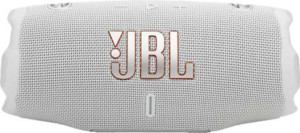
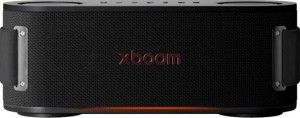
Both the JBL Charge 6 and the LG XBoom Bounce are waterproof cylindrical-style speakers sharing several structural similarities: each carries two drivers, includes a detachable cable, features an on-device control panel, and lacks a touch screen or remote control. Neither ships with a travel bag, so portability accessories are on the user. At a high level, they occupy the same category — but the physical differences between them are more significant than a quick glance suggests.

The most impactful real-world divergence is weight. The Charge 6 comes in at 960 g versus the XBoom Bounce's 1315 g — a difference of over 350 g, which is roughly the weight of a large apple sitting permanently on one side of the scale. For a speaker you're dropping in a bag or carrying to a beach, that gap is genuinely noticeable. The Charge 6 is also the more compact option, with a volume of ~2118 cm³ compared to the XBoom Bounce's ~2436 cm³, driven largely by its narrower width (228.8 mm vs 261.6 mm). The Charge 6 also uses a neodymium magnet, which the XBoom Bounce lacks — neodymium magnets are lighter and more powerful for their size, contributing to a more efficient driver assembly. On water resistance, the Charge 6 holds an IP68 rating versus the XBoom Bounce's IP67, meaning the Charge 6 is rated for deeper or longer submersion, though both share the same 1 m waterproof depth rating per the listed specs.

Where the XBoom Bounce carves out its own identity is with RGB lighting, which the Charge 6 entirely omits. For users who prioritize visual flair at parties or in dim environments, that's a meaningful aesthetic differentiator. Overall though, from a pure design standpoint, the JBL Charge 6 has the edge: it is lighter, more compact, uses a neodymium magnet, and carries a marginally superior IP rating — making it the more portable and technically refined option of the two.
Sound quality:
audio output power 2 x 22.5W 3 x 13.3W
Has a passive radiator
has a noise-canceling microphone

The audio output configurations here tell an interesting story. The JBL Charge 6 runs 2 × 22.5W for a total of 45W, while the LG XBoom Bounce spreads its power across 3 × 13.3W, totaling roughly 39.9W. On raw wattage alone, the Charge 6 edges ahead — and in practical terms, more total output generally translates to greater headroom at high volumes before the sound starts to compress or distort. The XBoom Bounce's three-driver arrangement could theoretically allow for more directional sound distribution, but with lower per-driver power, each unit is working within tighter constraints.

Shared between both is a passive radiator, which is a meaningful design choice. Passive radiators enhance low-frequency reproduction without requiring a dedicated powered subwoofer, effectively giving both speakers a fuller, more extended bass response than their physical size would otherwise allow. This is a genuine advantage for portable speakers in this class, and the fact that both include one puts them on equal footing in terms of bass architecture.

Neither speaker includes a noise-canceling microphone, so speakerphone performance is likely comparable and unremarkable for both. Overall, the JBL Charge 6 holds the edge in this group purely on the basis of higher total power output — 45W versus ~40W is a tangible gap that favors the Charge 6 when pushing toward maximum volume levels.

Power:
Battery life 28 hours 30 hours
charge time 3 hours 3 hours
has a battery level indicator
has a rechargeable battery
has a removable battery
has wireless charging

Battery life is remarkably close between these two: the LG XBoom Bounce claims 30 hours versus 28 hours for the JBL Charge 6. A two-hour difference at this range is unlikely to be felt in everyday use — both will comfortably last a full day of outdoor listening or a long weekend camping trip without needing a top-up. Charge time is identical at 3 hours for both, meaning neither has an advantage in how quickly you can get back to full power.

The more meaningful divergence is the XBoom Bounce's removable battery — a feature the Charge 6 lacks entirely. In practice, this is a significant long-term ownership advantage: if the battery degrades after a few years of charge cycles, XBoom Bounce users can swap it out and restore the speaker to full endurance without a service visit. Charge 6 owners, by contrast, are locked to whatever capacity the internal battery retains over time. Both speakers include a battery level indicator, so neither leaves you guessing about remaining charge during use.

On balance, the LG XBoom Bounce takes the edge in this category. The marginally longer battery life is almost negligible, but the removable battery is a genuine practical advantage that compounds over the lifespan of the product — making it the stronger choice for users who plan to keep their speaker for several years.

Connectivity:
Bluetooth version 5.4 5.3
supports Bluetooth pairing using NFC
has a socket for a 3.5 mm audio jack
has an AUX input
has aptX Lossless
has LDAC
has aptX Adaptive
has aptX HD
has aptX
has aptX Low Latency
has AAC
has AirPlay
has Chromecast built-in
has Auracast
has Bluetooth LE Audio
maximum Bluetooth range 10 m 10 m
supports Wi-Fi
USB ports 1 1
Has USB Type-C
has a 3.5mm male connector
has an external memory slot
is DLNA-certified
supports Ethernet
has a microphone input

Wired connectivity is identical across both speakers — a single USB-C port, no 3.5mm jack, no AUX input, and no external memory slot. Neither supports Wi-Fi, AirPlay, or Chromecast, so both are strictly Bluetooth-first devices. Maximum range is a shared 10 m, and both support Auracast, the Bluetooth broadcast standard that allows a single source to stream simultaneously to multiple compatible speakers — a genuinely useful feature for filling larger spaces without pairing chains.

The Bluetooth version gap is small but real: the JBL Charge 6 runs Bluetooth 5.4 against the LG XBoom Bounce's 5.3. In everyday use this difference is marginal — both will deliver stable connections at the same rated range. More consequential is what each speaker layers on top of that connection. The XBoom Bounce adds AAC codec support and Bluetooth LE Audio, neither of which the Charge 6 offers. AAC is the native codec for Apple devices, meaning iPhone and iPad users will get higher-quality wireless audio on the XBoom Bounce by default. LE Audio, meanwhile, is the architectural foundation for next-generation Bluetooth audio — lower power consumption, improved multi-stream capabilities, and better integration with hearing devices going forward.

Despite the Charge 6's marginally newer Bluetooth version, the LG XBoom Bounce holds the connectivity edge. AAC support alone makes a tangible difference for the large portion of users in the Apple ecosystem, and LE Audio positions it better for compatibility with future devices and standards.

Features:
release date March 2025 March 2025
Can be used wirelessly
supports a remote smartphone
has fast pairing
has voice commands
Has a radio
Has voice prompts
has a mute function
works as a power bank
has a sleep timer

Much of the feature set here is shared ground: both speakers operate wirelessly, support remote smartphone control, include voice prompts, and offer a sleep timer — making them functionally similar for everyday use. Neither supports fast pairing, which would have been a convenience win for either side.

The two meaningful differentiators cut in opposite directions. The JBL Charge 6 can function as a power bank, allowing it to charge other devices — phones, earbuds, or anything USB-C — directly from its own battery. For outdoor or travel use cases, this is a genuinely practical utility that transforms the speaker into a backup power source when a wall outlet isn't available. The LG XBoom Bounce, on the other hand, adds voice command support, enabling hands-free control without reaching for a phone or pressing a button. Depending on your workflow, that could mean adjusting volume, skipping tracks, or triggering an assistant entirely by voice.

Which advantage matters more comes down to use case. For travelers and outdoor users who want multi-purpose utility, the Charge 6's power bank function is a harder-to-replace capability. For home or stationary use where hands-free convenience is prioritized, voice commands on the XBoom Bounce are the more appealing differentiator. Given that the power bank feature addresses a more universal and situationally critical need, the JBL Charge 6 holds a slight edge in this category — but users who rarely need to charge on the go may find the XBoom Bounce's voice control equally compelling.

Miscellaneous:
supports pairing for stereo sound

The only data point in this category is stereo pairing, and both the JBL Charge 6 and the LG XBoom Bounce support it equally. This means two units of the same model can be linked together to split audio into dedicated left and right channels — a worthwhile upgrade from mono playback when you want a wider, more immersive soundstage without investing in a full speaker system.

This is a complete tie. With a single shared spec and no differentiating data points in this group, neither speaker holds any advantage here.

Comparison Summary & Verdict

Both the JBL Charge 6 and the LG XBoom Bounce are well-rounded portable speakers, but they cater to slightly different priorities. The JBL Charge 6 stands out with its superior IP68 waterproofing, lighter 960 g weight, newer Bluetooth 5.4, and the handy ability to work as a power bank, making it the better pick for outdoor adventurers and travellers who value durability and utility. The LG XBoom Bounce, on the other hand, appeals to those who want a more immersive experience at home or at a gathering, thanks to its RGB lighting, removable battery, AAC and Bluetooth LE Audio support, voice commands, and a marginally longer 30-hour battery life. Choose the JBL Charge 6 for rugged portability; choose the LG XBoom Bounce for expressive, feature-rich listening sessions.

JBL Charge 6
Buy JBL Charge 6 if...

Buy the JBL Charge 6 if you need a lighter, more rugged speaker with IP68 waterproofing, the convenience of using it as a power bank, and the latest Bluetooth 5.4 connectivity.

LG XBoom Bounce
Buy LG XBoom Bounce if...

Buy the LG XBoom Bounce if you want a visually striking speaker with RGB lighting, a removable battery, voice commands, and broader codec support including AAC and Bluetooth LE Audio.