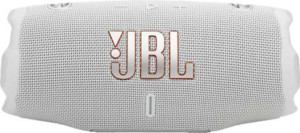
JBL Charge 6
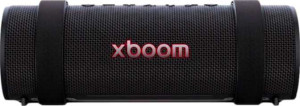
LG XBoom Grab

JBL Charge 6 LG XBoom Grab

Overview

Welcome to our in-depth comparison of the JBL Charge 6 and the LG XBoom Grab — two capable portable Bluetooth speakers with distinct personalities. While both share a waterproof build, passive radiator design, and solid wireless feature sets, they diverge in key areas such as battery life, physical dimensions, and extra functionality. Read on to find out which speaker best matches your lifestyle and listening needs.

Common Features

  • Both the JBL Charge 6 and LG XBoom Grab have a control panel placed on the device.
  • Both products are waterproof.
  • Neither product includes a travel bag.
  • Neither product has a touch screen.
  • Both products have a detachable cable.
  • Neither product is a neckband speaker.
  • Neither product has a remote control.
  • Both products have a passive radiator.
  • Neither product has a noise-canceling microphone.
  • Both products have a charge time of 3 hours.
  • Both products have a battery level indicator.
  • Both products have a rechargeable battery.
  • Neither product has a removable battery.
  • Neither product supports wireless charging.
  • Neither product supports Bluetooth pairing using NFC.
  • Neither product has a 3.5 mm audio jack socket or AUX input.
  • Neither product supports aptX, aptX HD, aptX Adaptive, aptX Lossless, or LDAC.
  • Both products can be used wirelessly and support remote smartphone control.
  • Neither product has fast pairing or a built-in radio.
  • Both products have voice prompts, a sleep timer, and support stereo sound pairing.

Main Differences

  • The Ingress Protection rating is IP68 on the JBL Charge 6 and IP67 on the LG XBoom Grab.
  • The volume is 2118.46 cm³ on the JBL Charge 6 and 1143.87 cm³ on the LG XBoom Grab.
  • The weight is 960 g on the JBL Charge 6 and 680.39 g on the LG XBoom Grab.
  • The height is 98.5 mm on the JBL Charge 6 and 73.66 mm on the LG XBoom Grab.
  • The width is 228.8 mm on the JBL Charge 6 and 210.82 mm on the LG XBoom Grab.
  • The thickness is 94 mm on the JBL Charge 6 and 73.66 mm on the LG XBoom Grab.
  • Battery life is 28 hours on the JBL Charge 6 and 20 hours on the LG XBoom Grab.
  • AAC support is available on the LG XBoom Grab but not on the JBL Charge 6.
  • Voice command support is present on the LG XBoom Grab but not available on the JBL Charge 6.
  • The JBL Charge 6 can work as a power bank, while the LG XBoom Grab cannot.
Specs Comparison
JBL Charge 6

JBL Charge 6

LG XBoom Grab

LG XBoom Grab

Design:
Ingress Protection (IP) rating IP68 IP67
volume 2118.4592 cm³ 1143.866228392 cm³
control panel placed on a device
water resistance Waterproof Waterproof
travel bag is included
has a touch screen
has a detachable cable
is a neckband speaker
has a remote control
weight 960 g 680.39 g
height 98.5 mm 73.66 mm
width 228.8 mm 210.82 mm
thickness 94 mm 73.66 mm

The most immediate design difference between the JBL Charge 6 and the LG XBoom Grab is sheer physical scale. The Charge 6 displaces nearly 2118 cm³ of volume against the XBoom Grab's 1144 cm³, making it roughly 85% bulkier. That gap is reflected in weight too: the Charge 6 tips the scales at 960 g, while the XBoom Grab comes in at a noticeably lighter 680 g. In practice, the XBoom Grab is the easier speaker to carry one-handed, slip into a bag, or mount in tight spaces, whereas the Charge 6 feels more like a fixture you set up and leave in place.

On water resistance, both are rated waterproof, but the Charge 6 holds a slight technical edge with an IP68 certification versus the XBoom Grab's IP67. IP68 implies the unit can withstand continuous submersion beyond the standard one-meter depth test, making it marginally better suited for poolside or boating use where accidental dunking is a real risk. For everyday splash and rain exposure, however, IP67 is perfectly adequate and the practical difference is minimal for most users.

On shared design traits the two speakers are closely matched: both feature an on-device control panel, a detachable cable, and no travel bag, touch screen, or remote control. The edge in this group belongs to the LG XBoom Grab for portability — its significantly lower weight and more compact footprint make it the better companion for users who prioritize on-the-go convenience — while the JBL Charge 6 counters with a marginally superior IP rating for buyers who need maximum water-resistance confidence.

Sound quality:
Has a passive radiator
has a noise-canceling microphone

Within the sound quality spec group, the JBL Charge 6 and the LG XBoom Grab share identical configurations: both employ a passive radiator and neither includes a noise-canceling microphone. A passive radiator is a meaningful design choice — it reinforces low-frequency output without requiring an additional powered driver, allowing engineers to extract deeper, fuller bass from a compact enclosure. Its presence in both speakers signals that each manufacturer has prioritized bass extension as part of the listening experience.

The absence of a noise-canceling microphone on both units means hands-free call quality will depend entirely on the standard microphone hardware each speaker carries. In noisy outdoor environments — exactly where portable speakers are commonly used — this can result in the person on the other end of a call picking up significant background noise. Neither product holds an advantage here, but it is worth flagging for users who plan to take frequent calls through their speaker.

Across every data point in this group, the two speakers are evenly matched. This is a clear tie with no differentiator to separate them on sound quality specs alone; other factors such as driver configuration, frequency response, or EQ tuning — which fall outside the provided data — would need to be considered to break the deadlock.

Power:
Battery life 28 hours 20 hours
charge time 3 hours 3 hours
has a battery level indicator
has a rechargeable battery
has a removable battery
has wireless charging

Battery life is where a clear gap opens up between these two speakers. The JBL Charge 6 is rated for 28 hours of playback, while the LG XBoom Grab tops out at 20 hours — a difference of eight hours that translates directly into real-world staying power. For context, 28 hours is enough to cover a full weekend of casual outdoor use without reaching for a cable, whereas 20 hours, while still competitive, may require an overnight charge during a multi-day trip.

What makes this gap more striking is that both speakers share an identical 3-hour charge time. The Charge 6 therefore delivers significantly more playback per charging cycle, giving it a notably better endurance-to-recharge ratio. Neither speaker supports wireless charging or offers a removable battery, so both users are equally dependent on a wired top-up when the time comes — but the Charge 6 will simply need that top-up less often.

Both units include a battery level indicator, which is a practical convenience that helps users avoid being caught off guard by a dead speaker mid-session. On balance, the power category is a clear win for the JBL Charge 6: same charge time, meaningfully longer runtime, with no trade-offs in charging features to offset the XBoom Grab's shorter endurance.

Connectivity:
supports Bluetooth pairing using NFC
has a socket for a 3.5 mm audio jack
has an AUX input
has aptX Lossless
has LDAC
has aptX Adaptive
has aptX HD
has aptX
has aptX Low Latency
has AAC
has AirPlay
has Chromecast built-in
has Auracast
has Bluetooth LE Audio
maximum Bluetooth range 10 m 10 m
supports Wi-Fi
USB ports 1 1
Has USB Type-C
has a 3.5mm male connector
has an external memory slot
is DLNA-certified
supports Ethernet
has a microphone input

Across a broad connectivity spec sheet, the JBL Charge 6 and the LG XBoom Grab are nearly identical — same 10 m Bluetooth range, a single USB-C port each, no AUX input, no Wi-Fi, and no advanced codecs like LDAC, aptX, or any of its variants. The one codec exception is AAC, which the XBoom Grab supports and the Charge 6 does not. AAC matters primarily for iPhone and iPad users, where it enables higher-quality wireless audio transmission compared to the baseline SBC codec. For Android users the practical difference is negligible, but Apple ecosystem users will get a cleaner audio stream from the XBoom Grab.

Both speakers support Auracast, which is a forward-looking Bluetooth broadcast feature that allows a single audio source to stream simultaneously to multiple receivers — useful in shared listening scenarios or public audio setups. Its presence on both devices puts them on equal footing for this emerging standard, though real-world utility still depends on compatible source devices becoming more widespread.

The connectivity category is effectively a near-tie, with a narrow edge to the LG XBoom Grab solely due to its AAC support. For Apple device owners this is a genuine, if modest, advantage. For everyone else, the two speakers are functionally equivalent across every connectivity dimension provided.

Features:
release date March 2025 April 2025
Can be used wirelessly
supports a remote smartphone
has fast pairing
has voice commands
Has a radio
Has voice prompts
works as a power bank
has a sleep timer

Two features split these speakers in opposite directions, and both carry meaningful real-world weight. The JBL Charge 6 can function as a power bank, allowing it to charge other devices — a genuinely useful capability when outdoors and away from outlets, effectively turning the speaker into an emergency battery pack for a phone or other USB-C device. The LG XBoom Grab, meanwhile, supports voice commands, enabling hands-free control via a connected voice assistant without needing to physically interact with the speaker. Which of these features matters more comes down entirely to how the speaker will be used.

Beyond those two differentiators, the feature sets align closely. Both speakers support wireless use, remote smartphone control, voice prompts for status feedback, and a sleep timer — a convenient addition for bedroom or wind-down listening sessions. Neither offers fast pairing, which would have been a small convenience perk for quick device switching.

This category comes down to a use-case trade-off rather than a clear winner. The Charge 6 holds the edge for outdoor adventurers and travelers who value device-charging versatility, while the XBoom Grab appeals more to smart-home or voice-assistant-centric users who want frictionless hands-free control. Neither advantage is universal, making this group an informed draw depending on the user's priorities.

Miscellaneous:
supports pairing for stereo sound

The miscellaneous group contains a single data point: stereo pairing support, which both the JBL Charge 6 and the LG XBoom Grab offer. This feature allows two speakers of the same model to be linked together, with one handling the left channel and the other the right, creating a wider, more spatially immersive soundstage than any single unit can produce on its own.

For users who already own — or plan to own — two units of the same model, stereo pairing is a meaningful upgrade to the listening experience, particularly in larger rooms or open outdoor settings where a single speaker's stereo separation is physically limited by the proximity of its drivers. Having this capability on both products ensures neither buyer is locked out of that option down the line.

With only one shared spec in this group and no differentiating data points, this is an unambiguous tie. Both speakers are equally equipped on this front, and no advantage can be awarded to either product based solely on the provided information.

Comparison Summary & Verdict

After examining the full specification breakdown, both speakers prove to be solid choices — but they target slightly different users. The JBL Charge 6 stands out with a superior IP68 waterproof rating and an impressive 28-hour battery life, making it ideal for extended outdoor adventures where durability and endurance matter most. It also doubles as a power bank, adding real everyday utility. The LG XBoom Grab, on the other hand, is notably lighter and more compact, supports AAC audio for better wireless sound quality, and offers voice command control for a more hands-free experience. If portability, smarter audio, and convenient controls are your priorities, the LG XBoom Grab is the stronger fit. Choose the JBL Charge 6 if you need a rugged, long-lasting speaker that can also charge your devices on the go.

JBL Charge 6
Buy JBL Charge 6 if...

Buy the JBL Charge 6 if you need the longest possible battery life, a higher IP68 waterproof rating, and the added convenience of using your speaker as a power bank.

LG XBoom Grab
Buy LG XBoom Grab if...

Buy the LG XBoom Grab if you prefer a lighter, more compact speaker with AAC audio support and hands-free voice command control.