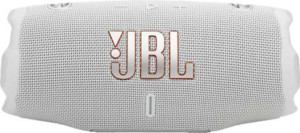
JBL Charge 6
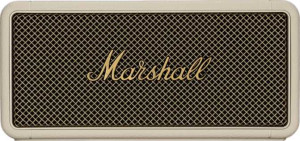
Marshall Middleton II

JBL Charge 6 Marshall Middleton II

Overview

When choosing between the JBL Charge 6 and the Marshall Middleton II, you are weighing two seriously capable portable speakers that share a waterproof build, passive radiator design, and power bank functionality — yet diverge sharply in areas like audio output power, portability, and Bluetooth range. This detailed spec comparison breaks down every key dimension to help you find the right fit for your lifestyle and listening habits.

Common Features

  • Both products feature a neodymium magnet.
  • Both products have a control panel placed on the device.
  • Both products are waterproof.
  • Neither product includes a travel bag.
  • Neither product has a touch screen.
  • Neither product has RGB lighting.
  • Neither product is a neckband speaker.
  • Neither product includes a remote control.
  • Both products share the same highest frequency of 20000 Hz.
  • Both products feature a passive radiator.
  • Neither product has a noise-canceling microphone.
  • Both products have a charge time of 3 hours.
  • Both products have a battery level indicator.
  • Both products have a rechargeable battery.
  • Neither product has a removable battery.
  • Neither product supports wireless charging.
  • Neither product supports Bluetooth pairing using NFC.
  • Neither product has a 3.5 mm audio jack socket or AUX input.
  • Neither product supports aptX, aptX HD, aptX Adaptive, aptX Lossless, or LDAC.
  • Both products can be used wirelessly and support remote smartphone control.
  • Neither product has fast pairing or voice commands.
  • Neither product has a built-in radio.
  • Both products have voice prompts.
  • Both products can work as a power bank.
  • Both products have a sleep timer.

Main Differences

  • The Ingress Protection rating is IP68 on the JBL Charge 6 and IP67 on the Marshall Middleton II.
  • The volume is 2118.4592 cm³ on the JBL Charge 6 and 2479.4 cm³ on the Marshall Middleton II.
  • A detachable cable is present on the JBL Charge 6 but not available on the Marshall Middleton II.
  • The weight is 960 g on the JBL Charge 6 and 1800 g on the Marshall Middleton II.
  • The height is 98.5 mm on the JBL Charge 6 and 110 mm on the Marshall Middleton II.
  • The width is 228.8 mm on the JBL Charge 6 and 230 mm on the Marshall Middleton II.
  • The thickness is 94 mm on the JBL Charge 6 and 98 mm on the Marshall Middleton II.
  • The lowest frequency is 56 Hz on the JBL Charge 6 and 45 Hz on the Marshall Middleton II.
  • The audio output power is 2 x 22.5W on the JBL Charge 6 and 4 x 80W on the Marshall Middleton II.
  • The sound pressure level is 80 dB/mW on the JBL Charge 6 and 97 dB/mW on the Marshall Middleton II.
  • Battery life is 28 hours on the JBL Charge 6 and 30 hours on the Marshall Middleton II.
  • The Bluetooth version is 5.4 on the JBL Charge 6 and 5.3 on the Marshall Middleton II.
  • AAC support is present on the Marshall Middleton II but not available on the JBL Charge 6.
  • Auracast support is present on the JBL Charge 6 but not available on the Marshall Middleton II.
  • The maximum Bluetooth range is 10 m on the JBL Charge 6 and 60 m on the Marshall Middleton II.
  • Stereo sound pairing is supported on the JBL Charge 6 but not available on the Marshall Middleton II.
Specs Comparison
JBL Charge 6

JBL Charge 6

Marshall Middleton II

Marshall Middleton II

Design:
Ingress Protection (IP) rating IP68 IP67
volume 2118.4592 cm³ 2479.4 cm³
has a neodymium magnet
control panel placed on a device
water resistance Waterproof Waterproof
travel bag is included
has a touch screen
has RGB lighting
has a detachable cable
is a neckband speaker
has a remote control
weight 960 g 1800 g
waterproof depth rating 1 m 1 m
height 98.5 mm 110 mm
width 228.8 mm 230 mm
thickness 94 mm 98 mm

Both speakers are physically similar in footprint — the JBL Charge 6 measures 228.8 × 98.5 × 94 mm while the Marshall Middleton II comes in at 230 × 110 × 98 mm — making them near-identical in width but with the Marshall being slightly taller and thicker. That extra volume (2479.4 cm³ vs 2118.5 cm³) hints at a larger internal acoustic chamber, which typically benefits low-frequency reproduction. However, the dimensional difference is modest enough that both speakers occupy roughly the same shelf or bag space.

Where the two diverge dramatically is weight. The Charge 6 weighs 960 g, while the Middleton II tips the scales at 1800 g — nearly double. For a portable speaker, this is a significant real-world trade-off: the Charge 6 is far easier to carry on hikes, toss in a daypack, or hold one-handed, whereas the Middleton II's heft makes it better suited to a fixed spot on a patio or countertop rather than true on-the-go use. The Charge 6 also includes a detachable cable, which the Middleton II lacks — a small but practical advantage for cable management and replacement.

On water resistance, both are rated waterproof to 1 m, but the Charge 6 holds an IP68 certification versus the Middleton II's IP67. IP68 means the device has been tested beyond the standard 1 m depth (the exact depth is manufacturer-defined), offering marginally greater confidence in wet environments like pools or heavy rain. Overall, the JBL Charge 6 has a clear design edge for portability and durability, while the Middleton II's larger build may serve those who prioritize a stationary, premium-aesthetic setup over mobility.

Sound quality:
highest frequency 20000 Hz 20000 Hz
lowest frequency 56 Hz 45 Hz
audio output power 2 x 22.5W 4 x 80W
Has a passive radiator
has a noise-canceling microphone
sound pressure level 80 dB/mW 97 dB/mW

The power gap between these two speakers is substantial. The Marshall Middleton II delivers 4 × 80W of total audio output — 320W across four drivers — compared to the JBL Charge 6's 2 × 22.5W (45W total). That is roughly seven times more amplification, which translates directly into the ability to fill larger spaces, maintain clarity at high volumes, and produce more dynamic, room-pressurizing sound. The Charge 6 is perfectly capable for personal or small-group listening, but the Middleton II operates in an entirely different loudness tier.

The low-frequency extension tells a similar story. The Middleton II reaches down to 45 Hz, versus 56 Hz for the Charge 6 — an 11 Hz difference that, while it may look modest on paper, covers a musically significant range of bass frequencies including the lower registers of bass guitars, kick drums, and synthesizers. Both speakers employ a passive radiator to enhance bass reproduction without a traditional port, but the Middleton II's combination of greater extension and higher power means its low-end output will be noticeably deeper and more impactful. The sound pressure level gap reinforces this: 97 dB/mW versus 80 dB/mW is a difference of 17 dB, which perceptually means the Middleton II can sound many times louder at the same input level.

The Marshall Middleton II holds an unambiguous edge in sound quality specs across every measurable dimension — power, bass extension, and maximum loudness. The Charge 6 is a competent compact speaker, but for listeners who prioritize acoustic performance and high-volume output over portability, the Middleton II is the clear choice based on this data.

Power:
Battery life 28 hours 30 hours
charge time 3 hours 3 hours
has a battery level indicator
has a rechargeable battery
has a removable battery
has wireless charging

Power management is arguably the most evenly matched category between these two speakers. Both charge in 3 hours, carry non-removable rechargeable batteries, include a battery level indicator, and omit wireless charging — meaning the ownership experience around charging is essentially identical.

The only measurable difference is battery life: 30 hours for the Marshall Middleton II versus 28 hours for the JBL Charge 6. A 2-hour gap at this range is practically negligible — both speakers comfortably cover a full day of continuous use without needing a recharge. It is worth noting that the Middleton II achieves this runtime while driving significantly more power output (as established in the sound specs), which speaks to its battery capacity, though the actual battery size is not provided here.

This group is effectively a tie. Neither speaker offers wireless charging or a removable battery, and the marginal edge in runtime the Middleton II holds will rarely matter in real-world use. Buyers should not let power specs be a deciding factor between these two products.

Connectivity:
Bluetooth version 5.4 5.3
supports Bluetooth pairing using NFC
has a socket for a 3.5 mm audio jack
has an AUX input
has aptX Lossless
has LDAC
has aptX Adaptive
has aptX HD
has aptX
has aptX Low Latency
has AAC
has AirPlay
has Chromecast built-in
has Auracast
has Bluetooth LE Audio
maximum Bluetooth range 10 m 60 m
supports Wi-Fi
USB ports 1 1
Has USB Type-C
has a 3.5mm male connector
has an external memory slot
is DLNA-certified
supports Ethernet
has a microphone input

The single most impactful differentiator in this category is Bluetooth range. The Marshall Middleton II is rated to 60 m, compared to just 10 m for the JBL Charge 6. In practice, this means the Middleton II can maintain a stable connection across a large backyard, an open-plan office, or a spacious indoor venue, while the Charge 6 requires the source device to stay relatively close. For a stationary speaker used in larger spaces — which aligns with the Middleton II's heavier, less portable profile — this is a genuinely meaningful advantage.

Beyond range, each speaker claims one exclusive codec or feature. The Charge 6 supports Auracast, a Bluetooth broadcast standard that allows a single source to stream audio to multiple receivers simultaneously — useful in multi-speaker or public audio scenarios, though it requires other Auracast-compatible devices to be relevant. The Middleton II, meanwhile, supports AAC, a codec that delivers better audio quality over Bluetooth compared to the standard SBC, particularly beneficial for Apple device users. Neither speaker supports higher-tier codecs like aptX, LDAC, or aptX Adaptive, so neither has an advantage in that regard. Both share a USB-C port and lack AUX input, Wi-Fi, or NFC pairing.

The Marshall Middleton II holds the connectivity edge for most users, primarily due to its vastly superior 60 m Bluetooth range and AAC support. The Charge 6's Auracast capability is a forward-looking feature, but its practical utility remains niche without widespread ecosystem adoption.
Features:
release date March 2025 July 2025
Can be used wirelessly
supports a remote smartphone
has fast pairing
has voice commands
Has a radio
Has voice prompts
works as a power bank
has a sleep timer

Rarely does a spec group produce a cleaner result: the JBL Charge 6 and Marshall Middleton II are in complete feature parity here. Every data point — wireless use, smartphone app support, voice prompts, power bank functionality, and sleep timer — is identical across both products. There is not a single differentiator in this group to weigh.

A few of these shared features are worth highlighting for their practical value. Both speakers can function as a power bank, meaning they can charge external devices like phones via their USB-C port — a genuinely useful backup capability during outdoor use. The sleep timer adds convenience for bedside or winding-down scenarios, and smartphone app support on both suggests each has a companion app for EQ or settings control, though the depth of those apps is not reflected in this data.

This group is an unambiguous tie. Neither speaker offers fast pairing, voice commands, or radio, and neither has any feature advantage over the other based solely on the provided specs. Buyers should focus on the differentiators found in other spec groups when making their decision.

Miscellaneous:
supports pairing for stereo sound

This group comes down to a single spec with a clear real-world implication. The JBL Charge 6 supports stereo pairing, meaning two units can be linked together to create a dedicated left and right channel setup. The Marshall Middleton II does not offer this capability.

For a speaker like the Charge 6 — which is lighter and more portable — stereo pairing is a particularly compelling feature. Users who own or plan to own two units can unlock a genuine stereo soundstage, significantly widening the sense of space and separation in music playback. This is something a single mono or internally-stereo speaker simply cannot replicate. The Middleton II, despite its acoustic power, cannot be paired in this way according to the provided data.

The JBL Charge 6 holds a clear edge here. Stereo pairing is a meaningful expandability feature that adds long-term value for users willing to invest in a second unit, and its absence on the Middleton II is a notable limitation in this category.

Comparison Summary & Verdict

After examining every specification, both speakers excel in their own right but clearly target different users. The JBL Charge 6 stands out for those who value a lighter, more portable package — at just 960 g with a higher IP68 waterproof rating and stereo pairing support, it is an excellent companion for travel and outdoor adventures where portability matters most. The Marshall Middleton II, on the other hand, is built for those who refuse to compromise on raw sound performance: its 4 x 80W output, deeper 45 Hz bass response, significantly higher sound pressure level of 97 dB/mW, and impressive 60 m Bluetooth range make it the dominant choice for serious listeners who want a powerful, room-filling sound experience. Battery life slightly favors the Marshall at 30 hours versus 28, while the JBL edges ahead with the newer Bluetooth 5.4 standard and Auracast support.

JBL Charge 6
Buy JBL Charge 6 if...

Buy the JBL Charge 6 if you want a lightweight, highly portable speaker with a superior IP68 waterproof rating, stereo pairing support, and the latest Bluetooth 5.4 with Auracast technology.

Marshall Middleton II
Buy Marshall Middleton II if...

Buy the Marshall Middleton II if you prioritize powerful, high-fidelity audio with a massive 4 x 80W output, deeper bass, a much longer 60 m Bluetooth range, and AAC codec support.