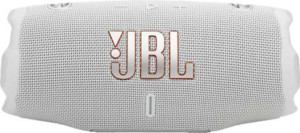
JBL Charge 6
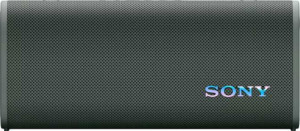
Sony ULT Field 3

JBL Charge 6 Sony ULT Field 3

Overview

When choosing between the JBL Charge 6 and the Sony ULT Field 3, you are looking at two capable portable Bluetooth speakers that share a surprising amount of common ground — yet differ in ways that could easily tip the decision depending on your priorities. From water resistance ratings and battery endurance to low-frequency sound reproduction and extra utility features, this detailed spec comparison will help you identify which speaker is the right fit for your lifestyle.

Common Features

  • Both products have a control panel placed on the device.
  • Neither product includes a travel bag.
  • Neither product has a touch screen.
  • Neither product features RGB lighting.
  • Both products have a detachable cable.
  • Neither product is a neckband speaker.
  • Neither product includes a remote control.
  • Both products share the same highest frequency of 20000 Hz.
  • Both products have a battery level indicator.
  • Both products have a rechargeable battery.
  • Neither product has a removable battery.
  • Neither product supports wireless charging.
  • Neither product supports Bluetooth pairing using NFC.
  • Neither product has a 3.5 mm audio jack socket.
  • Neither product has an AUX input.
  • Neither product supports aptX Lossless, LDAC, aptX Adaptive, aptX HD, or aptX.
  • Both products can be used wirelessly.
  • Both products support remote smartphone control.
  • Neither product has fast pairing.
  • Neither product supports voice commands.
  • Neither product has a radio.
  • Both products have voice prompts.
  • Neither product has a mute function.
  • Both products have a sleep timer.
  • Both products support pairing for stereo sound.

Main Differences

  • The Ingress Protection rating is IP68 on JBL Charge 6 and IP66 on Sony ULT Field 3.
  • The volume is 2118.4592 cm³ on JBL Charge 6 and 2285.312 cm³ on Sony ULT Field 3.
  • A neodymium magnet is present on JBL Charge 6 but not available on Sony ULT Field 3.
  • Water resistance is rated as Waterproof on JBL Charge 6 and Water resistant on Sony ULT Field 3.
  • The weight is 960 g on JBL Charge 6 and 1200 g on Sony ULT Field 3.
  • The height is 98.5 mm on JBL Charge 6 and 113 mm on Sony ULT Field 3.
  • The width is 228.8 mm on JBL Charge 6 and 256 mm on Sony ULT Field 3.
  • The thickness is 94 mm on JBL Charge 6 and 79 mm on Sony ULT Field 3.
  • The lowest frequency is 56 Hz on JBL Charge 6 and 20 Hz on Sony ULT Field 3.
  • A passive radiator is present on JBL Charge 6 but not available on Sony ULT Field 3.
  • Battery life is 28 hours on JBL Charge 6 and 24 hours on Sony ULT Field 3.
  • The Bluetooth version is 5.4 on JBL Charge 6 and 5.2 on Sony ULT Field 3.
  • Auracast support is present on JBL Charge 6 but not available on Sony ULT Field 3.
  • Power bank functionality is available on JBL Charge 6 but not present on Sony ULT Field 3.
Specs Comparison
JBL Charge 6

JBL Charge 6

Sony ULT Field 3

Sony ULT Field 3

Design:
Ingress Protection (IP) rating IP68 IP66
volume 2118.4592 cm³ 2285.312 cm³
has a neodymium magnet
control panel placed on a device
water resistance Waterproof Water resistant
travel bag is included
has a touch screen
has RGB lighting
has a detachable cable
is a neckband speaker
has a remote control
weight 960 g 1200 g
height 98.5 mm 113 mm
width 228.8 mm 256 mm
thickness 94 mm 79 mm

The most consequential design difference between these two speakers is their water protection rating. The JBL Charge 6 carries an IP68 certification, meaning it can be fully submerged in water — a genuine advantage for pool use, kayaking, or accidental drops in water. The Sony ULT Field 3 is rated IP66, which offers solid protection against powerful water jets and rain but does not cover submersion. For most outdoor scenarios this distinction is academic, but for water-adjacent activities it matters significantly.

Portability tells a clearer story. The JBL Charge 6 weighs 960 g compared to the Sony's 1,200 g — a 25% heavier body that compounds with the Sony's larger footprint (256 × 113 mm vs the JBL's 228.8 × 98.5 mm). The Sony is also flatter at 79 mm thick versus the JBL's 94 mm, giving it a more slab-like profile, while the JBL is more cylindrical and compact. In practice, the JBL will feel noticeably lighter in a bag or when carried by hand. The JBL also uses a neodymium magnet — a detail that partly explains its lower mass while maintaining driver performance, a technology the Sony omits.

Both speakers share a practical, no-frills control layout with a physical control panel on the device, a detachable cable, and no touch screen, RGB lighting, or remote. Neither includes a travel bag. Overall, the JBL Charge 6 holds a clear design edge: it is meaningfully lighter, more compact, and offers superior water protection — three factors that collectively make it the stronger choice for portability and outdoor durability.
Sound quality:
highest frequency 20000 Hz 20000 Hz
lowest frequency 56 Hz 20 Hz
Has a passive radiator

Both speakers reach the same 20,000 Hz ceiling on the high end, so treble reproduction is nominally identical. The real divergence is at the low end: the Sony ULT Field 3 claims a 20 Hz low-frequency limit, while the JBL Charge 6 bottoms out at 56 Hz. That 36 Hz gap sits squarely in the sub-bass register — the range responsible for the rumble in electronic music, the weight of kick drums, and the physical impact of bass-heavy tracks. On paper, the Sony's spec suggests meaningfully deeper bass extension.

What makes this more nuanced is how each speaker achieves its low-end output. The JBL Charge 6 uses a passive radiator — a membrane that moves sympathetically with the active driver to reinforce bass frequencies without requiring additional power. This is a well-proven technique for extracting punchy, controlled low-end from a compact enclosure. The Sony ULT Field 3 omits a passive radiator entirely, relying instead on its driver configuration alone to reach that ambitious 20 Hz floor. Whether that specification translates to audibly superior bass in practice depends on driver quality and tuning, which these specs alone cannot confirm.

Based strictly on the available data, the Sony ULT Field 3 holds a spec-level edge in bass reach, with a frequency floor nearly three times lower than the JBL's. However, the JBL's passive radiator is a tangible hardware advantage for bass reinforcement that partially offsets the gap. Listeners who prioritize deep, sub-bass presence will find the Sony's numbers more compelling; those who value tighter, punchy bass from a proven acoustic design may lean toward the JBL.

Power:
Battery life 28 hours 24 hours
has a battery level indicator
has a rechargeable battery
has a removable battery
has wireless charging

Battery life is where these two speakers part ways most clearly. The JBL Charge 6 is rated for 28 hours of playback, while the Sony ULT Field 3 comes in at 24 hours — a four-hour difference that represents roughly a 17% advantage for the JBL. In practical terms, that gap could mean the difference between recharging mid-weekend camping trip or comfortably lasting through it.

Everything else in this category is a draw. Both speakers have a rechargeable, non-removable battery with a battery level indicator, and neither supports wireless charging. The absence of wireless charging on both means users are committed to a cable for top-ups — a minor but consistent inconvenience compared to Qi-enabled alternatives on the market.

For this spec group, the JBL Charge 6 has a clear edge purely on endurance. Four hours of additional runtime is a meaningful real-world advantage for extended outdoor use, travel, or situations where access to a power source is limited. The Sony is still competitive at 24 hours, but when all other power-related features are identical, the JBL's longer battery life is the deciding factor here.

Connectivity:
Bluetooth version 5.4 5.2
supports Bluetooth pairing using NFC
has a socket for a 3.5 mm audio jack
has an AUX input
has aptX Lossless
has LDAC
has aptX Adaptive
has aptX HD
has aptX
has aptX Low Latency
has AAC
has AirPlay
has Chromecast built-in
has Auracast
has Bluetooth LE Audio
maximum Bluetooth range 10 m 10 m
supports Wi-Fi
USB ports 1 1
Has USB Type-C
has a 3.5mm male connector
has an external memory slot
is DLNA-certified
supports Ethernet
has a microphone input

Connectivity between these two speakers is largely identical, but two differences stand out. The JBL Charge 6 runs on Bluetooth 5.4 versus the Sony ULT Field 3's Bluetooth 5.2 — a newer revision that brings incremental improvements to connection stability and efficiency, though both will perform reliably at their shared 10 m maximum range in typical real-world conditions. More notably, the JBL supports Auracast, a broadcast audio feature introduced with Bluetooth 5.2+ that allows a single source to stream simultaneously to multiple receivers — useful for shared listening scenarios without pairing limitations. The Sony offers no equivalent.

Where both speakers converge is in what they lack. Neither supports any high-resolution audio codec — no LDAC, aptX, AAC, or any variant — which means audio transmission is limited to standard SBC regardless of the source device. There is no AUX input, no Wi-Fi, no AirPlay, and no Chromecast on either unit. Both offer a single USB-C port, primarily for charging. For listeners hoping to connect via a wired analog source or stream over a home network, neither speaker accommodates that.

Given the shared limitations, the JBL Charge 6 holds a modest but real connectivity edge: its newer Bluetooth version and exclusive Auracast support make it the more future-facing option. The Sony ULT Field 3 is not meaningfully behind for everyday single-device pairing, but the JBL offers capabilities the Sony simply does not.

Features:
release date March 2025 April 2025
Can be used wirelessly
supports a remote smartphone
has fast pairing
has voice commands
Has a radio
Has voice prompts
has a mute function
works as a power bank
has a sleep timer

Across most features, these two speakers are mirror images — both support wireless use, smartphone remote control, voice prompts, and a sleep timer, while neither offers fast pairing, voice commands, or a radio. The one feature that separates them is significant: the JBL Charge 6 works as a power bank, meaning it can charge other devices via its USB-C port directly from its internal battery. The Sony ULT Field 3 cannot.

For outdoor and travel use cases, this distinction carries genuine practical weight. Being able to top up a phone or another device from the speaker — without needing a separate power bank — reduces what a user needs to pack and provides a meaningful backup when outlets are unavailable. Given the JBL's already strong 28-hour battery noted in the power category, there is a reasonable reserve to share without significantly compromising playback time.

The JBL Charge 6 has a clear edge here, and it is a one-sided one. The power bank capability is a tangible, real-world utility that the Sony simply does not offer, making the JBL the more versatile companion for extended outdoor use or travel where carrying multiple devices is a consideration.

Miscellaneous:
supports pairing for stereo sound

Within this specification group, there is only one data point — and it is identical for both products. The JBL Charge 6 and the Sony ULT Field 3 both support pairing for stereo sound, meaning two units of the same model can be linked together to create a dedicated left/right stereo configuration. This is a meaningful capability for users who own two speakers and want a wider, more spatially accurate soundstage than a single mono or pseudo-stereo unit can deliver.

This group is a complete tie. With only one shared spec and no differentiating data points, neither speaker holds any advantage here. The buying decision for this category comes down to whether the feature itself matters to the user — and if it does, both options deliver it equally.

Comparison Summary & Verdict

After weighing all the evidence, both speakers are strong contenders, but they clearly cater to different users. The JBL Charge 6 stands out with its superior IP68 waterproof rating, lighter 960 g build, longer 28-hour battery life, newer Bluetooth 5.4 with Auracast support, and the added convenience of functioning as a power bank — making it an excellent companion for outdoor adventures and travel. The Sony ULT Field 3, on the other hand, offers a deeper lowest frequency of 20 Hz, promising more impactful bass performance, and its larger cabinet may appeal to those who prioritize raw sound presence over portability. Choose the JBL Charge 6 if durability, versatility, and battery longevity top your list. Opt for the Sony ULT Field 3 if deep, powerful bass reproduction is your primary concern.

JBL Charge 6
Buy JBL Charge 6 if...

Buy the JBL Charge 6 if you want a lighter, fully waterproof speaker with longer battery life, power bank functionality, and the latest Bluetooth 5.4 with Auracast support.

Sony ULT Field 3
Buy Sony ULT Field 3 if...

Buy the Sony ULT Field 3 if deep bass extension down to 20 Hz is your top priority and you prefer a larger, more imposing sound presence over added utility features.