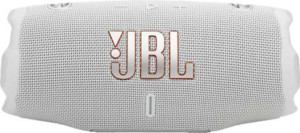
JBL Charge 6
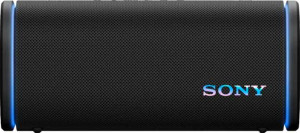
Sony ULT Field 5

JBL Charge 6 Sony ULT Field 5

Overview

When shopping for a powerful portable Bluetooth speaker, the JBL Charge 6 and the Sony ULT Field 5 represent two very different approaches to outdoor audio. While both offer wireless playback, power bank functionality, and stereo pairing support, they diverge sharply on key battlegrounds including size and portability, water protection levels, audio range, and connectivity features. Read on to see how every specification stacks up between these two contenders.

Common Features

  • Both speakers feature 2 drivers.
  • Both speakers have a control panel placed on the device.
  • Neither speaker includes a travel bag.
  • Neither speaker has a touch screen.
  • Neither speaker is a neckband speaker.
  • Neither speaker has a remote control.
  • Both speakers reach a highest frequency of 20000 Hz.
  • Both speakers include a passive radiator.
  • Both speakers have a battery level indicator.
  • Both speakers have a rechargeable battery.
  • Neither speaker has a removable battery.
  • Neither speaker supports wireless charging.
  • Neither speaker supports Bluetooth pairing using NFC.
  • Neither speaker has a 3.5 mm audio jack socket.
  • Neither speaker supports aptX, aptX HD, aptX Adaptive, aptX Lossless, aptX Low Latency, or AAC.
  • Both speakers can be used wirelessly.
  • Both speakers support remote smartphone control.
  • Neither speaker has fast pairing.
  • Neither speaker has voice commands.
  • Both speakers have voice prompts.
  • Neither speaker has a radio.
  • Neither speaker has a mute function.
  • Both speakers can work as a power bank.
  • Both speakers support pairing for stereo sound.

Main Differences

  • IP rating is IP68 on JBL Charge 6 and IP66 on Sony ULT Field 5.
  • Water resistance is waterproof on JBL Charge 6 and only water resistant on Sony ULT Field 5.
  • Volume is 2118.4592 cm³ on JBL Charge 6 and 5760 cm³ on Sony ULT Field 5.
  • Weight is 960 g on JBL Charge 6 and 3300 g on Sony ULT Field 5.
  • Height is 98.5 mm on JBL Charge 6 and 144 mm on Sony ULT Field 5.
  • Width is 228.8 mm on JBL Charge 6 and 320 mm on Sony ULT Field 5.
  • Thickness is 94 mm on JBL Charge 6 and 125 mm on Sony ULT Field 5.
  • A neodymium magnet is present on JBL Charge 6 but not on Sony ULT Field 5.
  • RGB lighting is present on Sony ULT Field 5 but not on JBL Charge 6.
  • A detachable cable is available on JBL Charge 6 but not on Sony ULT Field 5.
  • Lowest frequency is 56 Hz on JBL Charge 6 and 20 Hz on Sony ULT Field 5.
  • Battery life is 28 hours on JBL Charge 6 and 25 hours on Sony ULT Field 5.
  • Bluetooth version is 5.4 on JBL Charge 6 and 5.3 on Sony ULT Field 5.
  • AUX input is available on Sony ULT Field 5 but not on JBL Charge 6.
  • LDAC support is present on Sony ULT Field 5 but not on JBL Charge 6.
  • Auracast support is present on JBL Charge 6 but not on Sony ULT Field 5.
Specs Comparison
JBL Charge 6

JBL Charge 6

Sony ULT Field 5

Sony ULT Field 5

Design:
Ingress Protection (IP) rating IP68 IP66
volume 2118.4592 cm³ 5760 cm³
drivers count 2 2
has a neodymium magnet
control panel placed on a device
water resistance Waterproof Water resistant
travel bag is included
has a touch screen
has RGB lighting
has a detachable cable
is a neckband speaker
has a remote control
weight 960 g 3300 g
height 98.5 mm 144 mm
width 228.8 mm 320 mm
thickness 94 mm 125 mm

The most striking design difference between these two speakers is sheer size and weight. The JBL Charge 6 is a compact, portable unit weighing 960 g with a volume of roughly 2,118 cm³, while the Sony ULT Field 5 is a substantially larger speaker at 3,300 g and over 5,760 cm³ — more than three times heavier and nearly three times the volume. In practical terms, the Charge 6 is a grab-and-go companion you can comfortably carry in a bag or by hand, whereas the ULT Field 5 is better described as a portable party speaker: movable, but not something you'd casually take on a hike or to the beach.

Water protection is another critical divergence. The Charge 6 carries an IP68 rating, meaning it can be fully submerged in water — ideal for poolside use or even accidental drops in a lake. The ULT Field 5 is rated IP66, which provides strong protection against powerful water jets and rain but stops short of submersion. For truly wet environments, the Charge 6 has a meaningful real-world edge. On the other hand, the ULT Field 5 adds RGB lighting, which the Charge 6 lacks entirely — a design choice that targets party and ambiance use cases. The Charge 6 counters with a detachable cable and neodymium magnets, the latter contributing to driver efficiency in a more compact enclosure.

Overall, the JBL Charge 6 holds a clear design advantage for portability and water durability, making it the more versatile everyday companion. The Sony ULT Field 5 is purpose-built for larger gatherings where its size, weight, and RGB aesthetic are deliberate trade-offs in favor of presence and visual impact rather than on-the-go convenience.
Sound quality:
highest frequency 20000 Hz 20000 Hz
lowest frequency 56 Hz 20 Hz
Has a passive radiator

Both speakers share an identical upper frequency limit of 20,000 Hz, meaning neither has an edge in high-frequency reproduction — treble detail and air are theoretically on equal footing. Where they diverge meaningfully is at the low end. The Sony ULT Field 5 reaches down to 20 Hz, the very threshold of human hearing, while the JBL Charge 6 bottoms out at 56 Hz — a gap that represents a substantial portion of the sub-bass spectrum. In practice, this means the ULT Field 5 can reproduce deep kick drums, bass synths, and cinematic rumble that the Charge 6 simply cannot physically reproduce.

It is worth noting that both speakers employ a passive radiator, a design technique that enhances bass extension without requiring a powered subwoofer. This helps both units punch below their size class, but the ULT Field 5 — already a larger enclosure — leverages this advantage to reach far deeper frequencies. The Charge 6's passive radiator is doing meaningful work to overcome its compact cabinet, yet the physics of its smaller volume still impose a natural ceiling on how low it can credibly go.

For sound quality in this group, the Sony ULT Field 5 holds a clear and significant edge. A 20 Hz floor versus 56 Hz is not a marginal difference — it is the distinction between a speaker that covers the full audible bass range and one that handles mid-bass and above. Listeners who prioritize deep, room-filling low end will find the ULT Field 5 considerably more capable on paper.

Power:
Battery life 28 hours 25 hours
has a battery level indicator
has a rechargeable battery
has a removable battery
has wireless charging

Power endurance is remarkably close between these two speakers, and both are genuinely strong performers in this category. The JBL Charge 6 claims 28 hours of battery life versus 25 hours for the Sony ULT Field 5 — a three-hour gap that, while real, is unlikely to be a deciding factor for most users. Either speaker can comfortably cover a full day of outdoor use, an extended camping trip, or a weekend gathering without demanding a recharge.

Beyond runtime, the two products are functionally identical in this group: both feature a battery level indicator, neither offers wireless charging, and neither has a removable battery. The absence of wireless charging is a shared limitation worth noting — both speakers require a wired connection to recharge, which is standard for this product category but worth keeping in mind for users who have come to expect Qi charging convenience.

The JBL Charge 6 takes a narrow edge here on paper, though it is worth contextualizing: the ULT Field 5 is a significantly larger, more power-hungry speaker, so sustaining 25 hours at that scale is arguably an equivalent engineering achievement. For purely spec-driven decisions, however, the Charge 6's 28-hour rating gives it the win in this group.

Connectivity:
Bluetooth version 5.4 5.3
supports Bluetooth pairing using NFC
has a socket for a 3.5 mm audio jack
has an AUX input
has aptX Lossless
has LDAC
has aptX Adaptive
has aptX HD
has aptX
has aptX Low Latency
has AAC
has AirPlay
has Chromecast built-in
has Auracast
has Bluetooth LE Audio
maximum Bluetooth range 10 m 10 m
supports Wi-Fi
USB ports 1 1
Has USB Type-C
has a 3.5mm male connector
has an external memory slot
is DLNA-certified
supports Ethernet
has a microphone input

Connectivity is where these two speakers diverge in philosophically different directions. The Sony ULT Field 5 supports LDAC, Sony's high-resolution Bluetooth codec capable of transmitting up to three times more data than standard SBC — a meaningful advantage for listeners streaming lossless or high-bitrate audio from a compatible source. Paired with an AUX input, the ULT Field 5 also offers a wired fallback that the Charge 6 entirely lacks, adding flexibility in environments where Bluetooth connectivity is unreliable or unwanted.

The JBL Charge 6 counters with Auracast support, a newer Bluetooth broadcast technology that allows one speaker to transmit audio to multiple receivers simultaneously — useful for shared listening scenarios or future-proofing as the Auracast ecosystem grows. It also runs on the slightly newer Bluetooth 5.4 versus the ULT Field 5's 5.3, though in real-world use at an identical maximum range of 10 m, this version difference is unlikely to be perceptible. Both share USB-C and a single USB port, and neither supports Wi-Fi or NFC pairing.

This group doesn't have a single clear winner — it depends on the user's priorities. The Sony ULT Field 5 has the edge for audio fidelity and input flexibility, thanks to LDAC and its AUX port. The JBL Charge 6 is the stronger choice for forward-looking multi-device broadcast scenarios via Auracast. Audiophiles and users with wired sources will favor Sony; those invested in the emerging Auracast ecosystem will lean toward JBL.

Features:
release date March 2025 April 2025
Can be used wirelessly
supports a remote smartphone
has fast pairing
has voice commands
Has a radio
Has voice prompts
has a mute function
works as a power bank
has a sleep timer

Across every feature tracked in this group, the JBL Charge 6 and Sony ULT Field 5 are in complete lockstep — a rare outcome that makes this one of the most straightforward comparisons in the entire spec set. Both support smartphone remote control, meaning users can adjust settings or manage playback from a companion app without touching the speaker. Both include voice prompts for audible status feedback, a sleep timer for unattended playback scenarios, and crucially, both function as a power bank — a practical feature that lets either speaker charge an external device like a phone directly from its battery.

The power bank capability deserves particular attention given the context of each product. For the Charge 6, it reinforces its identity as an all-in-one outdoor companion where outlet access may be limited. For the ULT Field 5, it is a welcome bonus on a larger speaker that already carries significant battery capacity. Neither product adds fast pairing or voice assistant integration, which keeps the feature set focused and utilitarian rather than feature-bloated.

This group is a dead tie. There is no differentiator to analyze — every feature present on one speaker is identically present on the other. Users should look to other specification groups, such as Design, Sound Quality, or Connectivity, to inform their decision, as features alone will not separate these two products.

Miscellaneous:
supports pairing for stereo sound

With only one data point in this group, the analysis is concise by necessity: both the JBL Charge 6 and the Sony ULT Field 5 support stereo pairing, meaning two units of the same model can be linked together to deliver true left/right channel separation. For a category where mono output is still common, this is a genuinely useful capability — stereo pairing significantly widens the soundstage and creates a more immersive listening experience compared to a single speaker operating alone.

This group is a complete tie. Neither product holds any advantage over the other based on the available data. As with the Features group, the meaningful differentiators between these two speakers lie elsewhere — particularly in Design, Sound Quality, and Connectivity, where the two products diverge considerably.

Comparison Summary & Verdict

After examining every specification, it is clear that these two speakers target distinct audiences. The JBL Charge 6 stands out for users who value portability, as its significantly lighter 960 g frame and superior IP68 waterproof rating make it the stronger companion for active outdoor adventures. Its longer 28-hour battery life and Auracast support add further appeal for on-the-go listeners. The Sony ULT Field 5, on the other hand, is built for those who want a more immersive, room-filling experience, thanks to its larger cabinet, a deeper 20 Hz low-frequency response, LDAC high-quality audio streaming, AUX input, and RGB lighting for atmosphere. Choose the JBL Charge 6 for rugged portability; choose the Sony ULT Field 5 for powerful, feature-rich home or patio listening.

JBL Charge 6
Buy JBL Charge 6 if...

Buy the JBL Charge 6 if you need a lightweight, truly waterproof speaker for active outdoor use and want longer battery life with Auracast support.

Sony ULT Field 5
Buy Sony ULT Field 5 if...

Buy the Sony ULT Field 5 if you prioritize deeper bass extension, LDAC audio quality, an AUX input, and a larger sound presence for home or patio listening.