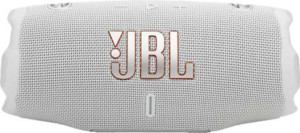
JBL Charge 6
Tribit StormBox Lava

JBL Charge 6 Tribit StormBox Lava

Overview

When comparing the JBL Charge 6 and the Tribit StormBox Lava, two feature-rich Bluetooth speakers emerge with very different personalities. Both share Bluetooth 5.4, waterproof builds, and stereo pairing support, yet they diverge sharply in size, power output, and portability. This head-to-head takes a close look at their battery performance, audio capabilities, and connectivity options to help you decide which one truly fits your lifestyle.

Common Features

  • Both products use a neodymium magnet.
  • Both products have a control panel placed on the device.
  • Both products are waterproof.
  • Neither product includes a travel bag.
  • Neither product has a touch screen.
  • Neither product has RGB lighting.
  • Neither product is a neckband speaker.
  • Neither product has a remote control.
  • Both products share the same highest frequency of 20000 Hz.
  • Both products have a battery level indicator.
  • Both products have a rechargeable battery.
  • Neither product has a removable battery.
  • Neither product supports wireless charging.
  • Both products use Bluetooth version 5.4.
  • Neither product supports Bluetooth pairing using NFC.
  • Neither product has a 3.5 mm audio jack socket or AUX input.
  • Neither product supports aptX Lossless, LDAC, aptX Adaptive, or aptX HD.
  • Both products can be used wirelessly and support remote smartphone control.
  • Neither product has fast pairing or a radio.
  • Both products have voice prompts and a sleep timer.
  • Both products support pairing for stereo sound.

Main Differences

  • Ingress Protection rating is IP68 on JBL Charge 6 and IP67 on Tribit StormBox Lava.
  • Volume is 2118.46 cm³ on JBL Charge 6 and 6910.01 cm³ on Tribit StormBox Lava.
  • Driver count is 2 on JBL Charge 6 and 4 on Tribit StormBox Lava.
  • A detachable cable is included with JBL Charge 6 but not available on Tribit StormBox Lava.
  • Weight is 960 g on JBL Charge 6 and 2780 g on Tribit StormBox Lava.
  • Height is 98.5 mm on JBL Charge 6 and 151.89 mm on Tribit StormBox Lava.
  • Width is 228.8 mm on JBL Charge 6 and 309.88 mm on Tribit StormBox Lava.
  • Thickness is 94 mm on JBL Charge 6 and 146.81 mm on Tribit StormBox Lava.
  • Lowest frequency is 56 Hz on JBL Charge 6 and 43 Hz on Tribit StormBox Lava.
  • Audio output power is 2 x 22.5W on JBL Charge 6 and 4 x 20W on Tribit StormBox Lava.
  • A passive radiator is present on JBL Charge 6 but not available on Tribit StormBox Lava.
  • Battery life is 28 hours on JBL Charge 6 and 24 hours on Tribit StormBox Lava.
  • Charge time is 3 hours on JBL Charge 6 and 5 hours on Tribit StormBox Lava.
  • AAC support is available on Tribit StormBox Lava but not on JBL Charge 6.
  • Auracast support is available on JBL Charge 6 but not on Tribit StormBox Lava.
  • Maximum Bluetooth range is 10 m on JBL Charge 6 and 30 m on Tribit StormBox Lava.
  • Power bank functionality is available on JBL Charge 6 but not on Tribit StormBox Lava.
Specs Comparison
JBL Charge 6

JBL Charge 6

Tribit StormBox Lava

Tribit StormBox Lava

Design:
Ingress Protection (IP) rating IP68 IP67
volume 2118.4592 cm³ 6910.005102492 cm³
drivers count 2 4
has a neodymium magnet
control panel placed on a device
water resistance Waterproof Waterproof
travel bag is included
has a touch screen
has RGB lighting
has a detachable cable
is a neckband speaker
has a remote control
weight 960 g 2780 g
height 98.5 mm 151.89 mm
width 228.8 mm 309.88 mm
thickness 94 mm 146.81 mm

The most immediate design difference between these two speakers is sheer size and weight. The JBL Charge 6 is a compact unit at 228.8 × 98.5 × 94 mm and 960 g, while the Tribit StormBox Lava is dramatically larger at 309.88 × 151.89 × 146.81 mm and 2780 g — nearly three times heavier. This translates directly to portability: the Charge 6 slips into a backpack or bag with ease and is comfortable to carry one-handed, whereas the StormBox Lava is more of a ″portable home speaker″ — movable between rooms or a patio, but not something you casually toss in a daypack.

On water resistance, both are rated waterproof, but the Charge 6 holds a slight edge with IP68 versus the StormBox Lava's IP67. In practice, IP68 means the Charge 6 can withstand submersion beyond the standard 1-meter depth that IP67 guarantees, making it the more confident choice for poolside or rain-heavy outdoor use. Both share a physical control panel on the device, neodymium drivers, and neither includes a travel bag — so no meaningful differentiation there. One practical note: the Charge 6 features a detachable cable, which the StormBox Lava lacks, adding a small but real convenience advantage for charging flexibility.

Overall, the JBL Charge 6 has a clear design edge for portability and durability, offering a higher IP rating and a form factor genuinely suited to on-the-go use. The StormBox Lava's larger chassis — housing 4 drivers versus the Charge 6's 2 — suggests it trades portability for acoustic potential, but from a pure design standpoint, it is the less portable and slightly less water-resistant of the two.

Sound quality:
highest frequency 20000 Hz 20000 Hz
lowest frequency 56 Hz 43 Hz
audio output power 2 x 22.5W 4 x 20W
Has a passive radiator

Both speakers share an identical 20,000 Hz upper frequency limit, so high-frequency reproduction is a wash. The real story is at the low end: the Tribit StormBox Lava reaches down to 43 Hz, compared to 56 Hz for the JBL Charge 6. That 13 Hz gap may look modest on paper, but in practice it means the StormBox Lava can reproduce deeper bass fundamentals — kick drums, bass guitar, and low synth tones will sound fuller and more grounded, whereas the Charge 6 begins rolling off earlier in the sub-bass region.

Power architecture tells a similarly divergent story. The Charge 6 delivers 2 × 22.5W for a total of 45W, while the StormBox Lava spreads 4 × 20W across four drivers for a combined 80W. More channels generally mean better stereo separation and more even sound dispersion — a meaningful advantage in larger rooms or open outdoor spaces where the StormBox Lava's size already positions it. However, raw wattage alone doesn't guarantee superior sound quality; driver tuning and cabinet design matter enormously, and the Charge 6 partially compensates with a passive radiator, which the StormBox Lava lacks. Passive radiators enhance low-frequency response without requiring additional amplification, helping the Charge 6 punch below its frequency floor on paper.

Weighing these factors together, the StormBox Lava holds a technical edge in sound quality specs — its lower frequency extension and higher total output power suit listeners who prioritize bass depth and volume scale. The Charge 6's passive radiator is a meaningful engineering counter, keeping its low-end competitive relative to its size, but it cannot fully close the gap in raw bass reach or total power.

Power:
Battery life 28 hours 24 hours
charge time 3 hours 5 hours
has a battery level indicator
has a rechargeable battery
has a removable battery
has wireless charging

Battery longevity favors the JBL Charge 6, which is rated for 28 hours of playback versus 24 hours for the Tribit StormBox Lava. That four-hour difference is practically meaningful — it represents an extra listening session or the ability to get through a full weekend of casual use without reaching for a cable. Keep in mind that the StormBox Lava's larger driver count and higher total output likely draw more current, which helps explain why its bigger form factor doesn't automatically translate to longer battery life.

Where the gap widens further is charge time. The Charge 6 replenishes in 3 hours, while the StormBox Lava requires 5 hours — nearly twice as long. For a speaker left to charge overnight this rarely matters, but for anyone topping up between uses or before a trip, that 2-hour difference is a real inconvenience. Both speakers share the same baseline conveniences: a battery level indicator for at-a-glance status, a non-removable rechargeable battery, and no wireless charging — so neither holds an advantage on those fronts.

On power as a whole, the JBL Charge 6 has a clear edge — it lasts longer per charge and recovers faster, a combination that suits portable, on-the-go use particularly well. The StormBox Lava's power profile is adequate for home or patio setups where outlet access is nearby, but for untethered use the Charge 6 is the more self-sufficient option.

Connectivity:
Bluetooth version 5.4 5.4
supports Bluetooth pairing using NFC
has a socket for a 3.5 mm audio jack
has an AUX input
has aptX Lossless
has LDAC
has aptX Adaptive
has aptX HD
has aptX
has aptX Low Latency
has AAC
has AirPlay
has Chromecast built-in
has Auracast
has Bluetooth LE Audio
maximum Bluetooth range 10 m 30 m
supports Wi-Fi
USB ports 1 1
Has USB Type-C
has a 3.5mm male connector
has an external memory slot
is DLNA-certified
supports Ethernet
has a microphone input

At the foundation, both speakers share Bluetooth 5.4 and a USB Type-C port, so the baseline connectivity experience is identical. The divergence comes in three specific areas that are worth examining closely. The most practically significant is wireless range: the Tribit StormBox Lava reaches up to 30 meters, triple the 10-meter maximum of the JBL Charge 6. In real-world terms, 10 m is enough for a single room or a small backyard, but the StormBox Lava's range comfortably covers larger outdoor spaces, multi-room scenarios, or situations where the source device is far from the speaker.

On codec support, the StormBox Lava adds AAC, which the Charge 6 lacks. AAC is Apple's preferred Bluetooth audio codec and delivers noticeably better audio quality over Bluetooth compared to the standard SBC fallback — a meaningful perk for iPhone users in particular. The Charge 6 counters with Auracast, a newer Bluetooth broadcast standard that allows a single source to stream simultaneously to multiple Auracast-compatible receivers. This is a forward-looking feature useful for shared listening scenarios, though it requires other Auracast-enabled devices to take advantage of it.

Neither product offers Wi-Fi, AUX input, or any high-resolution codec like LDAC or aptX — so the comparison ultimately hinges on range, AAC, and Auracast. For most users, the StormBox Lava's combination of 3× greater range and AAC support gives it a practical connectivity edge, particularly for Apple ecosystem users or those operating in large spaces. The Charge 6's Auracast is a niche advantage that will matter only to a subset of users with compatible hardware.
Features:
release date March 2025 March 2025
Can be used wirelessly
supports a remote smartphone
has fast pairing
Has a radio
Has voice prompts
has a mute function
works as a power bank
has a sleep timer

Across most of this feature set, the two speakers are virtually identical — both operate wirelessly, support remote smartphone control, offer voice prompts, and include a sleep timer. None of these shared features create any meaningful differentiation, and neither speaker adds fast pairing or a mute function to tip the balance.

The single feature that separates them is the JBL Charge 6's ability to work as a power bank, which the Tribit StormBox Lava does not support. This is a genuinely useful capability in portable scenarios — it means the Charge 6 can charge a smartphone or other USB device directly from its battery, effectively doubling as emergency backup power on a camping trip, at the beach, or during travel. For a speaker already positioned as a portable companion, this adds real utility beyond audio.

Given how closely matched everything else is, the JBL Charge 6 holds a clear edge in this category solely on the strength of its power bank functionality. It is a single differentiator, but a practical one that adds tangible value for users who prioritize self-sufficiency away from power outlets.

Miscellaneous:
supports pairing for stereo sound

With only one data point in this group, the analysis is straightforward: both the JBL Charge 6 and the Tribit StormBox Lava support stereo pairing, allowing two compatible speakers to be linked together — one handling the left channel, the other the right. This expands the soundstage significantly compared to a single-speaker setup and is particularly valuable in larger spaces where a single unit might not fill the room convincingly.

Since both products offer this capability, there is no differentiation here — it is a straightforward tie. Users of either speaker can take advantage of a true stereo configuration provided they own a second unit of the same model.

Comparison Summary & Verdict

After examining every specification, it is clear that the JBL Charge 6 and the Tribit StormBox Lava serve meaningfully different audiences. The JBL Charge 6 stands out for its longer 28-hour battery life, faster 3-hour charge time, superior IP68 waterproofing, built-in power bank function, and passive radiator for richer bass — all in a compact, lightweight 960 g body. It is the smarter pick for users who prioritize portability and all-day endurance. The Tribit StormBox Lava, on the other hand, delivers with its four-driver configuration, deeper 43 Hz low-frequency reach, AAC codec support, and an impressive 30-meter Bluetooth range — making it ideal for those who want a larger, more powerful home or outdoor party speaker where raw sound presence matters most.

JBL Charge 6
Buy JBL Charge 6 if...

Buy the JBL Charge 6 if you want a compact, lightweight speaker with a longer battery life, faster charging, IP68 waterproofing, and the added convenience of a built-in power bank.

Tribit StormBox Lava
Buy Tribit StormBox Lava if...

Buy the Tribit StormBox Lava if you prioritize a more powerful four-driver sound system, deeper bass extension, AAC support, and a significantly longer Bluetooth range of 30 meters.