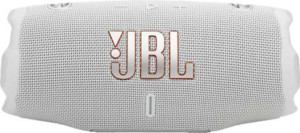
JBL Charge 6
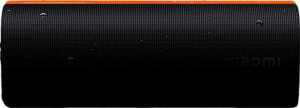
Xiaomi Sound Party

JBL Charge 6 Xiaomi Sound Party

Overview

Welcome to our in-depth spec comparison between the JBL Charge 6 and the Xiaomi Sound Party — two powerful portable Bluetooth speakers sharing a surprising amount of common ground. Both carry an IP68 waterproof rating and support stereo pairing, but key battlegrounds emerge around sound performance, build characteristics, and battery behavior. Read on to see how these two contenders truly stack up across every specification.

Common Features

  • Both products have an IP68 ingress protection rating.
  • Both products are waterproof.
  • Both products have a control panel placed on the device.
  • Neither product includes a travel bag.
  • Neither product has a touch screen.
  • Neither product has RGB lighting.
  • Both products have a detachable cable.
  • Neither product is a neckband speaker.
  • Both products share the same highest frequency of 20000 Hz.
  • Neither product has a noise-canceling microphone.
  • Both products have a battery level indicator.
  • Both products have a rechargeable battery.
  • Neither product has a removable battery.
  • Neither product supports wireless charging.
  • Both products use Bluetooth version 5.4.
  • Neither product supports Bluetooth pairing using NFC.
  • Neither product has a 3.5 mm audio jack socket or AUX input.
  • Neither product supports aptX Lossless, LDAC, aptX Adaptive, or aptX HD.
  • Both products can be used wirelessly and support remote smartphone control.
  • Both products work as a power bank and have voice prompts.
  • Neither product has fast pairing, voice commands, a radio, or a mute function.
  • Both products support pairing for stereo sound.

Main Differences

  • Volume is 2118.4592 cm³ on JBL Charge 6 and 2158.32 cm³ on Xiaomi Sound Party.
  • A neodymium magnet is present on JBL Charge 6 but not available on Xiaomi Sound Party.
  • Weight is 960 g on JBL Charge 6 and 1200 g on Xiaomi Sound Party.
  • Height is 98.5 mm on JBL Charge 6 and 92 mm on Xiaomi Sound Party.
  • Width is 228.8 mm on JBL Charge 6 and 255 mm on Xiaomi Sound Party.
  • Thickness is 94 mm on JBL Charge 6 and 92 mm on Xiaomi Sound Party.
  • Lowest frequency is 56 Hz on JBL Charge 6 and 60 Hz on Xiaomi Sound Party.
  • Audio output power is 2 x 22.5W on JBL Charge 6 and 2 x 25W on Xiaomi Sound Party.
  • A passive radiator is present on JBL Charge 6 but not available on Xiaomi Sound Party.
  • Sound pressure level is 80 dB/mW on JBL Charge 6 and 25 dB/mW on Xiaomi Sound Party.
  • Battery power is 4722 mAh on JBL Charge 6 and 5200 mAh on Xiaomi Sound Party.
  • Battery life is 28 hours on JBL Charge 6 and 26 hours on Xiaomi Sound Party.
  • Charge time is 3 hours on JBL Charge 6 and 4 hours on Xiaomi Sound Party.
  • Auracast support is present on JBL Charge 6 but not available on Xiaomi Sound Party.
Specs Comparison
JBL Charge 6

JBL Charge 6

Xiaomi Sound Party

Xiaomi Sound Party

Design:
Ingress Protection (IP) rating IP68 IP68
volume 2118.4592 cm³ 2158.32 cm³
has a neodymium magnet
control panel placed on a device
water resistance Waterproof Waterproof
travel bag is included
has a touch screen
has RGB lighting
has a detachable cable
is a neckband speaker
has a remote control
weight 960 g 1200 g
height 98.5 mm 92 mm
width 228.8 mm 255 mm
thickness 94 mm 92 mm

Both the JBL Charge 6 and the Xiaomi Sound Party share a strong foundation in their design specs: both carry an IP68 waterproof rating, feature an on-device control panel, include a detachable cable, and skip extras like RGB lighting, a touch screen, or a bundled travel bag. For users who prioritize ruggedness and portability, either speaker can handle outdoor and wet environments equally well on paper.

Where the two diverge meaningfully is in physical form and build. Despite having a nearly identical volume — 2118 cm³ vs 2158 cm³ — the Xiaomi Sound Party is noticeably wider (255 mm vs 228.8 mm) and slightly shorter, suggesting a flatter, more spread-out profile compared to the JBL's more compact footprint. More significantly, the Xiaomi weighs 1200 g against the JBL's 960 g — a 240 g difference that translates directly to how comfortable either speaker is to carry, strap to a bag, or hold for extended periods. The JBL also uses a neodymium magnet, which the Xiaomi lacks; neodymium magnets are denser and more powerful for their size, typically enabling a more efficient driver assembly within a compact enclosure.

On design, the JBL Charge 6 holds a clear edge: it is substantially lighter, more compact in width, and benefits from neodymium magnet construction. For users who value portability and ease of transport, these are real-world advantages. The Xiaomi Sound Party matches it on protection and shared features, but its added bulk and weight make it the less travel-friendly option based strictly on the provided specs.
Sound quality:
highest frequency 20000 Hz 20000 Hz
lowest frequency 56 Hz 60 Hz
audio output power 2 x 22.5W 2 x 25W
Has a passive radiator
has a noise-canceling microphone
sound pressure level 80 dB/mW 25 dB/mW

On paper, the power figures look close — 2 x 25W for the Xiaomi Sound Party versus 2 x 22.5W for the JBL Charge 6 — but raw wattage alone is a poor predictor of perceived loudness or audio quality. The more telling differentiator is the sound pressure level (SPL): the JBL registers 80 dB/mW compared to the Xiaomi's 25 dB/mW. That is not a marginal gap — it represents a dramatic difference in how efficiently each speaker converts power into actual volume, strongly favoring the JBL in real-world listening scenarios.

Bass reproduction is another area where the two speakers diverge. The JBL reaches down to 56 Hz and is equipped with a passive radiator, a mechanical component that reinforces low-frequency output without requiring additional amplification. The Xiaomi, despite its slightly higher power output, bottoms out at 60 Hz and has no passive radiator. In practice, this means the JBL is better equipped to produce fuller, more physical bass — the kind that matters for music genres like hip-hop, EDM, or rock at outdoor volumes.

The verdict here favors the JBL Charge 6 decisively. Its combination of a dramatically higher SPL rating, lower frequency extension, and passive radiator support paints a picture of a speaker engineered for efficient, impactful sound output. The Xiaomi's marginal wattage advantage does not compensate for its shortfalls across the remaining acoustic specs provided.

Power:
battery power 4722 mAh 5200 mAh
Battery life 28 hours 26 hours
charge time 3 hours 4 hours
has a battery level indicator
has a rechargeable battery
has a removable battery
has wireless charging

An interesting inversion emerges when looking at power efficiency: the Xiaomi Sound Party packs a larger battery at 5200 mAh versus the JBL Charge 6's 4722 mAh, yet the JBL actually delivers longer battery life28 hours compared to the Xiaomi's 26 hours. This tells a meaningful story about how efficiently each device draws from its cell. The JBL squeezes more playback time from fewer milliamp-hours, suggesting a more power-efficient internal design relative to its output.

Charging speed is where the Xiaomi loses further ground. Replenishing the Sound Party from empty takes 4 hours, a full hour longer than the JBL's 3-hour charge time. Given that the Xiaomi also has the larger battery, some of that gap is expected — but the combination of a slower charge and shorter runtime makes for a less compelling overall power package. Neither speaker offers wireless charging or a removable battery, so both users are equally committed to a wired top-up routine.

The JBL Charge 6 takes a clear win in this category. Longer playback, faster charging, and better energy efficiency relative to battery size all point in the same direction — despite the Xiaomi's capacity advantage on paper, real-world power performance favors the JBL.

Connectivity:
Bluetooth version 5.4 5.4
supports Bluetooth pairing using NFC
has a socket for a 3.5 mm audio jack
has an AUX input
has aptX Lossless
has LDAC
has aptX Adaptive
has aptX HD
has aptX
has aptX Low Latency
has AAC
has AirPlay
has Chromecast built-in
has Auracast
has Bluetooth LE Audio
maximum Bluetooth range 10 m 10 m
supports Wi-Fi
USB ports 1 1
Has USB Type-C
has a 3.5mm male connector
has an external memory slot
is DLNA-certified
supports Ethernet
has a microphone input

Connectivity is largely a draw between these two speakers. Both run on Bluetooth 5.4, share an identical 10 m maximum range, and offer a single USB-C port. Neither supports Wi-Fi, AUX input, a 3.5mm jack, NFC pairing, or any advanced audio codec — no LDAC, aptX, AAC, or AirPlay on either side. For most users streaming audio over Bluetooth, this level of parity means the connection experience will feel essentially the same day-to-day.

The one meaningful differentiator in this category is Auracast support, which the JBL Charge 6 has and the Xiaomi Sound Party lacks. Auracast is a Bluetooth broadcast audio standard that allows a single speaker to simultaneously stream to multiple listeners or devices — useful in scenarios like syncing several speakers in a room or sharing audio in public spaces without pairing individually. It is a forward-looking feature, and while its ecosystem is still maturing, its presence on the JBL gives it a practical edge for users who anticipate multi-device audio setups.

The JBL Charge 6 earns a narrow edge in connectivity purely on the strength of Auracast. For users who have no interest in broadcast audio, this category is effectively a tie — but for those building a multi-speaker environment or future-proofing their purchase, the JBL is the only option here that opens that door.

Features:
release date March 2025 June 2025
Can be used wirelessly
supports a remote smartphone
has fast pairing
has voice commands
Has a radio
Has voice prompts
has a mute function
works as a power bank
has a sleep timer

Feature for feature, the JBL Charge 6 and Xiaomi Sound Party are identical across every data point in this category. Both support wireless use, remote smartphone control, voice prompts, a sleep timer, and — notably — function as a power bank, meaning either speaker can charge an external device directly from its battery. That last capability is a genuinely useful perk for outdoor or travel use, turning the speaker into an emergency charging source for phones or other USB-powered devices.

This is a straightforward tie. No differentiator exists within the provided specs for this group, and declaring an edge for either product would not be supported by the data. Buyers weighing features alone will find no reason to choose one over the other here.

Miscellaneous:
supports pairing for stereo sound

The only data point in this category is stereo pairing support, and both the JBL Charge 6 and the Xiaomi Sound Party offer it equally. This means users can link two units of the same model together to create a true left/right stereo soundstage — a worthwhile upgrade from the mono or pseudo-stereo output of a single speaker, particularly in larger rooms or open outdoor settings. This is a tie; neither product holds any advantage over the other based on the available specs in this group.

Comparison Summary & Verdict

After examining every specification, both speakers prove to be capable, feature-rich options — yet they cater to slightly different priorities. The JBL Charge 6 stands out with a notably lighter 960 g build, a higher sound pressure level of 80 dB/mW, a passive radiator for richer bass, faster 3-hour charging, and exclusive Auracast support — making it the stronger pick for audio enthusiasts who value portability and connectivity features. The Xiaomi Sound Party, on the other hand, offers a larger 5200 mAh battery, slightly higher raw output power at 2 x 25W, and a wider physical footprint, appealing to users who prioritize raw power and endurance over weight. Choose the JBL Charge 6 if sound quality and convenience matter most; opt for the Xiaomi Sound Party if output power and battery capacity are your top concerns.

JBL Charge 6
Buy JBL Charge 6 if...

Buy the JBL Charge 6 if you want a lighter speaker with superior sound pressure, passive radiator bass, faster charging, and Auracast connectivity support.

Xiaomi Sound Party
Buy Xiaomi Sound Party if...

Buy the Xiaomi Sound Party if you prioritize a larger battery capacity and higher raw audio output power over portability and advanced connectivity features.