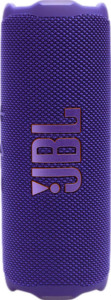
JBL Flip 7
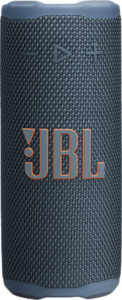
JBL Grip

JBL Flip 7 JBL Grip

Overview

Welcome to our in-depth spec comparison between the JBL Flip 7 and the JBL Grip. Both speakers share a solid IP68 rating and Bluetooth 5.4, but they diverge significantly when it comes to audio power, battery capacity, and physical size. Whether you prioritize raw sound performance or a lighter, more portable form factor, this comparison will help you decide which JBL speaker truly fits your lifestyle.

Common Features

  • Both products have an IP68 ingress protection rating.
  • Neither product has a neodymium magnet.
  • Both products have a control panel placed on the device.
  • Neither product includes a travel bag.
  • Neither product has a touch screen.
  • Neither product has RGB lighting.
  • Both products have a detachable cable.
  • Neither product is a neckband speaker.
  • Neither product has stereo speakers.
  • The highest frequency is 20000 Hz on both products.
  • The sound pressure level is 80 dB/mW on both products.
  • Both products have a battery level indicator.
  • Both products have a rechargeable battery.
  • Neither product has a removable battery.
  • Neither product supports wireless charging.
  • Both products use Bluetooth version 5.4.
  • Neither product supports Bluetooth pairing using NFC.
  • Neither product has a 3.5 mm audio jack socket or AUX input.
  • Neither product supports aptX Lossless, LDAC, aptX Adaptive, or aptX HD.
  • Both products can be used wirelessly, support remote smartphone control, and have voice prompts.
  • Neither product has fast pairing, voice commands, a radio, a mute function, or power bank functionality.

Main Differences

  • Volume is 906.888125 cm³ on JBL Flip 7 and 636.352 cm³ on JBL Grip.
  • JBL Flip 7 is fully waterproof, while JBL Grip is only water resistant.
  • Weight is 560 g on JBL Flip 7 and 385 g on JBL Grip.
  • Height is 182.5 mm on JBL Flip 7 and 152.5 mm on JBL Grip.
  • Width is 71.5 mm on JBL Flip 7 and 64 mm on JBL Grip.
  • Thickness is 69.5 mm on JBL Flip 7 and 65.2 mm on JBL Grip.
  • A subwoofer is present on JBL Flip 7 but not available on JBL Grip.
  • Lowest frequency is 60 Hz on JBL Flip 7 and 70 Hz on JBL Grip.
  • Audio output power is 2 x 17.5W on JBL Flip 7 and 2 x 8W on JBL Grip.
  • A passive radiator is present on JBL Flip 7 but not available on JBL Grip.
  • Battery power is 4800 mAh on JBL Flip 7 and 2600 mAh on JBL Grip.
  • Battery life is 16 hours on JBL Flip 7 and 14 hours on JBL Grip.
  • Charge time is 2.5 hours on JBL Flip 7 and 3 hours on JBL Grip.
  • Stereo sound pairing is supported on JBL Flip 7 but not available on JBL Grip.
Specs Comparison
JBL Flip 7

JBL Flip 7

JBL Grip

JBL Grip

Design:
Ingress Protection (IP) rating IP68 IP68
volume 906.888125 cm³ 636.352 cm³
has a neodymium magnet
control panel placed on a device
water resistance Waterproof Water resistant
travel bag is included
has a touch screen
has RGB lighting
has a detachable cable
is a neckband speaker
has a remote control
weight 560 g 385 g
height 182.5 mm 152.5 mm
width 71.5 mm 64 mm
thickness 69.5 mm 65.2 mm

The most immediate design difference between the JBL Flip 7 and the JBL Grip is their physical footprint. The Flip 7 measures 182.5 × 71.5 × 69.5 mm with a volume of roughly 907 cm³, while the Grip comes in at 152.5 × 64 × 65.2 mm and just 636 cm³ — about 30% more compact. That size gap translates directly to portability: the Grip is noticeably easier to slip into a bag or carry one-handed, making it the more travel-friendly option of the two.

Weight reinforces this picture. The Flip 7 tips the scales at 560 g versus the Grip's 385 g — a 175 g difference that you will genuinely feel over extended use or when clipping it to a bag. Both units share a practical set of shared design traits — an on-device control panel, a detachable cable, and no gimmicks like RGB lighting or a touch screen — so the core interaction model is identical. One subtle but notable distinction: despite both carrying an IP68 rating, the Flip 7 is classified as Waterproof while the Grip is labeled only Water resistant. This suggests the Flip 7 may be rated for deeper or more prolonged submersion in practice, even if the official IP designation is the same on paper.

Overall, the JBL Grip holds the design edge for users who prioritize portability and lightweight convenience. The Flip 7's larger build may house more internal hardware, but from a pure design and form-factor standpoint, the Grip is the more pocketable and carry-friendly device. The Flip 7 counters with a stronger waterproofing claim, which matters for outdoor or poolside use cases.

Sound quality:
has stereo speakers
has a subwoofer
highest frequency 20000 Hz 20000 Hz
lowest frequency 60 Hz 70 Hz
audio output power 2 x 17.5W 2 x 8W
Has a passive radiator
sound pressure level 80 dB/mW 80 dB/mW

Raw output power is where these two speakers diverge most sharply. The JBL Flip 7 delivers 2 × 17.5W — more than double the 2 × 8W of the JBL Grip. In practice, that gap means the Flip 7 can fill larger spaces, project sound over ambient noise more confidently, and maintain tonal clarity at higher volumes without distortion. The Grip's 16W total is adequate for personal listening or a small room, but it will run out of headroom faster in any demanding playback scenario.

The low-end story is just as telling. The Flip 7 extends down to 60 Hz and is backed by both a dedicated subwoofer and a passive radiator — a combination that physically moves more air to reinforce bass response. The Grip, lacking both of those components, bottoms out at 70 Hz. That 10 Hz difference may look modest on paper, but the absence of a subwoofer and passive radiator means the Grip's bass will feel noticeably thinner and less textured, particularly on bass-heavy music. Both speakers share identical high-frequency ceilings at 20000 Hz and the same sensitivity rating of 80 dB/mW, so treble reproduction and efficiency are on equal footing.

The JBL Flip 7 holds a clear advantage in this category across every meaningful dimension — power output, low-frequency extension, and driver architecture. The Grip is not a poor performer, but the data firmly positions it as a lighter-duty option suited to quieter, more intimate listening environments rather than competing head-to-head with the Flip 7 on sound quality.

Power:
battery power 4800 mAh 2600 mAh
Battery life 16 hours 14 hours
charge time 2.5 hours 3 hours
has a battery level indicator
has a rechargeable battery
has a removable battery
has wireless charging

Battery capacity sets the tone here: the JBL Flip 7 packs a 4800 mAh cell versus the JBL Grip's 2600 mAh — nearly twice the energy storage. Yet the real-world gap in runtime is surprisingly narrow: 16 hours for the Flip 7 against 14 hours for the Grip. That two-hour difference suggests the Grip is considerably more efficient relative to its capacity, likely a consequence of its lower output power. For most users, both speakers will comfortably last a full day of casual use without needing a top-up.

Where the Flip 7 pulls ahead more meaningfully is charge time. It replenishes its much larger battery in just 2.5 hours, while the Grip — despite having a smaller pack — takes 3 hours to reach full charge. That counter-intuitive result points to the Flip 7 supporting faster charging hardware, and in practical terms it means less time tethered to a cable before you can head out. Neither speaker offers wireless charging or a removable battery, so both share the same constraints on that front. Both also include a battery level indicator, which is a useful quality-of-life feature that prevents unexpected shutdowns.

On balance, the JBL Flip 7 has the edge in this category. It offers more runtime and charges faster — a combination that matters most for extended outdoor sessions or travel days where access to power is limited. The Grip's efficiency is commendable given its smaller cell, but when the Flip 7 lasts longer and recovers quicker, it is the stronger performer from a power standpoint.

Connectivity:
Bluetooth version 5.4 5.4
supports Bluetooth pairing using NFC
has a socket for a 3.5 mm audio jack
has an AUX input
has aptX Lossless
has LDAC
has aptX Adaptive
has aptX HD
has aptX
has aptX Low Latency
has AAC
has AirPlay
has Chromecast built-in
has Auracast
has Bluetooth LE Audio
maximum Bluetooth range 10 m 10 m
supports Wi-Fi
USB ports 1 1
Has USB Type-C
has a 3.5mm male connector
has an external memory slot
is DLNA-certified
supports Ethernet
has a microphone input

Connectivity is the one category where choosing between these two speakers becomes straightforward — because there is no difference at all. Both the JBL Flip 7 and the JBL Grip run on Bluetooth 5.4, share an identical 10 m maximum wireless range, each offer a single USB-C port, and both support Auracast broadcast audio. Every other connectivity attribute — from codec support to Wi-Fi to AUX input — is equally absent on both devices.

A few of those shared absences are worth flagging for context. Neither speaker supports any high-resolution audio codec such as aptX, LDAC, or AAC, which means audio is transmitted over standard SBC by default. For most Bluetooth speaker use cases this is not a meaningful limitation, but audiophiles expecting lossless-quality streaming should be aware. The presence of Auracast on both units is the standout feature here — it is a relatively new Bluetooth standard that enables one source to broadcast audio simultaneously to multiple compatible receivers, a genuinely useful capability for shared listening scenarios.

This group is an unambiguous tie. The spec sheets are mirror images of each other, and no data point in this category gives either the Flip 7 or the Grip any measurable advantage over the other. A buyer's decision should rest entirely on the differences found in other specification groups.

Features:
release date March 2025 July 2025
Can be used wirelessly
supports a remote smartphone
has fast pairing
has voice commands
Has a radio
Has voice prompts
has a mute function
works as a power bank
has a sleep timer

Much like the connectivity group, the feature sets of the JBL Flip 7 and the JBL Grip are identical across every data point provided. Both support wireless playback, smartphone remote control, voice prompts, and a sleep timer — and both equally lack fast pairing, voice commands, and power bank functionality.

The shared highlights are worth a moment of context. Voice prompts provide spoken status feedback — connection confirmations, battery warnings, and similar cues — which is a practical convenience that reduces guesswork during use. The sleep timer is a thoughtful addition for users who listen while falling asleep, automatically cutting audio after a set period to preserve battery. Smartphone remote support means both speakers can be managed through a companion app, enabling more granular control than the physical buttons alone allow. None of these features tip the scales between the two, however, since neither device has any exclusive capability in this group.

This is a second consecutive tie. The feature parity here reinforces the pattern that these two speakers are closely matched on software and usability grounds, leaving design, sound quality, and power as the categories where meaningful differentiation actually exists.

Miscellaneous:
supports pairing for stereo sound

This group comes down to a single specification with a clear, practical implication. The JBL Flip 7 supports stereo pairing — the ability to link two units together so one handles the left channel and the other handles the right — while the JBL Grip does not support this feature at all.

Stereo pairing matters because a single Bluetooth speaker, by definition, outputs a mono or mixed-down signal regardless of how wide its soundstage feels. When two compatible speakers are paired in true stereo mode, the audio field separates into distinct left and right channels, producing the kind of spatial depth that is otherwise only achievable with wired stereo setups or headphones. For users who already own — or plan to own — two units, the Flip 7 unlocks a meaningfully different and more immersive listening experience. The Grip offers no equivalent upgrade path.

The JBL Flip 7 has the clear edge here. While this is a single data point, it represents a significant long-term capability advantage for users who value expandability. The Grip's inability to pair for stereo sound makes it a permanently single-speaker solution, which is a notable limitation compared to the Flip 7's flexibility.

Comparison Summary & Verdict

After examining every specification, these two speakers clearly target different users. The JBL Flip 7 stands out with its superior 2 x 17.5W audio output, passive radiator, subwoofer, deeper 60 Hz bass response, and a larger 4800 mAh battery delivering 16 hours of playback — all backed by full waterproof protection and stereo pairing support. It is the stronger choice for those who want a powerful, feature-rich listening experience. The JBL Grip, on the other hand, offers a notably lighter 385 g build in a more compact form, with a faster 3-hour charge time offset by its smaller footprint, making it ideal for users who prioritize portability and ease of carry over maximum audio performance. Choose the Flip 7 for power; choose the Grip for convenience.

JBL Flip 7
Buy JBL Flip 7 if...

Buy the JBL Flip 7 if you want maximum audio power, deeper bass, longer battery life, and full waterproof protection — plus the ability to pair two speakers for stereo sound.

JBL Grip
Buy JBL Grip if...

Buy the JBL Grip if you prefer a lighter, more compact speaker that is easier to carry and still delivers solid performance for everyday wireless listening.