JBL Flip 7
LG XBoom Bounce

JBL Flip 7 LG XBoom Bounce

Overview

Welcome to our detailed spec comparison between the JBL Flip 7 and the LG XBoom Bounce — two Bluetooth speakers that share a waterproof build and passive radiator design, yet take very different approaches to portability, sound, and endurance. From battery life and weight to connectivity features and audio configuration, there is plenty to unpack before deciding which speaker best suits your lifestyle.

Common Features

  • Both products have 2 drivers.
  • Neither product has a neodymium magnet.
  • Both products have a control panel placed on the device.
  • Both products are waterproof.
  • Neither product includes a travel bag.
  • Neither product has a touch screen.
  • Both products have a detachable cable.
  • Neither product is a neckband speaker.
  • Both products have a passive radiator.
  • Neither product has a noise-canceling microphone.
  • Both products have a battery level indicator.
  • Both products have a rechargeable battery.
  • Neither product supports wireless charging.
  • Neither product supports Bluetooth pairing using NFC.
  • Neither product has a 3.5 mm audio jack socket or AUX input.
  • Neither product supports aptX, aptX HD, aptX Adaptive, aptX Lossless, or LDAC.
  • Both products can be used wirelessly and support remote smartphone control.
  • Neither product has fast pairing or a radio.
  • Both products have voice prompts and a sleep timer.
  • Both products support pairing for stereo sound.

Main Differences

  • Ingress Protection rating is IP68 on JBL Flip 7 and IP67 on LG XBoom Bounce.
  • Waterproof depth rating is 1.5 m on JBL Flip 7 and 1 m on LG XBoom Bounce.
  • Volume is 906.888125 cm³ on JBL Flip 7 and 2435.592935256 cm³ on LG XBoom Bounce.
  • Weight is 560 g on JBL Flip 7 and 1315.42 g on LG XBoom Bounce.
  • Height is 182.5 mm on JBL Flip 7 and 99.06 mm on LG XBoom Bounce.
  • Width is 71.5 mm on JBL Flip 7 and 261.62 mm on LG XBoom Bounce.
  • Thickness is 69.5 mm on JBL Flip 7 and 93.98 mm on LG XBoom Bounce.
  • RGB lighting is present on LG XBoom Bounce but not available on JBL Flip 7.
  • Stereo speakers are present on LG XBoom Bounce but not available on JBL Flip 7.
  • A subwoofer is present on JBL Flip 7 but not available on LG XBoom Bounce.
  • Audio output power is 2 x 17.5W on JBL Flip 7 and 3 x 13.3W on LG XBoom Bounce.
  • Battery life is 16 hours on JBL Flip 7 and 30 hours on LG XBoom Bounce.
  • Charge time is 2.5 hours on JBL Flip 7 and 3 hours on LG XBoom Bounce.
  • A removable battery is available on LG XBoom Bounce but not on JBL Flip 7.
  • Bluetooth version is 5.4 on JBL Flip 7 and 5.3 on LG XBoom Bounce.
  • AAC support is present on LG XBoom Bounce but not available on JBL Flip 7.
  • Bluetooth LE Audio support is present on LG XBoom Bounce but not available on JBL Flip 7.
  • Voice commands are supported on LG XBoom Bounce but not on JBL Flip 7.
Specs Comparison
JBL Flip 7

JBL Flip 7

LG XBoom Bounce

LG XBoom Bounce

Design:
Ingress Protection (IP) rating IP68 IP67
volume 906.888125 cm³ 2435.592935256 cm³
drivers count 2 2
has a neodymium magnet
control panel placed on a device
water resistance Waterproof Waterproof
travel bag is included
has a touch screen
has RGB lighting
has a detachable cable
is a neckband speaker
has a remote control
weight 560 g 1315.42 g
waterproof depth rating 1.5 m 1 m
height 182.5 mm 99.06 mm
width 71.5 mm 261.62 mm
thickness 69.5 mm 93.98 mm

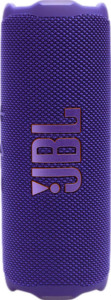
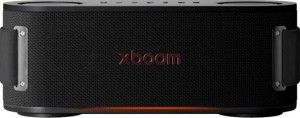
The most immediate design difference between the JBL Flip 7 and the LG XBoom Bounce is sheer physical scale. The Flip 7 is a compact cylindrical speaker weighing 560 g with a volume of roughly 907 cm³, while the XBoom Bounce is a substantially larger unit at 1,315 g and over 2,435 cm³ — nearly 2.7 times the volume. In practice, this means the Flip 7 slips easily into a backpack side pocket and is genuinely portable for hikes or travel, whereas the XBoom Bounce is better described as a transportable party speaker suited for moving between rooms or loading into a car, not carrying on your person for extended periods.

On water resistance, both are rated Waterproof, but the Flip 7 holds a slight edge with an IP68 rating and a submersion tolerance of 1.5 m, compared to the XBoom Bounce's IP67 at 1 m. For most real-world scenarios — poolside, rain, accidental drops in shallow water — both are well protected, but the Flip 7 offers a modest extra margin of safety. Both share identical structural conveniences: a detachable cable and an on-device control panel, while neither includes a travel bag or remote control.

Where the XBoom Bounce carves out a distinct identity is its RGB lighting, which the Flip 7 lacks entirely. For users who prioritize visual ambiance at gatherings, this is a meaningful differentiator. Overall, the Flip 7 has a clear portability and water-resistance edge, while the XBoom Bounce trades compactness for a more visually expressive, larger-format presence.
Sound quality:
has stereo speakers
has a subwoofer
audio output power 2 x 17.5W 3 x 13.3W
Has a passive radiator
has a noise-canceling microphone

Total output power is nearly identical — the JBL Flip 7 delivers 35W across two drivers, while the LG XBoom Bounce spreads 39.9W across three — so raw loudness is not where these speakers meaningfully diverge. The more consequential difference lies in how that power is directed. The Flip 7 dedicates its two-driver setup to a focused mono soundstage reinforced by a subwoofer, prioritizing low-frequency depth and punch. The XBoom Bounce, by contrast, uses its three drivers to produce stereo separation, trading dedicated bass hardware for a wider, more spatially immersive sound field.

Both speakers employ a passive radiator, a design choice that enhances bass response without requiring a powered amplifier stage — a meaningful shared trait that helps each punch above its size class in the low end. For the Flip 7, the passive radiator works in tandem with the subwoofer to reinforce deep bass, which can give it an edge in raw thump at high volumes. The XBoom Bounce uses the passive radiator to compensate for the absence of a dedicated subwoofer, partially bridging the gap.

The right choice here depends squarely on listening priorities. Users who value bass impact and depth — for workouts, outdoor use, or bass-heavy genres — will find the Flip 7's subwoofer-driven approach more satisfying. Those who prioritize stereo imaging and a fuller soundstage, particularly for ambient listening or vocal-forward music, will favor the XBoom Bounce. Neither holds an outright advantage; they reflect genuinely different sound philosophies.

Power:
Battery life 16 hours 30 hours
charge time 2.5 hours 3 hours
has a battery level indicator
has a rechargeable battery
has a removable battery
has wireless charging

Battery longevity is where the LG XBoom Bounce establishes a commanding lead. Its rated 30-hour battery life is nearly double the JBL Flip 7's 16 hours — a gap that translates directly into real-world scenarios. The Flip 7 can comfortably cover a full day of casual listening, but multi-day camping trips or extended outdoor events without a power source are where its battery starts to feel limiting. The XBoom Bounce, by contrast, can run through an entire weekend gathering on a single charge with headroom to spare.

Charge times are close but not identical: the XBoom Bounce takes 3 hours to fully replenish versus 2.5 hours for the Flip 7. Given the XBoom Bounce's much larger capacity, a 30-minute difference is a reasonable tradeoff. Neither speaker supports wireless charging, so both require a wired connection for top-ups. One structural advantage the XBoom Bounce holds is its removable battery — a feature the Flip 7 lacks entirely. In practice, this means a user with a spare battery pack can hot-swap for virtually unlimited runtime, which is a meaningful edge for power users or professional use cases where downtime is unacceptable.

Both speakers include a battery level indicator, ensuring users are never caught off guard by a dead unit. Overall, the XBoom Bounce holds a clear power advantage on every meaningful metric — significantly longer runtime, a swappable battery, and a charge-time penalty that is minimal relative to the capacity gain.

Connectivity:
Bluetooth version 5.4 5.3
supports Bluetooth pairing using NFC
has a socket for a 3.5 mm audio jack
has an AUX input
has aptX Lossless
has LDAC
has aptX Adaptive
has aptX HD
has aptX
has aptX Low Latency
has AAC
has AirPlay
has Chromecast built-in
has Auracast
has Bluetooth LE Audio
maximum Bluetooth range 10 m 10 m
supports Wi-Fi
USB ports 1 1
Has USB Type-C
has a 3.5mm male connector
has an external memory slot
is DLNA-certified
supports Ethernet
has a microphone input

At a glance, the connectivity profiles of these two speakers are remarkably similar — identical 10 m Bluetooth range, a single USB-C port each, and no wired audio input on either side. The version gap is narrow but real: the JBL Flip 7 runs Bluetooth 5.4 versus the LG XBoom Bounce's Bluetooth 5.3. In practice, both versions offer stable, low-energy connections at the same rated range, so this distinction is unlikely to be perceptible in everyday use.

The more meaningful divergence lies in codec and protocol support. The XBoom Bounce adds AAC and Bluetooth LE Audio — two features the Flip 7 lacks. AAC is the native codec for Apple devices, meaning iPhone and iPad users will get more efficient, higher-quality audio transmission on the XBoom Bounce without any extra configuration. LE Audio is a forward-looking protocol built on Bluetooth 5.2+ that enables lower power consumption, improved audio sharing, and better multi-stream capabilities. Both speakers support Auracast, which allows broadcasting audio to multiple listeners simultaneously — a genuinely useful feature for shared listening scenarios that is rare at this price tier.

Neither speaker offers Wi-Fi, AirPlay, Chromecast, or any high-resolution codec like LDAC or aptX, so the comparison stays squarely in the Bluetooth domain. Given the XBoom Bounce's addition of AAC and LE Audio on top of a comparable baseline, it holds a modest but tangible connectivity edge, particularly for Apple ecosystem users and those who may benefit from LE Audio's evolving feature set.

Features:
release date March 2025 March 2025
Can be used wirelessly
supports a remote smartphone
has fast pairing
has voice commands
Has a radio
Has voice prompts
has a mute function
works as a power bank
has a sleep timer

Across most feature categories, these two speakers are effectively identical. Both operate wirelessly, support smartphone remote control via a companion app, provide voice prompts for status feedback, and include a sleep timer — a handy convenience for nighttime listening that automatically powers down the speaker after a set period. Neither offers fast pairing, a radio tuner, a mute function, or the ability to charge other devices as a power bank.

The sole differentiator in this group is voice command support, which the LG XBoom Bounce offers and the JBL Flip 7 does not. This allows the XBoom Bounce to respond to spoken instructions for tasks like playback control or volume adjustment, reducing the need to physically interact with the speaker or reach for a phone. For users who frequently have their hands occupied — during cooking, workouts, or parties — this adds a layer of hands-free convenience that the Flip 7 simply cannot match.

It is a narrow feature set overall for both products, and the practical gap is limited to that single distinction. The XBoom Bounce holds a slight edge here solely on the strength of its voice command capability — a modest but real quality-of-life advantage for users who would actively use it.

Miscellaneous:
supports pairing for stereo sound

This group contains a single data point, and both speakers share it equally: the JBL Flip 7 and the LG XBoom Bounce both support pairing for stereo sound. This means each speaker can be wirelessly linked with a second unit of the same model to create a dedicated left-right stereo channel split — a meaningful upgrade over a standard mono or single-unit setup, particularly in larger rooms or outdoor spaces where a wider soundstage is desirable.

This is a complete tie based on the available data. Neither product holds any advantage over the other in this category.

Comparison Summary & Verdict

After reviewing the full spec sheet, both speakers serve distinct audiences. The JBL Flip 7 stands out as the more portable option, weighing just 560 g with a superior IP68 waterproof rating and a faster 2.5-hour charge time, making it ideal for travelers and outdoor adventurers who need a compact, rugged companion. The LG XBoom Bounce, on the other hand, is built for those who prioritize longer listening sessions with its 30-hour battery life, stereo speakers, RGB lighting, and a removable battery — all at the cost of a larger and heavier form factor. If raw portability and tougher water resistance matter most, the JBL Flip 7 is the smarter pick. If you want a feature-rich, party-ready speaker with extended endurance, the LG XBoom Bounce delivers a compelling package.

JBL Flip 7
Buy JBL Flip 7 if...

Buy the JBL Flip 7 if you want a lightweight, highly portable speaker with a superior IP68 waterproof rating and faster charging. It is the better choice for travel and outdoor use where size and ruggedness come first.

LG XBoom Bounce
Buy LG XBoom Bounce if...

Buy the LG XBoom Bounce if you prioritize a much longer 30-hour battery life, stereo sound, RGB lighting, and the convenience of a removable battery for extended gatherings or home use.