JBL Flip 7
Marshall Middleton II

JBL Flip 7 Marshall Middleton II

Overview

Welcome to our in-depth specification comparison between the JBL Flip 7 and the Marshall Middleton II — two portable Bluetooth speakers that take very different approaches to sound and portability. While both offer waterproof builds and passive radiators, they diverge significantly across audio output power, physical size, battery endurance, and connectivity features. Read on to discover which speaker best fits your lifestyle and listening needs.

Common Features

  • Both products have a control panel placed on the device.
  • Both products are waterproof.
  • Neither product includes a travel bag.
  • Neither product has a touch screen.
  • Neither product has RGB lighting.
  • Neither product is a neckband speaker.
  • Neither product has a remote control.
  • Both products reach a highest frequency of 20000 Hz.
  • Both products feature a passive radiator.
  • Neither product has a noise-canceling microphone.
  • Both products have a battery level indicator.
  • Both products have a rechargeable battery.
  • Neither product has a removable battery.
  • Neither product supports wireless charging.
  • Neither product supports Bluetooth pairing using NFC.
  • Neither product has a 3.5 mm audio jack socket.
  • Neither product has an AUX input.
  • Neither product supports aptX Lossless, LDAC, aptX Adaptive, aptX HD, or aptX.
  • Both products can be used wirelessly and support remote smartphone control.
  • Neither product has fast pairing or voice commands, but both have voice prompts and a sleep timer.

Main Differences

  • The IP rating is IP68 on the JBL Flip 7 and IP67 on the Marshall Middleton II.
  • The volume is 906.888125 cm³ on the JBL Flip 7 and 2479.4 cm³ on the Marshall Middleton II.
  • A neodymium magnet is present on the Marshall Middleton II but not on the JBL Flip 7.
  • A detachable cable is available on the JBL Flip 7 but not on the Marshall Middleton II.
  • The weight is 560 g on the JBL Flip 7 and 1800 g on the Marshall Middleton II.
  • The waterproof depth rating is 1.5 m on the JBL Flip 7 and 1 m on the Marshall Middleton II.
  • The height is 182.5 mm on the JBL Flip 7 and 110 mm on the Marshall Middleton II.
  • The width is 71.5 mm on the JBL Flip 7 and 230 mm on the Marshall Middleton II.
  • The thickness is 69.5 mm on the JBL Flip 7 and 98 mm on the Marshall Middleton II.
  • Stereo speakers are present on the Marshall Middleton II but not on the JBL Flip 7.
  • A subwoofer is included on the JBL Flip 7 but not on the Marshall Middleton II.
  • The lowest frequency is 60 Hz on the JBL Flip 7 and 45 Hz on the Marshall Middleton II.
  • The audio output power is 2 x 17.5W on the JBL Flip 7 and 4 x 80W on the Marshall Middleton II.
  • The sound pressure level is 80 dB/mW on the JBL Flip 7 and 97 dB/mW on the Marshall Middleton II.
  • Battery life is 16 hours on the JBL Flip 7 and 30 hours on the Marshall Middleton II.
  • Charge time is 2.5 hours on the JBL Flip 7 and 3 hours on the Marshall Middleton II.
  • The Bluetooth version is 5.4 on the JBL Flip 7 and 5.3 on the Marshall Middleton II.
  • AAC support is present on the Marshall Middleton II but not on the JBL Flip 7.
  • Auracast support is present on the JBL Flip 7 but not on the Marshall Middleton II.
  • The maximum Bluetooth range is 10 m on the JBL Flip 7 and 60 m on the Marshall Middleton II.
  • The ability to work as a power bank is available on the Marshall Middleton II but not on the JBL Flip 7.
  • Pairing for stereo sound is supported on the JBL Flip 7 but not on the Marshall Middleton II.
Specs Comparison
JBL Flip 7

JBL Flip 7

Marshall Middleton II

Marshall Middleton II

Design:
Ingress Protection (IP) rating IP68 IP67
volume 906.888125 cm³ 2479.4 cm³
has a neodymium magnet
control panel placed on a device
water resistance Waterproof Waterproof
travel bag is included
has a touch screen
has RGB lighting
has a detachable cable
is a neckband speaker
has a remote control
weight 560 g 1800 g
waterproof depth rating 1.5 m 1 m
height 182.5 mm 110 mm
width 71.5 mm 230 mm
thickness 69.5 mm 98 mm

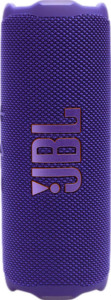
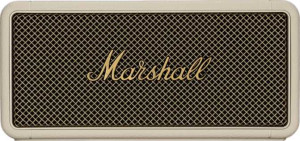
The most defining design difference between these two speakers is sheer size and portability. The JBL Flip 7 weighs 560 g and occupies roughly 907 cm³, making it a genuinely pocket-friendly, grab-and-go device. The Marshall Middleton II, by contrast, tips the scales at 1800 g — over three times heavier — and takes up nearly 2479 cm³. This is not a subtle difference; it fundamentally shapes where and how you use each speaker. The Flip 7 is built for backpacks, bike rides, and beach bags, while the Middleton II is more of a portable home speaker you carry intentionally, not casually.

On water resistance, both are rated waterproof, but the Flip 7 holds a meaningful edge: its IP68 certification covers submersion down to 1.5 m, versus the Middleton II's IP67 rating at 1 m. In practice, both handle rain, splashes, and poolside use comfortably, but the Flip 7 offers slightly more peace of mind in and around water. The Middleton II does include a neodymium magnet — a driver component associated with stronger magnetic flux and potentially more efficient audio conversion — though its acoustic impact cannot be judged from design specs alone. Only the Flip 7 offers a detachable cable, a small but useful convenience for charging flexibility.

Both speakers share a control panel placed directly on the device, and neither offers a touch screen, RGB lighting, a remote control, or an included travel bag — so those categories are evenly matched. Overall, the Flip 7 has a clear design advantage for portability and water protection, while the Middleton II's bulk suggests it is positioned as a higher-output home-to-patio speaker rather than a true on-the-move companion.
Sound quality:
has stereo speakers
has a subwoofer
highest frequency 20000 Hz 20000 Hz
lowest frequency 60 Hz 45 Hz
audio output power 2 x 17.5W 4 x 80W
Has a passive radiator
has a noise-canceling microphone
sound pressure level 80 dB/mW 97 dB/mW

Raw power tells much of the story here. The Marshall Middleton II delivers 4 x 80W of total audio output — a massive 320W combined — against the JBL Flip 7's 2 x 17.5W (35W total). That is nearly nine times more amplification, and it directly explains the Middleton II's significantly higher sound pressure level of 97 dB/mW versus the Flip 7's 80 dB/mW. A 17 dB gap is not marginal; it translates to a dramatically louder, room-filling sound that can realistically serve outdoor gatherings or large indoor spaces where the Flip 7 would simply run out of headroom.

Low-frequency extension is another area where the Middleton II pulls ahead. Its 45 Hz low-end floor undercuts the Flip 7's 60 Hz cutoff, meaning it can reproduce deeper bass tones — think the lower registers of a kick drum or bass guitar — that the Flip 7 cannot fully articulate. Both speakers rely on a passive radiator to extend bass beyond what their drivers alone could manage, but the Middleton II's larger enclosure and greater driver power give that radiator more to work with. The Flip 7 compensates with a dedicated subwoofer driver, which helps it punch above its weight class for its size, but it cannot overcome the fundamental physics gap. Both cap at 20,000 Hz on the high end, so treble extension is even.

One structural difference worth noting: the Middleton II supports stereo speakers, meaning left and right channel separation is reproduced by distinct drivers — delivering a wider, more spatially defined soundstage. The Flip 7 is a mono configuration, which collapses that stereo image into a single point of sound. For music where imaging and spatial width matter, this is a meaningful distinction. Across virtually every sound quality metric in this data set, the Middleton II holds a decisive advantage — it is louder, deeper, and spatially richer. The Flip 7 remains competitive for its compact class, but the comparison favors the Middleton II clearly.

Power:
Battery life 16 hours 30 hours
charge time 2.5 hours 3 hours
has a battery level indicator
has a rechargeable battery
has a removable battery
has wireless charging

Battery life is where the Marshall Middleton II establishes a clear lead: its rated 30 hours of playback is nearly double the Flip 7's 16 hours. In practical terms, that gap could mean the difference between recharging every day or every other day for typical listening sessions — a meaningful convenience advantage, especially for extended outdoor use or travel where a power outlet is not always at hand. It is worth noting that the Middleton II's higher output power means its battery is working considerably harder to sustain that runtime, which makes the 30-hour figure even more impressive in context.

The Flip 7 does have one counter-point: it recovers faster, requiring just 2.5 hours to fully charge versus the Middleton II's 3 hours. That 30-minute difference is modest, but for a user who forgets to charge overnight and needs a quick top-up, it is a tangible advantage. Beyond that, both speakers are evenly matched in the remaining power features — neither offers wireless charging or a removable battery, and both include a battery level indicator so you are never caught off guard by a dying speaker.

On balance, the Middleton II holds the clear edge in this category. Its substantially longer runtime outweighs the Flip 7's marginally faster charge time for most use cases. The Flip 7's 16 hours is respectable for its size class, but users who prioritize going longer between charges will find the Middleton II's endurance more compelling.

Connectivity:
Bluetooth version 5.4 5.3
supports Bluetooth pairing using NFC
has a socket for a 3.5 mm audio jack
has an AUX input
has aptX Lossless
has LDAC
has aptX Adaptive
has aptX HD
has aptX
has aptX Low Latency
has AAC
has AirPlay
has Chromecast built-in
has Auracast
has Bluetooth LE Audio
maximum Bluetooth range 10 m 60 m
supports Wi-Fi
USB ports 1 1
Has USB Type-C
has a 3.5mm male connector
has an external memory slot
is DLNA-certified
supports Ethernet
has a microphone input

The single most striking gap in this category is Bluetooth range. The Marshall Middleton II is rated to 60 m, while the JBL Flip 7 caps out at just 10 m — a sixfold difference. For a backyard party, a large open-plan space, or any scenario where the source device and speaker are not in the same room, the Middleton II offers dramatically more freedom of movement before the connection starts to degrade. The Flip 7's 10 m is adequate for close-range personal use but becomes a real constraint the moment walls or distance enter the picture.

Each speaker holds one exclusive codec or feature worth noting. The Middleton II supports AAC, which is the preferred Bluetooth audio codec for Apple devices and delivers noticeably better audio quality over Bluetooth than the standard SBC fallback — a genuine advantage for iPhone and iPad users. The Flip 7, meanwhile, supports Auracast, a newer Bluetooth broadcast standard that allows one audio source to stream simultaneously to multiple receivers, enabling shared listening scenarios. Neither codec or feature directly cancels the other out — their value depends entirely on how you intend to use the speaker. Beyond these distinctions, both share identical wired connectivity: a single USB Type-C port, no AUX input, and no 3.5 mm jack. Neither supports Wi-Fi, NFC pairing, or any lossless audio codec.

Taken together, the Middleton II has the connectivity edge for most users — its vastly superior Bluetooth range is a day-to-day advantage that the Flip 7 cannot match. The Flip 7's Auracast support is forward-looking but niche, whereas AAC and 60 m range address practical, common use cases. The Bluetooth version difference (5.4 vs 5.3) is negligible in real-world use and does not meaningfully shift the balance.

Features:
release date March 2025 July 2025
Can be used wirelessly
supports a remote smartphone
has fast pairing
has voice commands
Has a radio
Has voice prompts
works as a power bank
has a sleep timer

This is one of the closest category matchups across the entire comparison. Both the JBL Flip 7 and the Marshall Middleton II support wireless playback, smartphone remote control, voice prompts, and a sleep timer — covering all the core convenience features most users expect from a modern portable speaker. Neither offers fast pairing, voice commands, or a built-in radio, so those omissions are shared equally and do not favor either side.

The only functional differentiator in this group is that the Middleton II works as a power bank, allowing it to charge other devices directly from its battery. Given the Middleton II's already substantial 30-hour battery capacity, this is a genuinely useful bonus — on a camping trip or a long day out, it can top up a smartphone without needing a separate power pack. The Flip 7 lacks this capability entirely.

The Middleton II takes a narrow edge here solely on the strength of its power bank functionality. It is not a transformative advantage, but it is a real-world convenience that the Flip 7 simply cannot offer. For users who already carry the Middleton II as their primary speaker, having it double as an emergency charger reduces the number of accessories they need to bring — a small but meaningful addition to an otherwise evenly matched feature set.

Miscellaneous:
supports pairing for stereo sound

This group comes down to a single but genuinely meaningful spec: the JBL Flip 7 supports pairing for stereo sound, while the Marshall Middleton II does not. Stereo pairing allows two units of the same speaker to be linked together, with one handling the left channel and the other the right — creating a true stereo soundstage that a single speaker cannot replicate. For users who own or plan to own two Flip 7s, this unlocks a substantially wider and more immersive listening experience, particularly for music where left-right imaging matters.

The Middleton II's lack of this feature is notable given that it already functions as a stereo speaker internally. However, the inability to pair a second unit means the soundstage remains fixed to a single enclosure's width, with no option to spatially expand it by adding a second speaker. For a speaker at the Middleton II's size and price tier, the absence of stereo pairing is a limitation worth considering if room-filling, spatially separated sound is a priority.

The Flip 7 holds the clear edge in this category. Stereo pairing is a feature that meaningfully expands what the speaker can do, and its presence on the Flip 7 — a much more compact and affordable device — makes it a standout advantage, especially for users open to a two-speaker setup.

Comparison Summary & Verdict

After examining every specification, these two speakers clearly target different audiences. The JBL Flip 7 stands out for users who value portability above all — at just 560 g with a compact form factor, an IP68 waterproof rating (rated to 1.5 m depth), and support for Auracast and stereo pairing, it is the ideal travel-friendly companion. The Marshall Middleton II, on the other hand, is built for those who want serious home or outdoor audio performance, delivering 4 x 80W of output power, a deeper bass response down to 45 Hz, a commanding 97 dB/mW sound pressure level, and an impressive 30-hour battery life — plus the bonus of functioning as a power bank. Choose the JBL Flip 7 for lightweight adventures; choose the Marshall Middleton II for powerful, long-lasting sound.

JBL Flip 7
Buy JBL Flip 7 if...

Buy the JBL Flip 7 if you want a lightweight, highly portable speaker with a superior IP68 waterproof rating, Auracast support, and the ability to pair two units for stereo sound.

Marshall Middleton II
Buy Marshall Middleton II if...

Buy the Marshall Middleton II if you prioritize powerful audio performance, a deeper bass response, a much longer 30-hour battery life, and the added convenience of using it as a power bank.