JBL Flip 7
Sony ULT Field 3

JBL Flip 7 Sony ULT Field 3

Overview

Welcome to our in-depth spec comparison between the JBL Flip 7 and the Sony ULT Field 3. These two portable Bluetooth speakers share a number of common traits, yet diverge significantly when it comes to size and portability, protection ratings, low-frequency performance, and battery endurance. Whether you prioritize rugged compactness or extended playtime and deeper bass reach, this comparison will help you find the right fit for your needs.

Common Features

  • Neither product has a neodymium magnet.
  • Both products have a control panel placed on the device.
  • Neither product includes a travel bag.
  • Neither product has a touch screen.
  • Neither product has RGB lighting.
  • Both products have a detachable cable.
  • Neither product is a neckband speaker.
  • Neither product has a remote control.
  • Neither product has stereo speakers.
  • Both products share a highest frequency of 20000 Hz.
  • Both products have a battery level indicator.
  • Both products have a rechargeable battery.
  • Neither product has a removable battery.
  • Neither product supports wireless charging.
  • Neither product supports Bluetooth pairing using NFC.
  • Neither product has a 3.5 mm audio jack socket or AUX input.
  • Neither product supports aptX, aptX HD, aptX Adaptive, aptX Lossless, or LDAC.
  • Both products can be used wirelessly and support remote smartphone control.
  • Neither product has fast pairing or voice commands.
  • Both products have voice prompts, and neither has a radio or mute function.
  • Neither product works as a power bank.
  • Both products support pairing for stereo sound.

Main Differences

  • The Ingress Protection rating is IP68 on the JBL Flip 7 and IP66 on the Sony ULT Field 3.
  • Water resistance is waterproof on the JBL Flip 7, while the Sony ULT Field 3 is only water resistant.
  • Volume is 906.888125 cm³ on the JBL Flip 7 and 2285.312 cm³ on the Sony ULT Field 3.
  • Weight is 560 g on the JBL Flip 7 and 1200 g on the Sony ULT Field 3.
  • Height is 182.5 mm on the JBL Flip 7 and 113 mm on the Sony ULT Field 3.
  • Width is 71.5 mm on the JBL Flip 7 and 256 mm on the Sony ULT Field 3.
  • Thickness is 69.5 mm on the JBL Flip 7 and 79 mm on the Sony ULT Field 3.
  • A subwoofer is present on the JBL Flip 7 but not available on the Sony ULT Field 3.
  • The lowest frequency is 60 Hz on the JBL Flip 7 and 20 Hz on the Sony ULT Field 3.
  • A passive radiator is present on the JBL Flip 7 but not available on the Sony ULT Field 3.
  • Battery life is 16 hours on the JBL Flip 7 and 24 hours on the Sony ULT Field 3.
  • The Bluetooth version is 5.4 on the JBL Flip 7 and 5.2 on the Sony ULT Field 3.
  • Auracast support is present on the JBL Flip 7 but not available on the Sony ULT Field 3.
Specs Comparison
JBL Flip 7

JBL Flip 7

Sony ULT Field 3

Sony ULT Field 3

Design:
Ingress Protection (IP) rating IP68 IP66
volume 906.888125 cm³ 2285.312 cm³
has a neodymium magnet
control panel placed on a device
water resistance Waterproof Water resistant
travel bag is included
has a touch screen
has RGB lighting
has a detachable cable
is a neckband speaker
has a remote control
weight 560 g 1200 g
height 182.5 mm 113 mm
width 71.5 mm 256 mm
thickness 69.5 mm 79 mm

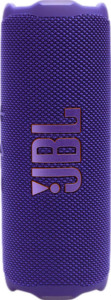
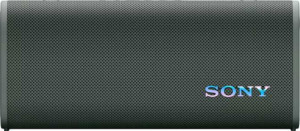
The most immediate design distinction between these two speakers is their form factor and portability. The JBL Flip 7 is a compact cylindrical speaker weighing 560 g with a volume of roughly 907 cm³, while the Sony ULT Field 3 is a substantially larger unit at 1,200 g and over 2,285 cm³. In practice, the Flip 7 is genuinely pocket- or bag-friendly for travel and outdoor use, whereas the ULT Field 3 is better categorized as a portable-but-not-pocketable speaker intended for stationary setups like a beach camp or backyard gathering. Neither includes a travel bag, so users of the Sony in particular will need to plan for carrying it separately.

On water resistance, the difference is meaningful. The Flip 7 carries an IP68 rating, meaning it can be submerged beyond one meter — it can handle being dropped in a pool or a sink without concern. The ULT Field 3 is rated IP66, which offers strong protection against powerful water jets and rain but is not rated for submersion. For truly wet environments like kayaking or poolside use, the Flip 7 offers noticeably more confidence. Both share the same non-premium magnet type and neither offers RGB lighting or a touch screen, keeping their physical interfaces straightforward.

Overall, the JBL Flip 7 has a clear design edge for users prioritizing portability and ruggedness — it is less than half the weight, significantly more compact, and better protected against water. The Sony ULT Field 3's larger footprint is a deliberate trade-off that likely serves acoustic ambitions rather than design convenience, making it the less flexible choice from a pure design and portability standpoint.
Sound quality:
has stereo speakers
has a subwoofer
highest frequency 20000 Hz 20000 Hz
lowest frequency 60 Hz 20 Hz
Has a passive radiator

Both speakers share the same upper frequency ceiling of 20,000 Hz and neither offers stereo output — but their low-end architectures tell very different stories. The Sony ULT Field 3 claims a remarkably low floor of 20 Hz, which represents the theoretical limit of human hearing. The JBL Flip 7, by contrast, bottoms out at 60 Hz, meaning deep sub-bass frequencies are simply outside its range.

What makes this comparison nuanced, however, is the hardware behind those numbers. The Flip 7 achieves its bass response through a dedicated subwoofer and a passive radiator — a mechanical system that reinforces low-end output by moving additional air without requiring extra amplification power. These are well-established tools for extracting punchy, physical bass from a compact enclosure. The Sony, meanwhile, has neither a subwoofer nor a passive radiator, raising the question of how credibly it reproduces those claimed lower frequencies at meaningful volume and with real impact. A stated frequency range does not guarantee usable output at those extremes.

On balance, the specs present a genuine trade-off. The Sony ULT Field 3 holds a theoretical edge in frequency range, but the Flip 7's dedicated bass hardware suggests its low-end performance may be more tangibly felt in real listening conditions. Users who prioritize measurable bass extension on paper will lean toward the Sony, while those who value engineered, physical bass impact may find the Flip 7's subwoofer and passive radiator setup more convincing in practice.

Power:
Battery life 16 hours 24 hours
has a battery level indicator
has a rechargeable battery
has a removable battery
has wireless charging

Battery life is where these two speakers diverge most clearly in this category. The Sony ULT Field 3 is rated for 24 hours of playback, a full 8 hours more than the JBL Flip 7's 16 hours. That gap is not trivial — it represents 50% more runtime between charges, which translates to the difference between recharging once during a weekend camping trip versus not needing to think about it at all. For extended outdoor or travel use, this is a meaningful real-world advantage.

Beyond that headline figure, the two speakers are structurally identical in their power design: both use a non-removable rechargeable battery, neither supports wireless charging, and both include a battery level indicator so users are never caught off guard by a sudden shutdown. The absence of wireless charging on both means a cable is always required, which is worth noting for users accustomed to that convenience on other devices.

The Sony ULT Field 3 holds a clear edge in this group purely on the strength of its longer battery life. Given that both products share the same charging constraints, the 24-hour rating is an unambiguous advantage for anyone planning extended listening sessions away from a power source.

Connectivity:
Bluetooth version 5.4 5.2
supports Bluetooth pairing using NFC
has a socket for a 3.5 mm audio jack
has an AUX input
has aptX Lossless
has LDAC
has aptX Adaptive
has aptX HD
has aptX
has aptX Low Latency
has AAC
has AirPlay
has Chromecast built-in
has Auracast
has Bluetooth LE Audio
maximum Bluetooth range 10 m 10 m
supports Wi-Fi
USB ports 1 1
Has USB Type-C
has a 3.5mm male connector
has an external memory slot
is DLNA-certified
supports Ethernet
has a microphone input

Connectivity is largely a wash between these two speakers, with one notable exception. Both rely exclusively on Bluetooth — no Wi-Fi, no AUX input, no 3.5mm jack — and share the same 10 m maximum Bluetooth range and a single USB-C port. Neither supports any high-resolution audio codec such as LDAC, aptX HD, or AAC, which means both are limited to standard Bluetooth audio transmission quality regardless of the source device.

Where they part ways is Bluetooth version and multipoint broadcasting capability. The JBL Flip 7 runs on Bluetooth 5.4 versus the Sony ULT Field 3's Bluetooth 5.2 — a newer spec that brings incremental improvements in connection efficiency and reliability, though both versions are modern enough to perform well in typical use. More meaningfully, the Flip 7 supports Auracast, a broadcast audio feature introduced with Bluetooth 5.2 that allows a single source to stream simultaneously to multiple receivers. The Sony lacks this capability entirely.

Auracast support gives the JBL Flip 7 a modest but genuine edge in this category. For users who want to sync multiple speakers together or take advantage of emerging Auracast-compatible ecosystems, the Flip 7 is the only option here. Outside of that use case, the two products are effectively equivalent in their connectivity offerings.

Features:
release date March 2025 April 2025
Can be used wirelessly
supports a remote smartphone
has fast pairing
has voice commands
Has a radio
Has voice prompts
has a mute function
works as a power bank
has a sleep timer

Across every feature in this category, the JBL Flip 7 and Sony ULT Field 3 are in complete lockstep. Both support wireless use and smartphone remote control, include voice prompts for status feedback, and offer a sleep timer — a handy feature for winding down music automatically without draining the battery overnight. Neither supports fast pairing, voice commands, or doubles as a power bank for charging other devices.

The absence of fast pairing on both is a minor inconvenience in a world where many competing speakers offer one-tap or accelerated Bluetooth handshakes, but it is unlikely to be a dealbreaker in daily use. More notably, neither speaker can act as a power bank — a feature that occasionally appears at this product tier and can be genuinely useful during extended outdoor trips when charging options are scarce.

This group is an unambiguous tie. There is not a single feature differentiator between these two products based on the provided data, and a buyer's decision here will have to rest entirely on the advantages each speaker holds in other specification categories.

Miscellaneous:
supports pairing for stereo sound

The only data point in this category is shared equally by both speakers: each supports pairing for stereo sound, meaning two units of the same model can be linked together to create a dedicated left/right stereo configuration. For listeners who find a single speaker's mono output limiting in larger spaces, this opens the door to a more immersive soundstage — provided they own two of the same device.

With just this one spec in play, the result is a straightforward tie. Neither the JBL Flip 7 nor the Sony ULT Field 3 holds any advantage here, and buyers interested in this capability will find it equally available on both.

Comparison Summary & Verdict

After examining every specification, it is clear that both speakers serve different listener profiles. The JBL Flip 7 stands out with its superior IP68 waterproof rating, more compact and lightweight build at just 560 g, a built-in passive radiator, and support for the latest Bluetooth 5.4 with Auracast — making it ideal for active users who need a highly portable, rugged speaker for outdoor adventures. The Sony ULT Field 3, on the other hand, wins on battery life at 24 hours, a much lower frequency floor of 20 Hz for richer bass, and a larger acoustic presence, making it the better choice for listeners who prioritize sound depth and longer sessions at home or at gatherings. Neither product supports wireless charging or includes a travel bag, so both sit on equal footing in those areas.

JBL Flip 7
Buy JBL Flip 7 if...

Buy the JBL Flip 7 if you want a lightweight, truly waterproof speaker with Auracast support and the latest Bluetooth 5.4 for on-the-go use.

Sony ULT Field 3
Buy Sony ULT Field 3 if...

Buy the Sony ULT Field 3 if you prioritize longer battery life of 24 hours and a deeper bass reach down to 20 Hz for extended listening sessions.