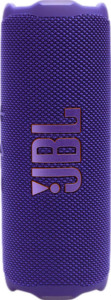
JBL Flip 7
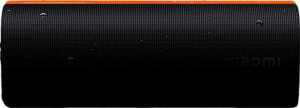
Xiaomi Sound Party

JBL Flip 7 Xiaomi Sound Party

Overview

When choosing between the JBL Flip 7 and the Xiaomi Sound Party, two waterproof Bluetooth speakers that share an IP68 rating and Bluetooth 5.4, the decision is far from straightforward. From portability and acoustic engineering to battery endurance and raw output power, these two speakers take notably different approaches to delivering a great listening experience. Read on as we break down every key specification to help you find the right fit.

Common Features

  • Both products have an IP68 ingress protection rating.
  • Neither product has a neodymium magnet.
  • Both products have a control panel placed on the device.
  • Both products are waterproof.
  • Neither product includes a travel bag.
  • Neither product has a touch screen.
  • Neither product has RGB lighting.
  • Both products have a detachable cable.
  • Neither product has stereo speakers.
  • Both products share the same highest frequency of 20000 Hz.
  • Both products share the same lowest frequency of 60 Hz.
  • Neither product has a noise-canceling microphone.
  • Both products have a battery level indicator.
  • Both products have a rechargeable battery.
  • Neither product has a removable battery.
  • Neither product supports wireless charging.
  • Both products use Bluetooth version 5.4.
  • Neither product supports Bluetooth pairing using NFC.
  • Neither product has a 3.5 mm audio jack socket or AUX input.
  • Neither product supports aptX Lossless, LDAC, aptX Adaptive, or aptX HD.
  • Both products can be used wirelessly.
  • Both products support remote smartphone control.
  • Neither product has fast pairing.
  • Neither product supports voice commands.
  • Neither product has a radio.
  • Both products have voice prompts.
  • Neither product has a mute function.
  • Both products have a sleep timer.
  • Both products support pairing for stereo sound.

Main Differences

  • Volume is 906.888125 cm³ on JBL Flip 7 and 2158.32 cm³ on Xiaomi Sound Party.
  • Weight is 560 g on JBL Flip 7 and 1200 g on Xiaomi Sound Party.
  • Height is 182.5 mm on JBL Flip 7 and 92 mm on Xiaomi Sound Party.
  • Width is 71.5 mm on JBL Flip 7 and 255 mm on Xiaomi Sound Party.
  • Thickness is 69.5 mm on JBL Flip 7 and 92 mm on Xiaomi Sound Party.
  • A subwoofer is present on JBL Flip 7 but not available on Xiaomi Sound Party.
  • Audio output power is 2 x 17.5W on JBL Flip 7 and 2 x 25W on Xiaomi Sound Party.
  • A passive radiator is present on JBL Flip 7 but not available on Xiaomi Sound Party.
  • Sound pressure level is 80 dB/mW on JBL Flip 7 and 25 dB/mW on Xiaomi Sound Party.
  • Battery power is 4800 mAh on JBL Flip 7 and 5200 mAh on Xiaomi Sound Party.
  • Battery life is 16 hours on JBL Flip 7 and 26 hours on Xiaomi Sound Party.
  • Charge time is 2.5 hours on JBL Flip 7 and 4 hours on Xiaomi Sound Party.
  • Auracast support is present on JBL Flip 7 but not available on Xiaomi Sound Party.
  • The ability to work as a power bank is available on Xiaomi Sound Party but not on JBL Flip 7.
Specs Comparison
JBL Flip 7

JBL Flip 7

Xiaomi Sound Party

Xiaomi Sound Party

Design:
Ingress Protection (IP) rating IP68 IP68
volume 906.888125 cm³ 2158.32 cm³
has a neodymium magnet
control panel placed on a device
water resistance Waterproof Waterproof
travel bag is included
has a touch screen
has RGB lighting
has a detachable cable
is a neckband speaker
has a remote control
weight 560 g 1200 g
height 182.5 mm 92 mm
width 71.5 mm 255 mm
thickness 69.5 mm 92 mm

Both the JBL Flip 7 and the Xiaomi Sound Party share an IP68 waterproof rating, meaning both can withstand full submersion — a genuine parity point for outdoor and poolside use. They also both feature an on-device control panel and a detachable cable, so neither has a meaningful edge in usability layout or connectivity convenience.

Where these two speakers diverge sharply is in their physical footprint. The JBL Flip 7 is a compact cylindrical unit at 182.5 × 71.5 × 69.5 mm and 560 g, while the Xiaomi Sound Party is a wide, flat form factor at 255 × 92 × 92 mm and a substantial 1,200 g — more than double the weight. The Xiaomi's volume of 2,158 cm³ versus the JBL's 907 cm³ confirms it is roughly 2.4× larger overall. In real-world terms, the JBL slips into a bag with ease and is genuinely portable, while the Xiaomi is better characterized as a transportable party speaker — movable, but not something you'd casually carry on a hike.

For portability and everyday carry, the JBL Flip 7 has a clear advantage. The Xiaomi Sound Party's larger chassis likely serves a different purpose — potentially housing bigger drivers or a larger battery — but based strictly on design specs, buyers prioritizing grab-and-go convenience will find the Flip 7 far more practical. The Xiaomi suits stationary or semi-stationary settings where its bulk is less of a trade-off.

Sound quality:
has stereo speakers
has a subwoofer
highest frequency 20000 Hz 20000 Hz
lowest frequency 60 Hz 60 Hz
audio output power 2 x 17.5W 2 x 25W
Has a passive radiator
has a noise-canceling microphone
sound pressure level 80 dB/mW 25 dB/mW

On paper, the Xiaomi Sound Party edges ahead in raw power with 2 × 25W of audio output versus the JBL Flip 7's 2 × 17.5W, and both share an identical frequency range of 60 Hz – 20,000 Hz. However, wattage alone is a poor predictor of perceived loudness and audio quality — the architecture behind the drivers matters just as much as the numbers on the spec sheet.

This is where the JBL Flip 7 makes a compelling case. It includes a dedicated subwoofer and a passive radiator — a combination specifically engineered to extend and reinforce low-frequency reproduction without demanding additional power. The result is typically richer, more textured bass than a similarly sized speaker could otherwise produce. The Xiaomi Sound Party has neither, meaning its low-end output, despite the wider chassis, relies entirely on its main drivers. More telling is the sound pressure level gap: the JBL registers 80 dB/mW compared to the Xiaomi's 25 dB/mW — a difference of 55 dB, which in practical terms means the JBL is dramatically more efficient at converting power into perceived volume.

The JBL Flip 7 holds a decisive advantage in sound quality based on these specs. Its subwoofer, passive radiator, and far superior sensitivity rating suggest a fuller, louder, and more refined listening experience than its higher-wattage rival can offer. The Xiaomi's extra power output does not compensate for its lack of bass reinforcement hardware and its significantly lower efficiency.

Power:
battery power 4800 mAh 5200 mAh
Battery life 16 hours 26 hours
charge time 2.5 hours 4 hours
has a battery level indicator
has a rechargeable battery
has a removable battery
has wireless charging

Battery capacity between the two is relatively close — 4,800 mAh for the JBL Flip 7 versus 5,200 mAh for the Xiaomi Sound Party — but the real-world runtime gap is anything but. The Xiaomi is rated for a remarkable 26 hours of playback, compared to the JBL's already-respectable 16 hours. That 10-hour difference likely reflects the Xiaomi's larger, more power-efficient driver configuration running at lower sustained loads relative to its capacity, and it translates directly into fewer recharge cycles over a weekend trip or extended outdoor use.

The trade-off surfaces at charging time. Refueling the Xiaomi takes 4 hours, while the JBL Flip 7 recovers in just 2.5 hours — a meaningful difference if you need a quick top-up before heading out. Neither model supports wireless charging, and both feature a battery level indicator, so users always have visibility into remaining charge. The absence of a removable battery on both means long-term battery degradation is a shared consideration.

For marathon listening sessions, the Xiaomi Sound Party has a clear advantage with its significantly longer runtime. But the JBL Flip 7 counters with faster recharging, making it the smarter pick for users who prioritize flexibility and shorter downtime over maximum continuous playtime.

Connectivity:
Bluetooth version 5.4 5.4
supports Bluetooth pairing using NFC
has a socket for a 3.5 mm audio jack
has an AUX input
has aptX Lossless
has LDAC
has aptX Adaptive
has aptX HD
has aptX
has aptX Low Latency
has AAC
has AirPlay
has Chromecast built-in
has Auracast
has Bluetooth LE Audio
maximum Bluetooth range 10 m 10 m
supports Wi-Fi
USB ports 1 1
Has USB Type-C
has a 3.5mm male connector
has an external memory slot
is DLNA-certified
supports Ethernet
has a microphone input

Connectivity is a story of near-total parity here. Both speakers run on Bluetooth 5.4, share an identical 10 m maximum wireless range, and are equipped with a single USB-C port. Neither supports Wi-Fi, AUX input, NFC pairing, or any high-resolution audio codec — no aptX, LDAC, or AAC on either side. For most users, this means a straightforward Bluetooth connection is the only wireless path in, which keeps setup simple but limits audio streaming quality to standard SBC.

The sole differentiator in this group is the JBL Flip 7's support for Auracast — a Bluetooth broadcast standard that allows a single speaker to simultaneously share audio with multiple Auracast-compatible receivers nearby. In practical terms, this opens the door to multi-listener scenarios without requiring individual pairing, a feature the Xiaomi Sound Party entirely lacks. It is worth noting that Auracast adoption is still in its early stages, so its immediate utility depends on whether other devices in a user's ecosystem support it.

Given how closely matched the rest of the connectivity specs are, the JBL Flip 7 holds a narrow but meaningful edge by virtue of Auracast support alone. For users who have no interest in that feature, connectivity is effectively a tie.

Features:
release date March 2025 June 2025
Can be used wirelessly
supports a remote smartphone
has fast pairing
has voice commands
Has a radio
Has voice prompts
has a mute function
works as a power bank
has a sleep timer

Feature sets for these two speakers are largely identical — both operate wirelessly, support remote smartphone control, offer voice prompts, and include a sleep timer. These shared conveniences place them on equal footing for everyday usability, and the absence of fast pairing or voice command support on either side means neither gains an advantage in setup speed or hands-free control.

The single feature that separates them is the Xiaomi Sound Party's ability to function as a power bank. Given that the Xiaomi carries a 5,200 mAh battery, this is a genuinely practical bonus — at a park, festival, or campsite, it can top up a smartphone when no outlet is available. The JBL Flip 7 offers no such capability, which is a missed opportunity for a speaker positioned as a portable outdoor companion.

The Xiaomi Sound Party has the edge in this category, and it is an unambiguous one. The power bank function adds real-world utility that goes beyond audio playback, making the Xiaomi a more versatile device for users who spend extended time away from power sources.

Miscellaneous:
supports pairing for stereo sound

This category contains a single data point, and it is shared: both the JBL Flip 7 and the Xiaomi Sound Party support stereo pairing, meaning two units of the same model can be linked together to deliver true left/right channel separation. For listeners who own or plan to own a second speaker, this unlocks a noticeably wider and more immersive soundstage than any single unit can produce on its own.

This is a complete tie based on the available data. Neither product holds any advantage here, and the decision in this category will come down to which speaker a user finds more compelling across the other specification groups.

Comparison Summary & Verdict

After examining all the specifications, it is clear that the JBL Flip 7 and Xiaomi Sound Party are engineered for different kinds of listeners. The JBL Flip 7 stands out with its compact build at just 560 g, a built-in subwoofer backed by a passive radiator, a considerably higher sound pressure level of 80 dB/mW, exclusive Auracast connectivity, and a much faster 2.5-hour charge time, making it the stronger choice for those who value portability and acoustic precision on the go. The Xiaomi Sound Party, by contrast, delivers greater raw muscle with 2 x 25W of audio output, an impressive 26-hour battery life, a larger 5200 mAh battery, and the practical bonus of doubling as a power bank, making it ideal for extended outdoor gatherings or anyone who needs both endurance and extra charging capability in a single device.

JBL Flip 7
Buy JBL Flip 7 if...

Buy the JBL Flip 7 if you want a lightweight, highly portable speaker with a built-in subwoofer, passive radiator, superior sound pressure level, Auracast support, and a faster 2.5-hour charge time.

Xiaomi Sound Party
Buy Xiaomi Sound Party if...

Choose the Xiaomi Sound Party if you prioritize longer battery life at 26 hours, higher audio output power at 2 x 25W, and the added practicality of a built-in power bank function.