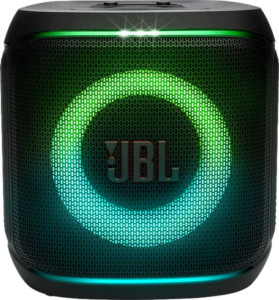
JBL Partybox Encore 2
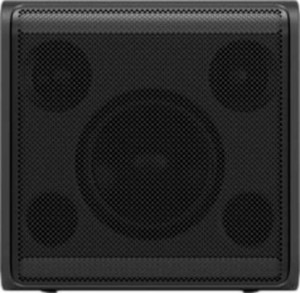
LG XBoom Stage 301

JBL Partybox Encore 2 LG XBoom Stage 301

Overview

When choosing between the JBL Partybox Encore 2 and the LG XBoom Stage 301, you are looking at two similarly sized party speakers that share a surprising amount of common ground — yet differ meaningfully in areas like bass extension, connectivity options, and battery endurance. This head-to-head comparison dives into their design, sound quality, power, and features to help you decide which speaker best fits your needs.

Common Features

  • Both products have an IPX4 ingress protection rating.
  • Neither product uses a neodymium magnet.
  • Both products have a control panel placed on the device.
  • Both products are sweat resistant.
  • Neither product includes a travel bag.
  • Neither product has a touch screen.
  • Both products have a detachable cable.
  • Neither product is a neckband speaker.
  • Neither product has stereo speakers.
  • Neither product has a subwoofer.
  • Both products reach a highest frequency of 20000 Hz.
  • Neither product has magnetic shielding.
  • Both products have a battery level indicator.
  • Both products have a rechargeable battery.
  • Neither product has a removable battery.
  • Neither product supports wireless charging.
  • Neither product supports Bluetooth pairing using NFC.
  • Neither product has a 3.5 mm audio jack socket.
  • Neither product supports aptX, aptX HD, aptX Adaptive, aptX Low Latency, aptX Lossless, or LDAC.
  • Both products can be used wirelessly.
  • Both products support remote smartphone control.
  • Neither product has fast pairing.
  • Neither product supports voice commands.
  • Neither product has a radio.
  • Both products have voice prompts.
  • Neither product has a mute function.
  • Neither product works as a power bank.
  • Both products support pairing for stereo sound.

Main Differences

  • Volume is 28452.05 cm³ on JBL Partybox Encore 2 and 28861.50 cm³ on LG XBoom Stage 301.
  • Driver unit size is 135 mm on JBL Partybox Encore 2 and 165 mm on LG XBoom Stage 301.
  • RGB lighting is not available on JBL Partybox Encore 2 but is present on LG XBoom Stage 301.
  • Weight is 6400 g on JBL Partybox Encore 2 and 6168.86 g on LG XBoom Stage 301.
  • Height is 338.6 mm on JBL Partybox Encore 2 and 327.66 mm on LG XBoom Stage 301.
  • Width is 319.5 mm on JBL Partybox Encore 2 and 312.42 mm on LG XBoom Stage 301.
  • Thickness is 263 mm on JBL Partybox Encore 2 and 281.94 mm on LG XBoom Stage 301.
  • Lowest frequency is 40 Hz on JBL Partybox Encore 2 and 20 Hz on LG XBoom Stage 301.
  • Battery power is 4722 mAh on JBL Partybox Encore 2 and 4700 mAh on LG XBoom Stage 301.
  • Battery life is 15 hours on JBL Partybox Encore 2 and 12 hours on LG XBoom Stage 301.
  • Charge time is 3.5 hours on JBL Partybox Encore 2 and 3 hours on LG XBoom Stage 301.
  • Bluetooth version is 5.4 on JBL Partybox Encore 2 and 5.3 on LG XBoom Stage 301.
  • AUX input is available on JBL Partybox Encore 2 but not present on LG XBoom Stage 301.
  • AAC support is not available on JBL Partybox Encore 2 but is present on LG XBoom Stage 301.
  • Maximum Bluetooth range is 30 m on JBL Partybox Encore 2 and 10 m on LG XBoom Stage 301.
  • Microphone input is available on JBL Partybox Encore 2 but not present on LG XBoom Stage 301.
Specs Comparison
JBL Partybox Encore 2

JBL Partybox Encore 2

LG XBoom Stage 301

LG XBoom Stage 301

Design:
Ingress Protection (IP) rating IPX4 IPX4
volume 28452.0501 cm³ 28861.503438168 cm³
driver unit size 135 mm 165 mm
has a neodymium magnet
control panel placed on a device
water resistance Sweat resistant Sweat resistant
travel bag is included
has a touch screen
has RGB lighting
has a detachable cable
is a neckband speaker
has a remote control
weight 6400 g 6168.86 g
height 338.6 mm 327.66 mm
width 319.5 mm 312.42 mm
thickness 263 mm 281.94 mm

Both the JBL Partybox Encore 2 and the LG XBoom Stage 301 share a solid baseline of design fundamentals: an IPX4 water-resistance rating (sweat and splash resistant, though neither is submersion-proof), a control panel directly on the unit, a detachable cable, and no included travel bag. At roughly 28,450–28,860 cm³ of total volume, these are comparably sized speakers in the same physical class, so neither holds a meaningful portability edge over the other on footprint alone.

Where the designs begin to diverge is in driver size and lighting. The LG XBoom Stage 301 houses a notably larger 165 mm driver compared to the Encore 2's 135 mm — a 22% increase in cone area that, at equal cabinet volume, generally translates to more efficient low-frequency movement and the potential for deeper, fuller bass reproduction. On visual flair, only the LG offers RGB lighting, which is a meaningful differentiator for party or stage use where visual atmosphere matters. The JBL, by contrast, has no RGB capability at all. In terms of weight, the LG is marginally lighter at approximately 6,169 g versus the JBL's 6,400 g, though the ~230 g difference is unlikely to be felt in practice during typical carry or setup. The JBL is slightly taller and wider but thinner, while the LG is shorter and narrower but deeper — pure form-factor trade-offs with no clear practical winner.

Overall, the LG XBoom Stage 301 holds the design edge in this group. Its larger driver unit is the more technically significant differentiator, and the addition of RGB lighting gives it a clear advantage for users who value stage presence. The JBL Partybox Encore 2 matches it on all shared protection and usability features, but offers no compensating design advantage that stands out from the provided specs.
Sound quality:
has stereo speakers
has a subwoofer
highest frequency 20000 Hz 20000 Hz
lowest frequency 40 Hz 20 Hz
has a magnetic shielding

Across most sound quality specs, these two speakers are virtually identical — both are mono units (no stereo separation), neither includes a dedicated subwoofer, both reach the same 20,000 Hz upper frequency limit, and neither employs magnetic shielding. The single differentiator in this group, but a meaningful one, is low-frequency extension: the LG XBoom Stage 301 reaches down to 20 Hz, while the JBL Partybox Encore 2 bottoms out at 40 Hz.

In practical terms, 40 Hz already covers the majority of bass content in music — kick drums, bass guitar, and most electronic low-end sit comfortably above that threshold. However, the range between 20 Hz and 40 Hz is where sub-bass and physical rumble live — the kind of low-end you feel as much as hear in genres like EDM, hip-hop, or cinematic audio. A spec claiming extension down to 20 Hz suggests the LG is designed to reach into that sub-bass territory, which aligns with its larger 165 mm driver noted in the design group.

The LG XBoom Stage 301 takes the edge here on paper, solely due to its lower frequency floor. That said, rated frequency range is a manufacturer-declared figure and does not account for output level or distortion at those extremes — real-world performance at 20 Hz may be modest. Still, based strictly on the provided specs, the LG has a broader low-frequency range on paper, making it the stronger candidate for bass-heavy listening scenarios.

Power:
battery power 4722 mAh 4700 mAh
Battery life 15 hours 12 hours
charge time 3.5 hours 3 hours
has a battery level indicator
has a rechargeable battery
has a removable battery
has wireless charging

The battery capacities here are nearly identical — 4722 mAh for the JBL Partybox Encore 2 versus 4700 mAh for the LG XBoom Stage 301, a difference of just 22 mAh that is functionally irrelevant. Both use a non-removable, rechargeable cell with no wireless charging option, and both include a battery level indicator so you are never caught off guard mid-session. The shared specs tell a consistent story: these are similarly equipped in terms of battery hardware.

Where they diverge is in battery life and charge time. The Encore 2 is rated for 15 hours of playback versus the LG's 12 hours — a 25% advantage that, given nearly equal battery capacity, suggests the JBL either drives its amplifier more efficiently or operates at a lower average power draw. That three-hour gap is genuinely meaningful in real-world use: it can be the difference between a full-day outdoor event on a single charge versus needing a top-up. On the flip side, the LG charges slightly faster at 3 hours compared to the JBL's 3.5 hours, so it recovers from empty about 30 minutes quicker — a minor but real convenience advantage.

On balance, the JBL Partybox Encore 2 holds the clear edge in this group. The longer battery life is the more impactful spec for most users, as minimizing interruptions during use outweighs the marginal charge-time benefit the LG offers. Unless rapid recharging is a priority, the JBL's endurance advantage makes it the stronger performer in the Power category.

Connectivity:
Bluetooth version 5.4 5.3
supports Bluetooth pairing using NFC
has a socket for a 3.5 mm audio jack
has an AUX input
has aptX Lossless
has LDAC
has aptX Adaptive
has aptX HD
has aptX
has aptX Low Latency
has AAC
has AirPlay
has Chromecast built-in
has Auracast
has Bluetooth LE Audio
maximum Bluetooth range 30 m 10 m
supports Wi-Fi
USB ports 1 1
Has USB Type-C
has a 3.5mm male connector
has an external memory slot
is DLNA-certified
supports Ethernet
has a microphone input

Starting with Bluetooth, the JBL Partybox Encore 2 runs on the newer Bluetooth 5.4 versus the LG XBoom Stage 301's 5.3 — a generational step that brings modest improvements in connection efficiency, but more importantly, the JBL's maximum wireless range of 30 m dwarfs the LG's 10 m. For outdoor or large-room use, that threefold range advantage is genuinely practical: it means far more freedom to move around without risking dropouts. Both speakers share Auracast support — a newer Bluetooth broadcast standard that allows audio sharing to multiple listeners — and both offer a single USB Type-C port, keeping them on equal footing for those features.

Beyond Bluetooth range, the JBL pulls ahead on physical input versatility. It includes an AUX input and a microphone input, neither of which the LG provides. An AUX port is a reliable fallback for non-Bluetooth sources, and a dedicated mic input meaningfully expands the JBL's use case for live performance, karaoke, or public address scenarios. The LG counters with AAC codec support — relevant for Apple device users who benefit from higher-quality wireless audio transmission over standard SBC — but the JBL lists no advanced codec support at all, which is a minor shortcoming for audiophile streaming use cases.

Taken together, the JBL Partybox Encore 2 holds a clear connectivity advantage. Its superior Bluetooth range, AUX input, and microphone jack give it substantially more flexibility across real-world scenarios. The LG's AAC support is a niche plus for specific users, but it cannot offset the JBL's broader and more impactful set of connectivity options.

Features:
release date February 2025 April 2025
Can be used wirelessly
supports a remote smartphone
has fast pairing
has voice commands
Has a radio
Has voice prompts
has a mute function
works as a power bank
has a sleep timer

This is a rare case of a perfect spec-for-spec tie. Every single feature in this group — wireless operation, smartphone remote support, voice prompts, sleep timer, and the absence of fast pairing, voice commands, radio, mute function, and power bank capability — is identical across the JBL Partybox Encore 2 and the LG XBoom Stage 301. There is no differentiator to analyze here based on the provided data.

That said, the shared feature set is worth contextualizing. Smartphone remote support is a practical convenience for party use, allowing playback and volume control without physically reaching the speaker. Voice prompts aid usability in loud environments where reading a display isn't feasible. The sleep timer is a quality-of-life addition suited for home use. Notably, neither speaker can act as a power bank — so they won't charge your phone — and neither supports fast pairing, meaning initial Bluetooth setup follows the standard process.

With every spec in this group matching exactly, the verdict is a complete tie. Neither the Encore 2 nor the XBoom Stage 301 holds any advantage here, and this category will not be a deciding factor in choosing between them.

Miscellaneous:
supports pairing for stereo sound

The Miscellaneous group contains a single data point: both the JBL Partybox Encore 2 and the LG XBoom Stage 301 support stereo pairing, meaning two units of the same model can be linked together to deliver true left/right channel separation. This is a meaningful capability for users who own or plan to own two of the same speaker — it transforms what are otherwise mono units into a proper stereo setup, significantly widening the soundstage for larger spaces or more immersive listening.

Since both speakers offer this feature, it provides no competitive advantage to either side. The verdict here is a tie — this spec is relevant context for buyers considering a dual-speaker purchase, but it will not differentiate the two products in any buying decision.

Comparison Summary & Verdict

After examining all available specifications, both the JBL Partybox Encore 2 and the LG XBoom Stage 301 prove to be well-matched party speakers sharing IPX4 protection, stereo pairing support, and wireless playback. However, each has a clear edge in specific areas. The JBL Partybox Encore 2 stands out with a superior 15-hour battery life, a longer 30-metre Bluetooth range, a built-in AUX input and microphone input, and a newer Bluetooth 5.4 standard — making it the stronger pick for performers and extended outdoor use. The LG XBoom Stage 301, on the other hand, wins with a deeper 20 Hz bass response, a larger 165 mm driver, RGB lighting for a more vibrant atmosphere, and AAC codec support for higher-quality wireless audio. Choose accordingly based on your priority.

JBL Partybox Encore 2
Buy JBL Partybox Encore 2 if...

Buy the JBL Partybox Encore 2 if you need a longer battery life, a greater Bluetooth range, or require AUX and microphone inputs for live use.

LG XBoom Stage 301
Buy LG XBoom Stage 301 if...

Buy the LG XBoom Stage 301 if you prioritize deeper bass extension, a larger driver, RGB lighting, or AAC audio codec support.