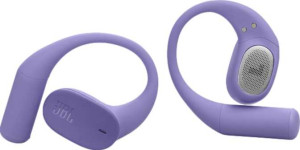
JBL Sense Lite
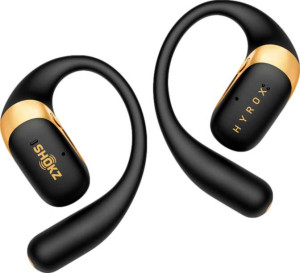
Shokz OpenFit 2 Plus

JBL Sense Lite Shokz OpenFit 2 Plus

Overview

Welcome to our in-depth spec comparison between the JBL Sense Lite and the Shokz OpenFit 2 Plus, two open-ear wireless earbuds competing for your attention. Both share a cord-free design and multipoint connectivity, but they diverge in meaningful ways across battery endurance, build weight, water resistance, and charging flexibility. Read on to discover which of these earbuds is the better fit for your lifestyle.

Common Features

  • Both products have an open-ear fit.
  • Neither product has wires or cables.
  • Neither product is a neckband earbud.
  • Neither product has RGB lighting.
  • Both products feature stereo speakers.
  • Neither product has a UV light.
  • Neither product has a display.
  • Neither product has active noise cancellation (ANC).
  • Neither product has passive noise reduction.
  • Both products have a lowest frequency of 20 Hz.
  • Both products have a highest frequency of 20000 Hz.
  • Neither product supports spatial audio.
  • Neither product has Dolby Atmos.
  • Neither product has a neodymium magnet.
  • Neither product has a solar power battery.
  • Both products have a battery level indicator.
  • Both products have a rechargeable battery.
  • Neither product supports fast pairing.
  • Both products have USB Type-C.
  • Neither product has LDAC, LDHC, Bluetooth LE Audio, aptX Adaptive, aptX Low Latency, or aptX HD.
  • Neither product has an ambient sound mode.
  • Neither product has in/on-ear detection.
  • Both products support fast charging.
  • Both products support multipoint connection with 2 devices.
  • Neither product can read notifications.
  • Neither product has a built-in translator.
  • Both products have a mute function.
  • Both products can be used as a headset.
  • Both products have a noise-canceling microphone.

Main Differences

  • The Ingress Protection rating is IP54 on JBL Sense Lite and IP55 on Shokz OpenFit 2 Plus.
  • JBL Sense Lite is sweat resistant, while Shokz OpenFit 2 Plus is water resistant.
  • The weight is 38 g on JBL Sense Lite and 18.8 g on Shokz OpenFit 2 Plus.
  • Wingtips are included with Shokz OpenFit 2 Plus but not with JBL Sense Lite.
  • The driver unit size is 15.4 mm on JBL Sense Lite and 17.3 mm on Shokz OpenFit 2 Plus.
  • Battery life is 8 hours on JBL Sense Lite and 11 hours on Shokz OpenFit 2 Plus.
  • The battery life of the charging case is 24 hours on JBL Sense Lite and 37 hours on Shokz OpenFit 2 Plus.
  • Charge time is 1.5 hours on JBL Sense Lite and 2 hours on Shokz OpenFit 2 Plus.
  • Wireless charging is available on Shokz OpenFit 2 Plus but not on JBL Sense Lite.
Specs Comparison
JBL Sense Lite

JBL Sense Lite

Shokz OpenFit 2 Plus

Shokz OpenFit 2 Plus

Design:
Fit Open-ear Open-ear
Ingress Protection (IP) rating IP54 IP55
water resistance Sweat resistant Water resistant
weight 38 g 18.8 g
has no wires or cables
are neckband earbuds
wingtips included
has RGB lighting
has stereo speakers
has UV light
Has a display

Both the JBL Sense Lite and the Shokz OpenFit 2 Plus share the same fundamental design philosophy: fully wireless, open-ear form factors with no neckband, no RGB lighting, and no display — keeping things clean and focused on audio utility. Where they diverge meaningfully is in weight and weather protection, two specs that directly shape everyday wearability.

The most striking difference is weight. At just 18.8 g, the OpenFit 2 Plus is less than half the mass of the Sense Lite's 38 g. For open-ear headphones worn during extended sessions — workouts, commutes, or all-day work — that gap is genuinely noticeable; lighter earphones cause less fatigue and are easier to forget you're wearing. The OpenFit 2 Plus also includes wingtips, which the Sense Lite lacks, offering a more secure fit during physical activity. On the durability side, the OpenFit 2 Plus holds an IP55 rating (water resistant) versus the Sense Lite's IP54 (sweat resistant) — a modest but real step up that means the Shokz can handle light rain or splashing, not just perspiration.

In this category, the Shokz OpenFit 2 Plus holds a clear design edge: it is dramatically lighter, better protected against water ingress, and comes with wingtips for a more stable fit — all factors that matter most for active or prolonged use.

Sound quality:
has active noise cancellation (ANC)
has passive noise reduction
driver unit size 15.4 mm 17.3 mm
lowest frequency 20 Hz 20 Hz
highest frequency 20000 Hz 20000 Hz
supports spatial audio
has Dolby Atmos
has Dirac Virtuo
has a neodymium magnet

From a sound quality spec standpoint, these two headphones share a lot of common ground. Both cover the full standard human hearing range of 20 Hz to 20,000 Hz, and neither offers ANC, passive noise reduction, spatial audio, Dolby Atmos, or Dirac Virtuo — meaning both are straightforward, open-ear listening experiences with no software-enhanced soundstage or noise management.

The only measurable differentiator here is driver size: the OpenFit 2 Plus uses a 17.3 mm driver versus the Sense Lite's 15.4 mm. A larger driver has more physical surface area to move air, which in principle can translate to fuller low-end reproduction and higher output volume — particularly relevant for open-ear designs that inherently lose bass energy to the surrounding environment. That said, driver size alone does not guarantee superior sound; tuning, diaphragm material, and acoustic engineering all play significant roles that these specs do not capture.

On paper, the Shokz OpenFit 2 Plus has a marginal edge in this category solely due to its larger driver, which offers a theoretical advantage in bass body and overall loudness for an open-ear form factor. However, given that all other sound-related specs are identical, the real-world difference may be subtle — and neither product distinguishes itself with premium audio features.

Power:
Battery life 8 hours 11 hours
Battery life of charging case 24 hours 37 hours
charge time 1.5 hours 2 hours
has wireless charging
Has a solar power battery
has a battery level indicator
has a rechargeable battery

Battery life is where the gap between these two products becomes hard to ignore. The Shokz OpenFit 2 Plus delivers 11 hours of continuous playback versus the JBL Sense Lite's 8 hours — a 37% advantage that meaningfully changes the use case. For users who wear their earphones through full workdays, long flights, or back-to-back gym sessions without wanting to think about charging, that extra three hours provides real peace of mind. The total system endurance gap is even wider: the OpenFit 2 Plus's case extends total battery to 37 hours, compared to 24 hours for the Sense Lite — nearly a full extra day of combined use.

The Sense Lite does recharge faster, needing just 1.5 hours versus the OpenFit 2 Plus's 2 hours, which is a minor consolation for power users who are disciplined about plugging in overnight. More impactful, however, is the OpenFit 2 Plus's support for wireless charging — a convenience feature the Sense Lite lacks entirely. For users already in a Qi charging ecosystem, being able to drop the case on a pad rather than hunting for a cable is a genuine quality-of-life improvement.

The Shokz OpenFit 2 Plus wins this category decisively: it lasts longer per charge, stores more total energy in the case, and adds wireless charging — the only trade-off being a marginally slower wired charge time, which is unlikely to matter for most users.

Connectivity:
has fast pairing
Has USB Type-C
has LDAC
has LDHC
has Bluetooth LE Audio
has aptX Adaptive
has aptX Low Latency
has aptX HD
has aptX
has aptX Lossless
has aptX Voice
has Auracast
maximum Bluetooth range 10 m 10 m
supports Bluetooth pairing using NFC
Can be used wirelessly
has AAC

Connectivity is the one category where these two products are in complete lockstep. Both the JBL Sense Lite and the Shokz OpenFit 2 Plus are fully wireless, charge via USB-C, and top out at a 10 m Bluetooth range — enough for typical indoor use but not exceptional by modern standards. Neither supports fast pairing or NFC pairing, so initial setup follows the standard manual Bluetooth process on both.

More notable is what both products lack: there is no support for any high-resolution audio codec — no LDAC, no aptX variant, and no AAC. This means both devices rely on standard SBC Bluetooth transmission, which compresses audio more aggressively than premium codecs. For open-ear headphones positioned around fitness and casual listening, this is an expected trade-off, but audiophiles or users streaming high-quality audio from services like Apple Music or Tidal will not be extracting the full potential of those streams. Neither product supports Bluetooth LE Audio or Auracast either, forgoing the efficiency and multi-stream sharing benefits of the newer standard.

This category is a complete tie — every single connectivity spec is identical between the two. Neither product holds any advantage here, and prospective buyers should weigh other categories to differentiate their decision.

Features:
release date October 2025 October 2025
has ambient sound mode
has in/on-ear detection
Supports fast charging
multipoint count 2 2
can read notifications
Has a built-in translator
has a mute function
can be used as a headset
control panel placed on a device
Has voice prompts
travel bag is included
Has an in-line control panel
Has a temperature sensor
Has a built-in camera remote control function

Much like connectivity, the features category reveals no meaningful separation between these two products — every single spec is identical. Both support fast charging, connect to 2 devices simultaneously via multipoint, and offer on-device controls with voice prompts, making day-to-day operation broadly similar regardless of which you choose.

The shared feature set is reasonably practical for everyday use: dual-device multipoint means seamless switching between, say, a laptop and a phone without manual re-pairing; the mute function and headset capability make both viable for calls and video meetings; and the included travel bag adds a small but appreciated touch of portability. Neither product, however, offers ambient sound mode or in-ear detection — features that have become common at this tier and whose absence means no automatic pause when you remove the earphones and no software-enhanced awareness of your surroundings.

This is another complete tie — there is no feature advantage on either side. Buyers who prioritize ambient mode or ear detection will find both products equally limited in that regard, while those focused purely on call functionality and multipoint convenience will find both equally capable.

Microphone:
has a noise-canceling microphone

With only a single data point available for this category, the comparison is straightforward: both the JBL Sense Lite and the Shokz OpenFit 2 Plus are equipped with a noise-canceling microphone. For open-ear headphones that are frequently used in motion or outdoors, this is a meaningful baseline feature — mic noise cancellation works to filter out wind, ambient chatter, and environmental sounds so that call recipients hear the speaker more clearly rather than their surroundings.

This is a complete tie. The provided specs offer no further microphone detail — such as microphone count or beamforming configuration — to differentiate the two. Both products meet the same stated standard, and neither holds an advantage in this category based on the available data.

Comparison Summary & Verdict

After examining all the specs, both earbuds deliver a solid open-ear experience with noise-canceling microphones, fast charging, and dual-device multipoint pairing. However, the differences are telling. The Shokz OpenFit 2 Plus pulls ahead with a significantly longer 11-hour battery life (vs. 8 hours), a more generous 37-hour charging case, wireless charging support, a higher IP55 water resistance rating, and a much lighter 18.8 g weight — making it the stronger choice for active users and all-day wearers. The JBL Sense Lite, on the other hand, charges faster at just 1.5 hours and may appeal to those who prefer a familiar brand and a slightly larger driver at 15.4 mm. Choose the Shokz OpenFit 2 Plus for endurance and versatility; choose the JBL Sense Lite if quick top-ups and brand preference matter most to you.

JBL Sense Lite
Buy JBL Sense Lite if...

Buy the JBL Sense Lite if you prioritize faster charging at 1.5 hours and do not need wireless charging or extended battery life.

Shokz OpenFit 2 Plus
Buy Shokz OpenFit 2 Plus if...

Buy the Shokz OpenFit 2 Plus if you want longer battery life, a lighter and more water-resistant build, wireless charging, and included wingtips for a more secure fit.