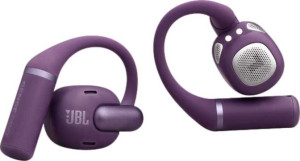
JBL Sense Pro
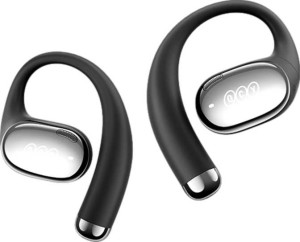
QCY Crossky R70

JBL Sense Pro QCY Crossky R70

Overview

When choosing between the JBL Sense Pro and the QCY Crossky R70, the decision is far from straightforward. These two wireless earbuds take notably different approaches to fit, sound, and endurance — making the comparison a fascinating one. From their distinct ear fit styles to their contrasting positions on battery life and audio codec support, each product has carved out its own identity. Read on as we break down every specification to help you find the right match for your needs.

Common Features

  • Both the JBL Sense Pro and QCY Crossky R70 are completely wireless with no wires or cables.
  • Neither the JBL Sense Pro nor the QCY Crossky R70 are neckband earbuds.
  • RGB lighting is not featured on either the JBL Sense Pro or the QCY Crossky R70.
  • Both the JBL Sense Pro and QCY Crossky R70 have stereo speakers.
  • UV light is not present on either the JBL Sense Pro or the QCY Crossky R70.
  • Neither the JBL Sense Pro nor the QCY Crossky R70 has a display.
  • Active noise cancellation (ANC) is not available on either the JBL Sense Pro or the QCY Crossky R70.
  • Both the JBL Sense Pro and QCY Crossky R70 have a lowest frequency of 20 Hz.
  • Dolby Atmos support is not available on either the JBL Sense Pro or the QCY Crossky R70.
  • Neither the JBL Sense Pro nor the QCY Crossky R70 features a neodymium magnet.
  • Both the JBL Sense Pro and QCY Crossky R70 have a charge time of 2 hours.
  • Solar power battery is not featured on either the JBL Sense Pro or the QCY Crossky R70.
  • Both the JBL Sense Pro and QCY Crossky R70 include a battery level indicator.
  • Both the JBL Sense Pro and QCY Crossky R70 have a rechargeable battery.
  • Fast pairing is not available on either the JBL Sense Pro or the QCY Crossky R70.
  • Both the JBL Sense Pro and QCY Crossky R70 use USB Type-C for charging.
  • Both the JBL Sense Pro and QCY Crossky R70 support Bluetooth version 6.
  • Neither the JBL Sense Pro nor the QCY Crossky R70 supports aptX Adaptive, aptX Low Latency, aptX HD, LDHC, or Bluetooth LE Audio.
  • Ambient sound mode is not available on either the JBL Sense Pro or the QCY Crossky R70.
  • Both the JBL Sense Pro and QCY Crossky R70 support fast charging.
  • Both the JBL Sense Pro and QCY Crossky R70 support multipoint connection with up to 2 devices.
  • Neither the JBL Sense Pro nor the QCY Crossky R70 can read notifications.
  • Both the JBL Sense Pro and QCY Crossky R70 include a mute function.
  • Both the JBL Sense Pro and QCY Crossky R70 can be used as a headset.
  • Both the JBL Sense Pro and QCY Crossky R70 have a control panel placed on the device.
  • Both the JBL Sense Pro and QCY Crossky R70 are equipped with 4 microphones.
  • Both the JBL Sense Pro and QCY Crossky R70 feature a noise-canceling microphone.

Main Differences

  • The JBL Sense Pro has an in-ear fit, while the QCY Crossky R70 has an open-ear fit.
  • The ingress protection rating is IP54 on the JBL Sense Pro and IPX5 on the QCY Crossky R70.
  • The JBL Sense Pro is sweat resistant, while the QCY Crossky R70 is water resistant.
  • Wingtips are included with the QCY Crossky R70 but not with the JBL Sense Pro.
  • Passive noise reduction is present on the JBL Sense Pro but not available on the QCY Crossky R70.
  • The highest frequency is 40000 Hz on the JBL Sense Pro and 20000 Hz on the QCY Crossky R70.
  • Spatial audio support is available on the JBL Sense Pro but not on the QCY Crossky R70.
  • Battery life is 8 hours on the JBL Sense Pro and 13 hours on the QCY Crossky R70.
  • The battery life of the charging case is 30 hours on the JBL Sense Pro and 49 hours on the QCY Crossky R70.
  • Wireless charging is supported on the JBL Sense Pro but not on the QCY Crossky R70.
  • LDAC support is present on the QCY Crossky R70 but not available on the JBL Sense Pro.
  • AAC support is present on the QCY Crossky R70 but not available on the JBL Sense Pro.
Specs Comparison
JBL Sense Pro

JBL Sense Pro

QCY Crossky R70

QCY Crossky R70

Design:
Fit In-ear Open-ear
Ingress Protection (IP) rating IP54 IPX5
water resistance Sweat resistant Water resistant
has no wires or cables
are neckband earbuds
wingtips included
has RGB lighting
has stereo speakers
has UV light
Has a display

The most fundamental design difference between these two earbuds is their fit style. The JBL Sense Pro uses a traditional in-ear fit, sealing the ear canal for passive noise isolation, while the QCY Crossky R70 adopts an open-ear design that rests outside the canal. In practice, this means the Sense Pro will generally deliver better audio immersion and sound isolation, whereas the Crossky R70 keeps you more aware of your surroundings — a meaningful distinction for outdoor or safety-conscious use cases. The R70 also includes wingtips to help secure the open-ear fit, which becomes important given that open-ear designs rely entirely on physical anchoring rather than canal friction.

On water resistance, both are fully wireless and carry respectable ratings, but there is a subtle difference worth noting. The Sense Pro holds an IP54 rating, protecting against both dust ingress and sweat, making it suitable for workouts. The Crossky R70 carries IPX5, which offers no rated dust protection but handles water jets more robustly — positioning it as slightly better for rain or heavy sweat exposure, though dust resilience is unrated. Neither product features RGB lighting, UV light, or a display, keeping the design focused and utilitarian.

Overall, the design edge depends entirely on the intended use. The Sense Pro suits users who prioritize immersive audio and workout-grade dust protection, while the Crossky R70 is better suited for those who want situational awareness with a more water-resilient build. Neither is strictly superior — they serve meaningfully different listener profiles.
Sound quality:
has active noise cancellation (ANC)
has passive noise reduction
lowest frequency 20 Hz 20 Hz
highest frequency 40000 Hz 20000 Hz
supports spatial audio
has Dolby Atmos
has Dirac Virtuo
has a neodymium magnet

Neither earbud offers active noise cancellation, but the JBL Sense Pro does benefit from passive noise reduction — a natural consequence of its in-ear fit that physically blocks ambient sound. The QCY Crossky R70, with its open-ear design, provides no noise isolation of any kind, meaning environmental sound passes through freely. For focused listening in noisy environments, this is a tangible disadvantage for the R70.

Frequency response tells a similar story. Both earbuds share the same 20 Hz lower bound, covering the full range of human hearing on the bass end. However, the Sense Pro extends to 40,000 Hz — double the Crossky R70's ceiling of 20,000 Hz. While most adults cannot consciously perceive frequencies above 20 kHz, a wider high-frequency range is generally associated with greater driver capability and can contribute to a more spacious, detailed sound through harmonic richness. The Sense Pro also supports spatial audio, adding a simulated three-dimensional soundstage that the R70 entirely lacks — a meaningful perk for movie watching or immersive content.

Across every measurable sound quality dimension provided here, the Sense Pro holds a clear advantage: passive isolation, a wider frequency range, and spatial audio support all point in the same direction. The Crossky R70 makes no comparable claims in this category, and users who prioritize audio fidelity or immersive listening should weigh this gap seriously.

Power:
Battery life 8 hours 13 hours
Battery life of charging case 30 hours 49 hours
charge time 2 hours 2 hours
has wireless charging
Has a solar power battery
has a battery level indicator
has a rechargeable battery

Battery endurance is where the QCY Crossky R70 pulls ahead decisively. Its earbuds last 13 hours on a single charge compared to the Sense Pro's 8 hours, and the gap widens when factoring in the case: the R70's combined total reaches 49 hours versus the Sense Pro's 30 hours. In practical terms, the R70 can comfortably handle multi-day trips or heavy daily use without reaching for a charger, while the Sense Pro users will need to top up more frequently — particularly noticeable for long-haul travelers or all-day listeners.

Charge time is identical at 2 hours for both, so neither has a speed advantage when plugging in. Where the Sense Pro reclaims some ground is with wireless charging support, a convenience feature the R70 lacks entirely. For users who already own a Qi pad on their desk or nightstand, this removes the need to fumble with cables — a small but genuinely useful quality-of-life benefit that partially offsets the raw capacity gap.

Taken together, the Crossky R70 holds the edge in power for users who prioritize staying unplugged as long as possible, with substantially more battery life both from the earbuds and the case. The Sense Pro counters with wireless charging convenience, making it the better fit for those already embedded in a wireless charging ecosystem who can tolerate more frequent top-ups.

Connectivity:
has fast pairing
Has USB Type-C
Bluetooth version 6 6
has LDAC
has LDHC
has Bluetooth LE Audio
has aptX Adaptive
has aptX Low Latency
has aptX HD
has aptX
has aptX Lossless
has aptX Voice
has Auracast
maximum Bluetooth range 10 m 10 m
supports Bluetooth pairing using NFC
Can be used wirelessly
has AAC

At the foundation, these two earbuds are evenly matched: both run on Bluetooth 6, share an identical 10 m maximum range, use USB-C for wired charging, and offer no fast pairing or NFC. The shared Bluetooth 6 platform means both benefit from the latest generation's improved efficiency and connection stability, so neither holds a structural advantage in raw wireless performance.

The meaningful separation comes down to audio codec support. The QCY Crossky R70 supports both LDAC and AAC, while the JBL Sense Pro supports neither. LDAC is Sony's high-resolution wireless codec, capable of transmitting up to three times the data of standard SBC — on compatible Android devices, this can translate into noticeably richer, more detailed audio. AAC meanwhile is the preferred codec for Apple devices, ensuring higher-quality transmission on iPhones without falling back to the baseline SBC codec. The Sense Pro's absence of both means it defaults to SBC regardless of the source device, which is a real-world audio quality ceiling that matters to discerning listeners.

For connectivity, the Crossky R70 has a clear edge. Its codec support makes it more versatile across both Android and Apple ecosystems and unlocks a higher audio quality ceiling for users with compatible devices. The Sense Pro offers no codec advantages to offset this gap, making the R70 the stronger choice for anyone who prioritizes wireless audio fidelity.

Features:
release date August 2025 April 2025
has ambient sound mode
has in/on-ear detection
Supports fast charging
multipoint count 2 2
can read notifications
has a mute function
can be used as a headset
control panel placed on a device
Has voice prompts
travel bag is included
Has an in-line control panel
Has a temperature sensor
Has a built-in camera remote control function

Across every feature listed in this category, the JBL Sense Pro and QCY Crossky R70 are in complete lockstep. Both support fast charging, connect to two devices simultaneously via multipoint, include on-device controls, a mute function, voice prompts, and ship with a travel bag. Both can function as headsets for calls, and neither offers ambient sound mode, ear detection, or notification readout.

The practical takeaway is that these earbuds are feature-for-feature identical within this group. Multipoint pairing at 2 devices is a genuinely useful perk shared by both — it means seamless switching between, say, a laptop and a phone without manual re-pairing. Fast charging is similarly valuable on both sides, helping recover usable battery quickly even if charge speed specifics are not detailed here.

This category is a dead tie. No differentiators exist between the two products based on the provided data, and any purchasing decision within this spec group carries no advantage either way. Buyers should weigh the other categories — design, sound quality, power, and connectivity — where the two products diverge more meaningfully.

Microphone:
number of microphones 4 4
has a noise-canceling microphone

Both the JBL Sense Pro and QCY Crossky R70 field 4 microphones with noise-canceling capability, making them equivalent on paper for call and voice performance. A four-mic array is a meaningful setup — it allows the earbuds to use beamforming techniques, isolating the user's voice while suppressing wind, street noise, and background chatter more effectively than simpler single- or dual-mic configurations.

Given that the specs are identical across both data points available, this category offers no basis for differentiation. Whether the underlying microphone hardware or signal processing algorithms produce different real-world call quality cannot be determined from the provided data alone — but by the numbers, neither product holds a stated advantage over the other.

The microphone category is a tie. Both earbuds arrive equally equipped for hands-free calls and voice use, and this spec group should not influence a purchase decision between the two.

Comparison Summary & Verdict

After a thorough look at the specs, the JBL Sense Pro and QCY Crossky R70 emerge as two earbuds built for different kinds of listeners. The JBL Sense Pro stands out with its passive noise reduction, spatial audio support, a wider frequency range reaching up to 40000 Hz, and the convenience of wireless charging — making it a strong pick for commuters and detail-oriented listeners who value immersive sound. The QCY Crossky R70, on the other hand, wins decisively on battery life (13 hours on the earbuds, 49 hours from the case), brings LDAC and AAC codec support for higher-quality wireless audio transmission, and opts for an open-ear fit with wingtips included — ideal for active users who need all-day comfort and longer listening sessions without sacrificing audio fidelity.

JBL Sense Pro
Buy JBL Sense Pro if...

Buy the JBL Sense Pro if you want passive noise reduction, spatial audio support, and the convenience of wireless charging in an in-ear design built for immersive listening.

QCY Crossky R70
Buy QCY Crossky R70 if...

Buy the QCY Crossky R70 if you prioritize longer battery life, LDAC and AAC codec support, and an open-ear fit with wingtips for all-day active use.