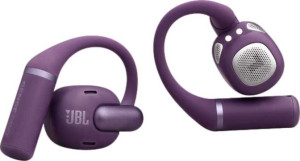
JBL Sense Pro
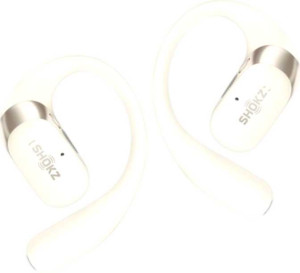
Shokz OpenFit 2

JBL Sense Pro Shokz OpenFit 2

Overview

Choosing between the JBL Sense Pro and the Shokz OpenFit 2 means navigating two genuinely different approaches to wireless audio. These earbuds share a solid common foundation — including dual-device multipoint, fast charging, and four-microphone setups — yet they diverge sharply when it comes to fit style, battery endurance, and audio performance. Whether you care most about immersive sound or all-day comfort, this side-by-side spec breakdown will help you make the right call.

Common Features

  • Both products are wireless with no wires or cables.
  • Neither product is a neckband earbud design.
  • Neither product features RGB lighting.
  • Both products deliver stereo sound.
  • Neither product includes a UV light.
  • Neither product has a display.
  • Neither product includes active noise cancellation (ANC).
  • Neither product supports Dolby Atmos.
  • Neither product supports Dirac Virtuo.
  • Neither product uses a neodymium magnet.
  • Neither product has a solar power battery.
  • Both products have a battery level indicator.
  • Both products have a rechargeable battery.
  • Neither product supports fast pairing.
  • Both products include a USB Type-C port.
  • Neither product supports LDAC, LDHC, Bluetooth LE Audio, aptX Adaptive, aptX Low Latency, or aptX HD.
  • Neither product has an ambient sound mode.
  • Neither product has in/on-ear detection.
  • Both products include a find device feature.
  • Both products support fast charging.
  • Both products support multipoint connection with up to 2 devices.
  • Neither product can read notifications aloud.
  • Both products have a mute function.
  • Both products can be used as a headset.
  • Both products are equipped with 4 microphones.
  • Both products feature a noise-canceling microphone.

Main Differences

  • The fit style is in-ear on JBL Sense Pro and open-ear on Shokz OpenFit 2.
  • The Ingress Protection rating is IP54 on JBL Sense Pro and IP55 on Shokz OpenFit 2.
  • Water resistance is sweat resistant on JBL Sense Pro and water resistant on Shokz OpenFit 2.
  • The weight is 23.2 g on JBL Sense Pro and 18.8 g on Shokz OpenFit 2.
  • Wingtips are not included with JBL Sense Pro but are included with Shokz OpenFit 2.
  • Passive noise reduction is present on JBL Sense Pro but not available on Shokz OpenFit 2.
  • The driver unit size is 16.2 mm on JBL Sense Pro and 17.3 mm on Shokz OpenFit 2.
  • The lowest frequency is 20 Hz on JBL Sense Pro and 50 Hz on Shokz OpenFit 2.
  • The highest frequency is 40000 Hz on JBL Sense Pro and 16000 Hz on Shokz OpenFit 2.
  • Spatial audio support is present on JBL Sense Pro but not available on Shokz OpenFit 2.
  • The sound pressure level is 92 dB/mW on JBL Sense Pro and 96.5 dB/mW on Shokz OpenFit 2.
  • Battery life is 8 hours on JBL Sense Pro and 11 hours on Shokz OpenFit 2.
  • The battery life of the charging case is 30 hours on JBL Sense Pro and 37 hours on Shokz OpenFit 2.
  • Charge time is 2 hours on JBL Sense Pro and 1 hour on Shokz OpenFit 2.
  • Wireless charging is supported on JBL Sense Pro but not available on Shokz OpenFit 2.
  • The Bluetooth version is 6 on JBL Sense Pro and 5.4 on Shokz OpenFit 2.
  • AAC support is not available on JBL Sense Pro but is present on Shokz OpenFit 2.
Specs Comparison
JBL Sense Pro

JBL Sense Pro

Shokz OpenFit 2

Shokz OpenFit 2

Design:
Fit In-ear Open-ear
Ingress Protection (IP) rating IP54 IP55
water resistance Sweat resistant Water resistant
weight 23.2 g 18.8 g
has no wires or cables
are neckband earbuds
wingtips included
has RGB lighting
has stereo speakers
has UV light
Has a display

The most fundamental design difference between these two earbuds is their fit philosophy. The JBL Sense Pro uses a traditional in-ear design, meaning the eartip creates a seal inside the ear canal, while the Shokz OpenFit 2 adopts an open-ear form factor that rests outside the ear canal entirely. This is not a minor distinction — it shapes the entire listening experience. In-ear designs typically deliver better passive noise isolation and bass response, whereas open-ear designs allow ambient sound to pass through freely, making them safer for outdoor activities and more comfortable for extended wear since there is no canal pressure or occlusion effect.

On the practical side, the OpenFit 2 holds a couple of meaningful physical advantages. At 18.8 g versus 23.2 g, it is noticeably lighter — a difference that compounds over hours of wear. It also includes wingtips, which help anchor the buds during movement, a thoughtful addition given that open-ear designs lack the natural grip of an in-ear seal. The OpenFit 2 also edges ahead on water resistance with an IP55 rating compared to the Sense Pro's IP54, meaning it can handle light water jets in addition to sweat and splashes — a modest but real upgrade for outdoor or gym use.

Both earbuds are fully wireless with no neckband, stereo speakers, and no gimmicks like RGB or UV lighting, keeping the design focused. Overall, the Shokz OpenFit 2 has a clear design edge for users who prioritize comfort, situational awareness, and slightly better weather protection. The JBL Sense Pro, however, is the better fit for those who want the isolation and sound reinforcement that only an in-ear seal can provide — a trade-off defined entirely by use case rather than build quality.

Sound quality:
has active noise cancellation (ANC)
has passive noise reduction
driver unit size 16.2 mm 17.3 mm
lowest frequency 20 Hz 50 Hz
highest frequency 40000 Hz 16000 Hz
supports spatial audio
has Dolby Atmos
has Dirac Virtuo
sound pressure level 92 dB/mW 96.5 dB/mW
has a neodymium magnet

Frequency response is where these two earbuds diverge most sharply. The JBL Sense Pro covers an impressively wide 20 Hz–40,000 Hz range, extending deep into sub-bass territory and well beyond the upper limit of human hearing into high-resolution audio territory. The Shokz OpenFit 2, by contrast, operates within a much narrower 50 Hz–16,000 Hz window — essentially the boundaries of standard human hearing, with no sub-bass extension and a ceiling that cuts off before the upper harmonics and air frequencies that contribute to a sense of detail and sparkle. In practice, the Sense Pro is tuned to reproduce a fuller, richer sound profile, while the OpenFit 2 is optimized for vocal clarity and midrange presence, which aligns with its open-ear design philosophy.

Noise handling tells a similarly one-sided story. Neither earbuds offer active noise cancellation, but the Sense Pro benefits from passive noise reduction — a natural consequence of its in-ear seal. The OpenFit 2, being open-ear, provides no passive noise reduction by design. The Sense Pro also supports spatial audio, which adds a simulated three-dimensional soundstage useful for immersive content like movies or gaming. These are not trivial differences; together they paint a picture of the Sense Pro as the more sonically capable device across multiple dimensions.

The OpenFit 2 does post a higher sound pressure level of 96.5 dB/mW versus 92 dB/mW, meaning its drivers are more efficient at converting power into volume — a practical advantage for outdoor listeners competing with ambient noise. However, this single advantage is outweighed by the Sense Pro's broader frequency range, passive isolation, and spatial audio support. The JBL Sense Pro holds a clear sound quality edge for critical listening; the OpenFit 2 trades sonic depth for the comfort and awareness benefits of its open-ear form factor.

Power:
Battery life 8 hours 11 hours
Battery life of charging case 30 hours 37 hours
charge time 2 hours 1 hours
has wireless charging
Has a solar power battery
has a battery level indicator
has a rechargeable battery

Battery endurance is an area where the Shokz OpenFit 2 pulls ahead on every raw metric. Its 11-hour bud battery life outpaces the Sense Pro's 8 hours by a meaningful margin — that gap represents roughly one and a half extra listening sessions before needing to return to the case. Combined case capacity tells the same story: 37 hours total for the OpenFit 2 versus 30 hours for the Sense Pro. For frequent travelers or users who charge infrequently, that additional reserve translates directly into fewer days tethered to a cable.

Charge speed further compounds the OpenFit 2's advantage. Reaching a full charge in just 1 hour compared to the Sense Pro's 2 hours, it spends half the time out of rotation — a genuinely useful real-world benefit for anyone topping up between meetings or workouts. The JBL Sense Pro counters with wireless charging, which the OpenFit 2 lacks entirely. For users already invested in a Qi charging ecosystem, this is a legitimate convenience perk that reduces cable dependency in a different way.

Ultimately, the two products represent different power philosophies: the OpenFit 2 prioritizes raw stamina and fast wired replenishment, while the Sense Pro trades some capacity and charge speed for the flexibility of wireless charging. For most users who measure battery life in workdays rather than charging habits, the Shokz OpenFit 2 holds the stronger overall power advantage — but the Sense Pro's wireless charging support keeps it competitive for users who value that convenience above all else.

Connectivity:
has fast pairing
Has USB Type-C
Bluetooth version 6 5.4
has LDAC
has LDHC
has Bluetooth LE Audio
has aptX Adaptive
has aptX Low Latency
has aptX HD
has aptX
has aptX Lossless
has aptX Voice
has Auracast
maximum Bluetooth range 10 m 10 m
supports Bluetooth pairing using NFC
Can be used wirelessly
has AAC

Two specs define the connectivity story here, pulling in opposite directions. The JBL Sense Pro runs on Bluetooth 6, the latest generation of the standard, which brings improvements in connection stability, interference handling, and efficiency over the Bluetooth 5.4 found in the Shokz OpenFit 2. In dense wireless environments — busy offices, crowded transit, or multi-device households — the newer standard gives the Sense Pro a meaningful edge in maintaining a clean, dropout-resistant connection.

Audio codec support, however, flips the advantage. The OpenFit 2 includes AAC support, which is particularly significant for Apple device users, as AAC is the preferred high-quality codec on iOS and delivers noticeably lower latency and better audio fidelity over Bluetooth compared to the default SBC baseline. The Sense Pro offers no named codec beyond SBC, meaning it cannot negotiate a higher-quality audio stream regardless of what the source device supports. For Android users the gap narrows since AAC performance is more variable on that platform, but for iPhone users specifically, the OpenFit 2's AAC support is a tangible audio quality advantage.

Both earbuds share the same 10 m Bluetooth range, USB-C charging, and a notably sparse codec roster — neither supports LDAC, aptX in any form, or LE Audio. This is a genuinely split category: the Sense Pro wins on connection technology, the OpenFit 2 wins on audio transmission quality. Which advantage matters more depends on the user's ecosystem — those on iOS will likely feel the OpenFit 2's AAC support more acutely in daily use.
Features:
release date August 2025 January 2025
has ambient sound mode
has in/on-ear detection
has find device feature
Supports fast charging
multipoint count 2 2
can read notifications
has a mute function
can be used as a headset
control panel placed on a device
Has voice prompts
travel bag is included
Has an in-line control panel
Has a temperature sensor
Has a built-in camera remote control function

Rarely does a comparison yield a result this clear-cut: across every single feature in this group, the JBL Sense Pro and Shokz OpenFit 2 are in complete lockstep. Both support multipoint connection to 2 devices simultaneously, both offer fast charging, on-device controls, a mute function, voice prompts, headset capability for calls, a find-device feature, and even include a travel bag in the box. There is no feature present on one that is absent from the other.

The shared highlights are worth noting in context. Multipoint pairing is a genuinely useful everyday feature — it allows seamless switching between, say, a laptop and a smartphone without manual re-pairing, which is increasingly expected at this product tier. Fast charging complements the battery profiles discussed elsewhere, and on-device controls mean neither earbud forces the user to reach for their phone for basic playback management.

With no differentiators to weigh, this category is an unambiguous tie. A buyer prioritizing feature breadth will find no reason to favor one product over the other based on this group alone — the decision will rest entirely on the differences surfaced in other categories.

Microphone:
number of microphones 4 4
has a noise-canceling microphone

Both the JBL Sense Pro and Shokz OpenFit 2 field identical microphone configurations: 4 microphones each, all paired with noise-canceling capability. A quad-mic array at this tier is a solid foundation for call quality — more pickup points allow the firmware to apply beamforming techniques that isolate the speaker's voice while suppressing background noise from multiple directions. The result, in practical terms, is cleaner call audio in noisy environments like streets, cafés, or open offices.

This is a straightforward tie. The provided data offers no basis to distinguish one product from the other on microphone hardware — they are spec-for-spec identical in this group. Real-world call performance could still differ due to the processing algorithms each manufacturer applies, but that falls outside the scope of the available data.

Comparison Summary & Verdict

Both the JBL Sense Pro and the Shokz OpenFit 2 are capable wireless earbuds that share strong fundamentals, but they are built for different listeners. The JBL Sense Pro is the stronger pick for audio enthusiasts who demand a wider frequency range (20 Hz to 40,000 Hz), spatial audio support, passive noise reduction, and the everyday convenience of wireless charging. By contrast, the Shokz OpenFit 2 is purpose-built for active users: its open-ear design, lighter 18.8 g build, superior battery life of 11 hours (37 hours with the case), faster 1-hour charge time, IP55 water resistance, and AAC codec support make it an outstanding companion for sport and long daily wear. Your ideal pick ultimately depends on whether you prioritize sonic depth or all-day endurance and awareness.

JBL Sense Pro
Buy JBL Sense Pro if...

Buy the JBL Sense Pro if you prioritize a wider frequency range, spatial audio support, passive noise reduction, and the convenience of wireless charging.

Shokz OpenFit 2
Buy Shokz OpenFit 2 if...

Buy the Shokz OpenFit 2 if you want an open-ear fit with longer battery life, faster charging, better water resistance, and a lighter build for active use.