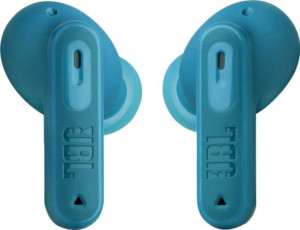
JBL Tune Beam 2
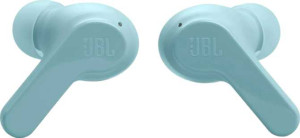
JBL Vibe Beam 2

JBL Tune Beam 2 JBL Vibe Beam 2

Overview

When choosing between the JBL Tune Beam 2 and the JBL Vibe Beam 2, you are looking at two wireless in-ear earbuds from JBL that share a strong foundation but diverge in meaningful ways. This comparison explores key battlegrounds including active noise cancellation, battery performance, microphone setup, and audio features to help you decide which model best fits your listening lifestyle.

Common Features

  • Both products use an in-ear fit.
  • Both products carry an IP54 ingress protection rating.
  • Both products are sweat resistant.
  • Both products are fully wireless with no cables or wires.
  • Neither product is a neckband-style earbud.
  • Neither product includes wingtips.
  • Neither product features RGB lighting.
  • Both products have stereo speakers.
  • Both products offer passive noise reduction.
  • The lowest frequency on both products is 20 Hz.
  • The highest frequency on both products is 20000 Hz.
  • Dolby Atmos is not available on either product.
  • Dirac Virtuo is not available on either product.
  • Both products have an impedance of 16 Ohms.
  • The sound pressure level on both products is 95 dB/mW.
  • A neodymium magnet is not used in either product.
  • Both products take 2 hours to fully charge.
  • Wireless charging is not available on either product.
  • Neither product has a solar power battery.
  • Both products include a battery level indicator.
  • Both products have a rechargeable battery.
  • Both products support fast pairing.
  • Both products feature a USB Type-C connection.
  • Both products use Bluetooth version 5.3.
  • LDAC is not supported on either product.
  • LDHC is not supported on either product.
  • Bluetooth LE Audio is not supported on either product.
  • aptX Adaptive is not supported on either product.
  • aptX Low Latency is not supported on either product.
  • In/on-ear detection is not available on either product.
  • Both products support fast charging.
  • Both products support multipoint connection with up to 2 devices simultaneously.
  • Neither product can read notifications.
  • Both products include a mute function.
  • Both products can be used as a headset.
  • Both products have a control panel placed on the device.
  • Both products feature voice prompts.
  • Both products include a noise-canceling microphone.

Main Differences

  • Weight is 10.4 g on JBL Tune Beam 2 and 8.6 g on JBL Vibe Beam 2.
  • Active noise cancellation (ANC) is available on JBL Tune Beam 2 but not on JBL Vibe Beam 2.
  • The driver unit size is 10 mm on JBL Tune Beam 2 and 8 mm on JBL Vibe Beam 2.
  • Spatial audio support is present on JBL Tune Beam 2 but not available on JBL Vibe Beam 2.
  • Battery life is 12 hours on JBL Tune Beam 2 and 10 hours on JBL Vibe Beam 2.
  • Battery life of the charging case is 36 hours on JBL Tune Beam 2 and 30 hours on JBL Vibe Beam 2.
  • Battery life with ANC enabled is 10 hours on JBL Tune Beam 2 and 8 hours on JBL Vibe Beam 2.
  • Battery power is 65 mAh on JBL Tune Beam 2 and 50 mAh on JBL Vibe Beam 2.
  • Charging case battery power is 590 mAh on JBL Tune Beam 2 and 550 mAh on JBL Vibe Beam 2.
  • Ambient sound mode is available on JBL Tune Beam 2 but not on JBL Vibe Beam 2.
  • The number of microphones is 6 on JBL Tune Beam 2 and 4 on JBL Vibe Beam 2.
Specs Comparison
JBL Tune Beam 2

JBL Tune Beam 2

JBL Vibe Beam 2

JBL Vibe Beam 2

Design:
Fit In-ear In-ear
Ingress Protection (IP) rating IP54 IP54
water resistance Sweat resistant Sweat resistant
weight 10.4 g 8.6 g
has no wires or cables
are neckband earbuds
wingtips included
has RGB lighting
has stereo speakers
has UV light
Has a display

In terms of design, the JBL Tune Beam 2 and JBL Vibe Beam 2 share the same fundamental blueprint: both are fully wireless, in-ear earbuds with an IP54 ingress protection rating, meaning each can handle sweat and light water splashes equally well. Neither includes wingtips, RGB lighting, a display, or UV sanitization — keeping both designs straightforward and focused.

The most meaningful differentiator in this group is weight. The Vibe Beam 2 comes in at 8.6 g per earbud versus the Tune Beam 2's 10.4 g — a difference of roughly 1.8 g. While that may sound minor on paper, in practice lighter earbuds reduce fatigue during extended listening sessions and tend to feel more secure in the ear without relying on added hardware like wingtips.

Overall, the Vibe Beam 2 holds a clear edge in this group purely due to its lighter build. All other design attributes are identical between the two, so if physical comfort and wearability over long periods are priorities, the Vibe Beam 2′s lower weight gives it a tangible, real-world advantage.

Sound quality:
has active noise cancellation (ANC)
has passive noise reduction
driver unit size 10 mm 8 mm
lowest frequency 20 Hz 20 Hz
highest frequency 20000 Hz 20000 Hz
supports spatial audio
has Dolby Atmos
has Dirac Virtuo
impedance 16 Ohms 16 Ohms
sound pressure level 95 dB/mW 95 dB/mW
has a neodymium magnet

Both earbuds cover the standard 20 Hz–20,000 Hz frequency range and share identical electrical characteristics — 16 Ohms impedance and 95 dB/mW sensitivity — meaning they are equally easy to drive from a phone and reach the same maximum loudness. At the baseline hardware level, they are evenly matched. The divergence, however, becomes significant once you look past those surface numbers.

The Tune Beam 2 pulls ahead in two meaningful ways. Its 10 mm driver is larger than the Vibe Beam 2′s 8 mm unit — a bigger driver generally moves more air, which tends to translate into a fuller low-end response and greater dynamic headroom. More impactful still, the Tune Beam 2 includes active noise cancellation (ANC) and spatial audio support, neither of which the Vibe Beam 2 offers. ANC is a genuinely functional feature for commuting or open-plan environments, while spatial audio adds a widened, three-dimensional soundstage that meaningfully changes the listening experience for compatible content.

The Tune Beam 2 wins this group decisively. The Vibe Beam 2 is not deficient in its fundamentals, but it lacks ANC, spatial audio, and carries a smaller driver — three tangible sound-quality disadvantages that place it firmly in a more entry-level tier for audio performance.

Power:
Battery life 12 hours 10 hours
Battery life of charging case 36 hours 30 hours
Battery life (ANC) 10 hours 8 hours
charge time 2 hours 2 hours
battery power 65 mAh 50 mAh
battery power (charging case) 590mAh 550mAh
has wireless charging
Has a solar power battery
has a battery level indicator
has a rechargeable battery

Charging infrastructure is identical between the two: both take 2 hours to charge, support rechargeable batteries, include a battery level indicator, and neither offers wireless charging. For most users, that shared charge time is a non-issue — but where the products diverge is in how long they last before you need to reach for the case.

The Tune Beam 2 delivers 12 hours of playback per charge versus 10 hours for the Vibe Beam 2, and its case extends total endurance to 36 hours compared to 30 hours. That 6-hour gap in combined battery life is meaningful for frequent travelers or anyone who charges infrequently. The Tune Beam 2′s larger 65 mAh earbud battery (versus 50 mAh) directly explains this advantage. It is also worth noting that both products quote an ANC-on battery life — the Tune Beam 2 sustains 10 hours with ANC active, which actually matches the Vibe Beam 2′s standard playback figure.

The Tune Beam 2 wins this group across every relevant metric. It lasts longer per session, offers more total case-backed endurance, and does so while running a more power-hungry ANC system — making its battery efficiency genuinely impressive relative to the Vibe Beam 2.

Connectivity:
has fast pairing
Has USB Type-C
Bluetooth version 5.3 5.3
has LDAC
has LDHC
has Bluetooth LE Audio
has aptX Adaptive
has aptX Low Latency
has aptX HD
has aptX
has aptX Lossless
has aptX Voice
has Auracast
maximum Bluetooth range 10 m 10 m
supports Bluetooth pairing using NFC
Can be used wirelessly
has AAC

Connectivity is the one area where neither product claims any advantage over the other — the spec sheets are completely identical. Both run Bluetooth 5.3, support fast pairing, charge via USB-C, and cap out at a 10 m wireless range. Neither supports advanced codecs such as LDAC, aptX, or AAC, nor do they include NFC pairing or Bluetooth LE Audio.

The absence of high-resolution audio codecs is worth contextualizing. Without LDAC or aptX HD, both earbuds are limited to standard SBC transmission for most Android users, which places a ceiling on wireless audio fidelity. That said, for the mainstream consumer these products appear to target, SBC over Bluetooth 5.3 remains stable and perfectly functional for everyday listening.

This group is a complete tie. Every connectivity attribute is shared between the Tune Beam 2 and the Vibe Beam 2, so this dimension should carry no weight in a purchasing decision between the two.

Features:
release date March 2025 March 2025
has ambient sound mode
has in/on-ear detection
Supports fast charging
multipoint count 2 2
can read notifications
has a mute function
can be used as a headset
control panel placed on a device
Has voice prompts
travel bag is included
Has an in-line control panel
Has a temperature sensor
Has a built-in camera remote control function

For the most part, these two earbuds offer the same practical feature set: both support fast charging, connect to 2 devices simultaneously via multipoint, include on-device controls, a mute function, voice prompts, headset capability, and even a travel bag. For day-to-day usability, that shared foundation is solid and comparable.

The single differentiator in this group is ambient sound mode, which the Tune Beam 2 has and the Vibe Beam 2 lacks entirely. This feature allows external environmental audio to pass through the earbuds electronically, letting the user stay aware of surroundings — traffic, announcements, conversations — without removing the earbuds. It is a meaningful quality-of-life feature for commuters, runners, or anyone moving through public spaces, and its absence on the Vibe Beam 2 is a real functional gap rather than a minor omission.

The Tune Beam 2 takes this group on the strength of ambient sound mode alone. Every other feature is matched identically, but the ability to switch between full immersion and environmental awareness adds a dimension of versatility that the Vibe Beam 2 simply cannot replicate.

Microphone:
number of microphones 6 4
has a noise-canceling microphone

The JBL Tune Beam 2 and JBL Vibe Beam 2 both feature noise-canceling microphones, ensuring clear voice capture during calls or recordings. However, they differ in the number of microphones. The JBL Tune Beam 2 is equipped with 6 microphones, while the JBL Vibe Beam 2 has 4 microphones.

Both products offer noise-canceling microphone technology, which helps reduce background noise, but the Tune Beam 2 may have an edge in terms of microphone coverage due to its higher number of microphones.

Overall, while both models provide noise-canceling features, the JBL Tune Beam 2 stands out with its additional microphones for potentially improved voice clarity.

Comparison Summary & Verdict

Both the JBL Tune Beam 2 and the JBL Vibe Beam 2 deliver a solid wireless in-ear experience with IP54 water resistance, Bluetooth 5.3, fast charging, and dual-device multipoint connectivity. However, the differences are clear and meaningful. The JBL Tune Beam 2 is the more feature-rich option, offering active noise cancellation, spatial audio, an ambient sound mode, a larger 10 mm driver, longer battery life at 12 hours, and six microphones for superior call clarity. The JBL Vibe Beam 2, on the other hand, is lighter at 8.6 g and trades advanced audio features for a more accessible profile. If immersive, distraction-free listening is your priority, the Tune Beam 2 is the stronger pick. If you want a lightweight everyday companion without the need for ANC or spatial audio, the Vibe Beam 2 gets the job done efficiently.

JBL Tune Beam 2
Buy JBL Tune Beam 2 if...

Buy the JBL Tune Beam 2 if you want active noise cancellation, spatial audio, an ambient sound mode, and longer battery life for a more immersive and versatile listening experience.

JBL Vibe Beam 2
Buy JBL Vibe Beam 2 if...

Buy the JBL Vibe Beam 2 if you prefer a lighter, more compact earbud for everyday casual use and do not need active noise cancellation or spatial audio.