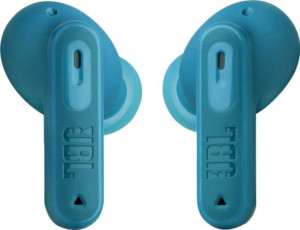
JBL Tune Beam 2
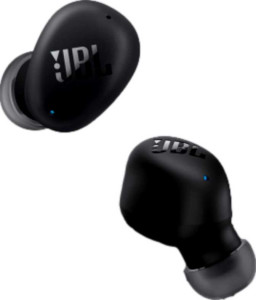
JBL Vibe Buds 2

JBL Tune Beam 2 JBL Vibe Buds 2

Overview

Welcome to our in-depth specification comparison between the JBL Tune Beam 2 and the JBL Vibe Buds 2. Both are truly wireless in-ear earbuds sharing a solid common foundation — including IP54 water resistance, active noise cancellation, and Bluetooth 5.3 — but key differences emerge when you look closer at battery endurance, driver size, spatial audio support, and microphone count. Read on to see which model better suits your needs.

Common Features

  • Both products use an in-ear fit design.
  • Both products carry an IP54 ingress protection rating.
  • Both products are sweat resistant.
  • Neither product has wires or cables.
  • Neither product is a neckband earbud.
  • Neither product includes wingtips.
  • Neither product features RGB lighting.
  • Both products have stereo speakers.
  • Both products support active noise cancellation (ANC).
  • Both products provide passive noise reduction.
  • Both products share a lowest frequency of 20 Hz and a highest frequency of 20000 Hz.
  • Both products have an impedance of 16 Ohms.
  • Both products have a sound pressure level of 95 dB/mW.
  • Neither product supports Dolby Atmos.
  • Neither product supports Dirac Virtuo.
  • Both products take 2 hours to fully charge.
  • Neither product supports wireless charging.
  • Neither product has a solar power battery.
  • Both products have a battery level indicator.
  • Both products use a rechargeable battery.
  • Both products feature USB Type-C connectivity.
  • Both products use Bluetooth version 5.3.
  • Neither product supports LDAC, LDHC, Bluetooth LE Audio, aptX Adaptive, aptX Low Latency, or aptX HD.
  • Both products have an ambient sound mode.
  • Neither product has in/on-ear detection.
  • Both products support fast charging.
  • Both products support multipoint connection with up to 2 devices.
  • Neither product can read notifications.
  • Both products have a mute function.
  • Both products can be used as a headset.
  • Both products have a control panel placed on the device.
  • Both products feature a noise-canceling microphone.

Main Differences

  • Driver unit size is 10 mm on JBL Tune Beam 2 and 8 mm on JBL Vibe Buds 2.
  • Spatial audio support is present on JBL Tune Beam 2 but not available on JBL Vibe Buds 2.
  • Battery life is 12 hours on JBL Tune Beam 2 and 10 hours on JBL Vibe Buds 2.
  • Battery life of the charging case is 36 hours on JBL Tune Beam 2 and 30 hours on JBL Vibe Buds 2.
  • Battery life with ANC enabled is 10 hours on JBL Tune Beam 2 and 8 hours on JBL Vibe Buds 2.
  • Battery power is 65 mAh on JBL Tune Beam 2 and 49 mAh on JBL Vibe Buds 2.
  • Charging case battery power is 590 mAh on JBL Tune Beam 2 and 550 mAh on JBL Vibe Buds 2.
  • Fast pairing support is present on JBL Tune Beam 2 but not available on JBL Vibe Buds 2.
  • The number of microphones is 6 on JBL Tune Beam 2 and 4 on JBL Vibe Buds 2.
Specs Comparison
JBL Tune Beam 2

JBL Tune Beam 2

JBL Vibe Buds 2

JBL Vibe Buds 2

Design:
Fit In-ear In-ear
Ingress Protection (IP) rating IP54 IP54
water resistance Sweat resistant Sweat resistant
has no wires or cables
are neckband earbuds
wingtips included
has RGB lighting
has stereo speakers
has UV light
Has a display

In terms of design, the JBL Tune Beam 2 and JBL Vibe Buds 2 are essentially identical on paper. Both use an in-ear fit, are fully wireless with no cables or neckband, and share the same IP54 ingress protection rating — meaning both offer comparable resistance to sweat and light moisture splashes. For everyday workouts or commutes in light rain, either pair should hold up equally well.

Neither model includes wingtips, RGB lighting, a UV light, or a display, so there are no extra retention or personalization features to differentiate them at the design level. Both deliver stereo audio, which is the standard expectation for true wireless earbuds in this category.

Based strictly on the provided design specs, these two models are evenly matched. There is no meaningful design advantage on either side — the differences between them, if any, will need to be found in other specification groups such as audio performance, battery life, or feature set.

Sound quality:
has active noise cancellation (ANC)
has passive noise reduction
driver unit size 10 mm 8 mm
lowest frequency 20 Hz 20 Hz
highest frequency 20000 Hz 20000 Hz
supports spatial audio
has Dolby Atmos
has Dirac Virtuo
impedance 16 Ohms 16 Ohms
sound pressure level 95 dB/mW 95 dB/mW
has a neodymium magnet

Both the JBL Tune Beam 2 and JBL Vibe Buds 2 cover the full audible spectrum from 20 Hz to 20,000 Hz and share identical impedance (16 Ohms) and sensitivity (95 dB/mW) ratings, meaning both are similarly easy to drive and should reach comparable loudness levels from the same source device. ANC and passive noise reduction are also present on both, so neither has an isolation advantage on paper.

The clearest hardware differentiator is driver size: the Tune Beam 2 uses a 10 mm driver versus the Vibe Buds 2's 8 mm driver. A larger driver generally moves more air, which can translate to more authoritative low-end response and a fuller overall sound — though real-world results also depend heavily on tuning. The more decisive advantage, however, is that the Tune Beam 2 supports spatial audio, while the Vibe Buds 2 does not. Spatial audio widens the perceived soundstage beyond the typical in-ear experience, which is a meaningful feature for immersive listening or content designed for 3D audio.

The Tune Beam 2 holds a clear edge in this category. The combination of a larger driver and spatial audio support gives it a tangible advantage in both raw sound potential and immersive playback capability — neither of which is matched by the Vibe Buds 2.

Power:
Battery life 12 hours 10 hours
Battery life of charging case 36 hours 30 hours
Battery life (ANC) 10 hours 8 hours
charge time 2 hours 2 hours
battery power 65 mAh 49 mAh
battery power (charging case) 590mAh 550mAh
has wireless charging
Has a solar power battery
has a battery level indicator
has a rechargeable battery

Battery endurance is one area where the two models diverge noticeably. The JBL Tune Beam 2 delivers 12 hours of playback per charge versus 10 hours for the Vibe Buds 2, and that gap carries over to ANC usage — 10 hours versus 8 hours respectively. For a daily commuter or someone who prefers to charge infrequently, that extra two hours is a practical difference, not just a spec sheet footnote.

The charging cases tell a similar story. The Tune Beam 2's case holds 590 mAh and extends total listening time to 36 hours, while the Vibe Buds 2's case offers 550 mAh and 30 hours combined. That 6-hour total difference means the Tune Beam 2 can go meaningfully longer between case top-ups — relevant for travel or multi-day use without access to a charger. Both cases refill the earbuds in 2 hours, so charge speed is a wash.

Neither model supports wireless charging, which is a shared limitation at this price tier. Overall, the Tune Beam 2 has a clear power advantage — more earbud capacity, more case capacity, and stronger ANC stamina — making it the stronger choice for users who prioritize longevity.

Connectivity:
has fast pairing
Has USB Type-C
Bluetooth version 5.3 5.3
has LDAC
has LDHC
has Bluetooth LE Audio
has aptX Adaptive
has aptX Low Latency
has aptX HD
has aptX
has aptX Lossless
has aptX Voice
has Auracast
maximum Bluetooth range 10 m 10 m
supports Bluetooth pairing using NFC
Can be used wirelessly
has AAC

Connectivity fundamentals are virtually identical here. Both earbuds run on Bluetooth 5.3 with a 10 m maximum range, charge via USB-C, and operate fully wirelessly. Notably, neither supports any high-resolution audio codec — no LDAC, aptX, AAC, or Bluetooth LE Audio — meaning both are limited to standard SBC transmission. For most listeners this will be imperceptible in daily use, but audiophiles seeking lossless wireless audio will find both models equally lacking.

The single differentiator in this group is fast pairing: the Tune Beam 2 supports it, while the Vibe Buds 2 does not. Fast pairing streamlines the initial setup process by allowing the earbuds to be detected and paired quickly through a device's native pairing interface, rather than requiring manual Bluetooth menu navigation. It is a convenience feature rather than a performance one, but it does reduce friction — especially when switching between devices or setting up for the first time.

The Tune Beam 2 takes a narrow edge here solely on the strength of fast pairing support. It is not a decisive advantage, but in an otherwise tied category, it is the only meaningful differentiator the specs provide.

Features:
release date March 2025 March 2025
has ambient sound mode
has in/on-ear detection
Supports fast charging
multipoint count 2 2
can read notifications
has a mute function
can be used as a headset
control panel placed on a device
Has voice prompts
travel bag is included
Has an in-line control panel
Has a temperature sensor
Has a built-in camera remote control function

Across every feature in this category, the JBL Tune Beam 2 and JBL Vibe Buds 2 are a perfect match. Both support ambient sound mode, fast charging, and multipoint connection to 2 devices simultaneously — a combination that covers the core expectations of a modern mid-range earbud. Multipoint in particular is worth highlighting: being able to stay connected to a phone and laptop at the same time without manual re-pairing is a genuine daily convenience.

Both also function as headsets for calls, include on-device controls, offer voice prompts, a mute function, and even come with a travel bag included. The absence of features like in-ear detection or notification readout is equally shared, so neither model stands out as more fully equipped than the other.

This is a straightforward tie. Every feature present on one is present on the other, and every omission is mutual. Buyers choosing between these two models will need to look to other specification groups — particularly sound quality and battery — to find meaningful differentiation.

Microphone:
number of microphones 6 4
has a noise-canceling microphone

Microphone hardware is where these two models part ways in a concrete and meaningful way. The JBL Tune Beam 2 carries 6 microphones compared to 4 on the Vibe Buds 2. Both implement noise-canceling mic technology, so the baseline call quality expectation is the same — but the additional mics on the Tune Beam 2 give its beamforming and noise-rejection algorithms more acoustic data to work with, which generally translates to cleaner voice pickup and better background noise suppression during calls.

For users who frequently take calls in noisy environments — busy streets, open offices, or public transport — that extra mic count is a practical differentiator, not merely a spec sheet number. More microphones allow the system to more precisely isolate the speaker's voice and filter out ambient interference from multiple angles.

The Tune Beam 2 holds the clear advantage in this category. With 50% more microphones and shared noise-canceling capability, it is the stronger option for call quality and voice-focused use cases.

Comparison Summary & Verdict

After examining the full spec sheet, both the JBL Tune Beam 2 and the JBL Vibe Buds 2 prove to be capable wireless earbuds with shared strengths: ANC, passive noise reduction, IP54 protection, fast charging, and dual-device multipoint. However, the JBL Tune Beam 2 pulls ahead in several measurable areas — offering a larger 10 mm driver, spatial audio support, a superior 6-microphone array, fast pairing, and meaningfully longer battery life of 12 hours (36 hours total with the case). The JBL Vibe Buds 2, while slightly behind on raw specs, still delivers a well-rounded experience with its own ANC, 10-hour playtime, and the same core feature set at what is likely a friendlier price point. Choose accordingly based on your priorities.

JBL Tune Beam 2
Buy JBL Tune Beam 2 if...

Buy the JBL Tune Beam 2 if you want longer battery life, spatial audio support, fast pairing, and a more powerful 6-microphone setup for clearer calls.

JBL Vibe Buds 2
Buy JBL Vibe Buds 2 if...

Buy the JBL Vibe Buds 2 if you want a solid ANC earbud experience with the same core features at a more accessible level, and do not need spatial audio or fast pairing.