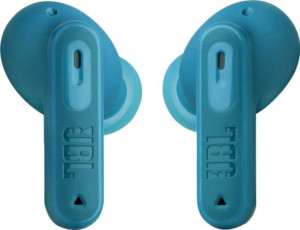
JBL Tune Beam 2
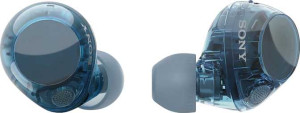
Sony WF-C710N

JBL Tune Beam 2 Sony WF-C710N

Overview

When choosing between the JBL Tune Beam 2 and the Sony WF-C710N, you are comparing two capable true wireless earbuds that share a surprising amount of common ground — yet differ in ways that could matter greatly depending on your priorities. Both deliver active noise cancellation, a 12-hour battery, and Bluetooth 5.3, but key battlegrounds emerge around driver size and spatial audio, battery endurance, and smart convenience features. Read on to see which earbud wins for your lifestyle.

Common Features

  • Both products use an in-ear fit.
  • Both products are sweat resistant.
  • Both products weigh 10.4 g.
  • Neither product has wires or cables.
  • Neither product is a neckband earbud style.
  • Neither product includes wingtips.
  • Neither product has RGB lighting.
  • Both products have stereo speakers.
  • Both products feature active noise cancellation (ANC).
  • Both products offer passive noise reduction.
  • Both products have a lowest frequency of 20 Hz and a highest frequency of 20000 Hz.
  • Neither product supports Dolby Atmos.
  • Neither product supports Dirac Virtuo.
  • Neither product uses a neodymium magnet.
  • Both products have a battery life of 12 hours.
  • Neither product supports wireless charging.
  • Neither product has a solar power battery.
  • Both products have a battery level indicator.
  • Both products have a rechargeable battery.
  • Both products support fast pairing.
  • Both products have a USB Type-C port.
  • Both products use Bluetooth version 5.3.
  • Neither product supports LDAC, LDHC, Bluetooth LE Audio, aptX Adaptive, or aptX Low Latency.
  • Both products have an ambient sound mode.
  • Both products support fast charging.
  • Both products support multipoint connection with up to 2 devices.
  • Neither product can read notifications.
  • Both products have a mute function.
  • Both products can be used as a headset.
  • Both products have a control panel placed on the device.
  • Both products have voice prompts.
  • Both products have a noise-canceling microphone.

Main Differences

  • The Ingress Protection rating is IP54 on the JBL Tune Beam 2 and IPX4 on the Sony WF-C710N.
  • The driver unit size is 10 mm on the JBL Tune Beam 2 and 5 mm on the Sony WF-C710N.
  • Spatial audio support is present on the JBL Tune Beam 2 but not available on the Sony WF-C710N.
  • The battery life of the charging case is 36 hours on the JBL Tune Beam 2 and 21.5 hours on the Sony WF-C710N.
  • Battery life with ANC enabled is 10 hours on the JBL Tune Beam 2 and 8.5 hours on the Sony WF-C710N.
  • Charge time is 2 hours on the JBL Tune Beam 2 and 1.5 hours on the Sony WF-C710N.
  • AAC support is present on the Sony WF-C710N but not available on the JBL Tune Beam 2.
  • In/on-ear detection is present on the Sony WF-C710N but not available on the JBL Tune Beam 2.
Specs Comparison
JBL Tune Beam 2

JBL Tune Beam 2

Sony WF-C710N

Sony WF-C710N

Design:
Fit In-ear In-ear
Ingress Protection (IP) rating IP54 IPX4
water resistance Sweat resistant Sweat resistant
weight 10.4 g 10.4 g
has no wires or cables
are neckband earbuds
wingtips included
has RGB lighting
has stereo speakers
has UV light
Has a display

The JBL Tune Beam 2 and Sony WF-C710N are remarkably similar in their physical design. Both are true wireless, in-ear earbuds with identical weight of 10.4 g per earbud — a featherlight build that translates to comfortable extended wear without ear fatigue. Neither includes wingtips, so fit relies entirely on eartip seal, which is worth keeping in mind for users who plan to use these during vigorous activity.

The one meaningful differentiator in this group is the ingress protection rating. The Tune Beam 2 carries an IP54 rating, while the WF-C710N is rated IPX4. In practical terms, both handle sweat and light splashes equally well — the IPX4 covers water resistance from any direction. However, the ″5″ in IP54 adds certified dust resistance, meaning the Tune Beam 2 is also protected against dust ingress, whereas the ″X″ in IPX4 means Sony simply has not tested or rated the WF-C710N for dust. For everyday commuters or gym users this distinction is minor, but for outdoor or dusty environments, the Tune Beam 2 has a tangible edge.

Overall, the JBL Tune Beam 2 holds a slight design advantage due to its more comprehensive IP54 protection. In all other design respects — form factor, weight, wireless build — these two earbuds are effectively tied.

Sound quality:
has active noise cancellation (ANC)
has passive noise reduction
driver unit size 10 mm 5 mm
lowest frequency 20 Hz 20 Hz
highest frequency 20000 Hz 20000 Hz
supports spatial audio
has Dolby Atmos
has Dirac Virtuo
has a neodymium magnet

Both earbuds share the same frequency range of 20 Hz–20,000 Hz and come equipped with active noise cancellation alongside passive noise reduction — so at a surface level they appear evenly matched. The critical differentiator, however, lies in the driver. The JBL Tune Beam 2 uses a 10 mm driver, while the Sony WF-C710N houses a notably smaller 5 mm driver. A larger driver moves more air, which generally translates to fuller low-end reproduction and more dynamic headroom — particularly noticeable with bass-heavy genres or cinematic content. The WF-C710N's 5 mm driver is unusually compact even by IEM standards, and while driver size alone does not determine audio quality, it does place a physical ceiling on how much low-frequency energy the Sony can realistically produce.

The second significant split is spatial audio support. The Tune Beam 2 offers it; the WF-C710N does not. For users who consume immersive content — streaming platforms with spatial mixes, gaming, or video — this adds a meaningful dimension to the listening experience that the Sony simply cannot replicate. Neither earbud supports Dolby Atmos or Dirac Virtuo, so the Tune Beam 2's spatial audio implementation is proprietary, but its presence is still a functional advantage over having none at all.

Taken together, the JBL Tune Beam 2 holds a clear edge in this category. Its larger driver and spatial audio support give it a broader sonic toolkit, while the WF-C710N's strengths here are limited to matching the Tune Beam 2 on ANC and frequency range — neither of which is a differentiator when they are identical.
Power:
Battery life 12 hours 12 hours
Battery life of charging case 36 hours 21.5 hours
Battery life (ANC) 10 hours 8.5 hours
charge time 2 hours 1.5 hours
has wireless charging
Has a solar power battery
has a battery level indicator
has a rechargeable battery

On earbud battery life alone, these two are dead even at 12 hours per charge — enough to cover a full workday without reaching for the case. The gap opens up when ANC is switched on: the JBL Tune Beam 2 sustains 10 hours with ANC active, while the Sony WF-C710N drops to 8.5 hours. That 1.5-hour difference is meaningful for users who rely on noise cancellation throughout long commutes or office sessions, as it can determine whether the earbuds make it through the day on a single charge.

The case reserves tell a sharper story. JBL's case extends total listening to 48 hours combined, versus Sony's 33.5 hours — a gap of roughly 14 hours. For frequent travelers or anyone who goes days between charging opportunities, the Tune Beam 2's case offers substantially more buffer. The Sony does answer back with a faster charge time of 1.5 hours versus JBL's 2 hours, which is a minor but real convenience advantage when you need a quick top-up. Neither model supports wireless charging, so both require a cable regardless.

On balance, the JBL Tune Beam 2 wins this category. Its longer ANC endurance and considerably larger case reserve make it the more capable option for heavy or extended use, and the 30-minute charging disadvantage is a modest trade-off against that much larger total capacity.

Connectivity:
has fast pairing
Has USB Type-C
Bluetooth version 5.3 5.3
has LDAC
has LDHC
has Bluetooth LE Audio
has aptX Adaptive
has aptX Low Latency
has aptX HD
has aptX
has aptX Lossless
has aptX Voice
has Auracast
maximum Bluetooth range 10 m 10 m
supports Bluetooth pairing using NFC
Can be used wirelessly
has AAC

Connectivity is largely a tie between these two earbuds. Both run Bluetooth 5.3, support fast pairing, use USB-C, and cap out at a 10 m wireless range. Neither supports advanced codecs like LDAC, aptX, or Bluetooth LE Audio, and NFC pairing is absent on both — so the feature set here is decidedly mid-range for wireless audio.

The sole differentiator is AAC support, which the Sony WF-C710N has and the JBL Tune Beam 2 lacks. AAC matters most to Apple device users: iPhones transmit audio over AAC by default, and without it the JBL falls back to SBC — a codec with higher latency and lower audio fidelity over Bluetooth. For Android users the practical gap is narrower, since Android's AAC implementation is less consistent, but for anyone in the Apple ecosystem this is a tangible real-world difference in wireless audio quality.

Given how evenly matched everything else is, Sony WF-C710N takes a narrow edge here on the strength of AAC alone. It is not a sweeping advantage, but for iPhone users in particular it is the more capable pairing out of the two.

Features:
release date March 2025 March 2025
has ambient sound mode
has in/on-ear detection
Supports fast charging
multipoint count 2 2
can read notifications
has a mute function
can be used as a headset
control panel placed on a device
Has voice prompts
travel bag is included
Has an in-line control panel
Has a temperature sensor
Has a built-in camera remote control function

Across the features category, these two earbuds are nearly identical in capability. Both offer ambient sound mode, fast charging, 2-device multipoint connectivity, mute, on-device controls, voice prompts, and even include a travel bag — a convenience accessory not always bundled at this price tier. For the vast majority of daily use cases, either earbud delivers the same functional toolkit.

The single point of separation is in/on-ear detection, which the Sony WF-C710N has and the JBL Tune Beam 2 does not. This sensor automatically pauses playback when an earbud is removed from the ear and resumes when it is replaced — a small but genuinely useful quality-of-life feature. Without it, the Tune Beam 2 requires manual interaction to pause whenever you need to have a quick conversation or take the earbuds out momentarily.

The Sony WF-C710N takes a slim edge here thanks solely to its in-ear detection. It is not a transformative advantage, but in a category where everything else is matched spec-for-spec, it is the one feature that adds measurable daily convenience that the JBL does not offer.

Microphone:
has a noise-canceling microphone

With only a single data point available for this category, the verdict is straightforward: both the JBL Tune Beam 2 and the Sony WF-C710N include a noise-canceling microphone. This means each earbud is equipped to filter out ambient background noise during calls — a meaningful baseline for anyone using these in busy environments like offices, commutes, or streets. This is a complete tie, and based strictly on the provided specs, neither product holds any advantage over the other in the microphone category.

Comparison Summary & Verdict

After a thorough look at the specs, both earbuds prove to be strong contenders in the true wireless space, sharing core strengths like active noise cancellation, fast charging, and dual-device multipoint connectivity. However, their differences draw a clear line between two types of users. The JBL Tune Beam 2 pulls ahead for audio enthusiasts who want a larger 10 mm driver, spatial audio support, and a significantly longer 36-hour case battery life — making it the better companion for frequent travelers or heavy daily listeners. The Sony WF-C710N, on the other hand, appeals to users who value smart convenience: its in/on-ear detection, AAC codec support, faster 1.5-hour charge time, and a more comprehensive IP rating for dust resistance make it a refined, practical everyday choice. Neither product is a clear-cut winner — your ideal pick simply comes down to whether you prioritize raw audio performance and endurance, or smart features and quicker top-ups.

JBL Tune Beam 2
Buy JBL Tune Beam 2 if...

Buy the JBL Tune Beam 2 if you want a larger driver for richer sound, spatial audio support, and a much longer charging case battery life for extended use away from an outlet.

Sony WF-C710N
Buy Sony WF-C710N if...

Buy the Sony WF-C710N if you prefer the convenience of in/on-ear detection, AAC codec support, a faster charge time, and broader ingress protection with its IP54-rated dust and sweat resistance.