JBL Tune Beam 2
Soundpeats Air 5 Pro

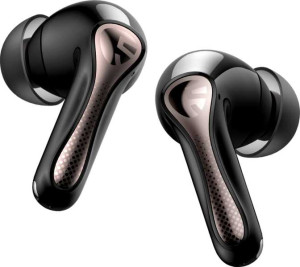
JBL Tune Beam 2 Soundpeats Air 5 Pro

Overview

Welcome to our in-depth spec comparison between the JBL Tune Beam 2 and the Soundpeats Air 5 Pro. Both earbuds share a solid foundation — in-ear design, active noise cancellation, six-microphone setups, and fast charging — but they diverge sharply when it comes to battery endurance, audio codec support, and connectivity features. Read on to see how these two contenders stack up across every key specification.

Common Features

  • Both use an in-ear fit design.
  • Neither product has wires or cables.
  • Neither product is a neckband earbud style.
  • Wingtips are not included with either product.
  • Neither product features RGB lighting.
  • Both products have stereo speakers.
  • Neither product has a UV light.
  • Neither product has a display.
  • Both products have active noise cancellation (ANC).
  • Both products have passive noise reduction.
  • Both use a 10 mm driver unit size.
  • Both products have a frequency range of 20 Hz to 20000 Hz.
  • Dolby Atmos support is not available on either product.
  • Dirac Virtuo support is not available on either product.
  • Neither product has a neodymium magnet.
  • Wireless charging is not available on either product.
  • Neither product has a solar power battery.
  • Both products have a battery level indicator.
  • Both products have a rechargeable battery.
  • Both products have a USB Type-C port.
  • LDHC support is not available on either product.
  • aptX Low Latency support is not available on either product.
  • aptX HD support is not available on either product.
  • aptX Voice support is not available on either product.
  • Auracast support is not available on either product.
  • Both products have a maximum Bluetooth range of 10 m.
  • Bluetooth pairing via NFC is not supported on either product.
  • Both products have an ambient sound mode.
  • In/on-ear detection is not available on either product.
  • Both products support fast charging.
  • Neither product can read notifications.
  • Both products have a mute function.
  • Both products can be used as a headset.
  • Both products have a control panel placed on the device.
  • Both products have voice prompts.
  • Both products have 6 microphones.
  • Both products have a noise-canceling microphone.

Main Differences

  • Ingress Protection rating is IP54 on JBL Tune Beam 2 and IPX5 on Soundpeats Air 5 Pro.
  • JBL Tune Beam 2 is sweat resistant, while Soundpeats Air 5 Pro is water resistant.
  • Weight is 10.4 g on JBL Tune Beam 2 and 9.6 g on Soundpeats Air 5 Pro.
  • Spatial audio support is present on JBL Tune Beam 2 but not available on Soundpeats Air 5 Pro.
  • Battery life is 12 hours on JBL Tune Beam 2 and 7.5 hours on Soundpeats Air 5 Pro.
  • Battery life of the charging case is 36 hours on JBL Tune Beam 2 and 29.5 hours on Soundpeats Air 5 Pro.
  • Charge time is 2 hours on JBL Tune Beam 2 and 1.5 hours on Soundpeats Air 5 Pro.
  • Battery power is 65 mAh on JBL Tune Beam 2 and 35 mAh on Soundpeats Air 5 Pro.
  • Charging case battery power is 590 mAh on JBL Tune Beam 2 and 520 mAh on Soundpeats Air 5 Pro.
  • Fast pairing support is present on JBL Tune Beam 2 but not available on Soundpeats Air 5 Pro.
  • Bluetooth version is 5.3 on JBL Tune Beam 2 and 5.4 on Soundpeats Air 5 Pro.
  • LDAC support is present on Soundpeats Air 5 Pro but not available on JBL Tune Beam 2.
  • Bluetooth LE Audio support is present on Soundpeats Air 5 Pro but not available on JBL Tune Beam 2.
  • aptX Adaptive support is present on Soundpeats Air 5 Pro but not available on JBL Tune Beam 2.
  • aptX support is present on Soundpeats Air 5 Pro but not available on JBL Tune Beam 2.
  • aptX Lossless support is present on Soundpeats Air 5 Pro but not available on JBL Tune Beam 2.
  • AAC support is present on Soundpeats Air 5 Pro but not available on JBL Tune Beam 2.
Specs Comparison
JBL Tune Beam 2

JBL Tune Beam 2

Soundpeats Air 5 Pro

Soundpeats Air 5 Pro

Design:
Fit In-ear In-ear
Ingress Protection (IP) rating IP54 IPX5
water resistance Sweat resistant Water resistant
weight 10.4 g 9.6 g
has no wires or cables
are neckband earbuds
wingtips included
has RGB lighting
has stereo speakers
has UV light
Has a display

Both the JBL Tune Beam 2 and the Soundpeats Air 5 Pro share a virtually identical design philosophy: true wireless, in-ear buds with no cables, no wingtips, no RGB lighting, and no display. For most users, the day-to-day experience of picking these up and wearing them will feel remarkably similar on paper.

Where they diverge is in two meaningful areas: weight and water resistance rating. The Air 5 Pro is marginally lighter at 9.6 g versus 10.4 g for the Tune Beam 2 — a 0.8 g difference that is unlikely to be noticeable during casual use but could matter slightly during extended wear sessions. On protection, the Tune Beam 2 carries an IP54 rating, meaning it resists both dust ingress and sweat/water splashes from any direction. The Air 5 Pro holds an IPX5 rating, which covers water jets but offers no rated dust protection. In practice, IPX5 is excellent for workouts and rain, but IP54 provides a more well-rounded shield for dusty environments like commutes or outdoor settings.

The edge in this category goes to the JBL Tune Beam 2. Its full IP54 rating offers broader environmental protection than the Air 5 Pro's IPX5, making it the more versatile choice for users who encounter varied conditions beyond just sweat and rain.

Sound quality:
has active noise cancellation (ANC)
has passive noise reduction
driver unit size 10 mm 10 mm
lowest frequency 20 Hz 20 Hz
highest frequency 20000 Hz 20000 Hz
supports spatial audio
has Dolby Atmos
has Dirac Virtuo
has a neodymium magnet

At the hardware level, the JBL Tune Beam 2 and the Soundpeats Air 5 Pro are essentially twins: both use a 10 mm dynamic driver, cover the same 20 Hz–20,000 Hz frequency range, and pair active noise cancellation with passive noise reduction. The identical frequency range means neither product claims an extended bass floor or a higher treble ceiling on paper, and the shared driver size suggests a comparable acoustic footprint going into the ear canal.

The single meaningful differentiator here is spatial audio support, which only the Tune Beam 2 offers. Spatial audio processes sound to simulate a three-dimensional listening environment, making it particularly valuable for movie watching, gaming, and certain music mixes where directionality and immersion matter. Without it, the Air 5 Pro is limited to a conventional stereo soundstage — perfectly adequate for most listening, but a step behind for users who prioritize an immersive, cinematic audio experience.

The JBL Tune Beam 2 takes a clear edge in this category solely due to its spatial audio capability. For straightforward music listening the two are evenly matched, but anyone who values immersive audio for video or gaming content will find the Tune Beam 2 the more capable option based on the available specs.

Power:
Battery life 12 hours 7.5 hours
Battery life of charging case 36 hours 29.5 hours
charge time 2 hours 1.5 hours
battery power 65 mAh 35 mAh
battery power (charging case) 590mAh 520mAh
has wireless charging
Has a solar power battery
has a battery level indicator
has a rechargeable battery

Battery life is where the JBL Tune Beam 2 pulls ahead decisively. Its earbuds last 12 hours on a single charge compared to 7.5 hours for the Soundpeats Air 5 Pro — a 60% advantage that translates directly into fewer interruptions during long travel days, extended work sessions, or marathon listening. The larger 65 mAh earbud battery versus the Air 5 Pro's 35 mAh explains this gap and suggests the Tune Beam 2 was engineered with endurance as a priority.

The total system stamina — earbuds plus case — follows the same pattern: 36 hours for the Tune Beam 2 against 29.5 hours for the Air 5 Pro. That extra ~6.5 hours of reserve can be the difference between needing to hunt for a USB-C outlet on a long trip or not. The Air 5 Pro does charge slightly faster at 1.5 hours versus 2 hours, which partially offsets its shorter runtime, but it is a modest consolation given how much less total use time it offers. Neither model supports wireless charging, so both require a wired top-up.

The JBL Tune Beam 2 wins this category convincingly. Unless the 30-minute faster charge time of the Air 5 Pro is a critical factor in a specific workflow, the Tune Beam 2's substantially longer per-charge and total battery life makes it the stronger choice for users who prioritize uninterrupted listening.

Connectivity:
has fast pairing
Has USB Type-C
Bluetooth version 5.3 5.4
has LDAC
has LDHC
has Bluetooth LE Audio
has aptX Adaptive
has aptX Low Latency
has aptX HD
has aptX
has aptX Lossless
has aptX Voice
has Auracast
maximum Bluetooth range 10 m 10 m
supports Bluetooth pairing using NFC
Can be used wirelessly
has AAC

Codec support is where the gap between these two earbuds becomes stark. The Soundpeats Air 5 Pro arrives with an impressive stack: LDAC, aptX Lossless, aptX Adaptive, aptX, and AAC — covering virtually every high-resolution and high-efficiency audio transmission standard available today. LDAC streams at up to three times the bitrate of standard Bluetooth audio, aptX Lossless can deliver CD-quality audio over a wireless link, and aptX Adaptive dynamically adjusts bitrate for a balance of quality and stability. For audiophiles or anyone streaming from a high-resolution source, this suite is genuinely meaningful. The JBL Tune Beam 2, by contrast, lists none of these codecs, meaning it falls back on the standard SBC codec — adequate for casual listening but leaving significant audio quality on the table for discerning ears.

The Air 5 Pro also runs on Bluetooth 5.4 versus the Tune Beam 2's Bluetooth 5.3, and adds Bluetooth LE Audio support — a forward-looking protocol designed for improved efficiency and multi-stream audio. Both share the same 10 m maximum range and USB-C charging. The Tune Beam 2 does offer fast pairing, which the Air 5 Pro lacks, making initial device setup marginally quicker — but this is a minor convenience against the Air 5 Pro's connectivity depth.

The Soundpeats Air 5 Pro wins this category and it is not particularly close. Its combination of high-resolution codec support, a newer Bluetooth version, and LE Audio compatibility gives it a substantial technological edge for users who care about audio fidelity and future-proofing their wireless connection.

Features:
release date March 2025 June 2025
has ambient sound mode
has in/on-ear detection
Supports fast charging
can read notifications
has a mute function
can be used as a headset
control panel placed on a device
Has voice prompts
travel bag is included
Has an in-line control panel
Has a temperature sensor
Has a built-in camera remote control function

Rarely does a feature-by-feature comparison land this evenly, but the JBL Tune Beam 2 and the Soundpeats Air 5 Pro are a perfect mirror of each other across every spec in this group. Both offer ambient sound mode, fast charging, a mute function, on-device controls, voice prompts, headset capability, and even a travel bag included in the box. There is not a single differentiating data point here.

The shared feature set is nonetheless a solid one. Ambient sound mode is a practical daily-use feature that lets external audio pass through without removing the earbuds — useful in traffic or at a counter. Fast charging is increasingly expected at this tier and ensures a short plug-in session translates to meaningful playback time. The included travel bag is a small but appreciated addition that speaks to portability-minded packaging from both brands.

This category is an unambiguous tie. Neither product holds any advantage over the other based on the provided specs — users choosing between the two should weigh this group as a neutral factor and look to other categories to make their decision.

Microphone:
number of microphones 6 6
has a noise-canceling microphone

On microphone hardware, the JBL Tune Beam 2 and the Soundpeats Air 5 Pro are identical: both deploy 6 microphones and both feature noise-canceling mic processing. A 6-mic array is a meaningful specification at this product tier — more pickup points allow the firmware to better isolate the speaker's voice from ambient noise using beamforming techniques, which is particularly valuable during calls in noisy environments like busy streets or open-plan offices.

This category is a tie. With no differentiating data points between the two products, neither holds a structural advantage in call quality hardware as specified. Real-world call performance will ultimately depend on the signal processing and firmware each brand applies to that shared mic count — but that falls outside what the provided specs can tell us.

Comparison Summary & Verdict

After examining all the specs, both earbuds serve different listener profiles. The JBL Tune Beam 2 stands out for its exceptional battery life of 12 hours (36 hours total with the case), spatial audio support, and fast pairing — making it ideal for long commutes and frequent travelers who prioritize endurance and convenience. The Soundpeats Air 5 Pro, on the other hand, wins for audiophiles and codec enthusiasts, offering LDAC, aptX, aptX Adaptive, aptX Lossless, AAC, and Bluetooth LE Audio alongside a faster 1.5-hour charge time and a slightly lighter build. If raw sound fidelity and codec versatility matter most to you, the Air 5 Pro is the stronger pick; if you need lasting battery performance and seamless pairing, the JBL Tune Beam 2 is the smarter choice.

JBL Tune Beam 2
Buy JBL Tune Beam 2 if...

Buy the JBL Tune Beam 2 if you prioritize longer battery life, spatial audio support, and fast pairing for a seamless, endurance-focused listening experience.

Soundpeats Air 5 Pro
Buy Soundpeats Air 5 Pro if...

Buy the Soundpeats Air 5 Pro if you want superior codec support — including LDAC, aptX Lossless, and Bluetooth LE Audio — and prefer a faster charge time and slightly lighter earbud.