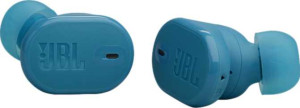
JBL Tune Buds 2
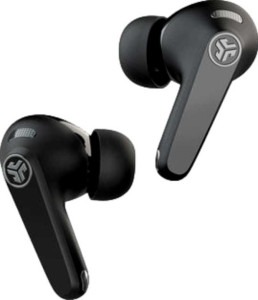
JLab JBuds Pods

JBL Tune Buds 2 JLab JBuds Pods

Overview

Welcome to our detailed spec comparison between the JBL Tune Buds 2 and the JLab JBuds Pods. Both are truly wireless in-ear earbuds sharing a surprisingly similar feature set, yet they differ in meaningful ways. In this comparison, we put their battery performance, build quality, driver specs, and connectivity head to head to help you decide which pair is the smarter buy for your lifestyle.

Common Features

  • Both the JBL Tune Buds 2 and JLab JBuds Pods use an in-ear fit.
  • Both products are water resistant.
  • Neither the JBL Tune Buds 2 nor the JLab JBuds Pods have wires or cables.
  • Neither product is a neckband earbud style.
  • Wingtips are not included with either the JBL Tune Buds 2 or the JLab JBuds Pods.
  • RGB lighting is not present on either product.
  • Both the JBL Tune Buds 2 and JLab JBuds Pods feature stereo speakers.
  • A UV light is not available on either product.
  • Both products support active noise cancellation (ANC).
  • Both the JBL Tune Buds 2 and JLab JBuds Pods offer passive noise reduction.
  • The lowest frequency on both products is 20 Hz.
  • The highest frequency on both products is 20000 Hz.
  • Spatial audio is supported on both the JBL Tune Buds 2 and JLab JBuds Pods.
  • Dolby Atmos is not available on either product.
  • Neither product features a neodymium magnet.
  • Both products have a charge time of 2 hours.
  • Wireless charging is not available on either the JBL Tune Buds 2 or the JLab JBuds Pods.
  • Neither product has a solar power battery.
  • Both the JBL Tune Buds 2 and JLab JBuds Pods include a battery level indicator.
  • Both products have a rechargeable battery.
  • Fast pairing is supported on both the JBL Tune Buds 2 and JLab JBuds Pods.
  • Both products feature a USB Type-C connection.
  • LDAC is not supported on either product.
  • Bluetooth LE Audio is not available on either the JBL Tune Buds 2 or the JLab JBuds Pods.
  • aptX Adaptive is not supported on either product.
  • An ambient sound mode is available on both the JBL Tune Buds 2 and JLab JBuds Pods.
  • Neither product features in/on-ear detection.
  • Fast charging is supported on both the JBL Tune Buds 2 and JLab JBuds Pods.
  • A mute function is available on both products.
  • Both the JBL Tune Buds 2 and JLab JBuds Pods can be used as a headset.
  • Both products have a control panel placed on the device.
  • Both the JBL Tune Buds 2 and JLab JBuds Pods are equipped with 6 microphones.
  • Both products feature a noise-canceling microphone.

Main Differences

  • The Ingress Protection rating is IP54 on the JBL Tune Buds 2 and IP55 on the JLab JBuds Pods.
  • The weight is 11 g on the JBL Tune Buds 2 and 16.7 g on the JLab JBuds Pods.
  • The driver unit size is 10 mm on the JBL Tune Buds 2 and 11 mm on the JLab JBuds Pods.
  • Battery life is 12 hours on the JBL Tune Buds 2 and 10 hours on the JLab JBuds Pods.
  • The battery life of the charging case is 36 hours on the JBL Tune Buds 2 and 46 hours on the JLab JBuds Pods.
  • The Bluetooth version is 5.3 on the JBL Tune Buds 2 and 5.4 on the JLab JBuds Pods.
Specs Comparison
JBL Tune Buds 2

JBL Tune Buds 2

JLab JBuds Pods

JLab JBuds Pods

Design:
Fit In-ear In-ear
Ingress Protection (IP) rating IP54 IP55
water resistance Water resistant Water resistant
weight 11 g 16.7 g
has no wires or cables
are neckband earbuds
wingtips included
has RGB lighting
has stereo speakers
has UV light
Has a display

Both the JBL Tune Buds 2 and the JLab JBuds Pods share the same fundamental design philosophy: true wireless, in-ear earbuds with no cables, no neckband, no wingtips, and no gimmicks like RGB lighting or UV sanitization. For users prioritizing a clean, distraction-free aesthetic, both deliver equally on that front.

The most meaningful differentiator in this group is water resistance. The JBuds Pods carry an IP55 rating versus the Tune Buds 2's IP54. In practice, both protect against sweat and light rain, but the higher ″5″ dust rating on the JLab means it offers full dust protection, while the JBL's ″4″ rating indicates only partial dust resistance. For most everyday users this distinction is minor, but it does give the JLab a slight edge in dusty or outdoor environments.

Weight is the other tangible difference: the Tune Buds 2 come in at a lighter 11 g compared to the JBuds Pods' 16.7 g — a difference of over 5 grams. Over extended listening sessions, lighter earbuds tend to cause less ear fatigue, giving the JBL a real comfort advantage. Overall, the JBL edges ahead on wearability, while the JLab holds a narrow lead on environmental protection.

Sound quality:
has active noise cancellation (ANC)
has passive noise reduction
driver unit size 10 mm 11 mm
lowest frequency 20 Hz 20 Hz
highest frequency 20000 Hz 20000 Hz
supports spatial audio
has Dolby Atmos
has Dirac Virtuo
has a neodymium magnet

At a foundational level, these two earbuds are remarkably well-matched on paper. Both cover the standard 20 Hz – 20,000 Hz audible frequency range, both feature active noise cancellation layered on top of passive noise reduction, and both support spatial audio — a combination that positions each as a capable all-rounder for music, podcasts, and calls alike.

The only measurable differentiator here is driver size: the JBuds Pods use an 11 mm driver versus the Tune Buds 2's 10 mm. A larger driver can, in principle, move more air and produce more impactful low-end response, but driver size alone is not a reliable predictor of sound quality — tuning, materials, and acoustic chamber design matter just as much. Without additional specs like sensitivity or impedance, this 1 mm gap should be treated as a marginal spec advantage rather than a guaranteed sonic improvement.

Neither product supports premium spatial audio formats like Dolby Atmos or Dirac Virtuo, and neither uses a neodymium magnet, so there are no differentiating premium audio technologies to separate them. This group is effectively a near-tie, with the JLab holding a very slight theoretical edge on driver size — though in real-world listening, most users are unlikely to notice any meaningful difference.

Power:
Battery life 12 hours 10 hours
Battery life of charging case 36 hours 46 hours
charge time 2 hours 2 hours
has wireless charging
Has a solar power battery
has a battery level indicator
has a rechargeable battery

Battery life splits cleanly into two distinct categories here: per-earbud endurance and total system endurance via the charging case. The JBL Tune Buds 2 leads on the first — 12 hours per charge versus the JLab JBuds Pods' 10 hours — which matters most for users who frequently go long stretches without access to the case, such as during travel or all-day work sessions.

Flip the lens to total system capacity, however, and the JLab pulls ahead considerably. Its case contributes an additional 46 hours of backup power, compared to the JBL's 36 hours, bringing the JLab's combined total to roughly 56 hours versus the JBL's 48 hours. That extra 10 hours of case capacity is meaningful for multi-day trips where wall outlets aren't always accessible. Both share an identical 2-hour charge time, so neither has a convenience edge on refueling speed.

Neither model offers wireless charging, which is a missed feature at this tier for users who prefer a cable-free lifestyle. Overall, the winner depends on usage pattern: the JBL suits those who prioritize longer individual sessions, while the JLab is the stronger choice for extended off-grid use where total cumulative playtime takes priority.

Connectivity:
has fast pairing
Has USB Type-C
Bluetooth version 5.3 5.4
has LDAC
has LDHC
has Bluetooth LE Audio
has aptX Adaptive
has aptX Low Latency
has aptX HD
has aptX
has aptX Lossless
has aptX Voice
has Auracast
maximum Bluetooth range 10 m 10 m
supports Bluetooth pairing using NFC
Can be used wirelessly
has AAC

Connectivity is where these two earbuds are most evenly matched — and also most limited. Both support fast pairing, USB-C charging, and an identical maximum Bluetooth range of 10 m. The one spec that separates them is Bluetooth version: the JLab JBuds Pods run Bluetooth 5.4 versus the JBL Tune Buds 2's 5.3. In practice, 5.4 brings incremental improvements to connection stability and energy efficiency, but the real-world difference for a typical listener is negligible.

More telling is what both products lack. Neither supports any high-resolution audio codec — no LDAC, no aptX in any form, and no AAC. That means both default to SBC, the most basic Bluetooth audio codec, which caps wireless audio quality below what lossless or hi-res codecs can deliver. Additionally, neither supports Bluetooth LE Audio or Auracast, which are the emerging standards for low-latency multi-device broadcasting. For audiophiles or users who care about future-proofing, this is a shared weakness.

Ultimately, this category is a near-tie. The JLab holds a paper-thin edge with its newer Bluetooth version, but the absence of advanced codecs on both sides means neither product is equipped for premium wireless audio transmission. Users who prioritize codec support will need to look elsewhere entirely.

Features:
release date March 2025 May 2025
has ambient sound mode
has in/on-ear detection
Supports fast charging
can read notifications
Has a built-in translator
has a mute function
can be used as a headset
control panel placed on a device
Has voice prompts
travel bag is included
Has an in-line control panel
Has a temperature sensor
Has a built-in camera remote control function

Across the entire features spec sheet, the JBL Tune Buds 2 and the JLab JBuds Pods are in complete lockstep — every single attribute is identical. Both offer ambient sound mode, fast charging, a mute function, on-device controls, voice prompts, and even a travel bag included in the box. For day-to-day usability, this means buyers get the same practical toolkit regardless of which they choose.

A few shared omissions are worth noting. Neither earbud includes in/on-ear detection, which automatically pauses playback when removed — a convenience feature that has become increasingly common even at mid-range price points. Neither can read notifications aloud or function as a camera remote, though those are niche capabilities most users won't miss.

With zero differentiation across all thirteen tracked features, this category is an absolute tie. The decision between these two products will need to rest entirely on the distinctions found in other spec groups — design, battery, or connectivity — because features offer no basis whatsoever for choosing one over the other.

Microphone:
number of microphones 6 6
has a noise-canceling microphone

On the microphone front, there is nothing to separate these two earbuds. Both the JBL Tune Buds 2 and the JLab JBuds Pods field 6 microphones and both feature noise-canceling mic technology — a configuration that suggests a beamforming or multi-mic array approach designed to isolate the user's voice while suppressing ambient noise during calls.

A 6-microphone setup is a genuinely capable arrangement at this price tier. More microphones allow the device to better distinguish voice from background noise using directional filtering, which translates to cleaner call quality in noisy environments like commutes, offices, or busy streets. The inclusion of active noise cancellation on the mic side complements this well.

Since every available data point in this category is identical, this is a complete tie. Neither product holds any spec-based advantage for call quality or voice pickup, and buyers prioritizing hands-free communication performance have no reason to favor one over the other based on this data alone.

Comparison Summary & Verdict

After examining every specification, it is clear that both the JBL Tune Buds 2 and the JLab JBuds Pods are well-matched truly wireless earbuds offering ANC, spatial audio, fast charging, and a 6-microphone setup. However, the differences do matter. The JBL Tune Buds 2 stands out with a longer 12-hour earbud battery life and a notably lighter 11 g weight, making it the better pick for comfort-focused users and those who need sustained listening without reaching for the case. The JLab JBuds Pods, on the other hand, counters with a higher IP55 water resistance rating, a larger 11 mm driver, newer Bluetooth 5.4, and a superior 46-hour case battery, appealing to more active users who want extended total endurance and a slightly more future-proof wireless connection.

JBL Tune Buds 2
Buy JBL Tune Buds 2 if...

Buy the JBL Tune Buds 2 if you prioritize a lighter, more comfortable fit and longer per-charge earbud battery life of 12 hours.

JLab JBuds Pods
Buy JLab JBuds Pods if...

Buy the JLab JBuds Pods if you want a higher IP55 water resistance rating, a larger total case battery of 46 hours, and the latest Bluetooth 5.4 connectivity.