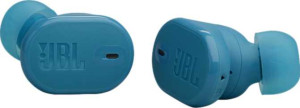
JBL Tune Buds 2
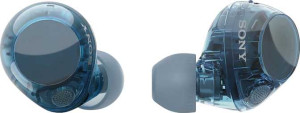
Sony WF-C710N

JBL Tune Buds 2 Sony WF-C710N

Overview

Welcome to our in-depth specification comparison between the JBL Tune Buds 2 and the Sony WF-C710N, two compelling true wireless earbuds competing in the active noise cancellation space. Both share a strong foundation of features, yet they diverge in meaningful ways across driver size, battery endurance, and codec support. Whether you prioritize all-day listening stamina or a smarter, more adaptive listening experience, this head-to-head breakdown will help you find the right fit.

Common Features

  • Both products use an in-ear fit.
  • Both products are fully wireless with no cables or wires.
  • Neither product is a neckband-style earbud.
  • Neither product includes wingtips.
  • Neither product features RGB lighting.
  • Both products have stereo speakers.
  • Neither product includes a UV light.
  • Neither product has a display.
  • Both products have active noise cancellation (ANC).
  • Both products offer passive noise reduction.
  • Both products share a frequency range of 20 Hz to 20000 Hz.
  • Neither product supports Dolby Atmos.
  • Both products have a battery life of 12 hours.
  • Neither product supports wireless charging.
  • Both products have a battery level indicator.
  • Both products have a rechargeable battery.
  • Both products support fast pairing.
  • Both products use USB Type-C for charging.
  • Both products use Bluetooth version 5.3.
  • Neither product supports LDAC, LDHC, Bluetooth LE Audio, aptX Adaptive, or aptX Low Latency.
  • Both products feature an ambient sound mode.
  • Both products include a find device feature.
  • Both products support fast charging.
  • Both products support multipoint connection for up to 2 devices simultaneously.
  • Neither product can read notifications aloud.
  • Both products have a mute function.
  • Both products can be used as a headset.
  • Both products have controls placed directly on the device.
  • Both products are equipped with a noise-canceling microphone.

Main Differences

  • The Ingress Protection rating is IP54 on the JBL Tune Buds 2 and IPX4 on the Sony WF-C710N.
  • The JBL Tune Buds 2 is water resistant, while the Sony WF-C710N is sweat resistant.
  • The weight is 11 g on the JBL Tune Buds 2 and 10.4 g on the Sony WF-C710N.
  • The driver unit size is 10 mm on the JBL Tune Buds 2 and 5 mm on the Sony WF-C710N.
  • Spatial audio support is available on the JBL Tune Buds 2 but not available on the Sony WF-C710N.
  • The battery life of the charging case is 36 hours on the JBL Tune Buds 2 and 21.5 hours on the Sony WF-C710N.
  • Battery life with ANC enabled is 10 hours on the JBL Tune Buds 2 and 8.5 hours on the Sony WF-C710N.
  • The charge time is 2 hours on the JBL Tune Buds 2 and 1.5 hours on the Sony WF-C710N.
  • AAC codec support is available on the Sony WF-C710N but not available on the JBL Tune Buds 2.
  • In-ear/on-ear detection is present on the Sony WF-C710N but not available on the JBL Tune Buds 2.
Specs Comparison
JBL Tune Buds 2

JBL Tune Buds 2

Sony WF-C710N

Sony WF-C710N

Design:
Fit In-ear In-ear
Ingress Protection (IP) rating IP54 IPX4
water resistance Water resistant Sweat resistant
weight 11 g 10.4 g
has no wires or cables
are neckband earbuds
wingtips included
has RGB lighting
has stereo speakers
has UV light
Has a display

Both the JBL Tune Buds 2 and the Sony WF-C710N share the same fundamental design philosophy: compact, wireless, in-ear earbuds with no neckband, no wingtips, no RGB lighting, and no display. For users comparing these two on form factor alone, the experience will feel broadly similar out of the box.

The most meaningful differentiator in this group is water resistance. The JBL carries an IP54 rating, meaning it is protected against both dust ingress and water splashes from any direction. The Sony holds an IPX4 rating, which covers sweat and light splashes but offers no rated dust protection. In practice, IP54 gives the JBL a tangible edge for outdoor or gym use where dust and grit are present, while the Sony′s IPX4 is adequate for workouts and light rain but nothing beyond.

On weight, the Sony edges ahead at 10.4 g versus the JBL′s 11 g per earbud — a negligible 0.6 g difference that is unlikely to be perceptible during real-world wear. Overall, the JBL Tune Buds 2 holds a clear design advantage here, solely due to its superior ingress protection rating.

Sound quality:
has active noise cancellation (ANC)
has passive noise reduction
driver unit size 10 mm 5 mm
lowest frequency 20 Hz 20 Hz
highest frequency 20000 Hz 20000 Hz
supports spatial audio
has Dolby Atmos
has Dirac Virtuo
has a neodymium magnet

Both earbuds share a standard full-range frequency response of 20 Hz to 20,000 Hz, along with active noise cancellation and passive noise reduction — so at a baseline level, neither has a structural disadvantage in terms of what frequencies they can reproduce or noise isolation capability.

Where things diverge meaningfully is driver size and spatial audio support. The JBL Tune Buds 2 uses a 10 mm driver, double the size of the Sony′s 5 mm driver. Larger drivers generally move more air, which tends to translate into fuller bass response and greater overall dynamic range — though driver size alone does not guarantee superior sound, as tuning plays a major role. Still, the JBL′s driver gives it a physical advantage that is hard to dismiss. On top of that, the JBL supports spatial audio, which adds a simulated three-dimensional soundstage particularly useful for movies and immersive listening — a feature the Sony entirely lacks.

The Sony WF-C710N has no offsetting advantages within this spec group. The JBL Tune Buds 2 holds a clear edge here, combining a significantly larger driver with spatial audio support.

Power:
Battery life 12 hours 12 hours
Battery life of charging case 36 hours 21.5 hours
Battery life (ANC) 10 hours 8.5 hours
charge time 2 hours 1.5 hours
has wireless charging
Has a solar power battery
has a battery level indicator
has a rechargeable battery

Earbud battery life is identical at 12 hours each — enough for a full workday of listening without reaching for the case. The gap opens up when ANC is switched on: the JBL sustains 10 hours with ANC active versus the Sony′s 8.5 hours, a 1.5-hour difference that matters for frequent noise-cancellation users on long commutes or flights.

The case tells an even sharper story. The JBL′s charging case extends total playtime to 36 hours combined, while the Sony′s case tops out at 21.5 hours — a gap of over 14 hours. For travelers or anyone who goes several days between charges, that extra case capacity is a practical advantage. The Sony does recover some ground on charge time, refilling in 1.5 hours compared to the JBL′s 2 hours, which is a minor but real convenience if you need a quick turnaround.

Neither earbud offers wireless charging, so that is a non-factor. On balance, the JBL Tune Buds 2 holds a clear power advantage — its superior ANC endurance and substantially larger case reserve outweigh the Sony′s marginally faster charge time.

Connectivity:
has fast pairing
Has USB Type-C
Bluetooth version 5.3 5.3
has LDAC
has LDHC
has Bluetooth LE Audio
has aptX Adaptive
has aptX Low Latency
has aptX HD
has aptX
has aptX Lossless
has aptX Voice
has Auracast
maximum Bluetooth range 10 m 10 m
supports Bluetooth pairing using NFC
Can be used wirelessly
has AAC

Connectivity is largely a draw between these two. Both run on Bluetooth 5.3, support fast pairing, use USB-C for charging, and top out at a 10 m wireless range. Neither supports advanced codecs like LDAC, aptX, or Bluetooth LE Audio, which keeps both firmly in the standard SBC transmission territory for most Android users.

The one meaningful distinction is AAC support on the Sony WF-C710N. AAC is the preferred codec for Apple devices, delivering lower latency and better audio fidelity over Bluetooth compared to the baseline SBC codec. For iPhone users, this is a genuine practical advantage — the Sony will maintain a more efficient, higher-quality wireless stream, while the JBL falls back to SBC regardless of the source device.

For Android users or those indifferent to codec optimization, this group is essentially a tie. But for anyone in the Apple ecosystem, the Sony WF-C710N holds a clear and specific edge through its AAC compatibility.

Features:
release date March 2025 March 2025
has ambient sound mode
has in/on-ear detection
has find device feature
Supports fast charging
multipoint count 2 2
can read notifications
has a mute function
can be used as a headset
control panel placed on a device
Has voice prompts
travel bag is included
Has an in-line control panel
Has a temperature sensor
Has a built-in camera remote control function

Across the features category, these two earbuds are remarkably well-matched. Both offer ambient sound mode, fast charging, device controls, a mute function, voice prompts, 2-device multipoint connectivity, and even a travel bag included in the box. For the vast majority of everyday use cases, users of either earbud will find a very similar feature set at their disposal.

The single differentiator here is in/on-ear detection, which the Sony WF-C710N has and the JBL Tune Buds 2 lacks. This sensor automatically pauses playback when an earbud is removed from the ear and resumes when reinserted — a small but genuinely convenient quality-of-life feature that reduces the need to manually pause and play during brief interruptions.

It is a narrow gap, but it is the only one. The Sony WF-C710N holds a slight edge in this group purely on the strength of its ear detection capability, which adds a layer of everyday convenience that the JBL does not provide.

Microphone:
has a noise-canceling microphone

The microphone spec data available for this comparison is limited to a single shared attribute: both the JBL Tune Buds 2 and the Sony WF-C710N are equipped with a noise-canceling microphone. This means both are designed to suppress ambient background noise during calls, making them functional for voice calls and virtual meetings in moderately noisy environments.

Based strictly on the provided data, this group is a complete tie. Neither product holds any distinguishable advantage over the other in the microphone category as specified here.

Comparison Summary & Verdict

After examining both products side by side, it is clear that each earbud serves a distinct type of listener. The JBL Tune Buds 2 stands out for users who demand extended battery endurance, with a 36-hour charging case and support for spatial audio, making it a strong companion for long travel days or immersive listening sessions. Its larger 10 mm driver may also appeal to those who prefer a fuller low-end sound. On the other hand, the Sony WF-C710N is the smarter daily companion, offering in-ear detection for seamless pause-and-play, AAC codec support for Apple device users, a faster 1.5-hour charge time, and a marginally lighter build. Both share solid ANC, fast pairing, and multipoint connectivity, so neither will disappoint on the fundamentals. Your choice ultimately comes down to longevity and immersion versus convenience and smart usability.

JBL Tune Buds 2
Buy JBL Tune Buds 2 if...

Buy the JBL Tune Buds 2 if you want a larger charging case battery for extended trips, spatial audio support, and broader water resistance with an IP54 rating.

Sony WF-C710N
Buy Sony WF-C710N if...

Buy the Sony WF-C710N if you value faster charging, in-ear detection for hands-free convenience, and AAC codec support for seamless use with Apple devices.