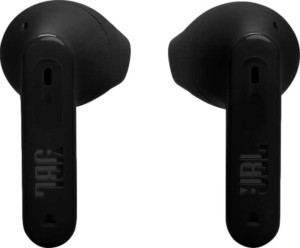
JBL Tune Flex 2
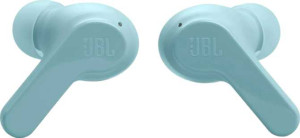
JBL Vibe Beam 2

JBL Tune Flex 2 JBL Vibe Beam 2

Overview

Welcome to our detailed spec comparison of the JBL Tune Flex 2 and the JBL Vibe Beam 2. Both earbuds share a solid foundation — IP54 protection, Bluetooth 5.3, fast charging, and a wireless design — but their approaches to noise management and battery endurance set them apart in meaningful ways. Read on to see how every specification stacks up before you decide which one belongs in your ears.

Common Features

  • Both products have an IP54 ingress protection rating.
  • Both products are fully wireless with no wires or cables.
  • Neither product is a neckband earbud design.
  • Neither product includes wingtips.
  • Neither product features RGB lighting.
  • Both products have stereo speakers.
  • Neither product includes a UV light.
  • Neither product has a display.
  • Both products share a frequency range of 20 Hz to 20000 Hz.
  • Neither product supports Dolby Atmos.
  • Both products have a sound pressure level of 95 dB/mW.
  • Neither product uses a neodymium magnet.
  • Both products have a battery life of 8 hours with ANC conditions.
  • Both products require 2 hours to fully charge.
  • Neither product supports wireless charging.
  • Both products have a battery level indicator.
  • Both products use a rechargeable battery.
  • Both products support fast pairing.
  • Both products feature a USB Type-C connector.
  • Both products use Bluetooth version 5.3.
  • Neither product supports LDAC, LDHC, Bluetooth LE Audio, aptX Adaptive, or aptX Low Latency.
  • Both products support multipoint connection with up to 2 devices simultaneously.
  • Both products have a find device feature.
  • Both products support fast charging.
  • Neither product has in/on-ear detection.
  • Both products include a mute function.
  • Both products can be used as a headset.
  • Both products have a control panel placed on the device.
  • Both products are equipped with a noise-canceling microphone.

Main Differences

  • The fit style is earbud on JBL Tune Flex 2 and in-ear on JBL Vibe Beam 2.
  • JBL Tune Flex 2 is water resistant, while JBL Vibe Beam 2 is sweat resistant.
  • The weight is 8.8 g on JBL Tune Flex 2 and 8.6 g on JBL Vibe Beam 2.
  • Active noise cancellation (ANC) is available on JBL Tune Flex 2 but not on JBL Vibe Beam 2.
  • Passive noise reduction is present on JBL Vibe Beam 2 but not available on JBL Tune Flex 2.
  • The driver unit size is 12 mm on JBL Tune Flex 2 and 8 mm on JBL Vibe Beam 2.
  • Spatial audio support is available on JBL Tune Flex 2 but not on JBL Vibe Beam 2.
  • The impedance is 13 Ohms on JBL Tune Flex 2 and 16 Ohms on JBL Vibe Beam 2.
  • Battery life is 12 hours on JBL Tune Flex 2 and 10 hours on JBL Vibe Beam 2.
  • The battery life of the charging case is 36 hours on JBL Tune Flex 2 and 30 hours on JBL Vibe Beam 2.
  • Ambient sound mode is available on JBL Tune Flex 2 but not on JBL Vibe Beam 2.
  • The number of microphones is 6 on JBL Tune Flex 2 and 4 on JBL Vibe Beam 2.
Specs Comparison
JBL Tune Flex 2

JBL Tune Flex 2

JBL Vibe Beam 2

JBL Vibe Beam 2

Design:
Fit Earbud In-ear
Ingress Protection (IP) rating IP54 IP54
water resistance Water resistant Sweat resistant
weight 8.8 g 8.6 g
has no wires or cables
are neckband earbuds
wingtips included
has RGB lighting
has stereo speakers
has UV light
Has a display

The most meaningful design distinction between these two earbuds lies in their fit style. The JBL Tune Flex 2 uses an earbud form factor, meaning it rests in the outer ear without entering the ear canal — a design that many users find more comfortable for extended wear and less isolating. The JBL Vibe Beam 2, by contrast, is an in-ear design, with a tip that inserts into the ear canal. This typically delivers better passive noise isolation and a more secure fit during physical activity, but can cause ear fatigue over long sessions for some users. This single difference has the largest real-world impact of any spec in this group and should be the primary deciding factor based on personal comfort preference.

Both earbuds share an IP54 ingress protection rating, but the manufacturers describe this differently: the Tune Flex 2 is listed as water resistant while the Vibe Beam 2 is listed as sweat resistant. IP54 is the same physical standard in both cases — protection against dust ingress and water splashes from any direction — so this is effectively a marketing framing difference rather than a technical one. Neither is suitable for submersion. Weight is essentially identical at 8.8 g versus 8.6 g, a 0.2 g gap that is imperceptible in real use.

On design overall, there is no clear winner in terms of build quality indicators — both are wireless, lightweight, and equally protected against the elements. The edge goes to whichever fit style suits the individual user: choose the Tune Flex 2 for a non-intrusive earbud feel, or the Vibe Beam 2 if you prioritize the passive isolation and stability of an in-ear seal.

Sound quality:
has active noise cancellation (ANC)
has passive noise reduction
driver unit size 12 mm 8 mm
lowest frequency 20 Hz 20 Hz
highest frequency 20000 Hz 20000 Hz
supports spatial audio
has Dolby Atmos
has Dirac Virtuo
impedance 13 Ohms 16 Ohms
sound pressure level 95 dB/mW 95 dB/mW
has a neodymium magnet

The JBL Tune Flex 2 and JBL Vibe Beam 2 have some differences in sound features. The Tune Flex 2 includes active noise cancellation (ANC), which the Vibe Beam 2 lacks, though the Vibe Beam 2 does feature passive noise reduction. In terms of driver size, the Tune Flex 2 has a larger 12 mm driver unit, compared to the 8 mm driver unit in the Vibe Beam 2, which could influence the overall sound performance and bass response.

Both earbuds share the same frequency range of 20 Hz to 20,000 Hz, ensuring similar audio clarity across both products. The impedance differs slightly, with the Tune Flex 2 having a lower impedance of 13 Ohms, while the Vibe Beam 2’s impedance is 16 Ohms. This difference may impact how each product interacts with various audio sources.

Both earbuds provide a sound pressure level of 95 dB/mW, meaning they produce similar maximum sound output. Neither model includes features like Dolby Atmos, Dirac Virtuo, or a neodymium magnet, and only the Tune Flex 2 supports spatial audio, a feature not available in the Vibe Beam 2.

Power:
Battery life 12 hours 10 hours
Battery life of charging case 36 hours 30 hours
Battery life (ANC) 8 hours 8 hours
charge time 2 hours 2 hours
has wireless charging
Has a solar power battery
has a battery level indicator
has a rechargeable battery

The JBL Tune Flex 2 holds a clear stamina advantage here. Its 12-hour playback life edges out the Vibe Beam 2's 10 hours — a difference that may seem modest on paper, but in practice means the Tune Flex 2 can comfortably outlast a full workday without a top-up, while the Vibe Beam 2 may require a mid-evening recharge for heavier listeners. The case extends that gap further: 36 total hours versus 30 hours, giving the Tune Flex 2 roughly one extra full charge cycle before you need to hunt for a cable.

Where the two converge is under active noise cancellation. Both drop to 8 hours with ANC enabled, and both share the same 2-hour full charge time — meaning neither product has a speed-charging edge. The absence of wireless charging on both is a minor but notable omission at this price tier, so users will always need a cable nearby regardless of which model they choose.

Overall, the Tune Flex 2 wins the power category outright. The combination of longer per-charge playback and a higher-capacity case makes it the stronger pick for travelers or anyone who wants to minimize how often they think about charging. The Vibe Beam 2 is perfectly adequate for moderate daily use, but if battery endurance is a priority, the Tune Flex 2 is the straightforward choice.

Connectivity:
has fast pairing
Has USB Type-C
Bluetooth version 5.3 5.3
has LDAC
has LDHC
has Bluetooth LE Audio
has aptX Adaptive
has aptX Low Latency
has aptX HD
has aptX
has aptX Lossless
has aptX Voice
has Auracast
maximum Bluetooth range 10 m 10 m
supports Bluetooth pairing using NFC
Can be used wirelessly
has AAC

Connectivity is a dead heat between these two. Both the JBL Tune Flex 2 and Vibe Beam 2 run on Bluetooth 5.3, which brings solid connection stability and improved coexistence with other wireless devices compared to older versions — practical benefits that translate to fewer dropouts during commutes or crowded environments. Both also cap out at a 10-meter wireless range, which is standard for earbuds of this class and sufficient for typical use within the same room or immediate vicinity.

One area worth flagging is the absence of advanced audio codecs on both models. Neither supports LDAC, aptX in any of its variants, AAC, or Bluetooth LE Audio. This means both are limited to the standard SBC codec, which is adequate for casual listening but rules out high-resolution wireless audio streaming. Audiophiles or users with high-bitrate music libraries won't be able to take full advantage of their source quality on either device.

Since every single connectivity specification is identical across both products, this group is a complete tie. Neither earbuds offer a meaningful advantage here — the choice between them should rest entirely on other specification groups.

Features:
release date March 2025 March 2025
has ambient sound mode
has in/on-ear detection
has find device feature
Supports fast charging
multipoint count 2 2
can read notifications
has a mute function
can be used as a headset
control panel placed on a device
Has voice prompts
travel bag is included
Has an in-line control panel
Has a temperature sensor
Has a built-in camera remote control function

The JBL Tune Flex 2 and JBL Vibe Beam 2 have several similar features, but also a few key differences. Both models support fast charging, have a find device feature, a mute function, and can be used as a headset. Additionally, both have a control panel placed on the device, voice prompts, and include a travel bag. Neither model has an in-line control panel, temperature sensor, or built-in camera remote control function.

One distinction between the two is that the Tune Flex 2 includes an ambient sound mode, which is not available in the Vibe Beam 2. Both products support multipoint connections with a count of 2, but neither can read notifications. In terms of in/on-ear detection, both products lack this feature.

Overall, the main difference lies in the presence of ambient sound mode on the Tune Flex 2, while the Vibe Beam 2 lacks this feature. Otherwise, both products offer nearly identical functionality in this category.

Microphone:
number of microphones 6 4
has a noise-canceling microphone

Microphone hardware is where the JBL Tune Flex 2 pulls ahead. It packs 6 microphones compared to the 4 microphones on the Vibe Beam 2. In practical terms, more microphones give the onboard processing more acoustic reference points to work with — enabling more precise beamforming, better separation of the speaker's voice from ambient noise, and generally cleaner call quality in challenging environments like busy streets or open offices.

That said, both earbuds include noise-canceling microphone technology, so the Vibe Beam 2 is by no means a poor call performer. The difference is one of degree rather than capability — the Tune Flex 2 simply has more raw hardware to potentially deliver a more refined voice pickup experience, particularly when background noise is severe.

The Tune Flex 2 holds a clear edge here. For users who take frequent calls or rely on voice assistants regularly, those two extra microphones represent a meaningful hardware advantage that the Vibe Beam 2 cannot match on paper.

Comparison Summary & Verdict

After comparing every specification, a clear picture emerges for each product. The JBL Tune Flex 2 is the stronger choice for listeners who want a richer, more immersive experience: it brings active noise cancellation, spatial audio, a larger 12 mm driver, an ambient sound mode, and a longer battery life of 12 hours — plus 36 hours total with the charging case. The JBL Vibe Beam 2, on the other hand, is a capable, no-frills companion that trades those premium features for a slightly lighter build and a more focused in-ear fit with passive noise reduction. If you commute in noisy environments or crave immersive sound, the Tune Flex 2 is the clear pick. If you need a reliable, lighter everyday earbud for casual listening, the Vibe Beam 2 delivers solid fundamentals at its level.

JBL Tune Flex 2
Buy JBL Tune Flex 2 if...

Buy the JBL Tune Flex 2 if you want active noise cancellation, spatial audio support, and longer battery life with a larger driver for a more immersive listening experience.

JBL Vibe Beam 2
Buy JBL Vibe Beam 2 if...

Buy the JBL Vibe Beam 2 if you prefer a slightly lighter in-ear earbud with passive noise reduction and you do not need active noise cancellation or spatial audio.