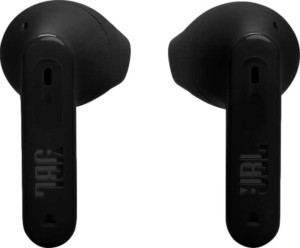
JBL Tune Flex 2
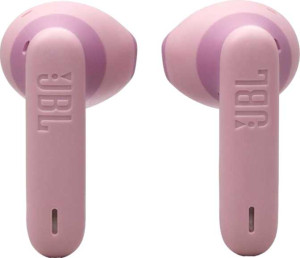
JBL Vibe Flex 2

JBL Tune Flex 2 JBL Vibe Flex 2

Overview

When choosing between the JBL Tune Flex 2 and the JBL Vibe Flex 2, buyers will find two wire-free earbuds that share a surprising amount of common ground — yet differ in meaningful ways. This comparison digs into the key battlegrounds, including noise cancellation capabilities, battery endurance, and microphone setup, to help you decide which model truly fits your lifestyle and listening needs.

Common Features

  • Both products have an earbud fit.
  • Both products carry an IP54 ingress protection rating.
  • Neither product has wires or cables.
  • Neither product is a neckband earbud.
  • Wingtips are not included with either product.
  • RGB lighting is not available on either product.
  • Both products have stereo speakers.
  • UV light is not present on either product.
  • Neither product has passive noise reduction.
  • Both products use a 12 mm driver unit.
  • Both products have a lowest frequency of 20 Hz and a highest frequency of 20000 Hz.
  • Dolby Atmos support is not available on either product.
  • Both products have a sound pressure level of 95 dB/mW.
  • A neodymium magnet is not featured in either product.
  • Both products have a charge time of 2 hours.
  • Wireless charging is not available on either product.
  • Both products have a battery level indicator.
  • Both products have a rechargeable battery.
  • Fast pairing is supported on both products.
  • Both products have a USB Type-C connection.
  • Both products use Bluetooth version 5.3.
  • LDAC support is not available on either product.
  • Bluetooth LE Audio is not supported on either product.
  • An ambient sound mode is available on both products.
  • In/on-ear detection is not present on either product.
  • A find device feature is available on both products.
  • Fast charging is supported on both products.
  • Both products support multipoint connection for up to 2 devices.
  • Neither product can read notifications.
  • A mute function is available on both products.
  • Both products can be used as a headset.
  • Both products have a noise-canceling microphone.

Main Differences

  • Water resistance is rated as water resistant on JBL Tune Flex 2 and sweat resistant on JBL Vibe Flex 2.
  • Weight is 8.8 g on JBL Tune Flex 2 and 8.24 g on JBL Vibe Flex 2.
  • Active noise cancellation (ANC) is available on JBL Tune Flex 2 but not on JBL Vibe Flex 2.
  • Spatial audio support is present on JBL Tune Flex 2 but not available on JBL Vibe Flex 2.
  • Impedance is 13 Ohms on JBL Tune Flex 2 and 16 Ohms on JBL Vibe Flex 2.
  • Battery life is 12 hours on JBL Tune Flex 2 and 10 hours on JBL Vibe Flex 2.
  • Battery life of the charging case is 36 hours on JBL Tune Flex 2 and 30 hours on JBL Vibe Flex 2.
  • The number of microphones is 6 on JBL Tune Flex 2 and 4 on JBL Vibe Flex 2.
Specs Comparison
JBL Tune Flex 2

JBL Tune Flex 2

JBL Vibe Flex 2

JBL Vibe Flex 2

Design:
Fit Earbud Earbud
Ingress Protection (IP) rating IP54 IP54
water resistance Water resistant Sweat resistant
weight 8.8 g 8.24 g
has no wires or cables
are neckband earbuds
wingtips included
has RGB lighting
has stereo speakers
has UV light
Has a display

The JBL Tune Flex 2 and JBL Vibe Flex 2 both feature an earbud design, providing a similar fit for users. However, the Tune Flex 2 is rated as water resistant with an IP54 rating, while the Vibe Flex 2 offers a sweat-resistant rating with the same IP54 level of protection, making the Vibe Flex 2 potentially better suited for intense workouts.

In terms of weight, the JBL Vibe Flex 2 is slightly lighter at 8.24 g compared to the JBL Tune Flex 2's 8.8 g, though the difference is minimal. Both models are wireless with no cables and are not neckband-style earbuds. Neither product includes wingtips, RGB lighting, UV light, or a display.

Both earbuds come with stereo speakers for an immersive audio experience, but neither offers additional visual or interactive features like RGB lighting or a display, keeping the focus strictly on sound quality and functionality.

Sound quality:
has active noise cancellation (ANC)
has passive noise reduction
driver unit size 12 mm 12 mm
lowest frequency 20 Hz 20 Hz
highest frequency 20000 Hz 20000 Hz
supports spatial audio
has Dolby Atmos
has Dirac Virtuo
impedance 13 Ohms 16 Ohms
sound pressure level 95 dB/mW 95 dB/mW
has a neodymium magnet

At the hardware level, both earbuds are built around an identical 12 mm driver with a 20 Hz–20,000 Hz frequency range and a matched 95 dB/mW sensitivity — meaning raw loudness and tonal coverage are effectively equal out of the box. The one hardware nuance worth noting is impedance: the Tune Flex 2 comes in at 13 Ohms versus the Vibe Flex 2's 16 Ohms. In practice, the lower impedance of the Tune Flex 2 means it requires slightly less power to reach the same volume, making it marginally easier to drive from a phone's output — though at this impedance range the real-world difference is negligible for most listeners.

Where the two products genuinely diverge is in the software and processing layer. The Tune Flex 2 offers Active Noise Cancellation (ANC), which actively samples and counters ambient sound in real time — a meaningful advantage for commuters, open offices, or travel. Neither earbuds provide passive noise reduction, so without ANC enabled, the Vibe Flex 2 offers no isolation at all. On top of that, the Tune Flex 2 supports spatial audio, which widens the perceived soundstage beyond the typical in-ear stereo image — particularly impactful for movies and immersive music formats. The Vibe Flex 2 supports neither feature.

The Tune Flex 2 holds a clear edge in this category. Shared driver specs mean both products start from the same acoustic foundation, but the Tune Flex 2 layers on ANC and spatial audio — two features that materially change the listening experience in real-world conditions. For users who prioritize pure audio fidelity in a quiet environment, both are comparable; for anyone seeking noise isolation or an expanded soundstage, the Tune Flex 2 is the significantly stronger choice.
Power:
Battery life 12 hours 10 hours
Battery life of charging case 36 hours 30 hours
charge time 2 hours 2 hours
has wireless charging
Has a solar power battery
has a battery level indicator
has a rechargeable battery

Both earbuds share the same 2-hour charge time and identical convenience features — battery level indicator, rechargeable battery, and no wireless charging on either side. The charging parity means neither product has a logistical edge in how you power them up; the real story is in how long they last.

On endurance, the Tune Flex 2 pulls ahead with 12 hours of earbud battery life and a case that extends total usage to 36 hours, versus the Vibe Flex 2's 10 hours per charge and 30 hours combined. That 2-hour gap per session is meaningful for long-haul travelers or full workday listeners — it's the difference between making it through a transatlantic flight on a single charge or needing a top-up. The 6-hour case advantage compounds this further, effectively giving the Tune Flex 2 one additional full charging cycle before you need to reach for a cable.

The Tune Flex 2 wins this category on the strength of its superior battery endurance across both the earbuds and the case. Given that charge time is identical, choosing the Vibe Flex 2 means accepting less total runtime for no offsetting convenience gain in how quickly it recharges.

Connectivity:
has fast pairing
Has USB Type-C
Bluetooth version 5.3 5.3
has LDAC
has LDHC
has Bluetooth LE Audio
has aptX Adaptive
has aptX Low Latency
has aptX HD
has aptX
has aptX Lossless
has aptX Voice
has Auracast
maximum Bluetooth range 10 m 10 m
supports Bluetooth pairing using NFC
Can be used wirelessly
has AAC

Connectivity is the one category where these two earbuds are completely indistinguishable. Both run Bluetooth 5.3, offer a 10 m wireless range, support fast pairing, and charge via USB-C — the full spec sheet is a mirror image.

It is worth noting what neither product offers: there are no high-resolution audio codecs such as LDAC, aptX, or AAC on either side. This means both rely on standard SBC transmission, which is adequate for everyday streaming but does impose a ceiling on audio fidelity for listeners who care about lossless or near-lossless wireless playback. Similarly, the absence of Bluetooth LE Audio and Auracast rules out next-generation multi-stream and public broadcast features on both devices.

This group is a complete tie — every connectivity spec is identical. Neither product offers a pairing, range, codec, or wired charging advantage over the other, so connectivity should play no role in choosing between the two.

Features:
release date March 2025 March 2025
has ambient sound mode
has in/on-ear detection
has find device feature
Supports fast charging
multipoint count 2 2
can read notifications
has a mute function
can be used as a headset
control panel placed on a device
Has voice prompts
travel bag is included
Has an in-line control panel
Has a temperature sensor
Has a built-in camera remote control function

Much like connectivity, the features category yields no differentiator between these two earbuds — every single spec is identical. Both support ambient sound mode, multipoint pairing for two simultaneous devices, fast charging, mute, voice prompts, on-device controls, and even include a travel bag. For daily usability, this is a solid and well-rounded feature set that covers the most practical bases.

A few shared omissions are worth flagging for the right buyer. Neither earbud offers in/on-ear detection, meaning audio won't automatically pause when you remove them — a small but genuinely convenient quality-of-life feature absent from both. Similarly, neither supports notification readouts, which rules out hands-free awareness of incoming messages for users who rely on that.

This group is another complete tie. The feature parity is total — there is no functional advantage to be found on either side. Any decision between the two should rest entirely on the differentiators identified in other spec groups, such as sound quality or battery life.

Microphone:
number of microphones 6 4
has a noise-canceling microphone

Both earbuds feature noise-canceling microphones, so call clarity in moderately noisy environments is a baseline expectation for either. The meaningful distinction here is quantity: the Tune Flex 2 deploys 6 microphones compared to the Vibe Flex 2's 4.

Microphone count matters because more mics enable more sophisticated beamforming and wind/noise rejection algorithms. With 6 microphones, the Tune Flex 2 has more spatial data to work with when isolating your voice from background noise — particularly relevant in busy environments like streets, cafes, or open offices. This also directly supports the ANC system identified in the sound quality group, where additional microphones feed both the active noise cancellation and the call-quality pipeline simultaneously. The Vibe Flex 2's 4-mic array is a respectable setup for this price tier, but it has less raw input to achieve the same result.

The Tune Flex 2 has the edge here. While both earbuds offer noise-canceling microphones, the additional two mics on the Tune Flex 2 translate to a higher potential for cleaner call audio and more effective noise suppression in demanding real-world conditions.

Comparison Summary & Verdict

Both the JBL Tune Flex 2 and JBL Vibe Flex 2 are competent wire-free earbuds sharing the same IP54 rating, Bluetooth 5.3, fast charging, and a 12 mm driver — but their differences reveal clearly distinct audiences. The JBL Tune Flex 2 stands out with active noise cancellation, spatial audio support, a superior 6-microphone array, and longer battery life of 12 hours (36 hours with the case), making it the stronger choice for commuters, remote workers, and audio enthusiasts. The JBL Vibe Flex 2, on the other hand, is slightly lighter and offers sweat resistance, positioning it better for casual everyday use and fitness activities where ANC is not a priority. Choose based on how much you value immersive audio features versus a simpler, lighter everyday companion.

JBL Tune Flex 2
Buy JBL Tune Flex 2 if...

Buy the JBL Tune Flex 2 if you want active noise cancellation, spatial audio, a more powerful 6-microphone setup, and longer battery life for commuting or focused listening sessions.

JBL Vibe Flex 2
Buy JBL Vibe Flex 2 if...

Buy the JBL Vibe Flex 2 if you prefer a lighter earbud with sweat resistance for workouts and casual use, and do not need active noise cancellation.