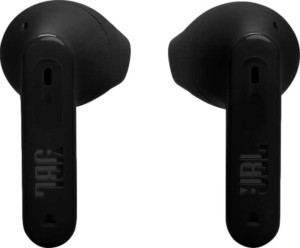
JBL Tune Flex 2
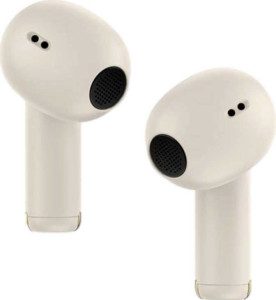
Sennheiser Accentum Open

JBL Tune Flex 2 Sennheiser Accentum Open

Overview

Welcome to our in-depth specification comparison between the JBL Tune Flex 2 and the Sennheiser Accentum Open. These two wireless earbuds share a surprising amount of common ground, yet diverge sharply when it comes to audio features, battery endurance, and connectivity options. Whether you are chasing immersive sound or prioritizing loudness and faster charging, this head-to-head breakdown will help you decide which earbud fits your lifestyle.

Common Features

  • Both products are earbud-style earphones.
  • Neither product has wires or cables.
  • Neither product is a neckband earbud.
  • Wingtips are not included with either product.
  • RGB lighting is not present on either product.
  • Both products have stereo speakers.
  • Neither product has a UV light.
  • Neither product has a display.
  • Neither product offers passive noise reduction.
  • Dolby Atmos support is not available on either product.
  • Dirac Virtuo support is not available on either product.
  • Neither product uses a neodymium magnet.
  • Wireless charging is not available on either product.
  • Neither product has a solar power battery.
  • Both products have a battery level indicator.
  • Both products have a rechargeable battery.
  • Both products use USB Type-C.
  • Both products have Bluetooth version 5.3.
  • LDAC support is not available on either product.
  • Bluetooth LE Audio is not supported on either product.
  • aptX Adaptive support is not available on either product.
  • Fast charging is supported on both products.
  • Neither product can read notifications.
  • Both products have a mute function.
  • Both products can be used as a headset.
  • Both products have a control panel placed on the device.
  • Voice prompts are available on both products.
  • A travel bag is included with both products.
  • Both products have a noise-canceling microphone.

Main Differences

  • The Ingress Protection rating is IP54 on JBL Tune Flex 2 and IPX4 on Sennheiser Accentum Open.
  • JBL Tune Flex 2 is water resistant, while Sennheiser Accentum Open is sweat resistant.
  • The weight is 8.8 g on JBL Tune Flex 2 and 8.7 g on Sennheiser Accentum Open.
  • Active noise cancellation is present on JBL Tune Flex 2 but not available on Sennheiser Accentum Open.
  • The driver unit size is 12 mm on JBL Tune Flex 2 and 11 mm on Sennheiser Accentum Open.
  • The lowest frequency is 20 Hz on JBL Tune Flex 2 and 25 Hz on Sennheiser Accentum Open.
  • The highest frequency is 20000 Hz on JBL Tune Flex 2 and 15000 Hz on Sennheiser Accentum Open.
  • Spatial audio support is present on JBL Tune Flex 2 but not available on Sennheiser Accentum Open.
  • The sound pressure level is 95 dB/mW on JBL Tune Flex 2 and 109 dB/mW on Sennheiser Accentum Open.
  • Battery life is 12 hours on JBL Tune Flex 2 and 6 hours on Sennheiser Accentum Open.
  • The battery life of the charging case is 36 hours on JBL Tune Flex 2 and 18 hours on Sennheiser Accentum Open.
  • Charge time is 2 hours on JBL Tune Flex 2 and 1 hour on Sennheiser Accentum Open.
  • Fast pairing is available on JBL Tune Flex 2 but not on Sennheiser Accentum Open.
  • AAC support is present on Sennheiser Accentum Open but not available on JBL Tune Flex 2.
  • Ambient sound mode is available on JBL Tune Flex 2 but not on Sennheiser Accentum Open.
  • A find device feature is present on JBL Tune Flex 2 but not on Sennheiser Accentum Open.
  • The number of microphones is 6 on JBL Tune Flex 2 and 4 on Sennheiser Accentum Open.
Specs Comparison
JBL Tune Flex 2

JBL Tune Flex 2

Sennheiser Accentum Open

Sennheiser Accentum Open

Design:
Fit Earbud Earbud
Ingress Protection (IP) rating IP54 IPX4
water resistance Water resistant Sweat resistant
weight 8.8 g 8.7 g
has no wires or cables
are neckband earbuds
wingtips included
has RGB lighting
has stereo speakers
has UV light
Has a display

Both the JBL Tune Flex 2 and the Sennheiser Accentum Open share the same fundamental design philosophy: true wireless earbuds with no cables, no neckband, no wingtips, and no gimmicks like RGB lighting or displays. At 8.8 g and 8.7 g respectively, the weight difference is negligible in practice — both are ultralight and should sit comfortably during extended wear.

The most meaningful differentiator in this group is ingress protection. The Tune Flex 2 carries an IP54 rating, meaning it is shielded against both dust ingress and water splashes from any direction. The Accentum Open is rated IPX4, which covers sweat and light splash resistance but offers no certified dust protection. In real-world terms, the JBL is the safer choice for outdoor or gym use where grit, sand, or fine particles might be present — not just moisture.

Overall, the JBL Tune Flex 2 holds a clear edge in durability within this group. Both products are otherwise structurally identical in form factor, so if your use case is strictly indoor or gym-based, the gap narrows considerably — but for versatile, on-the-go use, the broader IP54 coverage gives the JBL a practical advantage.

Sound quality:
has active noise cancellation (ANC)
has passive noise reduction
driver unit size 12 mm 11 mm
lowest frequency 20 Hz 25 Hz
highest frequency 20000 Hz 15000 Hz
supports spatial audio
has Dolby Atmos
has Dirac Virtuo
sound pressure level 95 dB/mW 109 dB/mW
has a neodymium magnet

The frequency response figures tell a revealing story. The JBL Tune Flex 2 spans 20 Hz to 20,000 Hz — the full range of human hearing — while the Sennheiser Accentum Open reaches only up to 15,000 Hz, cutting off a portion of the upper treble. In practice, this means the Accentum Open may sound slightly less airy or detailed in the highest frequencies, such as cymbal shimmer or the subtle overtones of strings. The JBL's slightly larger 12 mm driver versus the Accentum Open's 11 mm also gives it a marginal physical advantage in moving air at low frequencies, though driver size alone is not a guarantee of audio quality.

Where the gap widens more decisively is in features. The Tune Flex 2 includes active noise cancellation (ANC) and spatial audio support — capabilities the Accentum Open entirely lacks. ANC meaningfully reduces ambient noise in commutes or busy environments, while spatial audio enables a more immersive, three-dimensional soundstage for compatible content. On the flip side, the Accentum Open's 109 dB/mW sensitivity rating is notably higher than the Tune Flex 2's 95 dB/mW, meaning it can reach louder volumes with less power — useful for those who listen at higher volumes or need headroom in noisy settings without ANC.

Taken together, the JBL Tune Flex 2 holds a clear advantage in this group for most listeners. Its wider frequency range, ANC, and spatial audio support represent a materially richer feature set. The Accentum Open's higher sensitivity is a genuine plus, but it does not compensate for the missing noise cancellation and narrower frequency ceiling.

Power:
Battery life 12 hours 6 hours
Battery life of charging case 36 hours 18 hours
charge time 2 hours 1 hours
has wireless charging
Has a solar power battery
has a battery level indicator
has a rechargeable battery

The JBL Tune Flex 2 offers a longer battery life than the Sennheiser Accentum Open, with 12 hours of playback compared to 6 hours for the Sennheiser model. Both products come with a charging case, but the JBL Tune Flex 2 provides a total of 36 hours of additional battery life, while the Sennheiser Accentum Open offers 18 hours.

In terms of charge time, the Sennheiser Accentum Open has a faster charging time of 1 hour, while the JBL Tune Flex 2 takes 2 hours to fully charge. Neither model supports wireless charging, nor do they feature a solar power battery.

Both earbuds have a rechargeable battery and a battery level indicator, ensuring users can easily track their power status.

Connectivity:
has fast pairing
Has USB Type-C
Bluetooth version 5.3 5.3
has LDAC
has LDHC
has Bluetooth LE Audio
has aptX Adaptive
has aptX Low Latency
has aptX HD
has aptX
has aptX Lossless
has aptX Voice
has Auracast
maximum Bluetooth range 10 m 10 m
supports Bluetooth pairing using NFC
Can be used wirelessly
has AAC

Both the JBL Tune Flex 2 and the Sennheiser Accentum Open feature USB Type-C connectivity, ensuring fast charging. They both support Bluetooth 5.3, with the same maximum Bluetooth range of 10 m. However, the JBL Tune Flex 2 supports fast pairing, while the Sennheiser Accentum Open does not.

When it comes to audio codecs, the Sennheiser Accentum Open supports AAC, while the JBL Tune Flex 2 does not. Neither product includes support for LDAC, LDHC, Bluetooth LE Audio, aptX Adaptive, aptX Low Latency, aptX HD, aptX, aptX Lossless, aptX Voice, or Auracast.

Both models can be used wirelessly, and neither supports Bluetooth pairing via NFC.

Features:
release date March 2025 May 2025
has ambient sound mode
has in/on-ear detection
has find device feature
Supports fast charging
can read notifications
has a mute function
can be used as a headset
control panel placed on a device
Has voice prompts
travel bag is included
Has an in-line control panel
Has a temperature sensor
Has a built-in camera remote control function

The JBL Tune Flex 2 includes ambient sound mode and a find device feature, neither of which are available on the Sennheiser Accentum Open. Both products support fast charging, have a mute function, can be used as a headset, and feature control panels placed on a device. Additionally, both have voice prompts and include a travel bag.

Neither product offers in/on-ear detection, the ability to read notifications, an in-line control panel, a temperature sensor, or a built-in camera remote control function.

In summary, while the JBL Tune Flex 2 provides the added functionality of ambient sound mode and find device features, the Sennheiser Accentum Open lacks these specific capabilities but matches the JBL model in several other feature areas.

Microphone:
number of microphones 6 4
has a noise-canceling microphone

The JBL Tune Flex 2 has 6 microphones, while the Sennheiser Accentum Open has 4 microphones. Both models are equipped with a noise-canceling microphone to improve call quality by reducing background noise.

In summary, the JBL Tune Flex 2 offers more microphones than the Sennheiser Accentum Open, but both provide noise-canceling functionality for clearer audio during calls.

Comparison Summary & Verdict

After examining the full specification breakdown, both earbuds serve different types of listeners. The JBL Tune Flex 2 stands out with its active noise cancellation, spatial audio support, ambient sound mode, broader frequency range, and significantly longer battery life of 12 hours with 36 hours from its charging case — making it the stronger choice for commuters and frequent travelers. On the other hand, the Sennheiser Accentum Open delivers a higher sound pressure level of 109 dB/mW, faster one-hour charge time, and AAC codec support, appealing to listeners who value raw volume and quick top-ups over advanced audio processing features.

JBL Tune Flex 2
Buy JBL Tune Flex 2 if...

Buy the JBL Tune Flex 2 if you want active noise cancellation, spatial audio, an ambient sound mode, and significantly longer battery life for extended listening sessions.

Sennheiser Accentum Open
Buy Sennheiser Accentum Open if...

Buy the Sennheiser Accentum Open if you prioritize a higher sound pressure level, faster one-hour charging, and AAC codec support over advanced noise management features.