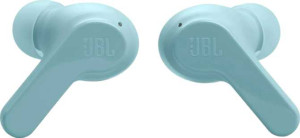
JBL Vibe Beam 2
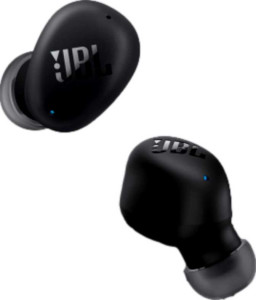
JBL Vibe Buds 2

JBL Vibe Beam 2 JBL Vibe Buds 2

Overview

When choosing between the JBL Vibe Beam 2 and the JBL Vibe Buds 2, you are looking at two closely matched true wireless earbuds from the same family, sharing the same core design, driver size, and battery endurance. Yet beneath the surface, key distinctions in active noise cancellation and connectivity features set them apart in meaningful ways for different types of listeners. This comparison breaks down every specification to help you decide which model is the right fit for your needs.

Common Features

  • Both products have an in-ear fit.
  • Both products carry an IP54 ingress protection rating.
  • Both products are sweat resistant.
  • Neither product uses wires or cables.
  • Neither product is a neckband earbud style.
  • Neither product includes wingtips.
  • Both products feature stereo speakers.
  • Both products offer passive noise reduction.
  • Both products use an 8 mm driver unit.
  • Both products cover a frequency range of 20 Hz to 20000 Hz.
  • Both products have an impedance of 16 Ohms.
  • Spatial audio is not supported on either product.
  • Both products provide a battery life of 10 hours.
  • Both products provide a charging case battery life of 30 hours.
  • Both products have a charge time of 2 hours.
  • The charging case battery capacity is 550 mAh on both products.
  • Wireless charging is not available on either product.
  • Both products have a battery level indicator.
  • Both products include a USB Type-C connection.
  • Both products use Bluetooth version 5.3.
  • Both products support fast charging.
  • Both products support multipoint connection with up to 2 devices.
  • Both products have a mute function.
  • Both products can be used as a headset.
  • Both products have a control panel placed on the device.
  • Both products feature voice prompts.
  • Both products are equipped with 4 microphones.
  • Both products have a noise-canceling microphone.

Main Differences

  • Active noise cancellation (ANC) is available on JBL Vibe Buds 2 but not on JBL Vibe Beam 2.
  • Battery power is 50 mAh on JBL Vibe Beam 2 and 49 mAh on JBL Vibe Buds 2.
  • Fast pairing is supported on JBL Vibe Beam 2 but not available on JBL Vibe Buds 2.
  • Ambient sound mode is available on JBL Vibe Buds 2 but not on JBL Vibe Beam 2.
Specs Comparison
JBL Vibe Beam 2

JBL Vibe Beam 2

JBL Vibe Buds 2

JBL Vibe Buds 2

Design:
Fit In-ear In-ear
Ingress Protection (IP) rating IP54 IP54
water resistance Sweat resistant Sweat resistant
has no wires or cables
are neckband earbuds
wingtips included
has RGB lighting
has stereo speakers
has UV light
Has a display

In terms of design, the JBL Vibe Beam 2 and JBL Vibe Buds 2 are virtually identical on paper. Both use an in-ear fit, are fully wireless with no cables or neckband, and neither includes wingtips for added stability. They share the same IP54 ingress protection rating, meaning both offer sweat resistance suitable for workouts and light rain — but neither is rated for full submersion.

Both earbuds also share stereo speaker configurations and lack extras like RGB lighting, UV sanitization, or a display. From a design standpoint, there is no meaningful functional difference between the two based on the provided specs alone.

Given that every design specification is identical across both products, this category is a complete tie. Buyers looking to differentiate between the Vibe Beam 2 and Vibe Buds 2 will need to look beyond design — to areas like sound, battery, or features — to find a meaningful distinction.

Sound quality:
has active noise cancellation (ANC)
has passive noise reduction
driver unit size 8 mm 8 mm
lowest frequency 20 Hz 20 Hz
highest frequency 20000 Hz 20000 Hz
supports spatial audio
has Dolby Atmos
has Dirac Virtuo
impedance 16 Ohms 16 Ohms
sound pressure level 95 dB/mW 95 dB/mW
has a neodymium magnet

At the hardware level, both earbuds are built around the same sonic foundation: an 8 mm driver, a full 20 Hz–20,000 Hz frequency range, matching 16 Ohm impedance, and a 95 dB/mW sensitivity rating. In practice, this means both should deliver comparable raw loudness and frequency coverage, with sensitivity high enough to reach solid volume levels from low-power sources like smartphones.

The single — but significant — differentiator here is noise isolation. Both models rely on passive noise reduction through their in-ear fit, but the Vibe Buds 2 adds active noise cancellation (ANC) on top of that. ANC uses microphones to detect and counteract ambient sound in real time, making a tangible difference in noisy environments like commutes, offices, or gyms — contexts where the Vibe Beam 2 simply cannot compete at the same level.

The Vibe Buds 2 holds a clear edge in this category. With identical driver hardware, the ANC capability is the decisive factor — it meaningfully expands the Buds 2's versatility in real-world listening environments without any apparent trade-off in raw acoustic specs.

Power:
Battery life 10 hours 10 hours
Battery life of charging case 30 hours 30 hours
Battery life (ANC) 8 hours 8 hours
charge time 2 hours 2 hours
battery power 50 mAh 49 mAh
battery power (charging case) 550mAh 550mAh
has wireless charging
Has a solar power battery
has a battery level indicator
has a rechargeable battery

Power performance is remarkably consistent across both models. Each earbud delivers 10 hours of continuous playback — dropping to 8 hours with ANC active on the Vibe Buds 2 — and both cases extend total listening time to a combined 40 hours. A 2-hour full charge time is the same for both, and neither supports wireless charging, meaning users are dependent on a cable in all scenarios.

The only numerical difference is the earbud battery capacity: 50 mAh on the Vibe Beam 2 versus 49 mAh on the Vibe Buds 2. A 1 mAh gap is functionally negligible and produces no measurable real-world difference in runtime — the identical rated playback hours confirm this. The 550 mAh case capacity is shared between both products as well.

This category is effectively a dead tie. Every metric that actually matters to a user — daily runtime, total case-extended life, and charge time — is identical. The 1 mAh cell difference is a manufacturing variance, not a competitive distinction.

Connectivity:
has fast pairing
Has USB Type-C
Bluetooth version 5.3 5.3
has LDAC
has LDHC
has Bluetooth LE Audio
has aptX Adaptive
has aptX Low Latency
has aptX HD
has aptX
has aptX Lossless
has aptX Voice
has Auracast
maximum Bluetooth range 10 m 10 m
supports Bluetooth pairing using NFC
Can be used wirelessly
has AAC

Both earbuds share the same connectivity backbone: Bluetooth 5.3, a 10 m maximum range, USB Type-C charging, and fully wireless operation. Notably, neither supports any high-resolution audio codec — no LDAC, aptX, AAC, or Bluetooth LE Audio — which means both are limited to the standard SBC codec for transmission. For most casual listeners this is unlikely to be noticeable, but audiophiles seeking higher-fidelity wireless streaming will find both models equally limited.

The one functional difference in this category is fast pairing. The Vibe Beam 2 supports it; the Vibe Buds 2 does not. Fast pairing streamlines the initial device setup by automating the Bluetooth discovery and pairing process, reducing the steps needed to connect to a new device for the first time — a small but genuinely convenient quality-of-life advantage.

The Vibe Beam 2 holds a narrow edge here solely due to fast pairing. It is not a dramatic advantage, but it is the only meaningful connectivity distinction between two otherwise identical setups. Users who frequently pair their earbuds with new devices will appreciate it more than those who pair once and rarely switch.

Features:
release date March 2025 March 2025
has ambient sound mode
has in/on-ear detection
Supports fast charging
multipoint count 2 2
can read notifications
has a mute function
can be used as a headset
control panel placed on a device
Has voice prompts
travel bag is included
Has an in-line control panel
Has a temperature sensor
Has a built-in camera remote control function

The JBL Vibe Beam 2 and JBL Vibe Buds 2 share several key features, but there are some differences worth noting. Both models support fast charging, have a multipoint count of 2, include a mute function, can be used as a headset, come with a control panel placed on a device, feature voice prompts, and include a travel bag. Neither product has an in-line control panel, a temperature sensor, or a built-in camera remote control function.

The main difference is that the Vibe Beam 2 does not offer an ambient sound mode, while the Vibe Buds 2 do include this feature. Additionally, neither product has in/on-ear detection or the ability to read notifications.

Overall, the JBL Vibe Buds 2 have the advantage of ambient sound mode, while the JBL Vibe Beam 2 has a more basic set of features in this regard, but both models offer similar core functionalities.

Microphone:
number of microphones 4 4
has a noise-canceling microphone

The JBL Vibe Beam 2 and JBL Vibe Buds 2 both feature 4 microphones, ensuring strong voice pickup. Additionally, both models come equipped with noise-canceling microphones, designed to reduce background noise and improve call quality. These microphone specifications are identical across both products, providing a consistent experience for users looking for clear communication.

Overall, there are no differences between the JBL Vibe Beam 2 and JBL Vibe Buds 2 in terms of microphone capabilities.

Comparison Summary & Verdict

Both the JBL Vibe Beam 2 and the JBL Vibe Buds 2 deliver a near-identical foundation: the same in-ear design, IP54 sweat resistance, an 8 mm driver, a 10-hour battery life, and a shared 40-hour total with the charging case. The critical fork in the road comes down to two features. The JBL Vibe Buds 2 adds active noise cancellation and an ambient sound mode, making it the stronger choice for commuters, travelers, or anyone who values acoustic control in noisy environments. The JBL Vibe Beam 2, on the other hand, counters with fast pairing, appealing to users who switch between devices frequently and want a quicker, more seamless connection experience. If immersive, distraction-free listening is your priority, the Vibe Buds 2 wins out. If speed and convenience of pairing matter more, the Vibe Beam 2 is the practical pick.

JBL Vibe Beam 2
Buy JBL Vibe Beam 2 if...

Buy the JBL Vibe Beam 2 if fast pairing is important to you and you frequently switch between two Bluetooth devices without needing active noise cancellation.

JBL Vibe Buds 2
Buy JBL Vibe Buds 2 if...

Buy the JBL Vibe Buds 2 if you want active noise cancellation and an ambient sound mode to stay aware of your surroundings in noisy environments.