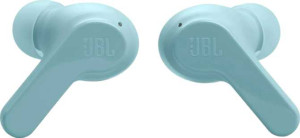
JBL Vibe Beam 2
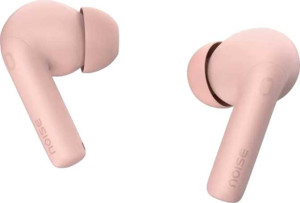
Noise Air Buds Pro 6

JBL Vibe Beam 2 Noise Air Buds Pro 6

Overview

Choosing between the JBL Vibe Beam 2 and the Noise Air Buds Pro 6 is no simple task, as both wireless in-ear earbuds share a strong foundation of features while diverging sharply in areas that matter most to everyday listeners. This head-to-head comparison explores their key battlegrounds, including battery endurance, noise management capabilities, driver performance, and audio codec support, to help you find the pair best suited to your lifestyle.

Common Features

  • Both products use an in-ear fit design.
  • Neither product has wires or cables.
  • Neither product is a neckband earbud.
  • Neither product includes wingtips.
  • Neither product has RGB lighting.
  • Both products have stereo speakers.
  • Neither product has a UV light.
  • Neither product has a display.
  • Both products offer passive noise reduction.
  • Both products have a lowest frequency of 20 Hz and a highest frequency of 20000 Hz.
  • Spatial audio is not supported on either product.
  • Dolby Atmos is not available on either product.
  • Neither product has a neodymium magnet.
  • Wireless charging is not available on either product.
  • Neither product has a solar power battery.
  • Both products have a battery level indicator.
  • Both products have a rechargeable battery.
  • Fast pairing is supported on both products.
  • Both products use USB Type-C for charging.
  • LDAC is not supported on either product.
  • Bluetooth LE Audio is not supported on either product.
  • aptX Adaptive, aptX Low Latency, aptX HD, and aptX are not supported on either product.
  • Fast charging is supported on both products.
  • Both products support multipoint connection with up to 2 devices.
  • Neither product can read notifications.
  • Both products have a mute function.
  • Both products can be used as a headset.
  • Both products have a control panel placed on the device.
  • Both products have voice prompts.
  • A travel bag is included with both products.
  • Both products have 4 microphones.
  • Both products have a noise-canceling microphone.

Main Differences

  • The Ingress Protection rating is IP54 on the JBL Vibe Beam 2 and IPX5 on the Noise Air Buds Pro 6.
  • The JBL Vibe Beam 2 is sweat resistant, while the Noise Air Buds Pro 6 is water resistant.
  • Active noise cancellation (ANC) is present on the Noise Air Buds Pro 6 but not available on the JBL Vibe Beam 2.
  • The driver unit size is 8 mm on the JBL Vibe Beam 2 and 12.4 mm on the Noise Air Buds Pro 6.
  • Battery life is 10 hours on the JBL Vibe Beam 2 and 7 hours on the Noise Air Buds Pro 6.
  • The battery life of the charging case is 30 hours on the JBL Vibe Beam 2 and 36 hours on the Noise Air Buds Pro 6.
  • Charge time is 2 hours on the JBL Vibe Beam 2 and 1.5 hours on the Noise Air Buds Pro 6.
  • LDHC support is present on the Noise Air Buds Pro 6 but not available on the JBL Vibe Beam 2.
  • AAC support is present on the Noise Air Buds Pro 6 but not available on the JBL Vibe Beam 2.
  • Ambient sound mode is available on the Noise Air Buds Pro 6 but not on the JBL Vibe Beam 2.
  • In/on-ear detection is present on the Noise Air Buds Pro 6 but not available on the JBL Vibe Beam 2.
Specs Comparison
JBL Vibe Beam 2

JBL Vibe Beam 2

Noise Air Buds Pro 6

Noise Air Buds Pro 6

Design:
Fit In-ear In-ear
Ingress Protection (IP) rating IP54 IPX5
water resistance Sweat resistant Water resistant
has no wires or cables
are neckband earbuds
wingtips included
has RGB lighting
has stereo speakers
has UV light
Has a display

Both the JBL Vibe Beam 2 and the Noise Air Buds Pro 6 share the same fundamental design DNA: fully wireless, in-ear fit with stereo sound, no neckband, no wingtips, no RGB lighting, and no display. For most users, this means the day-to-day experience of handling and wearing either pair will feel broadly similar.

The most meaningful differentiator in this group is water resistance. The Vibe Beam 2 carries an IP54 rating, which means it is protected against both dust ingress and water splashes from any direction. The Air Buds Pro 6 holds an IPX5 rating — the ″X″ indicating no official dust protection rating, while the ″5″ confirms resistance to sustained, low-pressure water jets. In practical terms, both are well-suited for workouts and light rain, but the Vibe Beam 2′s dust resistance gives it a marginal real-world edge in dusty or outdoor environments such as construction sites, sandy beaches, or dry trails.

Overall, the two earbuds are near-identical in design category. However, the JBL Vibe Beam 2 holds a slight advantage in this group purely due to its full IP54 certification versus the Air Buds Pro 6′s IPX5, offering broader environmental protection for active or outdoor users.

Sound quality:
has active noise cancellation (ANC)
has passive noise reduction
driver unit size 8 mm 12.4 mm
lowest frequency 20 Hz 20 Hz
highest frequency 20000 Hz 20000 Hz
supports spatial audio
has Dolby Atmos
has Dirac Virtuo
has a neodymium magnet

The frequency range is identical on paper — 20 Hz to 20,000 Hz for both — covering the full span of human hearing. However, shared frequency range is a baseline, not a differentiator; what matters far more is how each earbud achieves its sound and manages noise.

This is where the two diverge significantly. The Noise Air Buds Pro 6 is equipped with active noise cancellation (ANC) and a considerably larger 12.4 mm driver, versus the Vibe Beam 2′s 8 mm driver and passive-only noise reduction. A larger driver generally allows for greater air movement, which can translate to more pronounced bass and a fuller low-end presence. ANC, meanwhile, electronically suppresses ambient sound before it reaches the ear — a meaningful advantage in commuting, open offices, or noisy environments where passive isolation alone falls short.

The Noise Air Buds Pro 6 holds a clear edge in this group. Its combination of ANC and a larger driver gives it a more versatile and potentially more immersive sound profile, particularly in challenging listening environments. The Vibe Beam 2, relying solely on passive noise reduction and a smaller driver, is better suited to quieter settings where acoustic isolation demands are lower.

Power:
Battery life 10 hours 7 hours
Battery life of charging case 30 hours 36 hours
charge time 2 hours 1.5 hours
has wireless charging
Has a solar power battery
has a battery level indicator
has a rechargeable battery

On per-charge earbud battery life, the JBL Vibe Beam 2 pulls ahead with 10 hours compared to the Air Buds Pro 6′s 7 hours. That 3-hour gap is practically significant — it can mean the difference between needing a mid-day top-up or comfortably lasting through a full workday of continuous listening without ever reaching for the case.

The case total, however, flips the dynamic. The Air Buds Pro 6 delivers 36 hours of combined case-plus-earbud battery versus the Vibe Beam 2′s 30 hours. This means that over multiple charge cycles away from a power outlet — think multi-day travel or camping — the Air Buds Pro 6 offers more total reserve energy. The Air Buds Pro 6 also charges faster at 1.5 hours versus the Vibe Beam 2′s 2 hours, a minor but welcome convenience for users who frequently recharge.

The verdict depends on usage pattern. For users who prioritize long uninterrupted sessions — commuters, gym-goers, or those who rarely remember to case their earbuds — the Vibe Beam 2 has the edge. For travelers and extended off-grid use where total system endurance matters more than single-session runtime, the Air Buds Pro 6 has the advantage. Neither product wins outright; the two trade blows in complementary ways.

Connectivity:
has fast pairing
Has USB Type-C
has LDAC
has LDHC
has Bluetooth LE Audio
has aptX Adaptive
has aptX Low Latency
has aptX HD
has aptX
has aptX Lossless
has aptX Voice
has Auracast
maximum Bluetooth range 10 m 10 m
supports Bluetooth pairing using NFC
Can be used wirelessly
has AAC

The connectivity baseline is identical between the two: both offer fast pairing, USB Type-C charging, and a maximum Bluetooth range of 10 meters — standard for modern consumer earbuds. Neither supports NFC pairing, Auracast, or any aptX codec variant, so those looking for premium Qualcomm-based audio transmission will find no difference to weigh here.

Where the Noise Air Buds Pro 6 separates itself is codec support. It carries both AAC and LDHC, while the Vibe Beam 2 supports neither. AAC is meaningfully relevant for iPhone and iPad users, as Apple devices prioritize AAC delivery for efficient, relatively low-latency wireless audio. LDHC, meanwhile, is a high-resolution codec capable of transmitting audio at up to 900 kbps — far exceeding standard SBC — which can deliver noticeably richer audio fidelity on compatible source devices.

The Noise Air Buds Pro 6 holds a clear advantage in this group. Its dual-codec support broadens compatibility across device ecosystems and unlocks higher-quality audio transmission paths that the Vibe Beam 2 simply cannot access. For users streaming from iPhones or devices supporting LDHC, the Air Buds Pro 6 offers a more capable wireless audio pipeline.

Features:
release date March 2025 April 2025
has ambient sound mode
has in/on-ear detection
Supports fast charging
multipoint count 2 2
can read notifications
has a mute function
can be used as a headset
control panel placed on a device
Has voice prompts
travel bag is included
Has an in-line control panel
Has a temperature sensor
Has a built-in camera remote control function

Much of the feature set is shared: both earbuds support fast charging, dual-device multipoint connection, on-device controls, voice prompts, a mute function, headset use, and even include a travel bag. For everyday users, this common ground means neither feels stripped-down relative to the other in routine operation.

The meaningful separation comes from two features exclusive to the Noise Air Buds Pro 6: ambient sound mode and in/on-ear detection. Ambient mode allows the microphones to pipe in external audio, letting users stay aware of their surroundings — a critical safety and convenience feature for commuters, runners, or anyone navigating busy environments. In/on-ear detection automatically pauses playback when an earbud is removed, which reduces accidental audio bleed and battery drain. The Vibe Beam 2 offers neither of these.

The Noise Air Buds Pro 6 has a clear advantage in this group. While the shared features are solid and practical, ambient sound mode and ear detection are quality-of-life additions that meaningfully elevate daily usability — and their absence on the Vibe Beam 2 is a tangible gap for users who value situational awareness and smart playback management.

Microphone:
number of microphones 4 4
has a noise-canceling microphone

On microphone hardware, these two earbuds are perfectly matched. Both the JBL Vibe Beam 2 and the Noise Air Buds Pro 6 feature 4 microphones with noise-canceling capability — a configuration that enables beamforming and multi-mic array processing, which helps isolate the speaker's voice from background noise during calls.

A 4-mic setup at this product tier is a strong foundation for call clarity. With microphones distributed across both earbuds, the system can better distinguish the user's voice from ambient sound regardless of which ear is in use, making it well-suited for hands-free calling in moderately noisy environments.

This group is a complete tie. The specs are identical across both products, and there is no data here to differentiate one from the other. Users prioritizing call quality should weigh this category equally and look to other spec groups to inform their decision.

Comparison Summary & Verdict

After a thorough look at the specs, both earbuds prove capable daily companions, but they serve different kinds of users. The JBL Vibe Beam 2 stands out for those who prioritize longer per-session battery life at 10 hours, making it the better pick for extended listening without interruption. The Noise Air Buds Pro 6, on the other hand, appeals to feature-hungry users who want Active Noise Cancellation, a larger 12.4 mm driver, ambient sound mode, in/on-ear detection, and broader codec support through AAC and LDHC. Its faster 1.5-hour charge time and higher-capacity case at 36 hours are added conveniences. If simplicity, stamina, and value are your priorities, the JBL is a solid choice. If you demand a richer, more immersive feature set and smarter audio controls, the Noise Air Buds Pro 6 is the more versatile option.

JBL Vibe Beam 2
Buy JBL Vibe Beam 2 if...

Buy the JBL Vibe Beam 2 if you want longer continuous playback at 10 hours per charge and prefer a straightforward, no-frills listening experience without extra features driving up complexity.

Noise Air Buds Pro 6
Buy Noise Air Buds Pro 6 if...

Buy the Noise Air Buds Pro 6 if you need Active Noise Cancellation, ambient sound mode, a larger driver, faster charging, and broader codec support for a more feature-complete audio experience.