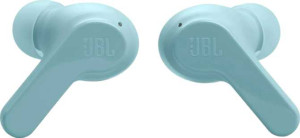
JBL Vibe Beam 2
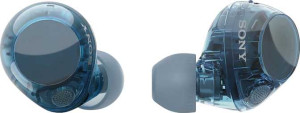
Sony WF-C710N

JBL Vibe Beam 2 Sony WF-C710N

Overview

Welcome to our in-depth specification comparison between the JBL Vibe Beam 2 and the Sony WF-C710N. Both are true wireless in-ear earbuds sharing a strong foundation — Bluetooth 5.3, fast charging, USB-C, and multipoint connectivity — yet they diverge in meaningful ways. Key battlegrounds in this comparison include active noise cancellation, driver size, battery endurance, and ingress protection, all of which could tip the balance depending on how and where you listen.

Common Features

  • Both the JBL Vibe Beam 2 and Sony WF-C710N use an in-ear fit design.
  • Both products are sweat resistant.
  • Neither the JBL Vibe Beam 2 nor the Sony WF-C710N have wires or cables.
  • Neither product is a neckband earbud design.
  • Wingtips are not included with either the JBL Vibe Beam 2 or the Sony WF-C710N.
  • RGB lighting is not present on either product.
  • Both the JBL Vibe Beam 2 and Sony WF-C710N feature stereo speakers.
  • UV light is not available on either product.
  • Both products offer passive noise reduction.
  • The lowest frequency on both the JBL Vibe Beam 2 and Sony WF-C710N is 20 Hz.
  • The highest frequency on both products is 20000 Hz.
  • Spatial audio is not supported on either the JBL Vibe Beam 2 or the Sony WF-C710N.
  • Dolby Atmos is not available on either product.
  • Neither product supports Dirac Virtuo.
  • A neodymium magnet is not used in either the JBL Vibe Beam 2 or the Sony WF-C710N.
  • Wireless charging is not available on either product.
  • Neither the JBL Vibe Beam 2 nor the Sony WF-C710N has a solar power battery.
  • Both products include a battery level indicator.
  • Both the JBL Vibe Beam 2 and Sony WF-C710N have a rechargeable battery.
  • Fast pairing is supported on both products.
  • Both products use USB Type-C for charging.
  • The Bluetooth version on both the JBL Vibe Beam 2 and Sony WF-C710N is 5.3.
  • LDAC is not supported on either product.
  • LDHC is not supported on either product.
  • Bluetooth LE Audio is not available on either the JBL Vibe Beam 2 or the Sony WF-C710N.
  • aptX Adaptive is not supported on either product.
  • aptX Low Latency is not supported on either product.
  • Both products include a find device feature.
  • Fast charging is supported on both the JBL Vibe Beam 2 and Sony WF-C710N.
  • Both products support multipoint connection with up to 2 devices.
  • Neither the JBL Vibe Beam 2 nor the Sony WF-C710N can read notifications.
  • A mute function is available on both products.
  • Both products can be used as a headset.
  • The control panel is placed on the device on both the JBL Vibe Beam 2 and Sony WF-C710N.
  • Voice prompts are available on both products.
  • Both the JBL Vibe Beam 2 and Sony WF-C710N feature a noise-canceling microphone.

Main Differences

  • The Ingress Protection rating is IP54 on the JBL Vibe Beam 2 and IPX4 on the Sony WF-C710N.
  • The weight is 8.6 g on the JBL Vibe Beam 2 and 10.4 g on the Sony WF-C710N.
  • Active noise cancellation (ANC) is present on the Sony WF-C710N but not available on the JBL Vibe Beam 2.
  • The driver unit size is 8 mm on the JBL Vibe Beam 2 and 5 mm on the Sony WF-C710N.
  • Battery life is 10 hours on the JBL Vibe Beam 2 and 12 hours on the Sony WF-C710N.
  • Battery life of the charging case is 30 hours on the JBL Vibe Beam 2 and 21.5 hours on the Sony WF-C710N.
  • Battery life with ANC is 8 hours on the JBL Vibe Beam 2 and 8.5 hours on the Sony WF-C710N.
  • Charge time is 2 hours on the JBL Vibe Beam 2 and 1.5 hours on the Sony WF-C710N.
  • AAC codec support is present on the Sony WF-C710N but not available on the JBL Vibe Beam 2.
  • Ambient sound mode is available on the Sony WF-C710N but not present on the JBL Vibe Beam 2.
  • In/on-ear detection is available on the Sony WF-C710N but not present on the JBL Vibe Beam 2.
Specs Comparison
JBL Vibe Beam 2

JBL Vibe Beam 2

Sony WF-C710N

Sony WF-C710N

Design:
Fit In-ear In-ear
Ingress Protection (IP) rating IP54 IPX4
water resistance Sweat resistant Sweat resistant
weight 8.6 g 10.4 g
has no wires or cables
are neckband earbuds
wingtips included
has RGB lighting
has stereo speakers
has UV light
Has a display

Both the JBL Vibe Beam 2 and the Sony WF-C710N share the same fundamental design DNA: fully wireless, in-ear earbuds with no neckband, no wingtips, no RGB lighting, and no display — a clean, no-frills form factor focused purely on audio portability.

The two most meaningful differentiators in this group are weight and ingress protection. At 8.6 g, the Vibe Beam 2 is noticeably lighter than the WF-C710N's 10.4 g — a gap of roughly 21%. While both are featherweight by any standard, lighter earbuds tend to cause less ear fatigue during extended wear, which matters for all-day listeners. On protection, the JBL holds a IP54 rating versus Sony's IPX4. Both handle sweat equally well, but the JBL's ″5″ dust resistance rating means it can also withstand dust ingress — a meaningful real-world advantage for outdoor or gym use where fine particles are a concern. Sony's ″X″ dust rating simply means it was not tested for dust protection, not that it fails.

The JBL Vibe Beam 2 holds a clear edge in this group: it is lighter for extended comfort and offers broader environmental protection thanks to its full IP54 certification. For users who prioritize wearability and durability in varied conditions, the JBL has a tangible advantage here.

Sound quality:
has active noise cancellation (ANC)
has passive noise reduction
driver unit size 8 mm 5 mm
lowest frequency 20 Hz 20 Hz
highest frequency 20000 Hz 20000 Hz
supports spatial audio
has Dolby Atmos
has Dirac Virtuo
has a neodymium magnet

The most consequential difference in this group is that the Sony WF-C710N includes Active Noise Cancellation (ANC), while the JBL Vibe Beam 2 relies solely on passive noise reduction — the physical seal of the eartip. ANC actively samples and counters ambient sound in real time, making a meaningful difference in environments like commutes, open offices, or flights. Passive isolation alone can muffle some noise, but it simply cannot compete with ANC in consistently loud or variable environments.

Flipping the script on driver size, the JBL uses a 8 mm driver versus Sony's 5 mm driver. Larger drivers generally move more air, which can translate to more pronounced bass response and a fuller low-end presentation — though driver size alone does not guarantee superior sound, as tuning plays a major role. That said, the 60% size advantage is not trivial and suggests the JBL is engineered for a more bass-forward sound signature. The frequency range is identical for both at 20 Hz – 20,000 Hz, covering the full range of human hearing, and neither product offers spatial audio or any premium audio format like Dolby Atmos.

This group does not have a single outright winner — it depends on the listener's priority. The Sony WF-C710N has a clear edge for noise-sensitive environments thanks to its ANC, while the JBL Vibe Beam 2 has a structural advantage for raw, bass-driven sound with its larger driver. Users who commute or work in noisy spaces should lean toward the Sony; those optimizing for audio fullness and impact without caring about noise isolation should favor the JBL.
Power:
Battery life 10 hours 12 hours
Battery life of charging case 30 hours 21.5 hours
Battery life (ANC) 8 hours 8.5 hours
charge time 2 hours 1.5 hours
has wireless charging
Has a solar power battery
has a battery level indicator
has a rechargeable battery

Earbud battery life splits into two distinct stories here: per-session endurance and total system capacity. The Sony WF-C710N edges ahead on per-session use at 12 hours versus the JBL Vibe Beam 2's 10 hours — a 20% advantage that can mean the difference between needing a mid-day top-up or not. When ANC is active, the gap nearly closes to 8.5 vs 8 hours, suggesting both products manage ANC power draw similarly, but the Sony still retains a slight lead.

Where the JBL stages a significant comeback is total system battery life. Its charging case extends the combined capacity to 30 hours, compared to Sony's 21.5 hours — nearly 40% more reserve power stored in the case. For travelers, long-haul commuters, or anyone who cannot reliably access an outlet, that extra buffer is genuinely valuable. The JBL also charges faster at 30 hours total, but it takes longer per charge session at 2 hours versus the Sony's quicker 1.5 hours, meaning you wait less to get back to listening with the Sony.

Neither product offers wireless charging, so the advantage analysis stays focused on capacity and speed. On balance, the Sony WF-C710N is the better fit for daily users who prioritize longer individual listening sessions and faster recharges. The JBL Vibe Beam 2 is the stronger choice for extended trips or off-grid use where total reserve power matters most.

Connectivity:
has fast pairing
Has USB Type-C
Bluetooth version 5.3 5.3
has LDAC
has LDHC
has Bluetooth LE Audio
has aptX Adaptive
has aptX Low Latency
has aptX HD
has aptX
has aptX Lossless
has aptX Voice
has Auracast
maximum Bluetooth range 10 m 10 m
supports Bluetooth pairing using NFC
Can be used wirelessly
has AAC

The JBL Vibe Beam 2 and Sony WF-C710N offer similar connectivity features. Both models support fast pairing, USB Type-C for charging, and Bluetooth version 5.3. The Bluetooth range is identical for both, at a maximum of 10 meters. Neither product supports Bluetooth pairing using NFC, and both are capable of being used wirelessly.

However, there is a difference in the audio codec support. The JBL Vibe Beam 2 does not support AAC, while the Sony WF-C710N does. Neither model supports LDAC, LDHC, Bluetooth LE Audio, or any aptX variants, such as aptX Adaptive, aptX Low Latency, aptX HD, aptX, aptX Lossless, or aptX Voice. Additionally, neither product has Auracast support.

Features:
release date March 2025 March 2025
has ambient sound mode
has in/on-ear detection
has find device feature
Supports fast charging
multipoint count 2 2
can read notifications
has a mute function
can be used as a headset
control panel placed on a device
Has voice prompts
travel bag is included
Has an in-line control panel
Has a temperature sensor
Has a built-in camera remote control function

The JBL Vibe Beam 2 and Sony WF-C710N share several features, such as the ability to find the device, support for fast charging, a multipoint connection count of 2, the inclusion of a travel bag, and having a mute function. Both can also be used as headsets, have control panels placed on the device, and include voice prompts.

However, there are a few differences in features. The Sony WF-C710N includes ambient sound mode and in/on-ear detection, which the JBL Vibe Beam 2 lacks. Both models can’t read notifications, have no in-line control panel, and don’t include a temperature sensor or a built-in camera remote control function.

In summary, while both models offer similar core features, the Sony WF-C710N provides extra convenience with ambient sound mode and in/on-ear detection, while the JBL Vibe Beam 2 offers the same functionality but without those additional features.

Microphone:
has a noise-canceling microphone

Both the JBL Vibe Beam 2 and the Sony WF-C710N feature a noise-canceling microphone. This common specification ensures that both models offer improved voice clarity during calls by reducing background noise.

There are no further differences in the microphone features between the two products, as both include the same noise-canceling microphone functionality.

In summary, both the JBL Vibe Beam 2 and Sony WF-C710N provide similar microphone performance with noise cancellation to enhance communication quality.

Comparison Summary & Verdict

After reviewing every specification, these two earbuds serve distinct listener profiles. The JBL Vibe Beam 2 stands out for its larger 8 mm driver, superior IP54 dust and sweat resistance, lighter 8.6 g build, and an impressive 30-hour charging case — making it a compelling pick for those who prioritize a robust, long-lasting audio companion without ANC. The Sony WF-C710N, on the other hand, counters with active noise cancellation, ambient sound mode, in/on-ear detection, AAC codec support, a longer 12-hour earbud battery, and a faster 1.5-hour charge time. If you commute, travel, or work in noisy environments, the Sony’s feature set is hard to beat. Choose the JBL if raw battery reserve and build rating matter most; choose the Sony if smart audio features and noise control are your priority.

JBL Vibe Beam 2
Buy JBL Vibe Beam 2 if...

Buy the JBL Vibe Beam 2 if you want a lighter earbud with full IP54 dust and sweat resistance, a larger 8 mm driver, and a significantly longer charging case battery life of 30 hours.

Sony WF-C710N
Buy Sony WF-C710N if...

Buy the Sony WF-C710N if active noise cancellation, ambient sound mode, in/on-ear detection, and a faster 1.5-hour charge time are priorities for your daily listening needs.