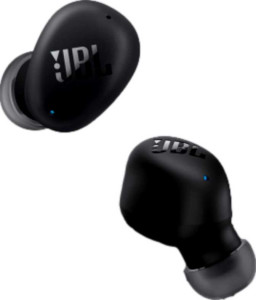
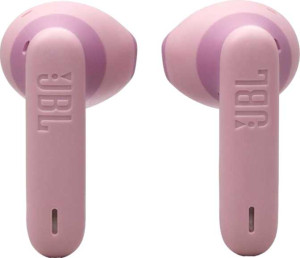
The most significant split between these two earbuds comes down to noise isolation. The Vibe Buds 2 offers both active noise cancellation (ANC) and passive noise reduction — a meaningful combination that targets environmental sound on two fronts. ANC uses microphones and processing to actively counter low-frequency noise like engines or HVAC systems, while passive reduction comes from the physical seal of the eartip in the ear canal. The Vibe Flex 2, by contrast, has neither, which is a notable omission for commuters or anyone in noisy environments.
On raw acoustic hardware, the Flex 2 counters with a noticeably larger 12 mm driver versus the Buds 2's 8 mm driver. A bigger driver can theoretically move more air, which tends to translate into fuller bass response and greater low-end presence. That said, both earbuds share an identical frequency range of 20 Hz–20,000 Hz, the same 16 Ohm impedance, and the same 95 dB/mW sensitivity — meaning at the circuit level, they're equally easy to drive and equally loud per unit of power. Neither supports spatial audio, Dolby Atmos, or Dirac Virtuo, so the listening experience is conventional stereo on both ends.
For sound quality as a whole, the answer depends on use case. In quiet environments, the Flex 2's larger driver may deliver a warmer, more impactful sound signature — but the Buds 2 holds the broader real-world advantage by adding active and passive noise isolation on top of a comparable acoustic baseline. For most users who listen outside or in mixed environments, the Vibe Buds 2 has a clear edge here.