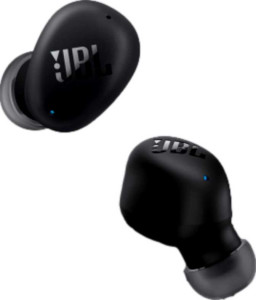
JBL Vibe Buds 2
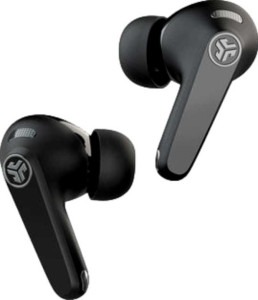
JLab JBuds Pods

JBL Vibe Buds 2 JLab JBuds Pods

Overview

Choosing between the JBL Vibe Buds 2 and the JLab JBuds Pods is no easy task — both are fully wireless in-ear earbuds packed with active noise cancellation, ambient sound mode, and fast charging support. Yet under the hood, they diverge in meaningful ways. This comparison puts their water resistance ratings, driver sizes, spatial audio capabilities, microphone counts, and charging case endurance head to head, so you can decide which set of earbuds truly fits your lifestyle and listening habits.

Common Features

  • Both products use an in-ear fit.
  • Both products are wireless with no cables or wires.
  • Neither product is a neckband earbud design.
  • Neither product includes wingtips.
  • Neither product features RGB lighting.
  • Both products have stereo speakers.
  • Neither product includes a UV light.
  • Neither product has a display.
  • Both products support active noise cancellation (ANC).
  • Both products offer passive noise reduction.
  • Both products have a lowest frequency of 20 Hz and a highest frequency of 20000 Hz.
  • Neither product supports Dolby Atmos.
  • Neither product uses a neodymium magnet.
  • Both products offer 10 hours of battery life.
  • Both products have a charge time of 2 hours.
  • Neither product supports wireless charging.
  • Both products have a battery level indicator.
  • Both products have a rechargeable battery.
  • Both products include a USB Type-C connection.
  • Neither product supports LDAC, LDHC, Bluetooth LE Audio, aptX Adaptive, aptX Low Latency, aptX HD, or aptX.
  • Both products have an ambient sound mode.
  • Neither product features in/on-ear detection.
  • Both products support fast charging.
  • Neither product can read notifications.
  • Both products have a mute function.
  • Both products can be used as a headset.
  • Both products have a control panel placed on the device.
  • Both products have voice prompts.
  • Both products have a noise-canceling microphone.

Main Differences

  • The Ingress Protection rating is IP54 on JBL Vibe Buds 2 and IP55 on JLab JBuds Pods.
  • JBL Vibe Buds 2 is sweat resistant, while JLab JBuds Pods is water resistant.
  • The driver unit size is 8 mm on JBL Vibe Buds 2 and 11 mm on JLab JBuds Pods.
  • Spatial audio support is present on JLab JBuds Pods but not available on JBL Vibe Buds 2.
  • The battery life of the charging case is 30 hours on JBL Vibe Buds 2 and 46 hours on JLab JBuds Pods.
  • Fast pairing is available on JLab JBuds Pods but not on JBL Vibe Buds 2.
  • The Bluetooth version is 5.3 on JBL Vibe Buds 2 and 5.4 on JLab JBuds Pods.
  • The number of microphones is 4 on JBL Vibe Buds 2 and 6 on JLab JBuds Pods.
Specs Comparison
JBL Vibe Buds 2

JBL Vibe Buds 2

JLab JBuds Pods

JLab JBuds Pods

Design:
Fit In-ear In-ear
Ingress Protection (IP) rating IP54 IP55
water resistance Sweat resistant Water resistant
has no wires or cables
are neckband earbuds
wingtips included
has RGB lighting
has stereo speakers
has UV light
Has a display

Both the JBL Vibe Buds 2 and the JLab JBuds Pods share the same fundamental design DNA: fully wireless, in-ear fit with stereo audio and no neckband or wingtips. For most users, the day-to-day wearing experience will feel broadly similar between the two.

Where they diverge is in water resistance. The Vibe Buds 2 carries an IP54 rating, meaning it is protected against sweat and light splashes but not sustained water exposure. The JBuds Pods steps up to IP55, which adds resistance to low-pressure water jets from any direction — a meaningful real-world advantage for workouts in the rain or accidental sink splashes, not just perspiration.

Overall, the JLab JBuds Pods holds a narrow but genuine edge in this category purely on the strength of its higher ingress protection rating. Neither product adds premium design flourishes like RGB lighting or a display, so for users who prioritize durability alongside a clean, no-frills form factor, the JBuds Pods is the slightly safer long-term choice.

Sound quality:
has active noise cancellation (ANC)
has passive noise reduction
driver unit size 8 mm 11 mm
lowest frequency 20 Hz 20 Hz
highest frequency 20000 Hz 20000 Hz
supports spatial audio
has Dolby Atmos
has Dirac Virtuo
has a neodymium magnet

At the foundation, both earbuds deliver the same 20 Hz–20,000 Hz frequency range and combine active noise cancellation with passive noise reduction — a solid baseline for blocking out ambient sound at this price tier. The ANC implementation on both is worth noting: layering passive isolation on top of active cancellation generally yields more effective real-world noise blocking than either technique alone.

The clearest hardware differentiator is driver size. The JBuds Pods uses an 11 mm driver versus the Vibe Buds 2's 8 mm unit. Larger drivers can move more air, which typically translates to fuller low-end response and greater overall volume headroom — though driver size alone does not guarantee superior sound, as tuning matters equally. Still, the gap here is notable enough to suggest the JBuds Pods is engineered with a more bass-forward acoustic profile in mind.

The JBuds Pods also adds spatial audio support, which the Vibe Buds 2 lacks entirely. Spatial audio creates a wider, more three-dimensional soundstage — particularly impactful when watching video content or listening to mixed recordings. Combined with the larger driver, the JBuds Pods holds a meaningful edge in this category for users who prioritize immersive audio experiences.

Power:
Battery life 10 hours 10 hours
Battery life of charging case 30 hours 46 hours
charge time 2 hours 2 hours
has wireless charging
Has a solar power battery
has a battery level indicator
has a rechargeable battery

Earbud battery life is identical across both options at 10 hours per charge, and both refill in the same 2 hours — so neither has an advantage during daily use. The real divergence emerges when you factor in the charging case.

The JBuds Pods case stores 46 hours of total backup power, compared to 30 hours for the Vibe Buds 2. In practical terms, that gap is substantial: the JBuds Pods can fully recharge the earbuds roughly 4.6 times before the case itself needs a top-up, versus about 3 times for the Vibe Buds 2. For frequent travelers, commuters, or anyone who forgets to charge regularly, that extra reserve translates directly into fewer disruptions across a multi-day trip without access to a wall outlet.

Neither product supports wireless charging, which keeps things even on convenience features. On balance, the JBuds Pods holds a clear advantage in this category — not because of what happens during a single listening session, but because of how much longer you can go before the entire system runs dry.

Connectivity:
has fast pairing
Has USB Type-C
Bluetooth version 5.3 5.4
has LDAC
has LDHC
has Bluetooth LE Audio
has aptX Adaptive
has aptX Low Latency
has aptX HD
has aptX
has aptX Lossless
has aptX Voice
has Auracast
maximum Bluetooth range 10 m 10 m
supports Bluetooth pairing using NFC
Can be used wirelessly
has AAC

Connectivity fundamentals are largely shared: both earbuds top out at a 10 m Bluetooth range, use USB-C for charging, and skip advanced audio codecs like LDAC or aptX entirely — meaning neither will deliver hi-res wireless audio beyond standard SBC streaming. For most listeners at this tier, that omission is unlikely to be a dealbreaker.

The two meaningful differentiators are Bluetooth version and fast pairing. The JBuds Pods runs Bluetooth 5.4 versus the Vibe Buds 2's 5.3, which in principle offers incremental improvements to connection efficiency and stability, though the real-world gap between adjacent Bluetooth versions is often subtle in everyday use. More tangibly, the JBuds Pods supports fast pairing, allowing it to auto-connect to a paired device almost instantly when removed from the case — a small but genuinely appreciated quality-of-life feature the Vibe Buds 2 lacks.

The JBuds Pods edges ahead in this category. The newer Bluetooth version is a marginal gain, but fast pairing is a concrete, daily-use advantage that removes friction from the listening experience. Neither product is a connectivity powerhouse, but the JBuds Pods is the more polished option of the two.

Features:
release date March 2025 May 2025
has ambient sound mode
has in/on-ear detection
Supports fast charging
can read notifications
has a mute function
can be used as a headset
control panel placed on a device
Has voice prompts
travel bag is included
Has an in-line control panel
Has a temperature sensor
Has a built-in camera remote control function

Across every single feature in this category, the JBL Vibe Buds 2 and JLab JBuds Pods are a perfect match. Both support ambient sound mode, fast charging, on-device controls, voice prompts, a mute function, and even include a travel bag — a useful perk that not all earbuds at this price point offer.

The practical feature set here is well-rounded for everyday use. Ambient sound mode lets outside audio pass through without removing the earbuds, which is valuable in traffic or public spaces. Fast charging means a short plug-in session can recover meaningful playback time quickly. Headset capability confirms both are call-ready, not just music-focused.

This category is a clear tie — there is no differentiator to speak of. Whichever product a buyer leans toward based on sound quality, battery, or connectivity, they will not gain or lose any functional feature advantage here.

Microphone:
number of microphones 4 6
has a noise-canceling microphone

Both earbuds feature noise-canceling microphones, so call clarity in quiet environments should be adequate on either. The key distinction is microphone count: the JBuds Pods deploys 6 microphones compared to 4 on the Vibe Buds 2.

Microphone count matters most in challenging acoustic conditions. More mics allow the beamforming algorithms to sample ambient noise from additional angles, making it easier to isolate the speaker's voice and suppress wind, crowd noise, or street sounds. The jump from 4 to 6 is meaningful — it suggests the JBuds Pods is better equipped for calls on the move or in noisy environments, not just at a desk.

The JBuds Pods holds a clear edge here. For users who frequently take calls outdoors or in busy spaces, the additional microphone hardware gives it a structural advantage in voice pickup quality that the Vibe Buds 2 cannot match on paper.

Comparison Summary & Verdict

After examining every spec, both earbuds share a strong foundation: active noise cancellation, 10-hour battery life, USB-C, and a noise-canceling microphone. However, the JLab JBuds Pods pulls ahead in several technical areas — it offers a larger 11 mm driver, spatial audio support, a higher IP55 water resistance rating, six microphones, Bluetooth 5.4 with fast pairing, and a significantly larger 46-hour charging case. The JBL Vibe Buds 2, by contrast, is a solid and reliable option with a more modest 30-hour case and a 8 mm driver, but lacks spatial audio and fast pairing. Choose the JBL Vibe Buds 2 if you want a dependable daily companion at a likely lower price point. Opt for the JLab JBuds Pods if richer sound staging, better call clarity, and longer total battery endurance are your priorities.

JBL Vibe Buds 2
Buy JBL Vibe Buds 2 if...

Buy the JBL Vibe Buds 2 if you want a capable ANC earbud with sweat resistance and solid core features for everyday use without needing spatial audio or extended case battery life.

JLab JBuds Pods
Buy JLab JBuds Pods if...

Buy the JLab JBuds Pods if you want superior water resistance, spatial audio, a larger 11 mm driver, six microphones for clearer calls, fast pairing, and a 46-hour charging case for longer trips.