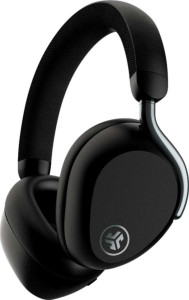
JLab Epic Lux Lab Edition
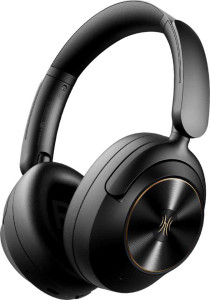
OneOdio Focus A6

JLab Epic Lux Lab Edition OneOdio Focus A6

Overview

Welcome to our in-depth comparison of the JLab Epic Lux Lab Edition and the OneOdio Focus A6 — two feature-rich over-ear headphones that share more common ground than you might expect. Both deliver active noise cancellation, LDAC support, and multipoint connectivity, yet they diverge in meaningful ways across battery endurance, audio latency, microphone count, and wireless charging. Read on to find out which one suits your lifestyle best.

Common Features

  • Both headphones use an over-ear fit design.
  • Both headphones come with a detachable cable.
  • Both headphones can be folded for storage.
  • Neither headphone is designed for kids.
  • Both headphones include a tangle-free cable.
  • Neither headphone uses an open-back design.
  • Both headphones feature stereo speakers.
  • Both headphones support active noise cancellation (ANC).
  • Both headphones share a lowest frequency of 20 Hz.
  • Both headphones share a highest frequency of 20000 Hz.
  • Neither headphone supports spatial audio.
  • Neither headphone uses a neodymium magnet.
  • Both headphones offer passive noise reduction.
  • Both headphones charge via USB Type-C.
  • Both headphones include a battery level indicator.
  • Neither headphone uses a solar power battery.
  • Both headphones have a rechargeable battery.
  • Neither headphone has a removable battery.
  • Both headphones support wireless and wired connectivity.
  • Neither headphone supports aptX Adaptive, aptX, LDHC, Bluetooth LE Audio, aptX Low Latency, or aptX HD.
  • Both headphones support LDAC.
  • Both headphones feature a noise-canceling microphone.
  • Both headphones include an ambient sound mode.
  • Neither headphone has a mute function.
  • Both headphones support multipoint connection with 2 devices.
  • Both headphones have a control panel placed on the device.
  • Both headphones can be used as a headset.
  • Neither headphone has an in-line control panel.

Main Differences

  • Weight is 300 g on JLab Epic Lux Lab Edition and 240 g on OneOdio Focus A6.
  • A travel bag is included with JLab Epic Lux Lab Edition but not with OneOdio Focus A6.
  • Driver unit size is 32 mm on JLab Epic Lux Lab Edition and 40 mm on OneOdio Focus A6.
  • Battery life is 90 hours on JLab Epic Lux Lab Edition and 75 hours on OneOdio Focus A6.
  • Battery life with ANC enabled is 60 hours on JLab Epic Lux Lab Edition and 40 hours on OneOdio Focus A6.
  • Wireless charging is supported on JLab Epic Lux Lab Edition but not available on OneOdio Focus A6.
  • Bluetooth version is 5.4 on JLab Epic Lux Lab Edition and 6 on OneOdio Focus A6.
  • Audio latency is 200 ms on JLab Epic Lux Lab Edition and 65 ms on OneOdio Focus A6.
  • Fast pairing is available on JLab Epic Lux Lab Edition but not on OneOdio Focus A6.
  • In/on-ear detection is present on JLab Epic Lux Lab Edition but not available on OneOdio Focus A6.
  • Number of microphones is 4 on JLab Epic Lux Lab Edition and 10 on OneOdio Focus A6.
Specs Comparison
JLab Epic Lux Lab Edition

JLab Epic Lux Lab Edition

OneOdio Focus A6

OneOdio Focus A6

Design:
Fit Over-ear Over-ear
weight 300 g 240 g
has a detachable cable
can be folded
is designed for kids
has a tangle free cable
travel bag is included
has an open-back design
has stereo speakers

Both the JLab Epic Lux Lab Edition and the OneOdio Focus A6 share a broadly similar design philosophy: over-ear fit, closed-back construction, foldable form factor, detachable and tangle-free cables, and stereo speakers. For commuters or travelers, the foldable design on both is a meaningful practical advantage, reducing bulk when stowed in a bag.

The most impactful differentiator within this group is weight. The OneOdio Focus A6 comes in at 240 g versus the JLab's 300 g — a 60 g difference that may seem minor on paper but translates to noticeably less fatigue during extended listening sessions. For users who wear headphones for hours at a time, the lighter Focus A6 has a real ergonomic advantage.

On the other hand, the JLab Epic Lux Lab Edition ships with a travel bag, which the Focus A6 lacks. This is a meaningful inclusion for portability-focused users, as it protects the headphones during transport and adds perceived value out of the box. Overall, the OneOdio Focus A6 edges ahead on wearability thanks to its lower weight, while the JLab Epic Lux holds an advantage in portability accessories — making the better pick here dependent on whether comfort during wear or travel protection matters more to the individual user.

Sound quality:
has active noise cancellation (ANC)
lowest frequency 20 Hz 20 Hz
highest frequency 20000 Hz 20000 Hz
driver unit size 32 mm 40 mm
supports spatial audio
has a neodymium magnet
has passive noise reduction

At a high level, these two headphones are closely matched in their sound quality specifications: both cover the full standard audible range of 20 Hz to 20,000 Hz, feature active noise cancellation, passive noise reduction, and neither supports spatial audio or uses a neodymium magnet. For the average listener, this shared foundation means both are engineered to handle everyday listening and noise-blocking scenarios without a clear gap in technology tier.

The sole differentiator here is the driver unit size32 mm on the JLab Epic Lux Lab Edition versus 40 mm on the OneOdio Focus A6. Larger drivers move more air, which generally translates to a stronger bass response and a more expansive perceived soundstage. That said, driver size alone does not guarantee superior sound quality, as tuning, driver material, and enclosure design all play significant roles — none of which are captured in the provided specs.

Based strictly on the available data, the OneOdio Focus A6 holds a technical edge in this category due to its larger 40 mm drivers, which give it a structural advantage for low-frequency reproduction. Users who prioritize bass presence or a fuller sound may lean toward the Focus A6, while those indifferent to driver size will find both headphones otherwise equivalent on paper.

Power:
Battery life 90 hours 75 hours
Battery life (ANC) 60 hours 40 hours
Has USB Type-C
has a battery level indicator
has wireless charging
Has a solar power battery
has a rechargeable battery
has a removable battery

Battery longevity is where the JLab Epic Lux Lab Edition pulls ahead decisively. Its rated 90-hour battery life (and 60 hours with ANC active) comfortably outpaces the OneOdio Focus A6's 75 hours standard and 40 hours with ANC. In practical terms, the JLab can last through multiple long-haul flights or an entire work week of heavy use without reaching for a charger, while the Focus A6 — though still competitive in absolute terms — trails meaningfully when ANC is engaged, a mode most users are likely to rely on regularly.

The JLab also supports wireless charging, a convenience the Focus A6 lacks entirely. For users already invested in a Qi charging ecosystem, this eliminates the need to locate a cable at the end of each day — a small but genuinely appreciated quality-of-life advantage. Both headphones share USB Type-C charging and a battery level indicator, so neither leaves the user guessing about remaining charge.

The verdict in this category is clear: the JLab Epic Lux Lab Edition wins on power, offering longer runtimes across both standard and ANC modes, plus the added flexibility of wireless charging. Unless a user specifically does not value those extras, the JLab is the stronger option here by a meaningful margin.

Connectivity:
connectivity Wireless & wired Wireless & wired
Bluetooth version 5.4 6
has aptX Adaptive
has aptX
has LDAC
has LDHC
has Bluetooth LE Audio
has aptX Low Latency
has aptX HD
has aptX Lossless
has AAC
has Auracast
audio latency 200 ms 65 ms
maximum Bluetooth range 10 m 10 m
has fast pairing
supports Bluetooth pairing using NFC

Codec support is evenly matched between these two — both carry LDAC and AAC, covering high-resolution wireless audio for Sony-ecosystem Android users and efficient compression for Apple devices respectively. Neither supports aptX variants or Bluetooth LE Audio, so on the codec front, users on either headphone are working with the same toolkit.

Where the gap opens up is in audio latency and Bluetooth version. The OneOdio Focus A6 runs on Bluetooth 6 and delivers a rated latency of just 65 ms, compared to the JLab Epic Lux's Bluetooth 5.4 and 200 ms. That latency difference is substantial in practice: 200 ms is perceptible as a lip-sync delay when watching video, and can feel sluggish in casual mobile gaming, while 65 ms sits close to the threshold where most users stop noticing desync. The newer Bluetooth version on the Focus A6 also brings architectural improvements in connection efficiency and stability.

The JLab counters with fast pairing, which the Focus A6 lacks — a convenience that speeds up the initial device connection experience. Still, that advantage is a one-time-per-device perk, while latency affects every session. On balance, the OneOdio Focus A6 holds a clear edge in connectivity, with its significantly lower latency and newer Bluetooth standard making it the stronger choice for video consumers and anyone sensitive to wireless audio delay.

Features:
release date January 2025 July 2025
has a noise-canceling microphone
has ambient sound mode
has in/on-ear detection
number of microphones 4 10
has a mute function
multipoint count 2 2
control panel placed on a device
can be used as a headset
Has an in-line control panel

For call quality and voice pickup, the OneOdio Focus A6 fields a notably larger microphone array — 10 microphones versus 4 on the JLab Epic Lux Lab Edition. More microphones allow for more sophisticated beamforming and noise isolation algorithms, which in practice means cleaner voice capture in noisy environments like offices or public transit. Both headphones feature noise-canceling microphone processing and can function as headsets, but the Focus A6's hardware investment in this area is significantly greater on paper.

The JLab counters with in/on-ear detection — a sensor-driven convenience feature absent on the Focus A6. This automatically pauses playback when the headphones are removed and resumes when they are put back on, reducing the friction of frequent interruptions throughout the day. For users who constantly take their headphones on and off, it is a genuinely useful quality-of-life feature. Both headphones otherwise share multipoint connectivity for 2 devices, ambient sound mode, and on-device controls, so the functional baseline is identical.

The conclusion here depends on use case. The Focus A6 has a clear edge for calls and conferencing thanks to its much larger microphone count, while the JLab Epic Lux holds an advantage for everyday wear convenience via ear detection. Users who prioritize voice communication should lean toward the Focus A6; those who value seamless wear-and-go interaction will appreciate what the JLab brings to the table.

Comparison Summary & Verdict

After a thorough look at the specs, both headphones prove themselves as capable over-ear performers with ANC, LDAC, and multipoint support built in. However, the right choice depends on your priorities. The JLab Epic Lux Lab Edition stands out for sheer endurance, offering 90 hours of battery life (60 with ANC), wireless charging, fast pairing, and in/on-ear detection — making it the stronger pick for frequent travelers who value convenience features and will appreciate the included travel bag. The OneOdio Focus A6, on the other hand, wins on audio latency at just 65 ms, a larger 40 mm driver, an impressive 10-microphone array, and the latest Bluetooth 6 — making it the better choice for calls, video conferencing, and low-latency listening sessions where communication clarity is paramount.

JLab Epic Lux Lab Edition
Buy JLab Epic Lux Lab Edition if...

Buy the JLab Epic Lux Lab Edition if you want the longest battery life, wireless charging convenience, and a complete travel-ready package with fast pairing and ear-detection.

OneOdio Focus A6
Buy OneOdio Focus A6 if...

Buy the OneOdio Focus A6 if you prioritize ultra-low audio latency, superior call quality with its 10-microphone setup, and cutting-edge Bluetooth 6 connectivity.