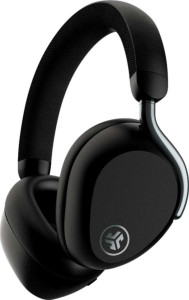
JLab Epic Lux Lab Edition
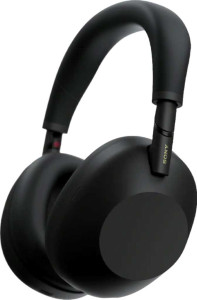
Sony WH-1000XM6

JLab Epic Lux Lab Edition Sony WH-1000XM6

Overview

Welcome to our in-depth spec comparison between the JLab Epic Lux Lab Edition and the Sony WH-1000XM6 — two premium over-ear headphones that share a strong foundation yet diverge sharply on several fronts. From battery endurance and wireless charging to frequency range and microphone performance, these two headsets take notably different approaches to delivering a top-tier listening experience. Read on to discover how they stack up across every major specification.

Common Features

  • Both headphones use an over-ear fit.
  • Both headphones come with a detachable cable.
  • Both headphones can be folded for storage.
  • Neither headphone is designed for kids.
  • Both headphones include a tangle-free cable.
  • A travel bag is included with both headphones.
  • Neither headphone uses an open-back design.
  • Both headphones feature stereo speakers.
  • Both headphones offer active noise cancellation (ANC).
  • Both headphones provide passive noise reduction.
  • Both headphones charge via USB Type-C.
  • Both headphones include a battery level indicator.
  • Neither headphone uses a solar power battery.
  • Both headphones have a rechargeable battery.
  • Neither headphone has a removable battery.
  • Both headphones support wireless and wired connectivity.
  • Neither headphone supports aptX Adaptive, aptX, aptX Low Latency, aptX HD, aptX Lossless, or LDHC.
  • Both headphones support LDAC audio codec.
  • Both headphones include a noise-canceling microphone.
  • Both headphones feature an ambient sound mode.
  • Both headphones have in/on-ear detection.
  • Both headphones support multipoint connection with up to 2 devices.
  • Both headphones have a control panel placed on the device.
  • Both headphones can be used as a headset.
  • Neither headphone includes an in-line control panel.

Main Differences

  • Weight is 300 g on JLab Epic Lux Lab Edition and 254 g on Sony WH-1000XM6.
  • Lowest frequency is 20 Hz on JLab Epic Lux Lab Edition and 4 Hz on Sony WH-1000XM6.
  • Highest frequency is 20000 Hz on JLab Epic Lux Lab Edition and 40000 Hz on Sony WH-1000XM6.
  • Driver unit size is 32 mm on JLab Epic Lux Lab Edition and 30 mm on Sony WH-1000XM6.
  • Impedance is 32 Ohms on JLab Epic Lux Lab Edition and 48 Ohms on Sony WH-1000XM6.
  • Spatial audio support is present on Sony WH-1000XM6 but not available on JLab Epic Lux Lab Edition.
  • Sound pressure level is 119 dB/mW on JLab Epic Lux Lab Edition and 103 dB/mW on Sony WH-1000XM6.
  • A neodymium magnet is present in Sony WH-1000XM6 but not in JLab Epic Lux Lab Edition.
  • Battery life is 90 hours on JLab Epic Lux Lab Edition and 30 hours on Sony WH-1000XM6.
  • Battery life with ANC enabled is 60 hours on JLab Epic Lux Lab Edition and 30 hours on Sony WH-1000XM6.
  • Charge time is 3 hours on JLab Epic Lux Lab Edition and 3.5 hours on Sony WH-1000XM6.
  • Wireless charging is supported on JLab Epic Lux Lab Edition but not available on Sony WH-1000XM6.
  • Bluetooth version is 5.4 on JLab Epic Lux Lab Edition and 5.3 on Sony WH-1000XM6.
  • Bluetooth LE Audio support is present on Sony WH-1000XM6 but not available on JLab Epic Lux Lab Edition.
  • Auracast support is present on Sony WH-1000XM6 but not available on JLab Epic Lux Lab Edition.
  • Number of microphones is 4 on JLab Epic Lux Lab Edition and 12 on Sony WH-1000XM6.
  • Warranty period is 2 years on JLab Epic Lux Lab Edition and 3 years on Sony WH-1000XM6.
Specs Comparison
JLab Epic Lux Lab Edition

JLab Epic Lux Lab Edition

Sony WH-1000XM6

Sony WH-1000XM6

Design:
Fit Over-ear Over-ear
weight 300 g 254 g
has a detachable cable
can be folded
is designed for kids
has a tangle free cable
travel bag is included
has an open-back design
has stereo speakers

In terms of design category, the JLab Epic Lux Lab Edition and the Sony WH-1000XM6 share a remarkably similar feature set: both are over-ear headphones with a closed-back design, foldable form factor, detachable and tangle-free cables, stereo speakers, and an included travel bag. For frequent travelers or commuters, this parity is meaningful — folding capability combined with a travel bag means both headphones are genuinely portable and protected on the go.

The single measurable differentiator in this group is weight. The Sony WH-1000XM6 comes in at 254 g, while the JLab Epic Lux Lab Edition weighs 300 g — a difference of 46 g, or roughly 18% heavier. While neither headphone is unusually heavy in absolute terms, that gap becomes noticeable during extended listening sessions. Over several hours of wear, the lighter Sony will generally exert less pressure on the head and neck, which translates to reduced fatigue for long-haul flights, work sessions, or marathon listening.

Based strictly on the provided specs, the Sony WH-1000XM6 holds a clear edge in this group due to its meaningfully lower weight. All other design attributes are identical, so weight alone tips the balance — and for a category focused on wearability and portability, lighter is a genuine real-world advantage.

Sound quality:
has active noise cancellation (ANC)
lowest frequency 20 Hz 4 Hz
highest frequency 20000 Hz 40000 Hz
driver unit size 32 mm 30 mm
impedance 32 Ohms 48 Ohms
supports spatial audio
sound pressure level 119 dB/mW 103 dB/mW
has a neodymium magnet
has passive noise reduction

The frequency response tells an important story here. The JLab Epic Lux Lab Edition covers the standard audible range of 20 Hz–20,000 Hz, which is technically sufficient for most human hearing. The Sony WH-1000XM6, however, extends dramatically to 4 Hz–40,000 Hz — reaching into sub-bass territory below what humans consciously hear (adding physical rumble and depth) and up into high-resolution audio ranges. Combined with a neodymium magnet — a higher-grade driver component the JLab lacks — the Sony is clearly engineered with audio fidelity as a primary concern, capable of resolving detail in hi-res audio files that the JLab simply cannot reproduce.

A few specs appear to favor the JLab on the surface but warrant careful interpretation. Its 119 dB/mW sound pressure level versus the Sony's 103 dB/mW means the JLab gets louder with less power — useful for ensuring volume headroom — but raw loudness is rarely the limiting factor in modern headphones. Similarly, the JLab's slightly larger 32 mm driver versus Sony's 30 mm does not automatically confer better sound; driver design and magnet quality matter far more than diameter alone. The Sony's higher impedance of 48 Ohms versus 32 Ohms means it may be slightly less efficient from low-power sources, but this is unlikely to be a practical issue for wireless headphone use.

The Sony WH-1000XM6 also supports spatial audio, a feature the JLab entirely lacks, which adds a meaningful dimension for users who consume spatial or immersive content. Taken together, the Sony holds a clear and decisive edge in this group — broader frequency range, neodymium driver, and spatial audio support collectively represent a substantially more capable sound quality specification sheet, regardless of the JLab's higher SPL figure.

Power:
Battery life 90 hours 30 hours
Battery life (ANC) 60 hours 30 hours
charge time 3 hours 3.5 hours
Has USB Type-C
has a battery level indicator
has wireless charging
Has a solar power battery
has a rechargeable battery
has a removable battery

Battery life is where the JLab Epic Lux Lab Edition pulls off a dramatic separation. Its rated 90 hours of standard playback dwarfs the Sony WH-1000XM6's 30 hours — a 3x advantage that is impossible to overlook. Even with ANC enabled, the JLab still delivers 60 hours, which is double the Sony's total rated life under any condition. For long-haul travelers, remote workers, or anyone who dislikes charging routinely, that gap translates directly into fewer interruptions across an entire workweek or multi-day trip without reaching for a cable.

The charging story also leans toward the JLab. Both headphones charge via USB Type-C, but the JLab charges fully in 3 hours versus the Sony's 3.5 hours — a minor but real difference. More significantly, the JLab supports wireless charging, while the Sony does not. That added convenience matters for users already embedded in a wireless charging ecosystem, removing the need to locate a cable at all during routine top-ups.

One notable Sony quirk in this data: its battery life remains identical at 30 hours whether ANC is on or off, which is unusual and may reflect how the figure is reported. The JLab, by contrast, shows an honest drop from 90 to 60 hours with ANC active — a more transparent representation of real-world use. Regardless, the JLab Epic Lux Lab Edition holds an overwhelming advantage in this group, combining vastly superior endurance, faster charging, and wireless charging support — three wins in the power category where the Sony offers no meaningful counterargument.

Connectivity:
connectivity Wireless & wired Wireless & wired
Bluetooth version 5.4 5.3
has aptX Adaptive
has aptX
has LDAC
has LDHC
has Bluetooth LE Audio
has aptX Low Latency
has aptX HD
has aptX Lossless
has AAC
has Auracast
maximum Bluetooth range 10 m 10 m
has fast pairing
supports Bluetooth pairing using NFC

At a foundational level, these two headphones are closely matched: both support wireless and wired connectivity, share the same 10 m Bluetooth range, offer fast pairing, and carry identical codec support in LDAC and AAC. LDAC is the standout shared feature — Sony's own high-resolution codec capable of transmitting up to 990 kbps, enabling near-lossless wireless audio quality when paired with a compatible source. That both headphones include it is a meaningful baseline, ensuring neither is left behind for hi-res wireless listening.

Where they diverge is in Bluetooth generation and forward-looking protocol support. The JLab Epic Lux Lab Edition runs on Bluetooth 5.4 — a newer version than the Sony's 5.3 — which brings incremental improvements to connection stability and efficiency. The Sony WH-1000XM6, however, counters with Bluetooth LE Audio and Auracast support, both of which the JLab lacks entirely. LE Audio is a next-generation audio framework offering improved efficiency and multi-stream capabilities, while Auracast is a broadcast audio standard that allows one device to stream to multiple receivers simultaneously — useful in public venues, shared listening scenarios, and increasingly supported in consumer infrastructure.

This is a genuinely close call that hinges on priorities. The JLab's newer Bluetooth version offers a marginal technical edge today, but the Sony's LE Audio and Auracast support represents greater long-term relevance as that ecosystem matures. For users who value future-proofing and emerging connectivity standards, the Sony WH-1000XM6 holds a slight edge in this group — those two exclusive features carry more practical upside than the incremental gain of one Bluetooth generation.

Features:
release date January 2025 May 2025
has a noise-canceling microphone
has ambient sound mode
has in/on-ear detection
number of microphones 4 12
multipoint count 2 2
control panel placed on a device
can be used as a headset
Has an in-line control panel
warranty period 2 years 3 years

Most of the feature set here is shared territory: both headphones offer ambient sound mode, in/on-ear detection, on-device controls, noise-canceling microphones, and 2-device multipoint pairing — the last of which is a practical essential for users juggling a phone and laptop simultaneously. That parity means neither headphone is missing a critical everyday feature the other provides.

The standout divergence is microphone count. The JLab Epic Lux Lab Edition carries 4 microphones, while the Sony WH-1000XM6 deploys an exceptional 12 microphones. More microphones enable more sophisticated beamforming and noise isolation algorithms — the array can more precisely locate the user's voice, suppress wind and ambient noise from multiple angles, and deliver cleaner call quality in challenging environments. For anyone who takes frequent calls, attends video meetings, or uses voice assistants regularly, this is a meaningful real-world gap, not a paper spec.

Warranty coverage adds another layer to Sony's advantage: 3 years versus the JLab's 2 years — a full additional year of manufacturer protection that reduces long-term ownership risk on a premium purchase. Taken together, the Sony WH-1000XM6 earns a clear edge in this group, with its vastly larger microphone array and longer warranty both pointing in the same direction for users who prioritize call performance and purchase confidence.

Comparison Summary & Verdict

After examining every specification, it is clear that both headphones serve distinct audiences. The JLab Epic Lux Lab Edition stands out with its exceptional 90-hour battery life, wireless charging support, and higher sound pressure level of 119 dB/mW — making it a compelling choice for users who prioritize endurance and raw volume. The Sony WH-1000XM6, on the other hand, excels in audio fidelity with its wider 4 Hz to 40 kHz frequency range, neodymium drivers, spatial audio, and an impressive 12-microphone array for superior call clarity. It also adds Bluetooth LE Audio, Auracast, and a longer 3-year warranty. Neither product is a universal winner — your ideal choice depends entirely on whether you value marathon battery performance or audiophile-grade sound and communication features.

JLab Epic Lux Lab Edition
Buy JLab Epic Lux Lab Edition if...

Buy the JLab Epic Lux Lab Edition if you need exceptional battery life of up to 90 hours, wireless charging support, and a louder sound output for extended listening sessions on the go.

Sony WH-1000XM6
Buy Sony WH-1000XM6 if...

Buy the Sony WH-1000XM6 if you prioritize a wider frequency response, spatial audio, a 12-microphone setup for crystal-clear calls, and advanced connectivity features like Bluetooth LE Audio and Auracast.