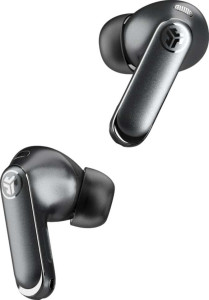
JLab Epic Pods
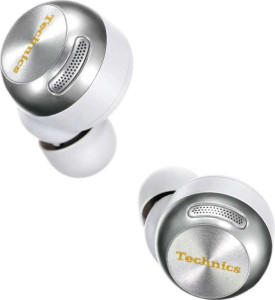
Technics EAH-AZ100

JLab Epic Pods Technics EAH-AZ100

Overview

Welcome to our in-depth specification comparison between the JLab Epic Pods and the Technics EAH-AZ100. Both are fully wireless in-ear headphones sharing a strong foundation: active noise cancellation, LDAC support, spatial audio, and a generous six-microphone setup. Yet key battlegrounds emerge around battery endurance, premium audio features, and wireless connectivity that may make one a far better fit for your lifestyle than the other.

Common Features

  • Both products have an in-ear fit.
  • Neither product has wires or cables.
  • Neither product is a neckband earbud design.
  • Neither product includes wingtips.
  • Neither product has RGB lighting.
  • Both products have stereo speakers.
  • Neither product has a UV light.
  • Neither product has a display.
  • Both products have active noise cancellation (ANC).
  • Both products have passive noise reduction.
  • Both products use a 10 mm driver unit size.
  • Both products have a lowest frequency of 20 Hz and a highest frequency of 40000 Hz.
  • Spatial audio support is available on both products.
  • Dirac Virtuo support is not available on either product.
  • Neither product uses a neodymium magnet.
  • Both products have a battery life of 12 hours.
  • Both products have a charge time of 2 hours.
  • Neither product has a solar power battery.
  • A battery level indicator is present on both products.
  • Both products have a rechargeable battery.
  • Fast pairing is supported on both products.
  • Both products have USB Type-C connectivity.
  • LDAC support is available on both products.
  • LDHC support is not available on either product.
  • aptX Adaptive support is not available on either product.
  • aptX Low Latency support is not available on either product.
  • aptX HD support is not available on either product.
  • aptX support is not available on either product.
  • Ambient sound mode is available on both products.
  • A find device feature is present on both products.
  • Fast charging is supported on both products.
  • Notification reading is not available on either product.
  • A mute function is available on both products.
  • Both products can be used as a headset.
  • Both products have a control panel placed on the device.
  • Voice prompts are available on both products.
  • Both products have 6 microphones.
  • A noise-canceling microphone is present on both products.

Main Differences

  • The Ingress Protection rating is IP55 on JLab Epic Pods and IPX4 on Technics EAH-AZ100.
  • Water resistance is rated as water resistant on JLab Epic Pods, while Technics EAH-AZ100 is rated as sweat resistant.
  • Dolby Atmos support is present on Technics EAH-AZ100 but not available on JLab Epic Pods.
  • The battery life of the charging case is 33 hours on JLab Epic Pods and 18 hours on Technics EAH-AZ100.
  • Wireless charging is supported on Technics EAH-AZ100 but not available on JLab Epic Pods.
  • Bluetooth LE Audio support is present on Technics EAH-AZ100 but not available on JLab Epic Pods.
  • In/on-ear detection is present on Technics EAH-AZ100 but not available on JLab Epic Pods.
  • The multipoint connection count is 2 on JLab Epic Pods and 3 on Technics EAH-AZ100.
Specs Comparison
JLab Epic Pods

JLab Epic Pods

Technics EAH-AZ100

Technics EAH-AZ100

Design:
Fit In-ear In-ear
Ingress Protection (IP) rating IP55 IPX4
water resistance Water resistant Sweat resistant
has no wires or cables
are neckband earbuds
wingtips included
has RGB lighting
has stereo speakers
has UV light
Has a display

Both the JLab Epic Pods and the Technics EAH-AZ100 share the same fundamental design blueprint: fully wireless, in-ear earbuds with stereo audio and no neckband. For users who prioritize a clean, cable-free experience, both deliver equally on that front.

The most meaningful differentiator in this group is water resistance. The Epic Pods carry an IP55 rating, meaning they are tested against both dust ingress and water jets from any direction — qualifying them as genuinely water resistant. The EAH-AZ100 holds an IPX4 rating, which covers only sweat and light splashing, with no dust certification at all. In practical terms, the Epic Pods offer broader protection: they can handle rain, outdoor workouts, and dusty environments more confidently, while the EAH-AZ100 is better suited to controlled gym or commute use where exposure is limited.

On design, the JLab Epic Pods hold a clear edge thanks to their superior IP55 protection. For users who need durability across varied environments, that extra resilience is a tangible real-world advantage the Technics cannot match in this category.

Sound quality:
has active noise cancellation (ANC)
has passive noise reduction
driver unit size 10 mm 10 mm
lowest frequency 20 Hz 20 Hz
highest frequency 40000 Hz 40000 Hz
supports spatial audio
has Dolby Atmos
has Dirac Virtuo
has a neodymium magnet

At a foundational level, these two earbuds are remarkably well-matched on paper: identical 10 mm driver sizes, the same 20 Hz–40,000 Hz frequency range, and shared support for both active and passive noise cancellation. The wide frequency ceiling — well beyond standard human hearing — suggests both are tuned with hi-res audio sources in mind, and ANC combined with passive isolation means users get layered noise blocking on both models.

The single differentiator in this group is Dolby Atmos support, which the Technics EAH-AZ100 carries and the JLab Epic Pods do not. Dolby Atmos adds a spatial processing layer on top of compatible content — most notably on streaming platforms like Apple Music, Netflix, or Tidal — creating a more three-dimensional, immersive soundstage. Both earbuds support spatial audio broadly, but the Technics goes a step further by unlocking certified Atmos decoding, which can make a perceptible difference when consuming Atmos-mixed content specifically.

For most listeners, the shared specs will deliver a comparable sonic foundation. However, for users who regularly stream Atmos-enabled content, the Technics EAH-AZ100 holds a meaningful edge — that certification is not just a marketing label but a real unlock for a richer immersive audio experience the Epic Pods cannot replicate.

Power:
Battery life 12 hours 12 hours
Battery life of charging case 33 hours 18 hours
charge time 2 hours 2 hours
has wireless charging
Has a solar power battery
has a battery level indicator
has a rechargeable battery

Earbud battery life is identical across both models at 12 hours per charge, and both refill in the same 2 hours — so day-to-day listening stamina is a wash. Where the two diverge is in total combined endurance and charging convenience.

The JLab Epic Pods pull ahead on raw capacity: their case extends total playback to 45 hours combined (12 + 33), versus the Technics EAH-AZ100's 30 hours combined (12 + 18). That 15-hour gap is significant for travelers or heavy users who go days without access to a wall outlet — the Epic Pods simply need to be recharged less frequently. The Technics counters with wireless charging, a convenience feature the Epic Pods lack entirely. For users who keep a Qi pad on their desk or nightstand, the frictionless top-up experience is genuinely useful day-to-day.

The right call depends on usage pattern. Frequent travelers or those who rarely sit near a charging pad will find the Epic Pods' larger case reserve the more practical asset. Users anchored to a desk or bedroom ecosystem where wireless pads are always nearby may prefer the effortless charging of the Technics — but they will be refilling that case noticeably more often. On balance, the JLab Epic Pods hold the broader power advantage.

Connectivity:
has fast pairing
Has USB Type-C
has LDAC
has LDHC
has Bluetooth LE Audio
has aptX Adaptive
has aptX Low Latency
has aptX HD
has aptX
has aptX Lossless
has aptX Voice
has Auracast
maximum Bluetooth range 10 m 10 m
supports Bluetooth pairing using NFC
Can be used wirelessly
has AAC

Connectivity is largely a mirror image between these two earbuds. Both support LDAC and AAC — covering high-resolution wireless audio for Sony-ecosystem and Apple users respectively — alongside fast pairing, USB-C, and an identical 10 m Bluetooth range. For the vast majority of users, this shared foundation will feel indistinguishable in daily use.

The sole differentiator is Bluetooth LE Audio, which the Technics EAH-AZ100 supports and the JLab Epic Pods do not. LE Audio is a next-generation Bluetooth standard that brings improved audio quality at lower power consumption and, critically, enables multi-stream audio — allowing independent left/right earbud connections and better hearing-aid integration. It is still an emerging standard with limited device support, but it represents meaningful future-proofing as more smartphones and audio sources adopt it.

For users shopping today with current devices, the practical gap is narrow — LDAC on both models already handles high-res audio transmission well. But the Technics EAH-AZ100 earns a modest edge here by positioning itself as the more forward-compatible option, making it the stronger pick for anyone who intends to keep their earbuds well into the LE Audio mainstream.

Features:
release date September 2025 January 2025
has ambient sound mode
has in/on-ear detection
has find device feature
Supports fast charging
multipoint count 2 3
can read notifications
has a mute function
can be used as a headset
control panel placed on a device
Has voice prompts
travel bag is included
Has an in-line control panel
Has a temperature sensor
Has a built-in camera remote control function

Feature parity is high across this group — both earbuds offer ambient sound mode, fast charging, find-my-device, mute, headset functionality, voice prompts, and a travel bag. For most users, the shared feature set will cover every everyday need without compromise on either side.

Two specs separate them. The Technics EAH-AZ100 supports 3-device multipoint connectivity versus the Epic Pods' 2-device multipoint. That extra simultaneous connection is genuinely useful for professionals juggling a laptop, phone, and tablet — switching audio sources becomes seamless without manual re-pairing. The Technics also adds in/on-ear detection, which the Epic Pods lack; this allows the earbuds to automatically pause playback when removed and resume when reinserted — a small but frequently appreciated convenience that reduces accidental missed content and battery drain.

Neither difference is dramatic on its own, but together they point in the same direction. The Technics EAH-AZ100 takes the edge in this category, offering a more polished and connected experience — particularly for multi-device users who value smart automation in their listening workflow.

Microphone:
number of microphones 6 6
has a noise-canceling microphone

On microphone hardware, these two earbuds are completely identical: both deploy 6 microphones with active noise-canceling mic technology. A 6-mic array is a generous configuration for wireless earbuds, enabling beamforming and wind-noise suppression techniques that meaningfully improve call clarity in noisy environments compared to simpler 2- or 4-mic setups.

With no differentiating specs in this group, this is a straight tie. Users on either earbud can expect a comparably equipped microphone system designed for clear voice pickup in real-world calling conditions.

Comparison Summary & Verdict

After examining the full spec sheet, both earbuds prove themselves capable daily drivers, but they cater to different priorities. The JLab Epic Pods stand out with a significantly larger total battery life of up to 33 hours via the charging case and a stronger IP55 ingress protection rating, making them the more durable and endurance-focused choice. The Technics EAH-AZ100, on the other hand, pulls ahead with premium extras including Dolby Atmos, wireless charging, Bluetooth LE Audio, in-ear detection, and three-device multipoint connectivity, making it the more feature-rich and convenience-oriented option for discerning listeners willing to trade some battery capacity for a richer ecosystem.

JLab Epic Pods
Buy JLab Epic Pods if...

Buy the JLab Epic Pods if you need maximum battery endurance from your case and want a more robust IP55 water resistance rating for active use.

Technics EAH-AZ100
Buy Technics EAH-AZ100 if...

Buy the Technics EAH-AZ100 if you want premium features like Dolby Atmos, wireless charging, Bluetooth LE Audio, and the convenience of three-device multipoint connectivity.