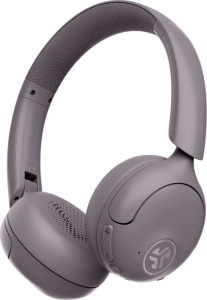
JLab Go Lux ANC
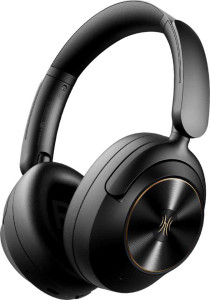
OneOdio Focus A6

JLab Go Lux ANC OneOdio Focus A6

Overview

Welcome to our detailed spec comparison between the JLab Go Lux ANC and the OneOdio Focus A6 — two wireless ANC headphones that share a surprising amount of common ground yet diverge in some meaningful ways. From their fit and weight to codec support and special audio features, each model has a distinct profile worth examining closely before you commit to a purchase.

Common Features

  • Both headphones include a detachable cable.
  • Neither headphone offers water resistance.
  • Both headphones can be folded.
  • Neither headphone is designed for kids.
  • Both headphones come with a tangle-free cable.
  • Neither headphone includes a travel bag.
  • Both headphones use a closed-back design.
  • Both headphones feature stereo speakers.
  • Both headphones support active noise cancellation (ANC).
  • Both headphones share the same lowest frequency of 20 Hz.
  • Both headphones share the same highest frequency of 20000 Hz.
  • Both headphones use a 40 mm driver unit size.
  • Neither headphone uses a neodymium magnet.
  • Both headphones deliver 40 hours of battery life with ANC enabled.
  • Both headphones charge via USB Type-C.
  • Both headphones include a battery level indicator.
  • Neither headphone supports wireless charging.
  • Neither headphone uses a solar power battery.
  • Both headphones have a rechargeable battery.
  • Neither headphone has a removable battery.
  • Both headphones support wireless and wired connectivity.
  • Neither headphone supports aptX Adaptive, aptX, LDHC, Bluetooth LE Audio, aptX Low Latency, aptX HD, or aptX Lossless.
  • Both headphones feature a noise-canceling microphone.
  • Both headphones include an ambient sound mode.
  • Neither headphone has in/on-ear detection.
  • Neither headphone has a mute function.
  • Both headphones support multipoint connection for up to 2 devices.
  • Both headphones have a control panel placed on the device.
  • Both headphones can be used as a headset.
  • Neither headphone has an in-line control panel.

Main Differences

  • The JLab Go Lux ANC uses an on-ear fit, while the OneOdio Focus A6 uses an over-ear fit.
  • The JLab Go Lux ANC weighs 196 g, while the OneOdio Focus A6 is heavier at 240 g.
  • Spatial audio support is available on the JLab Go Lux ANC but not on the OneOdio Focus A6.
  • Passive noise reduction is present on the OneOdio Focus A6 but not available on the JLab Go Lux ANC.
  • The total battery life is 70 hours on the JLab Go Lux ANC and 75 hours on the OneOdio Focus A6.
  • LDAC support is present on the OneOdio Focus A6 but not available on the JLab Go Lux ANC.
  • AAC support is present on the OneOdio Focus A6 but not available on the JLab Go Lux ANC.
  • Fast pairing is available on the JLab Go Lux ANC but not on the OneOdio Focus A6.
Specs Comparison
JLab Go Lux ANC

JLab Go Lux ANC

OneOdio Focus A6

OneOdio Focus A6

Design:
Fit On-ear Over-ear
weight 196 g 240 g
has a detachable cable
water resistance None None
can be folded
is designed for kids
has a tangle free cable
travel bag is included
has an open-back design
has stereo speakers

The most meaningful design distinction between these two headphones comes down to fit style and weight. The JLab Go Lux ANC uses an on-ear design, meaning the ear cups rest directly on the outer ear rather than encircling it. The OneOdio Focus A6, by contrast, is over-ear, with larger cups that fully envelop the ear. In practice, over-ear designs typically offer better passive sound isolation and a more immersive feel, but they also tend to be bulkier — which is exactly what the weight figures confirm: the Focus A6 comes in at 240 g versus the Go Lux ANC's notably lighter 196 g. That 44 g difference is perceptible during extended wear, giving the JLab a real-world comfort edge for users who keep headphones on for hours at a stretch.

On shared design traits, both headphones are well-equipped for portability: each supports folding for compact storage and includes a detachable, tangle-free cable, which is valuable for longevity since cables are the most failure-prone component. Neither model includes a travel bag, and neither offers any water resistance, so both are strictly for dry, indoor-leaning use cases.

Overall, the JLab Go Lux ANC holds a design edge for users who prioritize lightweight portability and all-day wearability. The OneOdio Focus A6 counters with an over-ear fit that may suit listeners who prefer a more enveloping, acoustically enclosed feel — but they will carry extra weight to get it.
Sound quality:
has active noise cancellation (ANC)
lowest frequency 20 Hz 20 Hz
highest frequency 20000 Hz 20000 Hz
driver unit size 40 mm 40 mm
supports spatial audio
has a neodymium magnet
has passive noise reduction

At the hardware level, these two headphones are remarkably alike: both feature 40 mm drivers, an identical frequency range of 20 Hz–20,000 Hz, and active noise cancellation. The shared driver size and frequency coverage mean neither holds a measurable acoustic advantage on paper — real-world sound character will depend more on tuning decisions than raw specs.

Where they diverge is in two meaningful noise and immersion features. The OneOdio Focus A6 adds passive noise reduction — a structural benefit tied directly to its over-ear fit, which physically blocks ambient sound even when ANC is off or the battery is dead. The JLab Go Lux ANC, being on-ear, lacks this, which is a genuine trade-off. However, the Go Lux ANC counters with spatial audio support, a feature the Focus A6 does not offer. Spatial audio can significantly expand the perceived soundstage for compatible content — movies, gaming, and certain music mixes — creating a more three-dimensional listening experience.

Neither product has a decisive, across-the-board advantage here — it comes down to use case. Users who prioritize robust noise isolation in loud environments will lean toward the Focus A6 for its layered passive-plus-active noise blocking. Those who consume a lot of spatial-audio-enabled content will find the Go Lux ANC more rewarding. On balance, the Go Lux ANC's spatial audio support is the rarer and more differentiating feature of the two.

Power:
Battery life 70 hours 75 hours
Battery life (ANC) 40 hours 40 hours
Has USB Type-C
has a battery level indicator
has wireless charging
Has a solar power battery
has a rechargeable battery
has a removable battery

Power is arguably the closest category between these two headphones. Both deliver an impressive 40 hours of ANC-on battery life — a figure that comfortably covers multiple long-haul flights or an entire work week of daily commutes without reaching for a charger. The gap emerges only in standard (non-ANC) playback: the OneOdio Focus A6 edges ahead at 75 hours versus the JLab Go Lux ANC's 70 hours. That 5-hour difference is real but unlikely to be a deciding factor for most users in day-to-day scenarios.

Everything else in this category is identical. Both headphones charge via USB-C, include a battery level indicator, and lack wireless charging — all standard expectations at this tier. The absence of wireless charging is a minor convenience trade-off but not unusual for headphones in this segment.

On balance, the Power category is effectively a tie. The Focus A6's marginal lead in maximum playback time is the only differentiator, and it is too slim to meaningfully influence a purchasing decision. Buyers can expect near-identical real-world charging habits and usage patterns from either headphone.

Connectivity:
connectivity Wireless & wired Wireless & wired
has aptX Adaptive
has aptX
has LDAC
has LDHC
has Bluetooth LE Audio
has aptX Low Latency
has aptX HD
has aptX Lossless
has AAC
has Auracast
maximum Bluetooth range 10 m 10 m
has fast pairing
supports Bluetooth pairing using NFC

Both headphones offer the same foundation — wireless and wired connectivity with a maximum Bluetooth range of 10 m — but the codec support tells a more interesting story. The OneOdio Focus A6 supports both LDAC and AAC, while the JLab Go Lux ANC supports neither. This is a meaningful gap: LDAC is Sony's high-resolution codec capable of transmitting up to three times the data of standard Bluetooth audio, making it the codec of choice for audiophiles streaming high-res content from compatible Android devices. AAC, meanwhile, is the preferred codec for Apple devices, delivering cleaner audio than the default SBC baseline.

For the Go Lux ANC, the absence of both codecs means it will default to SBC on most connections — a functional but sonically inferior fallback. It partially compensates with fast pairing, which streamlines the initial Bluetooth setup experience, though this is a convenience feature rather than an audio quality one. The Focus A6 does not offer fast pairing but its codec advantages are far more impactful for everyday listening.

The OneOdio Focus A6 holds a clear edge in this category. LDAC and AAC support directly benefit audio quality for a broad range of users — Android listeners on high-res streaming platforms and Apple device users alike. Unless seamless first-time pairing is a top priority, the Focus A6's codec stack is the more substantive advantage.

Features:
release date March 2025 July 2025
has a noise-canceling microphone
has ambient sound mode
has in/on-ear detection
has a mute function
multipoint count 2 2
control panel placed on a device
can be used as a headset
Has an in-line control panel

Rarely does a spec group come out this evenly matched, but the Features category is an exact tie — every single data point is identical between the two headphones. Both offer a noise-canceling microphone, ambient sound mode, multipoint connection for 2 devices, and an on-device control panel, with headset use supported on each.

The shared highlights worth contextualizing: multipoint pairing (connecting to two Bluetooth sources simultaneously) is a genuinely useful productivity feature, eliminating the need to manually switch connections between, say, a laptop and a phone. Ambient sound mode complements the ANC both headphones carry, allowing users to let in environmental audio without removing the headphones — practical for commuters or office use. The noise-canceling microphone ensures call quality remains solid even in moderately noisy environments.

This category is a dead tie. Neither headphone offers a feature the other lacks, and the shared set is well-rounded for the target use case. Buyers should look to other spec groups — particularly Connectivity and Sound Quality — to differentiate between these two models.

Comparison Summary & Verdict

After reviewing the full spec sheet, both headphones deliver solid fundamentals: 40 hours of ANC battery life, USB-C charging, dual-device multipoint, and a noise-canceling microphone. However, their differences point them toward different audiences. The JLab Go Lux ANC stands out with its lighter 196 g on-ear build, spatial audio support, and fast pairing — making it a strong pick for commuters and frequent travelers who value convenience. The OneOdio Focus A6, on the other hand, offers an over-ear fit, LDAC and AAC codec support, passive noise reduction, and a slightly longer 75-hour total battery life, positioning it as the better choice for audiophiles and extended listening sessions at home or in the studio.

JLab Go Lux ANC
Buy JLab Go Lux ANC if...

Buy the JLab Go Lux ANC if you prefer a lighter, on-ear headphone with spatial audio support and fast pairing for quick, on-the-go convenience.

OneOdio Focus A6
Buy OneOdio Focus A6 if...

Buy the OneOdio Focus A6 if you prioritize high-quality audio codecs like LDAC and AAC, passive noise reduction, and a comfortable over-ear fit for longer listening sessions.