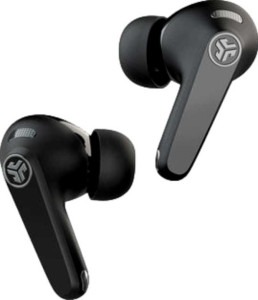
JLab JBuds Pods
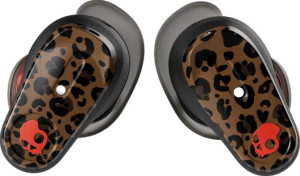
Skullcandy Method 360 ANC

JLab JBuds Pods Skullcandy Method 360 ANC

Overview

Welcome to our in-depth specification comparison between the JLab JBuds Pods and the Skullcandy Method 360 ANC. Both are fully wireless, in-ear earbuds packed with active noise cancellation and a host of shared features, yet they take noticeably different approaches to areas like battery endurance, build protection, and audio technology. Read on to see how every spec stacks up before you decide which pair is right for you.

Common Features

  • Both products have an in-ear fit.
  • Neither product has wires or cables.
  • Neither product is a neckband earbud design.
  • Neither product has RGB lighting.
  • Both products have stereo speakers.
  • Neither product has a UV light.
  • Neither product has a display.
  • Both products have active noise cancellation (ANC).
  • Both products have passive noise reduction.
  • Both products have a lowest frequency of 20 Hz.
  • Both products have a highest frequency of 20000 Hz.
  • Dolby Atmos support is not available on either product.
  • Dirac Virtuo support is not available on either product.
  • A neodymium magnet is not present in either product.
  • Wireless charging is not available on either product.
  • Neither product has a solar power battery.
  • Both products have a battery level indicator.
  • Both products have a rechargeable battery.
  • Both products support fast pairing.
  • Both products have a USB Type-C connector.
  • LDAC support is not available on either product.
  • Bluetooth LE Audio is not available on either product.
  • aptX Adaptive support is not available on either product.
  • aptX Low Latency support is not available on either product.
  • aptX HD support is not available on either product.
  • Both products have an ambient sound mode.
  • Neither product has in/on-ear detection.
  • Both products support fast charging.
  • Neither product can read notifications.
  • Both products have a mute function.
  • Both products can be used as a headset.
  • Both products have a control panel placed on the device.
  • Both products have voice prompts.
  • Both products have a noise-canceling microphone.

Main Differences

  • The ingress protection rating is IP55 on JLab JBuds Pods and IPX4 on Skullcandy Method 360 ANC.
  • JLab JBuds Pods is water resistant, while Skullcandy Method 360 ANC is sweat resistant.
  • The weight is 16.7 g on JLab JBuds Pods and 22 g on Skullcandy Method 360 ANC.
  • Wingtips are included with Skullcandy Method 360 ANC but not with JLab JBuds Pods.
  • The driver unit size is 11 mm on JLab JBuds Pods and 12 mm on Skullcandy Method 360 ANC.
  • Spatial audio support is available on JLab JBuds Pods but not on Skullcandy Method 360 ANC.
  • Battery life is 10 hours on JLab JBuds Pods and 11 hours on Skullcandy Method 360 ANC.
  • Battery life of the charging case is 46 hours on JLab JBuds Pods and 29 hours on Skullcandy Method 360 ANC.
  • The Bluetooth version is 5.4 on JLab JBuds Pods and 5.3 on Skullcandy Method 360 ANC.
Specs Comparison
JLab JBuds Pods

JLab JBuds Pods

Skullcandy Method 360 ANC

Skullcandy Method 360 ANC

Design:
Fit In-ear In-ear
Ingress Protection (IP) rating IP55 IPX4
water resistance Water resistant Sweat resistant
weight 16.7 g 22 g
has no wires or cables
are neckband earbuds
wingtips included
has RGB lighting
has stereo speakers
has UV light
Has a display

Both the JLab JBuds Pods and the Skullcandy Method 360 ANC share the same fundamental form factor: fully wireless, in-ear earbuds with stereo drivers and no display or gimmicky extras like RGB lighting. At a glance, they occupy the same design category, but a few key differences reveal meaningfully different priorities in their engineering.

The most consequential divergence is in water protection. The JBuds Pods carry an IP55 rating, which means they are tested against both dust ingress and water jets from any direction — making them genuinely water resistant in real-world conditions like rain or splashing. The Method 360 ANC is rated IPX4, offering only sweat resistance, with no dust protection certified at all. For gym use, IPX4 is adequate, but for outdoor or more demanding environments, the JBuds Pods hold a clear advantage. Weight also favors JLab: at 16.7 g versus 22 g for the Method 360 ANC, the JBuds Pods are noticeably lighter, which can reduce ear fatigue during extended wear.

Where the Method 360 ANC pushes back is with its inclusion of wingtips, which the JBuds Pods lack. Wingtips anchor earbuds during vigorous activity, so users prioritizing a secure, sport-ready fit may find the Skullcandy a better physical match. Overall though, the JBuds Pods have the design edge in this group: they are lighter, better protected against the elements, and sacrifice little in return.

Sound quality:
has active noise cancellation (ANC)
has passive noise reduction
driver unit size 11 mm 12 mm
lowest frequency 20 Hz 20 Hz
highest frequency 20000 Hz 20000 Hz
supports spatial audio
has Dolby Atmos
has Dirac Virtuo
has a neodymium magnet

On paper, these two earbuds are remarkably close in their audio credentials. Both cover the full standard human hearing range of 20 Hz to 20,000 Hz, and both combine active noise cancellation with passive noise reduction — a meaningful one-two punch that uses both physical seal and digital processing to block out ambient sound. Neither relies on premium audio processing frameworks like Dolby Atmos or Dirac Virtuo, so expectations on that front should be calibrated accordingly for both.

The driver size difference — 11 mm for the JBuds Pods versus 12 mm for the Method 360 ANC — is technically present but practically marginal. A 1 mm gap in driver diameter does not reliably translate to audible differences; tuning, housing acoustics, and DSP implementation matter far more. It would be a stretch to call this a meaningful advantage for Skullcandy based on specs alone.

The clearest differentiator here is spatial audio support. The JLab JBuds Pods offer it; the Method 360 ANC does not. For users who stream music, movies, or games through platforms that support spatial audio formats, this adds a dimension of perceived soundstage that flat stereo simply cannot replicate. That single feature tips the balance: the JBuds Pods hold the edge in this category, particularly for users who value immersive listening experiences.

Power:
Battery life 10 hours 11 hours
Battery life of charging case 46 hours 29 hours
has wireless charging
Has a solar power battery
has a battery level indicator
has a rechargeable battery

Battery life tells two different stories depending on how you use your earbuds. Per-earbud endurance is nearly identical — 10 hours for the JBuds Pods versus 11 hours for the Method 360 ANC. That single-hour gap is unlikely to be felt in day-to-day use; both will comfortably outlast a long-haul flight or a full workday without needing a top-up.

Where the gap becomes impossible to ignore is in the charging case. The JLab JBuds Pods case extends total battery life to an impressive 46 hours, compared to just 29 hours for the Method 360 ANC. In practical terms, that difference means JLab users can go several days of regular listening before needing a wall outlet, while Skullcandy users will be reaching for a cable noticeably sooner. For frequent travelers or anyone who charges infrequently, this is a meaningful real-world distinction. Neither case supports wireless charging, so both require a cable when it's time to recharge.

The verdict here is clear: the Method 360 ANC edges out the JBuds Pods on per-session endurance, but the JBuds Pods win decisively on total system battery life thanks to their far larger case capacity. Unless single-session runtime is the only metric that matters, the JLab JBuds Pods offer the stronger overall power package.

Connectivity:
has fast pairing
Has USB Type-C
Bluetooth version 5.4 5.3
has LDAC
has LDHC
has Bluetooth LE Audio
has aptX Adaptive
has aptX Low Latency
has aptX HD
has aptX
has aptX Lossless
has aptX Voice
has Auracast
maximum Bluetooth range 10 m 10 m
supports Bluetooth pairing using NFC
Can be used wirelessly
has AAC

Connectivity is perhaps the most evenly matched category across this entire comparison. Both earbuds are fully wireless, support fast pairing, use USB-C for charging, and top out at the same 10 m Bluetooth range. Neither supports advanced audio codecs like LDAC, aptX, or AAC — meaning both are limited to the standard SBC codec for transmission, which is worth noting for audiophiles expecting high-fidelity wireless streaming.

The only technical distinction is the Bluetooth version: the JLab JBuds Pods run on Bluetooth 5.4, while the Skullcandy Method 360 ANC uses Bluetooth 5.3. In practice, the difference between these two versions is subtle — 5.4 introduced refinements to LE Audio efficiency and connection reliability, but neither product actually supports LE Audio or Auracast, so many of 5.4's headline benefits go untapped here. The real-world connection experience between the two is unlikely to differ in any perceptible way for most users.

Given how closely matched these two are, this category is effectively a draw. The JBuds Pods hold a marginal technical edge with the newer Bluetooth revision, but without the codec support or LE Audio features to leverage it meaningfully, it amounts to a future-proofing footnote rather than a practical advantage today.

Features:
release date May 2025 April 2025
has ambient sound mode
has in/on-ear detection
Supports fast charging
can read notifications
has a mute function
can be used as a headset
control panel placed on a device
Has voice prompts
travel bag is included
Has an in-line control panel
Has a temperature sensor
Has a built-in camera remote control function

This is a rare case where the spec sheet offers no basis for differentiation whatsoever — every single feature in this group is identical across both products. The JLab JBuds Pods and the Skullcandy Method 360 ANC both support ambient sound mode, fast charging, a mute function, on-device controls, and voice prompts, and both ship with a travel bag included. They can each be used as a headset for calls, and neither offers in-ear detection, notification readout, or an in-line control panel.

The features that are shared are genuinely useful in practice. Ambient sound mode lets users stay aware of their surroundings without removing the earbuds — a critical safety and convenience feature for commuters and runners. Fast charging means a short cable session can recover meaningful playback time quickly, which complements the battery discussion from the power category. The inclusion of a travel bag in both packages is a small but appreciated practical touch at this price tier.

With no divergence anywhere in this group, the verdict is an unambiguous tie. A buyer prioritizing features alone has no reason to choose one over the other — the decision will need to rest on the differences surfaced in other categories.

Microphone:
has a noise-canceling microphone

The microphone category comes down to a single shared specification: both the JLab JBuds Pods and the Skullcandy Method 360 ANC feature a noise-canceling microphone. In practical terms, this means both earbuds are designed to filter out ambient background noise during calls — a meaningful capability for anyone taking calls in busy environments like offices, streets, or public transit.

This is a complete tie based on the available data. With only one data point in this group and no differentiation between the two products, there is no basis to favor either earbud on microphone specifications alone. Finer distinctions — such as microphone array configuration or beamforming implementation — are not reflected in the provided specs and cannot be factored into this analysis.

Comparison Summary & Verdict

After examining the full spec sheet, both earbuds share a strong foundation: ANC, fast charging, USB-C, ambient sound mode, and a noise-canceling microphone. Where they diverge is telling. The JLab JBuds Pods stand out with a lighter 16.7 g build, a higher IP55 water resistance rating, spatial audio support, and an impressive 46-hour charging case, making them ideal for users who travel often and want maximum total playback time. The Skullcandy Method 360 ANC, on the other hand, offers a slightly longer 11-hour single charge, a larger 12 mm driver, included wingtips for a more secure fit, and Bluetooth 5.3 — making it a strong pick for active users who prioritize fit stability during workouts and a bit more raw battery per session.

JLab JBuds Pods
Buy JLab JBuds Pods if...

Buy the JLab JBuds Pods if you want a lighter earbud with a higher IP55 protection rating, spatial audio support, and a significantly larger charging case battery for extended use away from a charger.

Skullcandy Method 360 ANC
Buy Skullcandy Method 360 ANC if...

Buy the Skullcandy Method 360 ANC if you prioritize a longer single-session battery life, a larger driver, and included wingtips for a more secure, stable fit during physical activity.