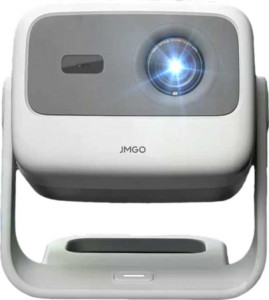
JMGO N1S 4K
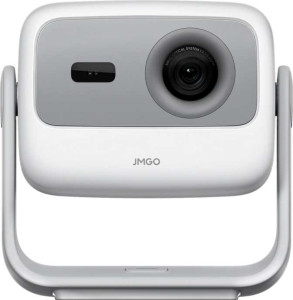
JMGO N1S SE

JMGO N1S 4K JMGO N1S SE

Overview

Welcome to our detailed spec comparison between the JMGO N1S 4K and the JMGO N1S SE. Both projectors share the same laser light source technology and a broad common feature set, yet they diverge in some meaningful ways. In this comparison, we examine the key battlegrounds of projection resolution, physical dimensions, and smart features to help you decide which model best fits your needs.

Common Features

  • Both projectors use a laser light source.
  • Both projectors have a thickness of 190 mm.
  • Both projectors have a contrast ratio of 1600:1.
  • Both projectors support a maximum projection size of 200″.
  • HDR10+ support is not available on either product.
  • Dolby Vision support is not available on either product.
  • Both projectors have 1 HDMI port.
  • AirPlay is available on both projectors.
  • Bluetooth is available on both projectors.
  • Wi-Fi is supported on both projectors.
  • Both projectors have 1 USB port.
  • Chromecast built-in is available on both projectors.
  • Neither projector has a VGA connector.
  • Neither projector has a DVI connector.
  • Both projectors feature stereo speakers.
  • Vertical lens shift is not available on either projector.
  • Horizontal lens shift is not available on either projector.
  • Both projectors come with a remote control.
  • Both projectors have a built-in smart TV platform.
  • Both projectors deliver 2 x 5W audio output power.
  • A 3.5 mm audio jack socket is available on both projectors.
  • Neither projector has an external memory slot.

Main Differences

  • Width is 170 mm on JMGO N1S 4K and 165 mm on JMGO N1S SE.
  • Height is 190 mm on JMGO N1S 4K and 182 mm on JMGO N1S SE.
  • Weight is 2000 g on JMGO N1S 4K and 1800 g on JMGO N1S SE.
  • Volume is 6137 cm³ on JMGO N1S 4K and 5705.7 cm³ on JMGO N1S SE.
  • Output resolution is 4K on JMGO N1S 4K and 1080p on JMGO N1S SE.
  • Minimum throw distance is 1.6 m on JMGO N1S 4K and 1.2 m on JMGO N1S SE.
  • HDR10 support is present on JMGO N1S 4K but not available on JMGO N1S SE.
  • Dolby Atmos support is present on JMGO N1S 4K but not available on JMGO N1S SE.
  • Voice commands are available on JMGO N1S 4K but not available on JMGO N1S SE.
Specs Comparison
JMGO N1S 4K

JMGO N1S 4K

JMGO N1S SE

JMGO N1S SE

General info:
has laser light source
release date April 2025 April 2025
width 170 mm 165 mm
height 190 mm 182 mm
thickness 190 mm 190 mm
weight 2000 g 1800 g
volume 6137 cm³ 5705.7 cm³

Both the JMGO N1S 4K and the JMGO N1S SE share the same laser light source technology and identical 190 mm depth, giving them a common foundation in terms of projection quality and overall form factor philosophy. The key physical differences emerge in width, height, and mass: the N1S SE is slightly more compact at 165 × 182 mm versus the N1S 4K's 170 × 190 mm, and noticeably lighter at 1800 g compared to 2000 g — a 10% weight reduction that translates into a more portable, easier-to-reposition unit in real-world use.

The volume difference reinforces this: the N1S SE displaces roughly 5706 cm³ against the N1S 4K's 6137 cm³, meaning the SE is the more space-efficient chassis. For users who frequently move their projector between rooms or travel with it, that saved bulk and 200 g matters. For a fixed home-theater setup, the difference is largely cosmetic.

On general physical specs alone, the N1S SE holds a clear portability edge — it is smaller and lighter across every relevant dimension. However, the N1S 4K's larger body likely accommodates additional internal hardware that justifies its higher-tier positioning, so the size gap may reflect meaningful internal trade-offs rather than simple engineering inefficiency.

Projection quality:
output resolution 4K 1080p
contrast ratio 1600:1 1600:1
maximum projection size 200" 200"
supports HDR10+
minimum throw distance 1.6 m 1.2 m
supports Dolby Vision
supports HDR10

The single most decisive differentiator in this group is output resolution. The JMGO N1S 4K delivers a native 4K image, while the N1S SE tops out at 1080p — a fourfold difference in pixel count. At larger throw sizes (both units support up to 200″), this gap becomes visible: 4K resolves fine detail, text sharpness, and texture in ways that 1080p simply cannot match on a screen that size. For a compact or casual viewing setup under 100″, the difference is more forgiving, but at the upper end of the projection range, the N1S 4K's resolution advantage is meaningful.

HDR handling further separates the two. The N1S 4K supports HDR10, enabling tone-mapped highlights and shadow detail when fed compatible content — a real-world benefit for streaming or disc playback. The N1S SE lacks any HDR support, meaning it will display HDR-flagged content without tone mapping, which can result in clipped highlights or washed-out contrast depending on the source. Both units share an identical 1600:1 contrast ratio and neither supports Dolby Vision or HDR10+, so neither has an edge in peak dynamic range capability.

The N1S SE does close the gap slightly on placement flexibility: its 1.2 m minimum throw distance versus the N1S 4K's 1.6 m makes it easier to use in tighter spaces. Still, in the projection quality category as a whole, the N1S 4K holds a clear and substantial advantage — higher resolution plus HDR10 support versus none of either on the SE.

Connectivity:
HDMI ports 1 1
has AirPlay
Has Bluetooth
supports Wi-Fi
USB ports 1 1
has Chromecast built-in
has a VGA connector
has a DVI connector
supports Miracast
RJ45 ports 0 0
Has S/PDIF Out port

Connectivity is the one area where these two projectors are completely indistinguishable. Every spec in this group is identical: both carry a single HDMI port and a single USB port for wired connections, and both omit a LAN (RJ45) port, meaning network access is wireless-only on either unit. Neither includes legacy outputs like VGA or DVI, nor a S/PDIF audio output — a notable absence for users who want to route audio to an external receiver digitally.

On the wireless side, the feature set is equally matched: AirPlay, Chromecast built-in, Miracast, Wi-Fi, and Bluetooth are all present on both models. This is actually a strong lineup for a projector at this tier — covering Apple, Google, and cross-platform screen mirroring ecosystems simultaneously means compatibility with virtually any smartphone, tablet, or laptop a user might own.

With no differences whatsoever across any connectivity metric, this group is a complete tie. The connectivity suite is a shared strength for both products, and it plays no role in distinguishing one from the other.

Features:
has stereo speakers
has lens shift (vertical)
has lens shift (horizontal)
has a remote control
has built-in smart TV
audio output power 2 x 5W 2 x 5W
has a socket for a 3.5 mm audio jack
has Dolby Atmos
has an external memory slot
has voice commands

Much of the feature set here is shared ground: both projectors include stereo speakers at 2 × 5W, a built-in smart TV platform, a remote control, and a 3.5 mm audio output for headphones or external speakers. Neither unit offers lens shift in any direction, which means precise image alignment relies entirely on physical placement and digital keystone correction — a shared limitation worth noting for users with strict geometry requirements.

Where the two diverge is in audio processing and control. The N1S 4K adds Dolby Atmos decoding and voice command support, neither of which is present on the N1S SE. Dolby Atmos on a projector with built-in speakers has a ceiling — the spatial audio effect is inherently limited by a two-channel speaker array — but it does matter for passthrough to a compatible soundbar or AV receiver via the 3.5 mm output, and it signals broader content compatibility. Voice commands, meanwhile, offer a genuine convenience upgrade for hands-free navigation, app launching, and search.

These two additions give the N1S 4K a clear edge in features. They are not transformative on their own, but combined with the 4K and HDR10 advantages seen in projection quality, they reinforce a consistent pattern: the N1S 4K is the more fully equipped of the two, while the N1S SE trades those extras for a lower price point and slightly more compact form.

Comparison Summary & Verdict

After reviewing all the specifications, the two projectors share a strong foundation: laser light source, identical connectivity, and a 1600:1 contrast ratio. However, the differences are clear and purposeful. The JMGO N1S 4K stands out with its native 4K resolution, HDR10 support, Dolby Atmos audio, and voice command functionality, making it the stronger choice for home cinema enthusiasts who demand premium picture and sound quality. The JMGO N1S SE, on the other hand, is more compact and lighter at 1800 g, with a shorter minimum throw distance of 1.2 m, making it better suited to smaller rooms or users who value portability and a lower-cost entry point into laser projection.

JMGO N1S 4K
Buy JMGO N1S 4K if...

Buy the JMGO N1S 4K if you want the best picture quality with native 4K resolution, HDR10 support, Dolby Atmos audio, and voice command functionality.

JMGO N1S SE
Buy JMGO N1S SE if...

Buy the JMGO N1S SE if you prefer a lighter, more compact projector with a shorter minimum throw distance, ideal for smaller spaces or tighter budgets.