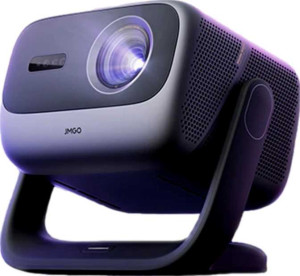
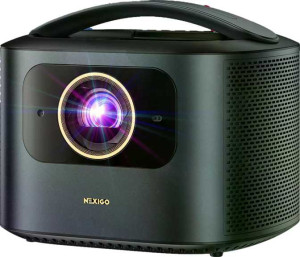
Both the JMGO N3 Ultra and the NexiGo TriVision Ultra share a laser light source, which is the most significant commonality in this group. Laser-based projection offers advantages over traditional lamp or LED sources, including greater color accuracy, longer lifespan, and the ability to maintain brightness over time without the degradation typical of lamp-based projectors.
Where the two diverge meaningfully is in their physical profiles. The NexiGo TriVision Ultra occupies a noticeably larger footprint — its 15,456 cm³ volume is roughly 27% greater than the JMGO N3 Ultra's 12,145 cm³ — making the N3 Ultra the more compact unit overall. However, the size advantage does not translate into a weight advantage: the JMGO N3 Ultra is considerably heavier at 6,800 g versus the NexiGo's 5,200 g, a difference of 1,600 g (about 3.5 lbs). This suggests denser internal construction in the JMGO, possibly reflecting a more robust thermal or optical assembly packed into a tighter chassis.
For users prioritizing portability and ease of repositioning, the NexiGo TriVision Ultra holds a clear edge with its lower weight, even if it demands more shelf or table space. For those with constrained placement areas who are less concerned about moving the projector frequently, the JMGO N3 Ultra's smaller volume is the practical winner. Overall, neither product dominates outright — the choice depends on whether physical footprint or carrying weight matters more in the user's specific setup.