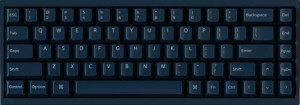
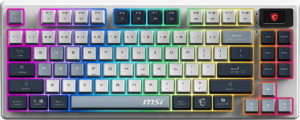
Shared across both keyboards are analog input, adjustable actuation, and full N-key rollover (NKRO), ensuring every simultaneous keypress is registered without ghosting — a baseline expectation for competitive gaming hardware. Neither board offers USB passthrough, QMK, ZMK, or VIA support, so open-source firmware customization is off the table for both. Within that common ground, however, the feature gap opens up considerably.
The Q16 HE 8K pulls ahead with two high-impact gaming features the GK600 TKL lacks entirely: rapid trigger and dual actuation. Rapid trigger allows the switch to re-arm the moment it begins moving upward rather than waiting for it to return past a fixed reset point — a critical advantage in games requiring fast repeated keypresses or precise movement cancellation. Dual actuation lets a single key trigger two separate actions at different points in its travel, unlocking input combinations that are simply not possible on conventional keyboards. These are not marketing extras; they represent a genuinely expanded input vocabulary for competitive play. The GK600 TKL, by contrast, counters with an on-board display, which offers at-a-glance status feedback — useful for monitoring profiles or settings without diving into software, but a functional convenience rather than a performance differentiator.
For gaming-focused users, the Q16 HE 8K has a clear and meaningful edge in this group. Rapid trigger and dual actuation are features that directly affect in-game performance in ways the GK600 TKL's display cannot offset. The GK600 TKL's screen is a welcome quality-of-life addition, but it appeals more to users who value ease of configuration over raw competitive capability.