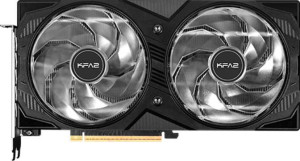
KFA2 GeForce RTX 5060 Ti EX 8GB
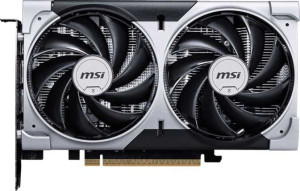
MSI GeForce RTX 5060 Ventus 2X

KFA2 GeForce RTX 5060 Ti EX 8GB MSI GeForce RTX 5060 Ventus 2X

Overview

When two Nvidia Blackwell-architecture GPUs share the same memory platform but diverge in processing power and physical design, the choice becomes genuinely interesting. In this detailed specification comparison between the KFA2 GeForce RTX 5060 Ti EX 8GB and the MSI GeForce RTX 5060 Ventus 2X, we examine the key battlegrounds: raw computational performance, power consumption, cooling footprint, and the features each card brings to the table. Read on to find out which GPU best suits your specific build and priorities.

Common Features

  • GPU memory speed is 1750 MHz on both products.
  • Both products have 48 render output units (ROPs).
  • Double Precision Floating Point (DPFP) is supported on both products.
  • Effective memory speed is 28000 MHz on both products.
  • Maximum memory bandwidth is 448 GB/s on both products.
  • Both products have 8GB of VRAM.
  • Both products use GDDR7 memory.
  • Memory bus width is 128-bit on both products.
  • ECC memory is supported on both products.
  • Both products support DirectX 12 Ultimate.
  • OpenGL version 4.6 is available on both products.
  • OpenCL version 3 is supported on both products.
  • Multi-display technology is supported on both products.
  • Ray tracing is supported on both products.
  • 3D is supported on both products.
  • DLSS is supported on both products.
  • XeSS (XMX) is not available on either product.
  • Both products have one HDMI output running HDMI version 2.1b.
  • Both products have 3 DisplayPort outputs, 0 USB-C ports, 0 DVI outputs, and 0 mini DisplayPort outputs.
  • Both products are built on the Blackwell GPU architecture with a 5 nm semiconductor size, PCIe version 5, and 21900 million transistors.
  • Air-water cooling is not available on either product.

Main Differences

  • GPU base clock speed is 2407 MHz on KFA2 GeForce RTX 5060 Ti EX 8GB and 2280 MHz on MSI GeForce RTX 5060 Ventus 2X.
  • GPU turbo clock speed is 2617 MHz on KFA2 GeForce RTX 5060 Ti EX 8GB and 2497 MHz on MSI GeForce RTX 5060 Ventus 2X.
  • Pixel rate is 125.6 GPixel/s on KFA2 GeForce RTX 5060 Ti EX 8GB and 119.9 GPixel/s on MSI GeForce RTX 5060 Ventus 2X.
  • Floating-point performance is 24.12 TFLOPS on KFA2 GeForce RTX 5060 Ti EX 8GB and 19.18 TFLOPS on MSI GeForce RTX 5060 Ventus 2X.
  • Texture rate is 376.8 GTexels/s on KFA2 GeForce RTX 5060 Ti EX 8GB and 299.6 GTexels/s on MSI GeForce RTX 5060 Ventus 2X.
  • Shading units total 4608 on KFA2 GeForce RTX 5060 Ti EX 8GB and 3840 on MSI GeForce RTX 5060 Ventus 2X.
  • Texture mapping units (TMUs) number 144 on KFA2 GeForce RTX 5060 Ti EX 8GB and 120 on MSI GeForce RTX 5060 Ventus 2X.
  • RGB lighting is present on KFA2 GeForce RTX 5060 Ti EX 8GB but not available on MSI GeForce RTX 5060 Ventus 2X.
  • Thermal Design Power (TDP) is 180W on KFA2 GeForce RTX 5060 Ti EX 8GB and 145W on MSI GeForce RTX 5060 Ventus 2X.
  • Width is 267 mm on KFA2 GeForce RTX 5060 Ti EX 8GB and 197 mm on MSI GeForce RTX 5060 Ventus 2X.
  • Height is 142.5 mm on KFA2 GeForce RTX 5060 Ti EX 8GB and 120 mm on MSI GeForce RTX 5060 Ventus 2X.
Specs Comparison
KFA2 GeForce RTX 5060 Ti EX 8GB

KFA2 GeForce RTX 5060 Ti EX 8GB

MSI GeForce RTX 5060 Ventus 2X

MSI GeForce RTX 5060 Ventus 2X

Performance:
GPU clock speed 2407 MHz 2280 MHz
GPU turbo 2617 MHz 2497 MHz
pixel rate 125.6 GPixel/s 119.9 GPixel/s
floating-point performance 24.12 TFLOPS 19.18 TFLOPS
texture rate 376.8 GTexels/s 299.6 GTexels/s
GPU memory speed 1750 MHz 1750 MHz
shading units 4608 3840
texture mapping units (TMUs) 144 120
render output units (ROPs) 48 48
Has Double Precision Floating Point (DPFP)

The most telling performance gap between these two cards lies in their shader and compute configurations. The KFA2 RTX 5060 Ti EX 8GB fields 4,608 shading units and 144 TMUs, versus 3,840 shading units and 120 TMUs on the MSI RTX 5060 Ventus 2X — a roughly 20% advantage in raw parallel processing hardware. This directly translates into the floating-point performance figures: 24.12 TFLOPS for the KFA2 against 19.18 TFLOPS for the MSI, a gap of nearly 26%. In practice, more shading units and higher TFLOPS mean the KFA2 can push more geometry, lighting calculations, and shader effects simultaneously, which matters most in demanding titles and at higher resolutions.

Clock speeds reinforce this lead. The KFA2 boosts to 2,617 MHz at peak versus 2,497 MHz on the MSI — a 120 MHz advantage that compounds the higher unit count. The texture rate delta is equally significant: 376.8 GTexels/s versus 299.6 GTexels/s, meaning the KFA2 can resolve textured surfaces considerably faster, benefiting texture-heavy scenes and higher-resolution rendering. The one area where both cards are evenly matched is memory speed (1,750 MHz) and render output units (48 ROPs), which means pixel fill rate and memory bandwidth are not a differentiator here.

Overall, the KFA2 RTX 5060 Ti EX 8GB holds a clear and consistent performance edge in this group across every compute and throughput metric. The ~26% TFLOPS advantage is not a marginal rounding difference — it reflects a meaningfully faster GPU core that should deliver noticeably higher frame rates in GPU-bound scenarios. The MSI RTX 5060 Ventus 2X is not without merit, but on raw performance specs alone, the KFA2 is the stronger card.
Memory:
effective memory speed 28000 MHz 28000 MHz
maximum memory bandwidth 448 GB/s 448 GB/s
VRAM 8GB 8GB
GDDR version GDDR7 GDDR7
memory bus width 128-bit 128-bit
Supports ECC memory

On memory, these two cards are completely identical across every measurable dimension. Both carry 8GB of GDDR7 running at an effective 28,000 MHz over a 128-bit bus, yielding 448 GB/s of maximum memory bandwidth. There is no differentiator to be found here, regardless of which metric you examine.

That said, the shared specs are worth contextualizing. GDDR7 is the latest memory standard at this tier, and its efficiency gains over GDDR6X mean the 128-bit bus punches above what that width historically implied — 448 GB/s would have required a wider bus in prior generations. ECC memory support on both cards is a minor but noteworthy inclusion, adding a layer of data integrity useful in workstation or creative workloads, not just gaming. For the target audience of either card, 8GB is the defining constraint to be aware of in 2025 and beyond, as VRAM pressure in modern titles at higher resolutions is real.

This group is a complete tie. No advantage exists for either the KFA2 RTX 5060 Ti EX 8GB or the MSI RTX 5060 Ventus 2X in memory configuration — buyers should look to other specification groups to differentiate between them.

Features:
DirectX version DirectX 12 Ultimate DirectX 12 Ultimate
OpenGL version 4.6 4.6
OpenCL version 3 3
Supports multi-display technology
supports ray tracing
Supports 3D
supports DLSS
has XeSS (XMX)
AMD SAM / Intel Resizable BAR Intel Resizable BAR Intel Resizable BAR
has LHR
has RGB lighting
supported displays 4 4

Functionally, these two cards are virtually indistinguishable. Both support DirectX 12 Ultimate, ray tracing, and DLSS, and both can drive up to 4 displays simultaneously. The shared API and feature parity means neither card has an edge in software compatibility, workload support, or gaming feature access — whatever one can run, so can the other.

The sole differentiator in this group is aesthetic: the KFA2 RTX 5060 Ti EX 8GB includes RGB lighting, while the MSI RTX 5060 Ventus 2X does not. This has no bearing on performance or compatibility, but it is a relevant distinction for builders who care about a lit, themed system build. Conversely, buyers who prefer a clean, understated look — or are building in a case where lighting is irrelevant — will find the MSI's lack of RGB a non-issue or even preferable.

As a features group verdict, this is essentially a tie on all meaningful technical dimensions. The KFA2 earns a narrow edge for buyers who value RGB integration, but that is a purely cosmetic consideration. Anyone choosing between these two cards for functional or compatibility reasons will find nothing in this group to separate them.

Ports:
has an HDMI output
HDMI ports 1 1
HDMI version HDMI 2.1b HDMI 2.1b
DisplayPort outputs 3 3
USB-C ports 0 0
DVI outputs 0 0
mini DisplayPort outputs 0 0

Port configurations are identical on both cards: one HDMI 2.1b output and three DisplayPorts, totaling four physical outputs — consistent with the four-display limit noted in the features group. Neither card offers USB-C or any legacy connectivity such as DVI or mini DisplayPort.

The shared HDMI 2.1b standard is worth noting as it supports the highest bandwidth available over HDMI, enabling 4K at high refresh rates or 8K output without compression. The triple DisplayPort layout is practical for multi-monitor workstation setups or gaming rigs, giving users flexibility in mixing display types without adapters in most scenarios.

This is a complete tie — the KFA2 RTX 5060 Ti EX 8GB and the MSI RTX 5060 Ventus 2X offer precisely the same port selection. Connectivity should play no part in the decision between these two cards.

General info:
GPU architecture Blackwell Blackwell
release date April 2025 May 2025
Thermal Design Power (TDP) 180W 145W
PCI Express (PCIe) version 5 5
semiconductor size 5 nm 5 nm
number of transistors 21900 million 21900 million
Has air-water cooling
width 267 mm 197 mm
height 142.5 mm 120 mm

Sharing the same Blackwell architecture, 5nm process node, and identical transistor count of 21,900 million, these two cards are built from the same silicon foundation. The key divergences emerge in power draw and physical footprint. The KFA2 RTX 5060 Ti EX 8GB carries a 180W TDP against the MSI RTX 5060 Ventus 2X at 145W — a 35W gap that is directly connected to the performance advantage the KFA2 demonstrated in the compute group. Higher clock speeds and more active shader units demand more power, so this delta is expected rather than surprising.

Physical dimensions tell an equally meaningful story. The KFA2 measures 267 × 142.5 mm while the MSI comes in considerably more compact at 197 × 120 mm — nearly 70mm shorter in length. For builders working with smaller mid-tower or mini-ITX cases, that difference can determine whether a card fits at all. The MSI's smaller footprint also suggests a more modest cooler, which is a reasonable trade-off given its lower thermal output of 145W.

Neither card has a clear overall edge in this group — rather, each suits a different builder profile. The KFA2 is the right choice for full-size builds where power and space are not constraints, while the MSI Ventus 2X holds a meaningful advantage for compact or thermally limited systems, and will also place less strain on a power supply. The shared architecture and process node mean the underlying silicon quality is equivalent; it is the implementation choices that differ.

Comparison Summary & Verdict

Both the KFA2 GeForce RTX 5060 Ti EX 8GB and the MSI GeForce RTX 5060 Ventus 2X are grounded in the same Blackwell foundation, sharing identical memory specs including 8GB of GDDR7 with 448 GB/s bandwidth, the same port selection, and a full common feature set covering ray tracing, DLSS, and DirectX 12 Ultimate. Where they diverge is equally telling. The KFA2 card leads decisively in raw horsepower, offering 24.12 TFLOPS, 4608 shading units, and higher boost clocks, along with RGB lighting for aesthetics-conscious builders, but it requires a 180W TDP and a noticeably larger chassis footprint. The MSI Ventus 2X counters with a 145W TDP and a compact 197 mm body, making it the smarter pick for small form factor cases or power-sensitive systems where efficiency matters more than peak throughput.

KFA2 GeForce RTX 5060 Ti EX 8GB
Buy KFA2 GeForce RTX 5060 Ti EX 8GB if...

Buy the KFA2 GeForce RTX 5060 Ti EX 8GB if you want the highest possible performance headroom, with more shading units, higher clock speeds, and 24.12 TFLOPS, plus RGB lighting for a visually striking build.

MSI GeForce RTX 5060 Ventus 2X
Buy MSI GeForce RTX 5060 Ventus 2X if...

Buy the MSI GeForce RTX 5060 Ventus 2X if you need a compact, power-efficient GPU with a 145W TDP and a smaller 197 mm body that fits comfortably into tighter cases without compromising the core feature set.