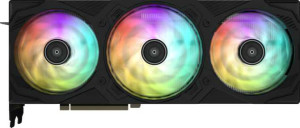
KFA2 GeForce RTX 5070 Ti EX Gamer 1-Click OC
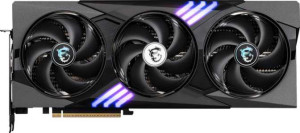
MSI GeForce RTX 5070 Ti Gaming Trio Plus

KFA2 GeForce RTX 5070 Ti EX Gamer 1-Click OC MSI GeForce RTX 5070 Ti Gaming Trio Plus

Overview

Choosing between the KFA2 GeForce RTX 5070 Ti EX Gamer 1-Click OC and the MSI GeForce RTX 5070 Ti Gaming Trio Plus is no easy task, as both cards are built on the same Blackwell foundation with identical memory configurations and feature sets. The real battlegrounds lie in their GPU turbo clock speeds, computational throughput figures, and physical dimensions. Read on for a detailed breakdown to find out which card is the right fit for your rig.

Common Features

  • Both cards share a base GPU clock speed of 2295 MHz.
  • Both cards have a GPU memory speed of 1750 MHz.
  • Both cards feature 8960 shading units.
  • Both cards include 280 texture mapping units (TMUs).
  • Both cards have 96 render output units (ROPs).
  • Double Precision Floating Point (DPFP) is supported on both cards.
  • Both cards have an effective memory speed of 28000 MHz.
  • Both cards offer a maximum memory bandwidth of 896 GB/s.
  • Both cards come with 16GB of VRAM.
  • Both cards use GDDR7 memory.
  • Both cards have a 256-bit memory bus width.
  • ECC memory is supported on both cards.
  • Both cards support DirectX 12 Ultimate.
  • Both cards support OpenGL version 4.6.
  • Both cards support OpenCL version 3.
  • Multi-display technology is supported on both cards.
  • Ray tracing is supported on both cards.
  • 3D technology is supported on both cards.
  • DLSS is supported on both cards.
  • XeSS (XMX) is not available on either card.
  • Both cards have one HDMI 2.1b output.
  • Both cards include 3 DisplayPort outputs.
  • Neither card has USB-C ports, DVI outputs, or mini DisplayPort outputs.
  • Both cards are built on the Blackwell GPU architecture.
  • Both cards have a Thermal Design Power (TDP) of 300W.
  • Both cards use PCIe version 5.
  • Both cards are manufactured on a 5 nm semiconductor process.
  • Both cards contain 45600 million transistors.
  • Air-water cooling is not available on either card.

Main Differences

  • GPU turbo clock speed is 2497 MHz on KFA2 GeForce RTX 5070 Ti EX Gamer 1-Click OC and 2452 MHz on MSI GeForce RTX 5070 Ti Gaming Trio Plus.
  • Pixel rate is 239.7 GPixel/s on KFA2 GeForce RTX 5070 Ti EX Gamer 1-Click OC and 235.4 GPixel/s on MSI GeForce RTX 5070 Ti Gaming Trio Plus.
  • Floating-point performance is 44.75 TFLOPS on KFA2 GeForce RTX 5070 Ti EX Gamer 1-Click OC and 43.94 TFLOPS on MSI GeForce RTX 5070 Ti Gaming Trio Plus.
  • Texture rate is 699.2 GTexels/s on KFA2 GeForce RTX 5070 Ti EX Gamer 1-Click OC and 686.6 GTexels/s on MSI GeForce RTX 5070 Ti Gaming Trio Plus.
  • Card width is 334 mm on KFA2 GeForce RTX 5070 Ti EX Gamer 1-Click OC and 338 mm on MSI GeForce RTX 5070 Ti Gaming Trio Plus.
  • Card height is 144 mm on KFA2 GeForce RTX 5070 Ti EX Gamer 1-Click OC and 140 mm on MSI GeForce RTX 5070 Ti Gaming Trio Plus.
Specs Comparison
KFA2 GeForce RTX 5070 Ti EX Gamer 1-Click OC

KFA2 GeForce RTX 5070 Ti EX Gamer 1-Click OC

MSI GeForce RTX 5070 Ti Gaming Trio Plus

MSI GeForce RTX 5070 Ti Gaming Trio Plus

Performance:
GPU clock speed 2295 MHz 2295 MHz
GPU turbo 2497 MHz 2452 MHz
pixel rate 239.7 GPixel/s 235.4 GPixel/s
floating-point performance 44.75 TFLOPS 43.94 TFLOPS
texture rate 699.2 GTexels/s 686.6 GTexels/s
GPU memory speed 1750 MHz 1750 MHz
shading units 8960 8960
texture mapping units (TMUs) 280 280
render output units (ROPs) 96 96
Has Double Precision Floating Point (DPFP)

At the foundation, both cards are built on identical silicon configurations: 8960 shading units, 280 TMUs, and 96 ROPs, with a shared base clock of 2295 MHz and memory speed of 1750 MHz. This means their theoretical parallelism and memory bandwidth are on equal footing — any performance gap between them comes down entirely to how aggressively each card boosts under load.

That is where the KFA2 EX Gamer pulls ahead. Its 1-Click OC feature pushes the GPU turbo to 2497 MHz, versus the MSI Gaming Trio Plus at 2452 MHz — a 45 MHz advantage that cascades directly into every derived metric. The KFA2 delivers 44.75 TFLOPS of floating-point performance against the MSI's 43.94 TFLOPS, a texture rate of 699.2 GTexels/s versus 686.6 GTexels/s, and a pixel fill rate of 239.7 GPixel/s compared to 235.4 GPixel/s. In real-world terms, the higher boost clock translates to marginally faster shader throughput in compute-heavy workloads and slightly smoother peak frame rates in GPU-limited scenarios — though the delta is modest, sitting around 1.8% across the board.

The edge goes to the KFA2 GeForce RTX 5070 Ti EX Gamer for this group. Its factory overclock gives it a consistent, if slim, lead across all performance metrics derived from clock speed. Both cards share DPFP support and the same rasterization hardware, so the MSI is not meaningfully behind for most gaming workloads — but for users who want the highest out-of-box boost frequency without manual overclocking, the KFA2 is the stronger choice on paper.

Memory:
effective memory speed 28000 MHz 28000 MHz
maximum memory bandwidth 896 GB/s 896 GB/s
VRAM 16GB 16GB
GDDR version GDDR7 GDDR7
memory bus width 256-bit 256-bit
Supports ECC memory

The KFA2 GeForce RTX 5070 Ti EX Gamer 1-Click OC and MSI GeForce RTX 5070 Ti Gaming Trio Plus are identical in terms of memory specifications. Both cards offer an effective memory speed of 28000 MHz, a maximum memory bandwidth of 896 GB/s, and 16GB of VRAM. The GDDR version for both products is GDDR7, and they both feature a 256-bit memory bus width.

Additionally, both the KFA2 and MSI models support ECC (Error Correcting Code) memory, which helps ensure data integrity during processing.

Since these specifications are identical across both products, there is no difference in memory performance between the two cards.

Features:
DirectX version DirectX 12 Ultimate DirectX 12 Ultimate
OpenGL version 4.6 4.6
OpenCL version 3 3
Supports multi-display technology
supports ray tracing
Supports 3D
supports DLSS
has XeSS (XMX)
AMD SAM / Intel Resizable BAR Intel Resizable BAR Intel Resizable BAR
has LHR
has RGB lighting
supported displays 4 4

The KFA2 GeForce RTX 5070 Ti EX Gamer 1-Click OC and MSI GeForce RTX 5070 Ti Gaming Trio Plus share identical features in terms of supported technologies and capabilities. Both cards support DirectX 12 Ultimate, OpenGL 4.6, and OpenCL 3, ensuring compatibility with modern graphics applications and APIs. They also both support multi-display technology, ray tracing, and 3D, offering a comprehensive feature set for immersive gaming and professional use.

Both cards also support DLSS, which can boost performance in supported games, and both have Intel Resizable BAR support, a feature that improves data transfer between the CPU and GPU. Neither card features XeSS (XMX) support, and neither model has LHR (Lite Hash Rate) capabilities, meaning both are equally suitable for high-performance gaming and other demanding workloads.

In terms of aesthetics, both products offer RGB lighting, adding visual appeal to a gaming setup. They also support up to four displays, enabling extensive multi-monitor setups for productivity or gaming. As both products have the same specifications in this group, there is no difference in the features they provide.

Ports:
has an HDMI output
HDMI ports 1 1
HDMI version HDMI 2.1b HDMI 2.1b
DisplayPort outputs 3 3
USB-C ports 0 0
DVI outputs 0 0
mini DisplayPort outputs 0 0

The KFA2 GeForce RTX 5070 Ti EX Gamer 1-Click OC and MSI GeForce RTX 5070 Ti Gaming Trio Plus both feature the same set of output ports. Both cards have one HDMI output, with support for HDMI 2.1b, and three DisplayPort outputs. Neither card includes USB-C ports, DVI outputs, or mini DisplayPort outputs.

Since the specifications for the ports are identical across both models, there is no difference in connectivity options between the two products.

General info:
GPU architecture Blackwell Blackwell
release date January 2025 February 2025
Thermal Design Power (TDP) 300W 300W
PCI Express (PCIe) version 5 5
semiconductor size 5 nm 5 nm
number of transistors 45600 million 45600 million
Has air-water cooling
width 334 mm 338 mm
height 144 mm 140 mm

The KFA2 GeForce RTX 5070 Ti EX Gamer 1-Click OC and MSI GeForce RTX 5070 Ti Gaming Trio Plus share identical specifications in terms of GPU architecture, thermal design power (TDP), PCI Express version, semiconductor size, and number of transistors. Both cards utilize the Blackwell GPU architecture, feature a TDP of 300W, and are built on a 5 nm semiconductor process with 45600 million transistors. Additionally, both models support PCIe version 5 and do not include air-water cooling systems.

There are slight differences in physical dimensions: the KFA2 card measures 334 mm in width and 144 mm in height, while the MSI card is slightly wider at 338 mm and slightly shorter in height at 140 mm.

Since the majority of specs are identical across both models, the main distinction is the small difference in the physical dimensions of the two cards.

Comparison Summary & Verdict

Having examined all available data, both the KFA2 GeForce RTX 5070 Ti EX Gamer 1-Click OC and the MSI GeForce RTX 5070 Ti Gaming Trio Plus share an exceptionally strong common core: identical 16GB GDDR7 memory, a 256-bit bus, 300W TDP, full ray tracing and DLSS support, and the same Blackwell architecture. Performance-wise, the KFA2 card holds a consistent edge, boasting a higher GPU turbo of 2497 MHz versus 2452 MHz, along with superior floating-point performance of 44.75 TFLOPS compared to 43.94 TFLOPS on the MSI. On the physical side, the MSI card is marginally shorter at 140mm in height versus 144mm for the KFA2, which could prove relevant in chassis with tight vertical clearance. In short, buyers chasing peak clock-level performance will lean toward the KFA2, while those prioritizing a slightly more compact card height may prefer the MSI.

KFA2 GeForce RTX 5070 Ti EX Gamer 1-Click OC
Buy KFA2 GeForce RTX 5070 Ti EX Gamer 1-Click OC if...

Buy the KFA2 GeForce RTX 5070 Ti EX Gamer 1-Click OC if maximizing GPU turbo clock speed and floating-point performance is your top priority, as it leads the MSI card across every measured performance metric.

MSI GeForce RTX 5070 Ti Gaming Trio Plus
Buy MSI GeForce RTX 5070 Ti Gaming Trio Plus if...

Buy the MSI GeForce RTX 5070 Ti Gaming Trio Plus if a slightly shorter card height of 140mm is important for fitting into a space-constrained chassis, while still enjoying the same core specs and feature set.