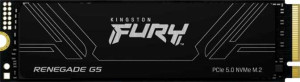
Kingston Fury Renegade G5 2TB
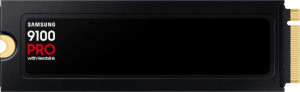
Samsung 9100 Pro 1TB

Kingston Fury Renegade G5 2TB Samsung 9100 Pro 1TB

Overview

Welcome to our in-depth specification comparison between the Kingston Fury Renegade G5 2TB and the Samsung 9100 Pro 1TB. Both drives occupy the cutting edge of consumer storage, sharing a PCIe 5.0 interface, NVMe 2.0 support, and an identical sequential read speed. Yet beneath that common ground, key battlegrounds emerge around write performance, endurance ratings, and storage capacity — differences that could meaningfully influence your buying decision.

Common Features

  • Both drives share the same sequential read speed of 14700 MB/s.
  • Both products use the M.2 form factor.
  • Both drives feature a DRAM cache.
  • Both products are NVMe SSDs.
  • Both drives support NVMe version 2.
  • Both products use TLC NAND flash storage.
  • Both drives use PCIe version 5.
  • Both controllers operate with 8 channels.
  • Both products come with a 5-year warranty.

Main Differences

  • Random read speed is 2200000 IOPS on Kingston Fury Renegade G5 2TB and 1850000 IOPS on Samsung 9100 Pro 1TB.
  • Sequential write speed is 14000 MB/s on Kingston Fury Renegade G5 2TB and 13300 MB/s on Samsung 9100 Pro 1TB.
  • Random write speed is 2200000 IOPS on Kingston Fury Renegade G5 2TB and 2600000 IOPS on Samsung 9100 Pro 1TB.
  • Internal storage capacity is 2000 GB on Kingston Fury Renegade G5 2TB and 1000 GB on Samsung 9100 Pro 1TB.
  • The controller is Silicon Motion SM2508 on Kingston Fury Renegade G5 2TB and Samsung Presto (S4LY027) on Samsung 9100 Pro 1TB.
  • Terabytes Written (TBW) endurance rating is 2000 TBW on Kingston Fury Renegade G5 2TB and 600 TBW on Samsung 9100 Pro 1TB.
  • MTBF is 2 million hours on Kingston Fury Renegade G5 2TB and 1.5 million hours on Samsung 9100 Pro 1TB.
Specs Comparison
Kingston Fury Renegade G5 2TB

Kingston Fury Renegade G5 2TB

Samsung 9100 Pro 1TB

Samsung 9100 Pro 1TB

Read speed:
sequential read speed 14700 MB/s 14700 MB/s
random read speed 2200000 IOPS 1850000 IOPS

On sequential read speed, both the Kingston Fury Renegade G5 2TB and the Samsung 9100 Pro 1TB land at an identical 14700 MB/s — a ceiling-level figure for current consumer NVMe Gen 5 drives. In practice, this means large file transfers, game asset streaming, and bulk data loads will feel virtually indistinguishable between the two drives.

The real differentiator emerges in random read performance, which is far more representative of everyday workloads like OS responsiveness, application launches, and database access. Here, the Fury Renegade G5 pulls ahead with 2,200,000 IOPS versus the 9100 Pro's 1,850,000 IOPS — a gap of roughly 19%. While both numbers are well beyond what typical desktop use can fully saturate, this advantage becomes meaningful under heavy multitasking, virtualization, or professional workloads that generate a high volume of small, randomized read requests.

Edge: Kingston Fury Renegade G5 2TB. Sequential read performance is a dead heat, but the Renegade G5's meaningfully higher random read IOPS gives it a tangible advantage in latency-sensitive and I/O-intensive scenarios.

Write speed:
sequential write speed 14000 MB/s 13300 MB/s
random write speed 2200000 IOPS 2600000 IOPS

Sequential write speed favors the Kingston Fury Renegade G5, which reaches 14000 MB/s compared to the Samsung 9100 Pro's 13300 MB/s — a roughly 5% lead. For tasks like writing large media files, creating backups, or capturing high-bitrate footage directly to the drive, the Renegade G5 will complete those operations slightly faster, though the difference is unlikely to be perceptible in casual use.

Flip to random write IOPS, however, and the picture reverses decisively. The 9100 Pro posts an impressive 2,600,000 IOPS against the Renegade G5's 2,200,000 IOPS — an 18% advantage. Random write performance is critical for workloads that continuously scatter small chunks of data across the drive: think database transactions, software compilation, virtual machine disk images, or sustained multitasking under a heavy OS load. In these scenarios, the 9100 Pro's controller handles the chaos more efficiently.

Edge: Split. The Renegade G5 holds a modest lead in sequential writes, making it marginally better for large linear transfers, while the 9100 Pro's substantially higher random write IOPS gives it an edge in transactional and mixed I/O workloads. Which advantage matters more depends entirely on the target use case.

General info:
type M2 M2
SSD cache DRAM cache DRAM cache
Is an NVMe SSD
NVMe version 2 2
internal storage 2000GB 1000GB
release date April 2025 February 2025
controller Silicon Motion SM2508 Samsung Presto (S4LY027)
SSD storage type TLC TLC
PCI Express (PCIe) version 5 5
Controller channels 8 8
Terabytes Written (TBW) 2000 600
MTBF 2million hours 1.5million hours
warranty period 5 years 5 years
Has an integrated heatsink
has RGB lighting

At their core, these two drives share the same architectural DNA: both are M.2 NVMe 2.0 SSDs on a PCIe 5.0 interface, equipped with DRAM cache, 8-channel controllers, and TLC NAND — a configuration that explains their similarly elite performance profiles. The meaningful distinctions lie elsewhere.

Endurance and reliability tell a clear story in favor of the Renegade G5. Its 2000 TBW rating dwarfs the 9100 Pro's 600 TBW — more than three times the rated write endurance — and its 2,000,000-hour MTBF edges out the 9100 Pro's 1,500,000-hour figure. Part of this gap is simply a capacity effect: the Renegade G5 ships at 2TB versus the 9100 Pro's 1TB, and larger drives naturally distribute write wear across more NAND cells. Still, even normalized for capacity, the Renegade G5's endurance advantage is substantial, making it a stronger choice for write-heavy workloads or environments where longevity is a priority.

Edge: Kingston Fury Renegade G5. Identical form factor, interface, and cache architecture mean neither drive has a structural advantage — but the Renegade G5's significantly higher TBW and MTBF ratings, combined with its greater capacity, make it the more compelling option for users who demand durability alongside raw performance.

Comparison Summary & Verdict

After examining every specification, both the Kingston Fury Renegade G5 2TB and the Samsung 9100 Pro 1TB prove themselves as elite PCIe 5.0 drives — but they cater to subtly different priorities. The Kingston stands out with a higher 2000 TBW endurance rating, a superior 2 million hour MTBF, stronger sequential and random read performance, and double the storage capacity, making it the stronger choice for heavy workloads and long-term reliability. The Samsung, on the other hand, pulls ahead with a notably higher random write speed of 2,600,000 IOPS and features Samsung's proprietary Presto controller, which may appeal to users whose workflows are particularly write-intensive. Both drives share a 5-year warranty, DRAM cache, and TLC NAND. Ultimately, the Kingston Fury Renegade G5 2TB is the better all-rounder for most demanding users, while the Samsung 9100 Pro 1TB is a compelling option if peak random write throughput is your primary concern.

Kingston Fury Renegade G5 2TB
Buy Kingston Fury Renegade G5 2TB if...

Buy the Kingston Fury Renegade G5 2TB if you need maximum storage capacity, superior endurance with a 2000 TBW rating, and stronger overall read performance for demanding workloads.

Samsung 9100 Pro 1TB
Buy Samsung 9100 Pro 1TB if...

Buy the Samsung 9100 Pro 1TB if your workload is heavily write-intensive and you want the edge of 2,600,000 IOPS random write performance backed by Samsung's proprietary Presto controller.