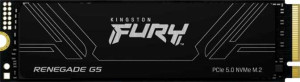
Kingston Fury Renegade G5 2TB
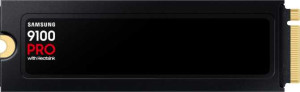
Samsung 9100 Pro 2TB

Kingston Fury Renegade G5 2TB Samsung 9100 Pro 2TB

Overview

Welcome to our detailed specification comparison between the Kingston Fury Renegade G5 2TB and the Samsung 9100 Pro 2TB, two of the most powerful PCIe 5.0 NVMe SSDs on the market today. Both drives share a number of impressive fundamentals, yet they diverge in meaningful ways across write performance, endurance ratings, and controller architecture. Read on to see exactly how these two high-performance storage solutions stack up against each other.

Common Features

  • Both drives share the same sequential read speed of 14700 MB/s.
  • Both drives use the M.2 form factor.
  • Both drives include a DRAM cache.
  • Both drives are NVMe SSDs.
  • Both drives use NVMe version 2.
  • Both drives offer 2000GB of internal storage.
  • Both drives use TLC NAND flash storage.
  • Both drives support PCIe version 5.
  • Both drives feature 8 controller channels.

Main Differences

  • Random read speed is 2200000 IOPS on Kingston Fury Renegade G5 2TB and 1850000 IOPS on Samsung 9100 Pro 2TB.
  • Sequential write speed is 14000 MB/s on Kingston Fury Renegade G5 2TB and 13400 MB/s on Samsung 9100 Pro 2TB.
  • Random write speed is 2200000 IOPS on Kingston Fury Renegade G5 2TB and 2600000 IOPS on Samsung 9100 Pro 2TB.
  • The controller is Silicon Motion SM2508 on Kingston Fury Renegade G5 2TB and Samsung Presto (S4LY027) on Samsung 9100 Pro 2TB.
  • Terabytes Written (TBW) is 2000 TB on Kingston Fury Renegade G5 2TB and 1200 TB on Samsung 9100 Pro 2TB.
  • MTBF is 2 million hours on Kingston Fury Renegade G5 2TB and 1.5 million hours on Samsung 9100 Pro 2TB.
Specs Comparison
Kingston Fury Renegade G5 2TB

Kingston Fury Renegade G5 2TB

Samsung 9100 Pro 2TB

Samsung 9100 Pro 2TB

Read speed:
sequential read speed 14700 MB/s 14700 MB/s
random read speed 2200000 IOPS 1850000 IOPS

In sequential read performance, the Kingston Fury Renegade G5 2TB and Samsung 9100 Pro 2TB are perfectly matched, both reaching 14700 MB/s. At this tier, large sequential workloads — think transferring massive video files, loading large game assets, or reading multi-gigabyte datasets — will feel essentially identical between the two drives.

The real differentiator emerges in random read performance, where the Kingston Fury Renegade G5 pulls ahead with 2,200,000 IOPS versus the Samsung 9100 Pro's 1,850,000 IOPS — a gap of roughly 19%. Random IOPS matter far more in day-to-day computing than sequential speeds: OS boot times, application launches, database queries, and multitasking all depend heavily on how quickly a drive can service many small, scattered read requests simultaneously. The Kingston's advantage here translates to a more responsive feel under mixed or high-concurrency workloads.

Overall edge goes to the Kingston Fury Renegade G5 for this spec group. While sequential parity means neither drive has a lead in raw throughput, the Kingston's meaningfully higher random read IOPS gives it a practical advantage in the real-world scenarios most users actually encounter.

Write speed:
sequential write speed 14000 MB/s 13400 MB/s
random write speed 2200000 IOPS 2600000 IOPS

Sequential write speeds are close but not identical: the Kingston Fury Renegade G5 reaches 14,000 MB/s while the Samsung 9100 Pro comes in at 13,400 MB/s, a difference of about 4.5%. For sustained large writes — video editing timelines, bulk file transfers, or backup operations — the Kingston holds a modest but real throughput advantage.

Flip to random writes, however, and the picture reverses sharply. The Samsung 9100 Pro delivers 2,600,000 IOPS versus the Kingston's 2,200,000 IOPS, an 18% lead that is hard to ignore. Random write IOPS directly affect how a drive handles the constant stream of small, scattered writes generated by operating systems, virtual machines, databases, and heavily used application caches. A higher figure here means the Samsung can absorb that kind of punishment more gracefully, with less latency under pressure.

This group is genuinely split depending on use case. Power users moving large files continuously will appreciate the Kingston's sequential edge, but for workstation-class multitasking or any write-intensive workload dominated by small random operations, the Samsung 9100 Pro holds the clear advantage.

General info:
type M2 M2
SSD cache DRAM cache DRAM cache
Is an NVMe SSD
NVMe version 2 2
internal storage 2000GB 2000GB
release date April 2025 February 2025
controller Silicon Motion SM2508 Samsung Presto (S4LY027)
SSD storage type TLC TLC
PCI Express (PCIe) version 5 5
Controller channels 8 8
Terabytes Written (TBW) 2000 1200
MTBF 2million hours 1.5million hours
warranty period 5 years 5 years
Has an integrated heatsink
has RGB lighting

At the foundational level, these two drives share a remarkably similar blueprint: both are M.2 NVMe SSDs leveraging PCIe 5.0, NVMe 2.0, TLC NAND, a DRAM cache, and an 8-channel controller. That shared architecture means neither drive carries a structural disadvantage — they are built for the same performance tier and will slot into the same systems without compatibility concerns.

Where the specs diverge meaningfully is in long-term endurance. The Kingston Fury Renegade G5 is rated for 2,000 TBW (terabytes written) compared to the Samsung 9100 Pro's 1,200 TBW — a 67% higher write endurance figure. Paired with a higher MTBF of 2 million hours versus 1.5 million, the Kingston presents a stronger reliability profile on paper. For most home users TBW limits are rarely approached, but for content creators, database operators, or anyone running write-heavy workloads daily, that gap becomes a genuine consideration over a multi-year lifespan.

Both drives carry a 5-year warranty, so neither manufacturer is hedging on their confidence in the product. Still, for this spec group, the Kingston Fury Renegade G5 holds a clear edge purely on endurance and rated reliability, making it the stronger choice for demanding, write-intensive environments.

Comparison Summary & Verdict

After examining the full specification breakdown, both drives prove themselves as elite PCIe 5.0 NVMe options, but they cater to slightly different priorities. The Kingston Fury Renegade G5 2TB stands out with a significantly higher TBW rating of 2000 TB and a superior MTBF of 2 million hours, alongside a stronger random read performance, making it the better long-term investment for users who prioritize drive longevity and read-heavy workloads. The Samsung 9100 Pro 2TB, on the other hand, takes the lead in random write speed at 2,600,000 IOPS, which benefits users with write-intensive tasks such as video editing or large database operations. Both drives match on sequential read speed, capacity, and core architecture, so the right choice ultimately comes down to whether endurance and read performance or peak write throughput matters most for your specific workload.

Kingston Fury Renegade G5 2TB
Buy Kingston Fury Renegade G5 2TB if...

Buy the Kingston Fury Renegade G5 2TB if you want superior long-term endurance, with a higher TBW rating and longer MTBF, paired with stronger random read performance.

Samsung 9100 Pro 2TB
Buy Samsung 9100 Pro 2TB if...

Buy the Samsung 9100 Pro 2TB if your workload is write-intensive and you need the highest possible random write speed at 2,600,000 IOPS.