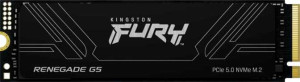
Kingston Fury Renegade G5 4TB
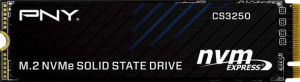
PNY CS3250 4TB

Kingston Fury Renegade G5 4TB PNY CS3250 4TB

Overview

Welcome to our in-depth specification comparison between the Kingston Fury Renegade G5 4TB and the PNY CS3250 4TB. Both drives compete in the high-performance PCIe 5.0 NVMe arena, sharing a great deal in common, yet differing in key areas such as cache architecture and controller choice that can influence real-world performance. Read on to see how these two flagship-tier SSDs stack up across every measurable specification.

Common Features

  • Both drives use the M.2 form factor.
  • Both drives are NVMe SSDs.
  • Both drives offer 4000GB of internal storage.
  • Both drives use TLC NAND flash storage.
  • Both drives support PCIe version 5.
  • Both drives have 8 controller channels.
  • Both drives share a sequential write speed of 14000 MB/s.
  • Both drives come with a 5-year warranty.
  • Neither drive includes an integrated heatsink.

Main Differences

  • Sequential read speed is 14800 MB/s on Kingston Fury Renegade G5 4TB and 14900 MB/s on PNY CS3250 4TB.
  • The SSD cache is a dedicated DRAM cache on Kingston Fury Renegade G5 4TB, while PNY CS3250 4TB uses HMB (Host Memory Buffer).
  • The controller is a Silicon Motion SM2508 on Kingston Fury Renegade G5 4TB and a Phison PS5028-E28-86 on PNY CS3250 4TB.
Specs Comparison
Kingston Fury Renegade G5 4TB

Kingston Fury Renegade G5 4TB

PNY CS3250 4TB

PNY CS3250 4TB

Read speed:
sequential read speed 14800 MB/s 14900 MB/s

Both drives operate at the cutting edge of Gen 5 sequential read performance, with the PNY CS3250 reaching 14,900 MB/s and the Kingston Fury Renegade G5 reaching 14,800 MB/s. The 100 MB/s delta between them is less than 0.7% — a gap that is essentially imperceptible in any real-world workload.

At this tier of throughput, both drives can saturate even the most demanding use cases: transferring massive 4K RAW video files, loading large game worlds, or feeding high-bandwidth AI/ML pipelines. The bottleneck in virtually any system will be elsewhere — CPU PCIe lane allocation, thermal throttling, or storage controller overhead — long before this 100 MB/s difference becomes relevant.

In terms of sequential read speed, these two drives are effectively tied. Neither product holds a meaningful real-world advantage over the other in this category, and this spec alone should not be a deciding factor between them.

Write speed:
sequential write speed 14000 MB/s 14000 MB/s

Sequential write performance tells a particularly important story for sustained workloads — think large file ingestion, video editing scratch disks, or continuous backup operations. Here, both the Kingston Fury Renegade G5 and the PNY CS3250 land at an identical 14,000 MB/s, leaving no daylight between them.

A write ceiling of 14 GB/s is a genuinely elite figure for a consumer Gen 5 drive, meaning neither product compromises on sustained throughput. At this level, writing an uncompressed 4K RAW video file of 10 GB takes less than a second in ideal conditions — the kind of performance that eliminates storage as a bottleneck in even the most write-intensive creative or professional pipelines.

This group is a clear tie. With identical sequential write speeds, there is no basis for choosing one drive over the other on this metric alone.

General info:
type M2 M2
SSD cache DRAM cache HMB (Host Memory Buffer)
Is an NVMe SSD
internal storage 4000GB 4000GB
release date April 2025 October 2025
controller Silicon Motion SM2508 Phison PS5028-E28-86
SSD storage type TLC TLC
PCI Express (PCIe) version 5 5
Controller channels 8 8
warranty period 5 years 5 years
Has an integrated heatsink
has RGB lighting

The most consequential difference in this group is the caching architecture. The Kingston Fury Renegade G5 uses a dedicated DRAM cache, while the PNY CS3250 relies on HMB (Host Memory Buffer), which borrows a portion of the system's RAM instead of carrying its own. A dedicated DRAM cache provides faster and more consistent address lookup performance — particularly under sustained mixed workloads — whereas HMB, while capable, introduces a dependency on system memory bandwidth and adds slight latency in certain access patterns.

The two drives also differ in their controllers: the Fury Renegade G5 uses the Silicon Motion SM2508, while the CS3250 is powered by the Phison PS5028-E28-86. Both are established Gen 5 controllers with 8-channel configurations, so the architecture is comparable in parallelism. Beyond the controller and cache, the drives share the same foundational DNA — M.2 form factor, PCIe 5.0 interface, TLC NAND, NVMe protocol, 4TB capacity, and a 5-year warranty — meaning platform compatibility and long-term support are equivalent.

The Kingston Fury Renegade G5 holds a general-info edge by virtue of its dedicated DRAM cache, which offers more predictable performance headroom independent of system memory conditions. For workstation users or anyone running memory-intensive tasks alongside heavy storage I/O, this distinction is worth noting.

Comparison Summary & Verdict

Both the Kingston Fury Renegade G5 4TB and the PNY CS3250 4TB are formidable PCIe 5.0 NVMe drives sharing identical sequential write speeds of 14000 MB/s, TLC NAND, 8 controller channels, and a 5-year warranty. The PNY CS3250 edges ahead marginally in sequential reads at 14900 MB/s versus 14800 MB/s, but the more meaningful distinction lies in their cache designs: the Kingston uses a dedicated DRAM cache via the Silicon Motion SM2508 controller for consistently low latency, while the PNY relies on HMB (Host Memory Buffer) through the Phison PS5028-E28-86. Choose the Kingston Fury Renegade G5 4TB if stable, low-latency workloads under sustained pressure are your priority; opt for the PNY CS3250 4TB if peak sequential throughput and a proven Phison platform matter most to you.

Kingston Fury Renegade G5 4TB
Buy Kingston Fury Renegade G5 4TB if...

Buy the Kingston Fury Renegade G5 4TB if you prioritize a dedicated DRAM cache for more consistent low-latency performance under sustained workloads.

PNY CS3250 4TB
Buy PNY CS3250 4TB if...

Buy the PNY CS3250 4TB if you want a marginally higher sequential read speed and prefer the Phison PS5028-E28-86 controller platform.