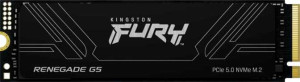
Kingston Fury Renegade G5 4TB
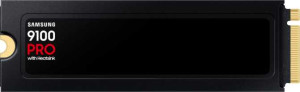
Samsung 9100 Pro 8TB

Kingston Fury Renegade G5 4TB Samsung 9100 Pro 8TB

Overview

Welcome to our detailed spec comparison between the Kingston Fury Renegade G5 4TB and the Samsung 9100 Pro 8TB, two flagship PCIe 5.0 NVMe SSDs pushing the boundaries of consumer storage performance. Both drives share an impressive feature set, but key differences in write speeds, endurance ratings, and storage capacity make this a compelling matchup worth examining closely.

Common Features

  • Both products have a sequential read speed of 14800 MB/s.
  • Both products have a random read speed of 2200000 IOPS.
  • Both products use the M.2 form factor.
  • Both products feature a DRAM cache.
  • Both products are NVMe SSDs.
  • Both products support NVMe version 2.
  • Both products use TLC NAND flash storage.
  • Both products use PCIe version 5.
  • Both products have 8 controller channels.
  • Both products come with a 5-year warranty.

Main Differences

  • Sequential write speed is 14000 MB/s on Kingston Fury Renegade G5 4TB and 13400 MB/s on Samsung 9100 Pro 8TB.
  • Random write speed is 2200000 IOPS on Kingston Fury Renegade G5 4TB and 2600000 IOPS on Samsung 9100 Pro 8TB.
  • Internal storage capacity is 4000GB on Kingston Fury Renegade G5 4TB and 8000GB on Samsung 9100 Pro 8TB.
  • The controller is Silicon Motion SM2508 on Kingston Fury Renegade G5 4TB and Samsung Presto (S4LY027) on Samsung 9100 Pro 8TB.
  • Terabytes Written (TBW) is 4000 TB on Kingston Fury Renegade G5 4TB and 4800 TB on Samsung 9100 Pro 8TB.
  • MTBF is 2 million hours on Kingston Fury Renegade G5 4TB and 1.5 million hours on Samsung 9100 Pro 8TB.
Specs Comparison
Kingston Fury Renegade G5 4TB

Kingston Fury Renegade G5 4TB

Samsung 9100 Pro 8TB

Samsung 9100 Pro 8TB

Read speed:
sequential read speed 14800 MB/s 14800 MB/s
random read speed 2200000 IOPS 2200000 IOPS

In read speed performance, the Kingston Fury Renegade G5 4TB and the Samsung 9100 Pro 8TB are in a dead heat across every measured dimension. Both drives post identical sequential read speeds of 14800 MB/s and identical random read speeds of 2,200,000 IOPS — leaving absolutely no daylight between them on paper.

To put those numbers in context: a sequential read of 14,800 MB/s represents the current bleeding edge of consumer NVMe performance, enabling near-instantaneous large file transfers, rapid OS boot times, and seamless loading of massive game worlds or video assets. The 2.2 million IOPS figure is equally impressive for real-world multitasking — high IOPS translates directly to snappier application launches, faster database queries, and smoother performance under mixed workloads where many small files are being read simultaneously.

For this spec group, the verdict is a complete tie. Neither drive holds any read speed advantage over the other. Buyers should look to other specification groups — such as write speed, latency, or endurance — to differentiate between these two drives.

Write speed:
sequential write speed 14000 MB/s 13400 MB/s
random write speed 2200000 IOPS 2600000 IOPS

Write speed is where the two drives finally diverge, and the split is interestingly asymmetric. The Kingston Fury Renegade G5 4TB pulls ahead on sequential writes at 14,000 MB/s versus the Samsung 9100 Pro 8TB's 13,400 MB/s — a roughly 4.5% lead that matters most when moving very large files in a single stream, such as writing a multi-gigabyte video export or cloning a full disk image.

Flip to random writes, however, and the advantage reverses. The Samsung 9100 Pro counters with 2,600,000 IOPS to the Kingston's 2,200,000 IOPS — an 18% edge that is far more consequential for everyday workloads. Random write IOPS govern how fluidly a drive handles fragmented, concurrent write operations: think compiling large codebases, running virtual machines, writing database transaction logs, or any scenario where the OS is juggling many small writes simultaneously. An 18% IOPS gap here is genuinely noticeable under sustained mixed-workload pressure.

The overall write speed picture is therefore a split decision. The Kingston Fury Renegade G5 is the stronger choice for pure large-file throughput, while the Samsung 9100 Pro holds a meaningful edge for heavily concurrent or latency-sensitive write workloads. Users doing bulk media transfers will favour the Kingston; those running demanding server-style or virtualized workloads will find the Samsung's higher random write IOPS more impactful day to day.

General info:
type M2 M2
SSD cache DRAM cache DRAM cache
Is an NVMe SSD
NVMe version 2 2
internal storage 4000GB 8000GB
release date April 2025 February 2025
controller Silicon Motion SM2508 Samsung Presto (S4LY027)
SSD storage type TLC TLC
PCI Express (PCIe) version 5 5
Controller channels 8 8
Terabytes Written (TBW) 4000 4800
MTBF 2million hours 1.5million hours
warranty period 5 years 5 years
Has an integrated heatsink
has RGB lighting

At their architectural core, these two drives share a remarkably similar foundation: both are M.2 PCIe 5.0 NVMe 2.0 SSDs using TLC NAND, DRAM cache, and an 8-channel controller — meaning they are built to the same modern standard and will slot into the same systems. The most immediately obvious difference is raw capacity: the Samsung 9100 Pro doubles the Kingston's footprint at 8TB versus 4TB, which is the primary consideration for users with large storage appetites.

Where the specs get more nuanced is in endurance and reliability. The Kingston Fury Renegade G5 carries an MTBF of 2 million hours compared to the Samsung's 1.5 million hours — a 33% higher rated reliability figure that signals greater confidence in long-term drive health under continuous operation. The Samsung partially compensates with a higher TBW of 4,800 versus the Kingston's 4,000, meaning it is rated to sustain more total data written before wear becomes a concern — logical given its larger NAND pool. The controllers differ too: Kingston deploys the third-party Silicon Motion SM2508 while Samsung uses its in-house Presto (S4LY027), though neither approach is inherently superior based on these specs alone.

Both drives carry a 5-year warranty and lack an integrated heatsink, so thermal management will depend on the host system. On balance, the Kingston edges ahead on rated reliability longevity, while the Samsung offers double the capacity and slightly higher write endurance. The right choice comes down to whether storage volume or long-term reliability confidence is the higher priority.

Comparison Summary & Verdict

After reviewing all the specifications, both drives are exceptionally well-matched at the top tier of PCIe 5.0 NVMe storage. They share identical 14800 MB/s sequential read speeds and the same random read performance, making either a strong choice for demanding workloads. The Kingston Fury Renegade G5 4TB stands out with a higher MTBF of 2 million hours and a faster sequential write speed of 14000 MB/s, appealing to users who prioritize long-term reliability. The Samsung 9100 Pro 8TB counters with a superior random write speed of 2600000 IOPS, higher TBW endurance of 4800 TB, and double the storage capacity, making it the better fit for high-volume, write-intensive environments.

Kingston Fury Renegade G5 4TB
Buy Kingston Fury Renegade G5 4TB if...

Buy the Kingston Fury Renegade G5 4TB if you prioritize maximum drive reliability with a higher MTBF of 2 million hours and faster sequential write speeds.

Samsung 9100 Pro 8TB
Buy Samsung 9100 Pro 8TB if...

Buy the Samsung 9100 Pro 8TB if you need greater storage capacity, superior random write performance, or higher overall write endurance for heavy workloads.